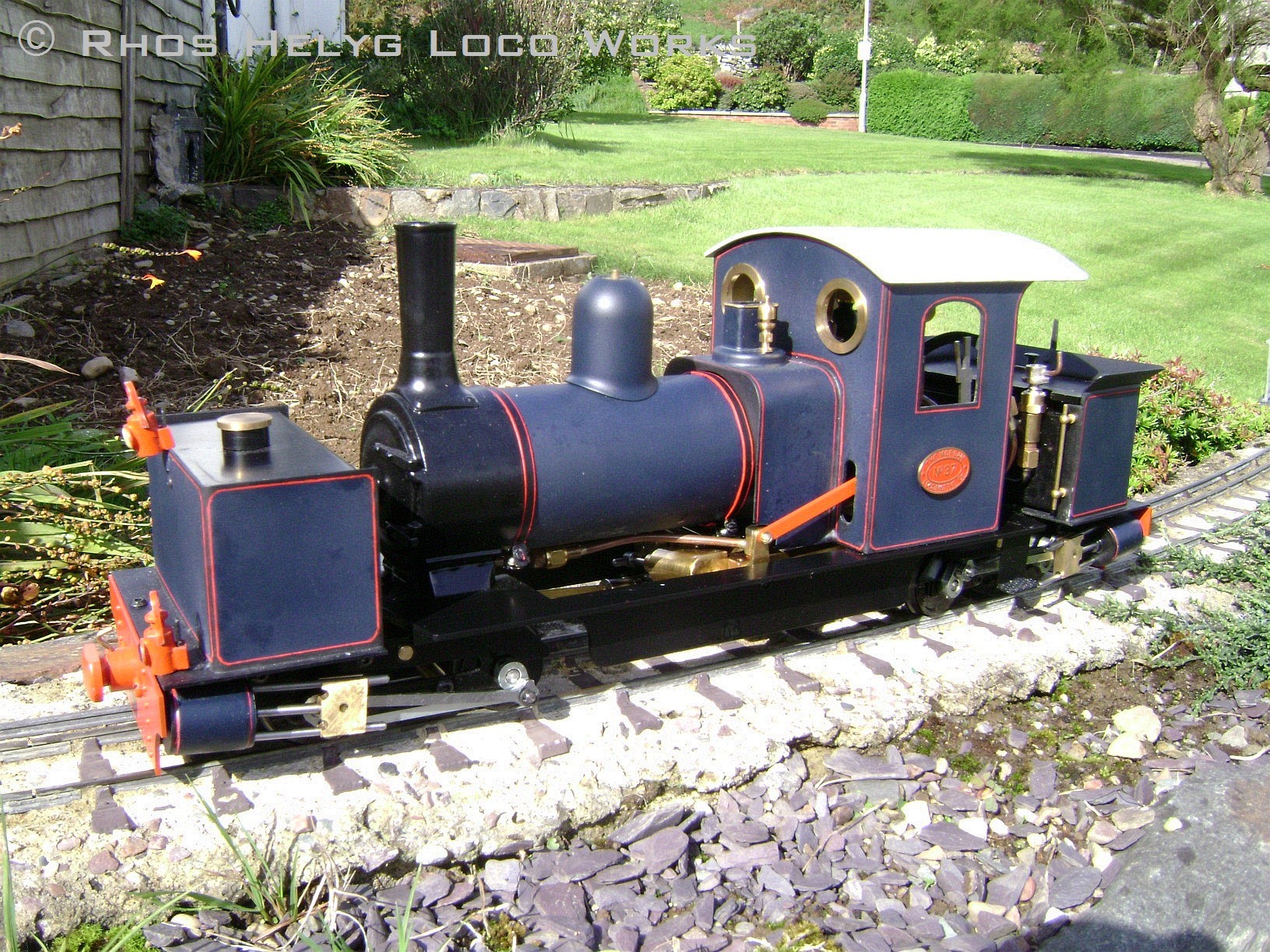
This page shows some of the many models that have been through the Rhos Helyg Locomotive Works. It is a large page and can take some time to load. Please see the Finished Models page for recent updates.
The page is sorted alphabetically by model manufacturer.
Click on an initial letter for quicker navigation.
[A]
[B]
[C]
[D]
[E]
[F]
[G]
[H]
[I]
[J]
[K]
[L]
[M]
[N]
[O]
[P]
[Q]
[R]
[S]
[T]
[U]
[V]
[W]
[X]
[Y]
[Z]
[Miscellaneous]
You may click on the pictures to see enlarged views, and you may click here to read
comments made by Rhos Helyg Locomotive Works' valued customers.
|
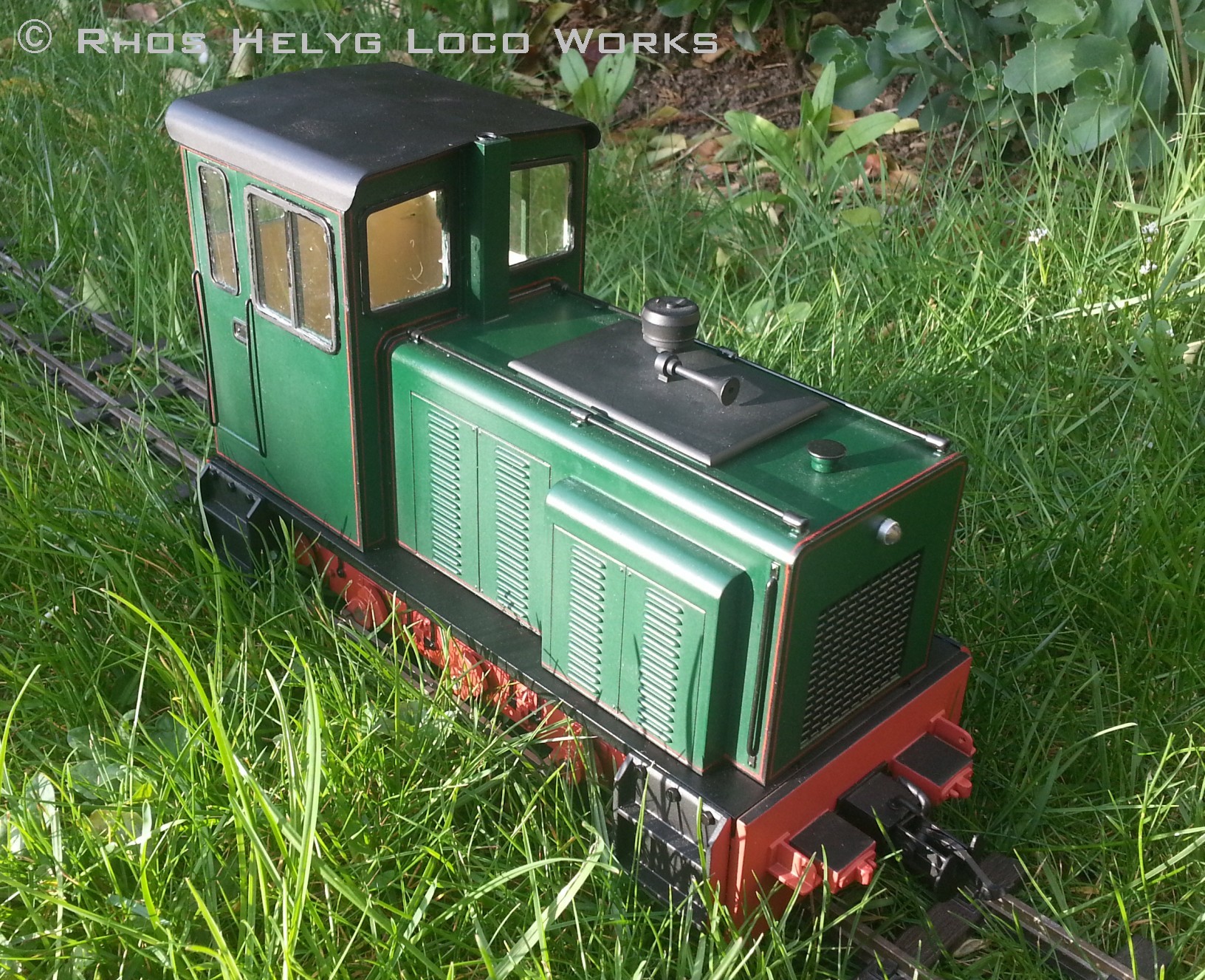
Accucraft Baguley 0-6-0 diesel
The body from this Accucraft Baguley diesel came here for painting in Festiniog-inspired green with red lining and black edging, and was then returned to its owner for reassembly. (Photo by Phil Roberts) |
|
|
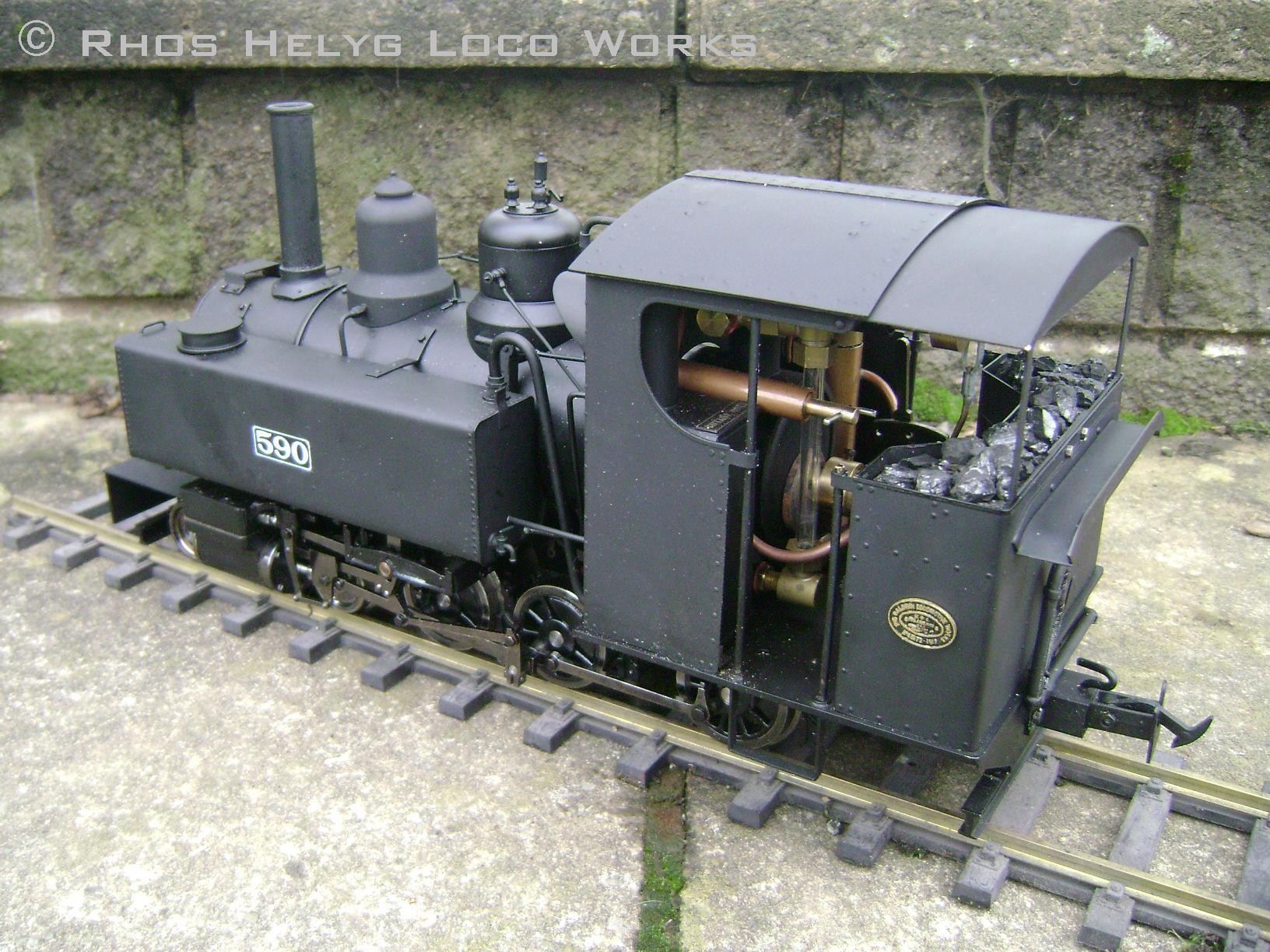
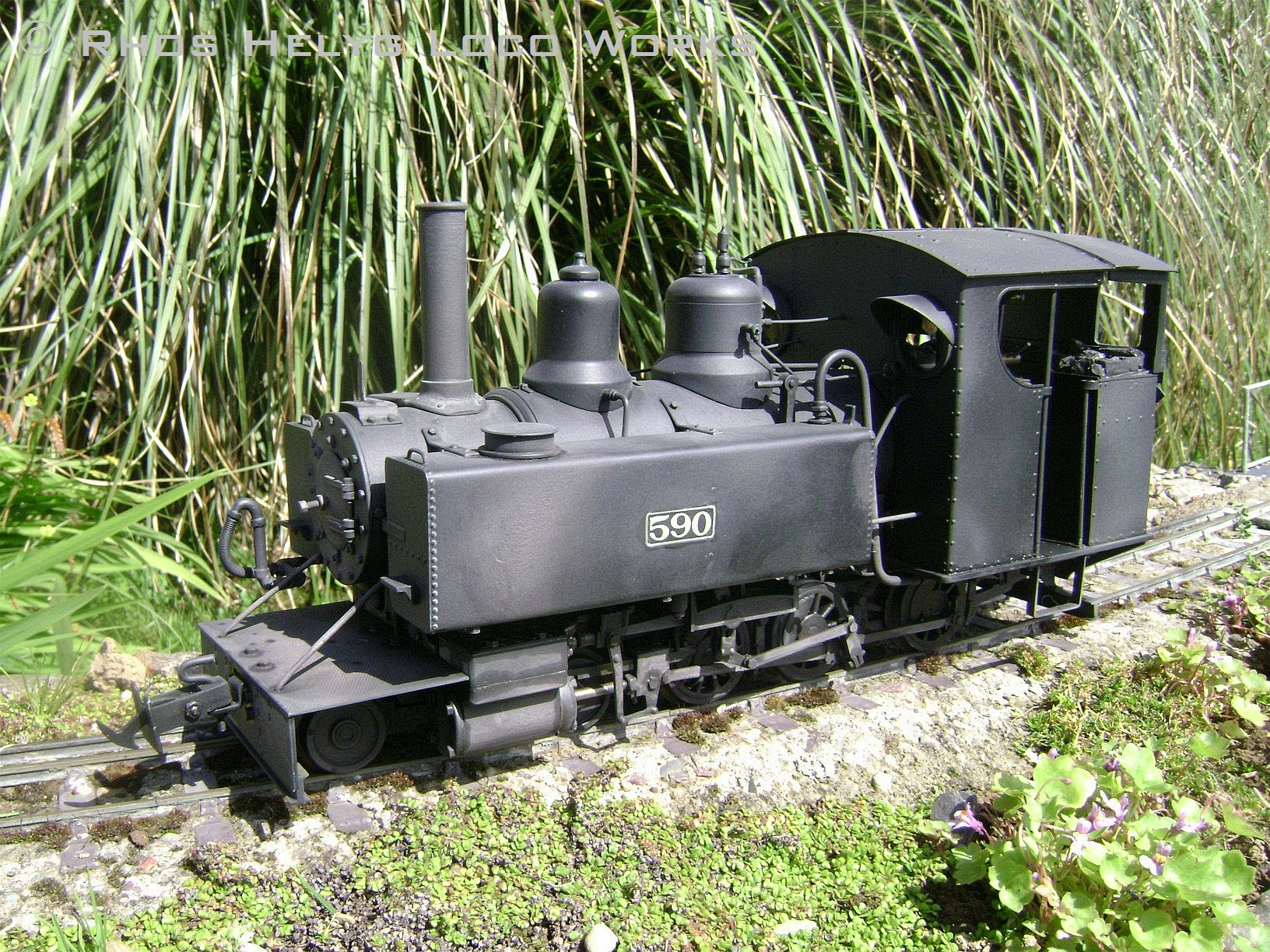
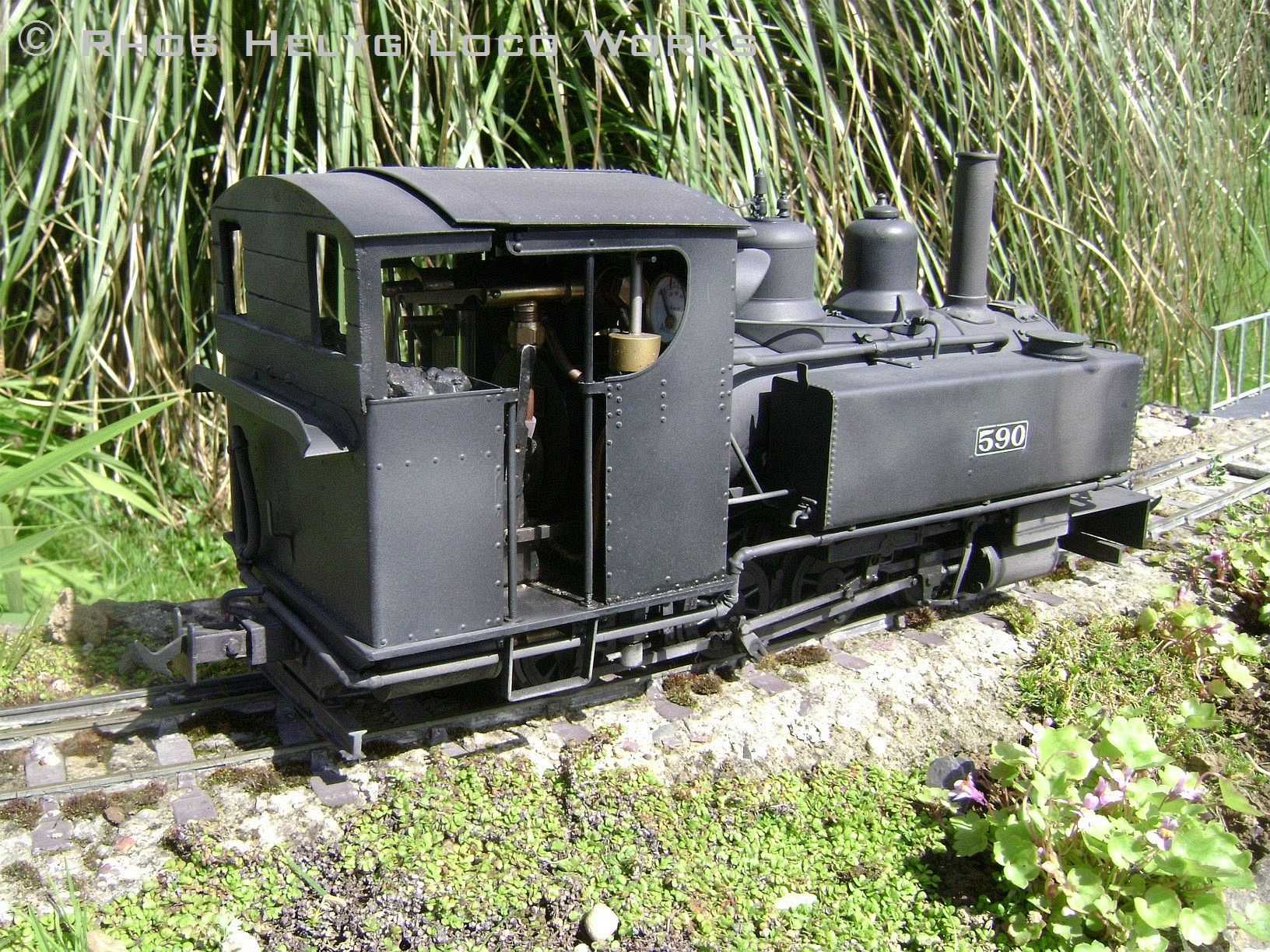
Accucraft Baldwin 4-6-0T as Welsh Highland Railway 590
Here we see an Accucraft Baldwin 4-6-0T modified in to a representation of the Welsh Highland
Railway's Baldwin 590. The changes included removal of the chimney cap and front and rear
headlamps and the addition of the following:
|
|
|
Accucraft Baldwin 4-6-0T as Welsh Highland Railway 590
Another Accucraft Baldwin 4-6-0T in the guise of Welsh Highland Railway No. 590.
The loco was purchased second-hand by the current owner, and in its previous life it had had
a replacement chimney cap fitted, had lost its front lamp bracket, and the front life guard
had become detached - all rectified. The valve setting was also attended to as its operation
was very erratic. Other work included adding:
|
|
|
Accucraft Baldwin 4-6-0T as Ashover Light Railway JOAN
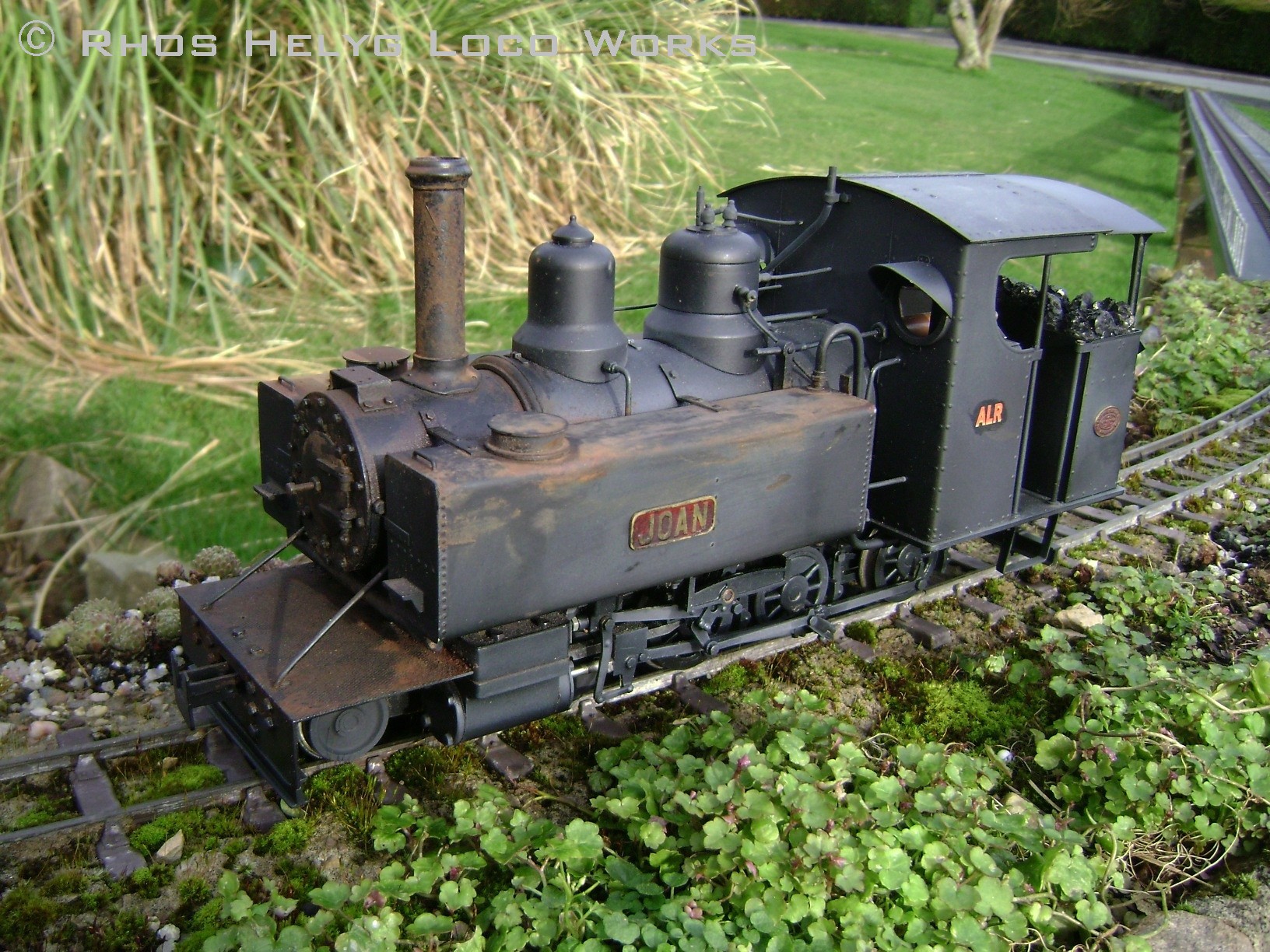
Another modified Accucraft Baldwin 4-6-0T which had already been converted in to a representation of an Ashover Light Railway loco before it came here. Using photographs of the full-size JOAN as a guide, some additional detailing was applied (in particular the prominent steam exhaust pipe on the front of the cab and the large water balance pipe connecting the two side tanks) and the headlamp and vacuum brake pipework were removed. This was followed by a general toning down of the rather too clean paintwork and weathering of the tank tops and smokebox. Custom name and works plates were supplied by MDC. |
|
|
Accucraft Baldwin 4-6-0T No. 16 ARIADNE
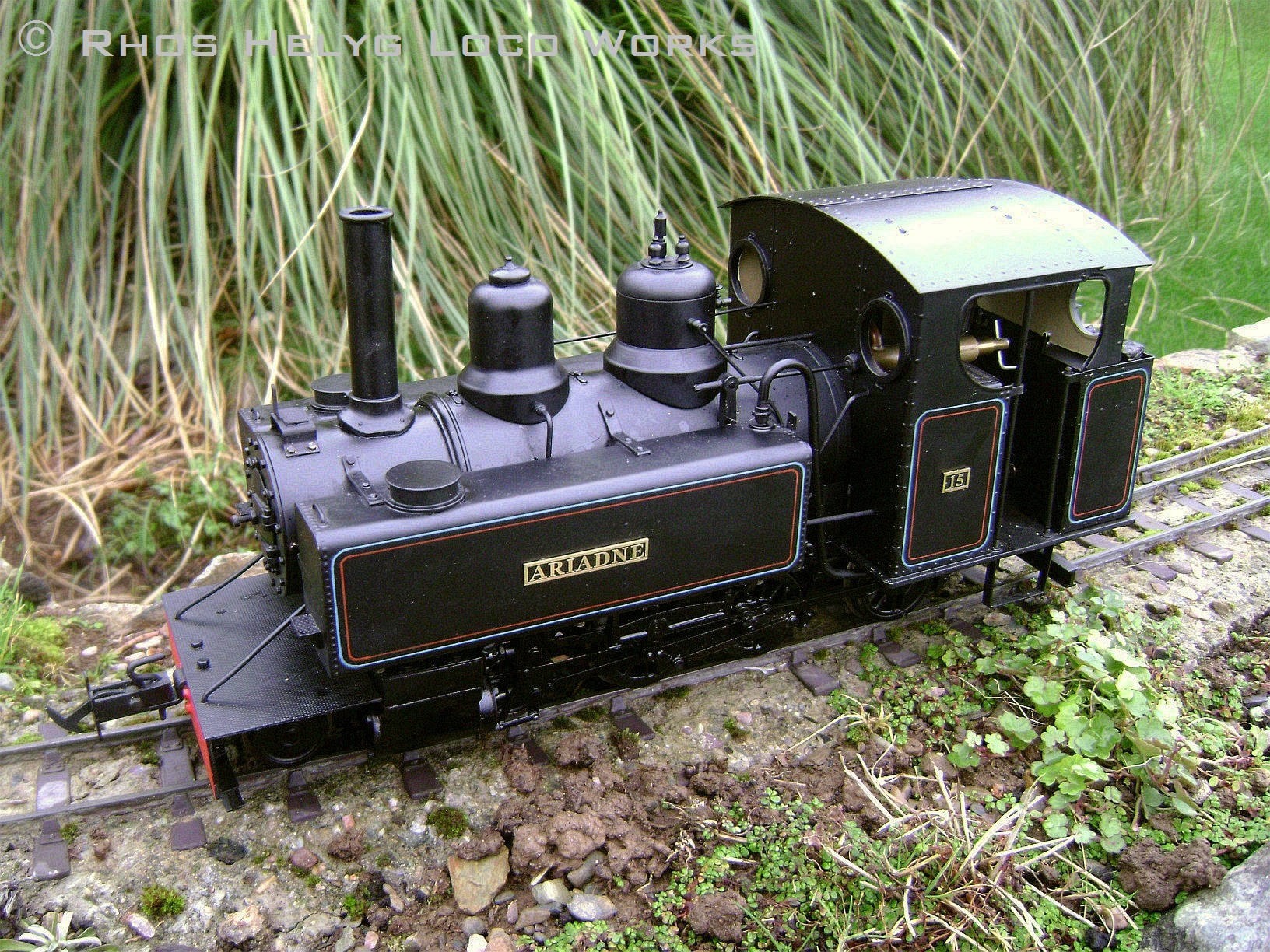
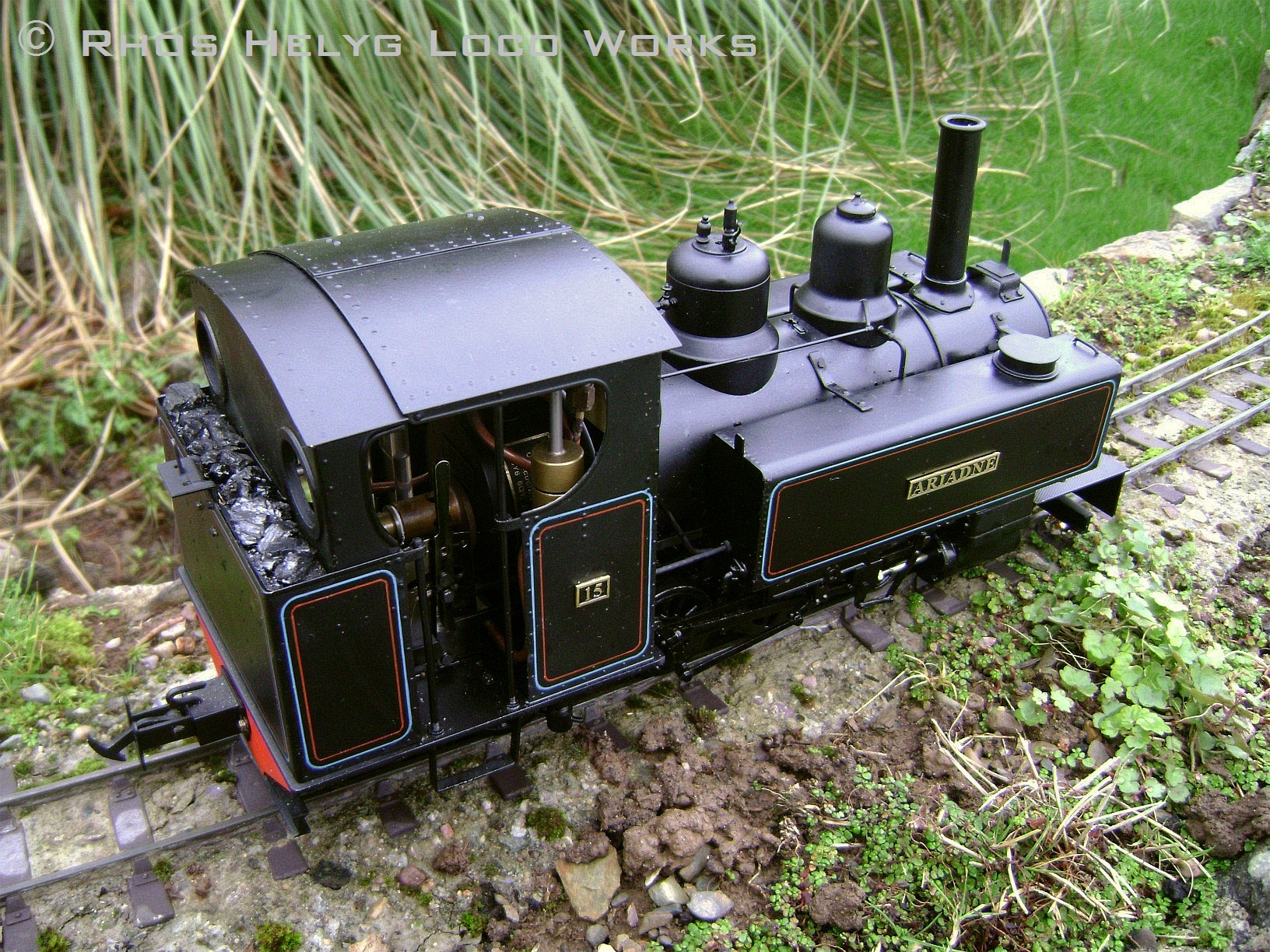
ARIADNE is an Accucraft model that had probably never been steamed and run before it arrived
here. It came for fitting of radio control, a rear cab extension and lamp brackets,
removal of the chimney cover and rear hose bracket, and a general service. Repairs were also
made to a blocked pressure gauge pipe and to a burner that just would not stay lit.
|
|
|
Accucraft Baldwin 4-6-0T No. 815
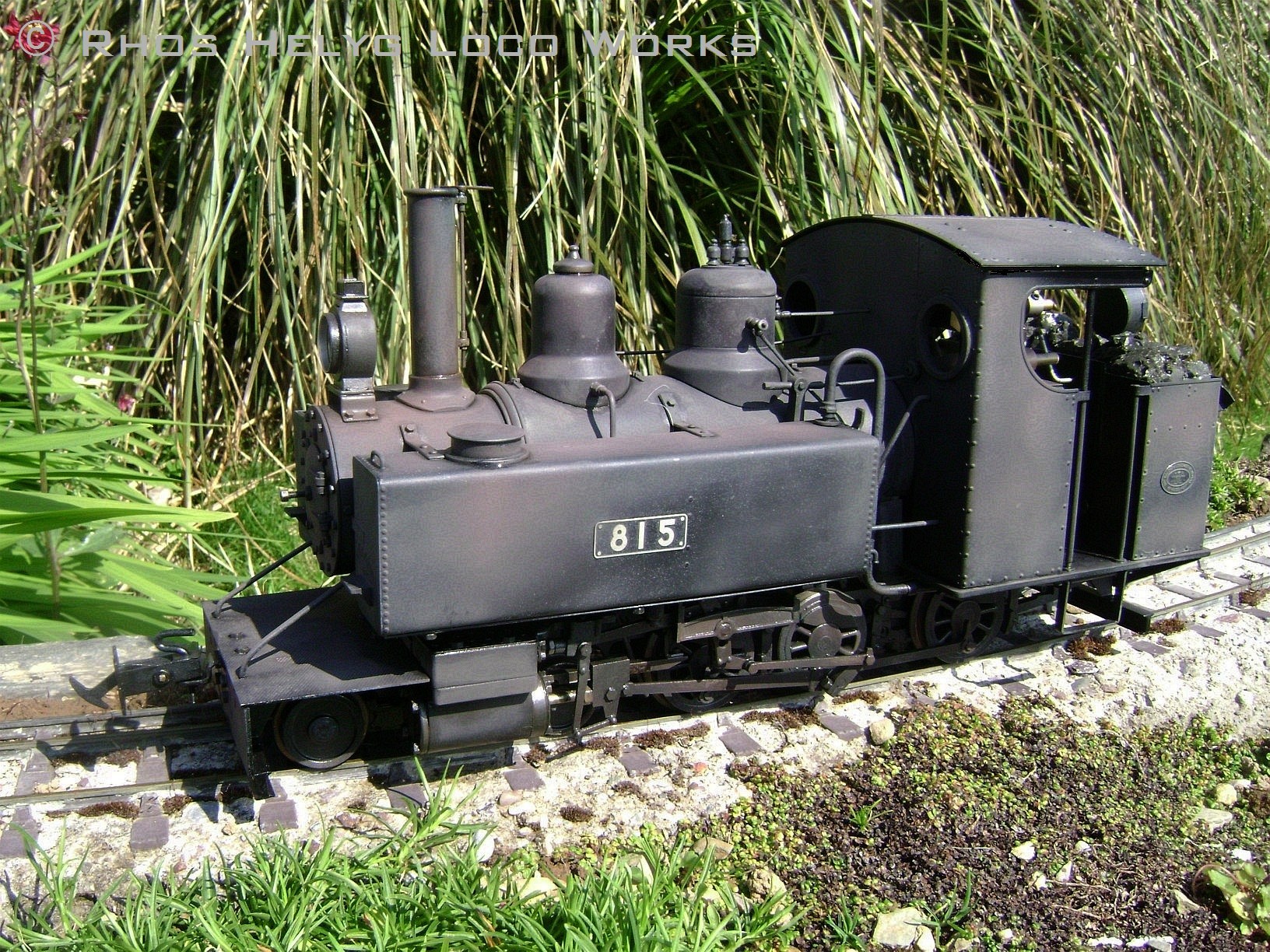
Another Accucraft Baldwin, fitted with 2-channel radio control and given a dose of weathering. |
|
|
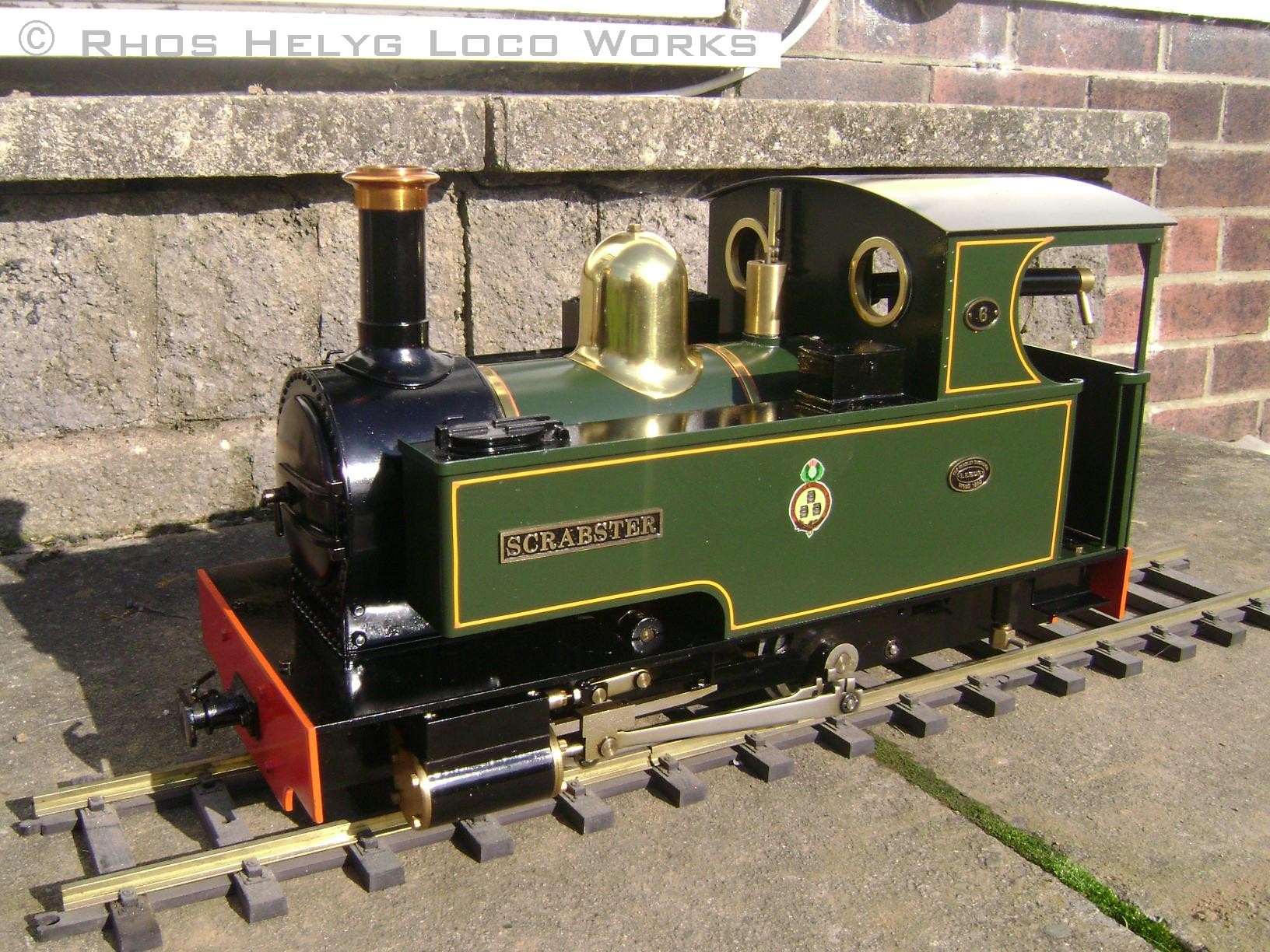
Accucraft Caradoc 0-4-0T No. 6 SCRABSTER
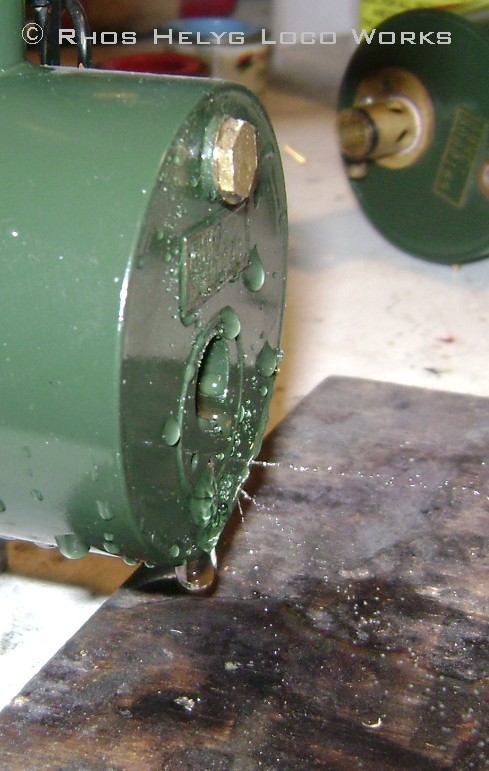
Scrabster's owner was having trouble maintaining steam pressure and a usable water level in the boiler when running, and brought it here for investigation. The problem turned out to be an issue with the boiler itself with several leaks around the backhead, and which unfortunately was not repairable. A replacement boiler in the identical green colour was obtained, and the orange lining either side of the brass boiler bands was applied before reassembly and successful steam testing. |
|
|
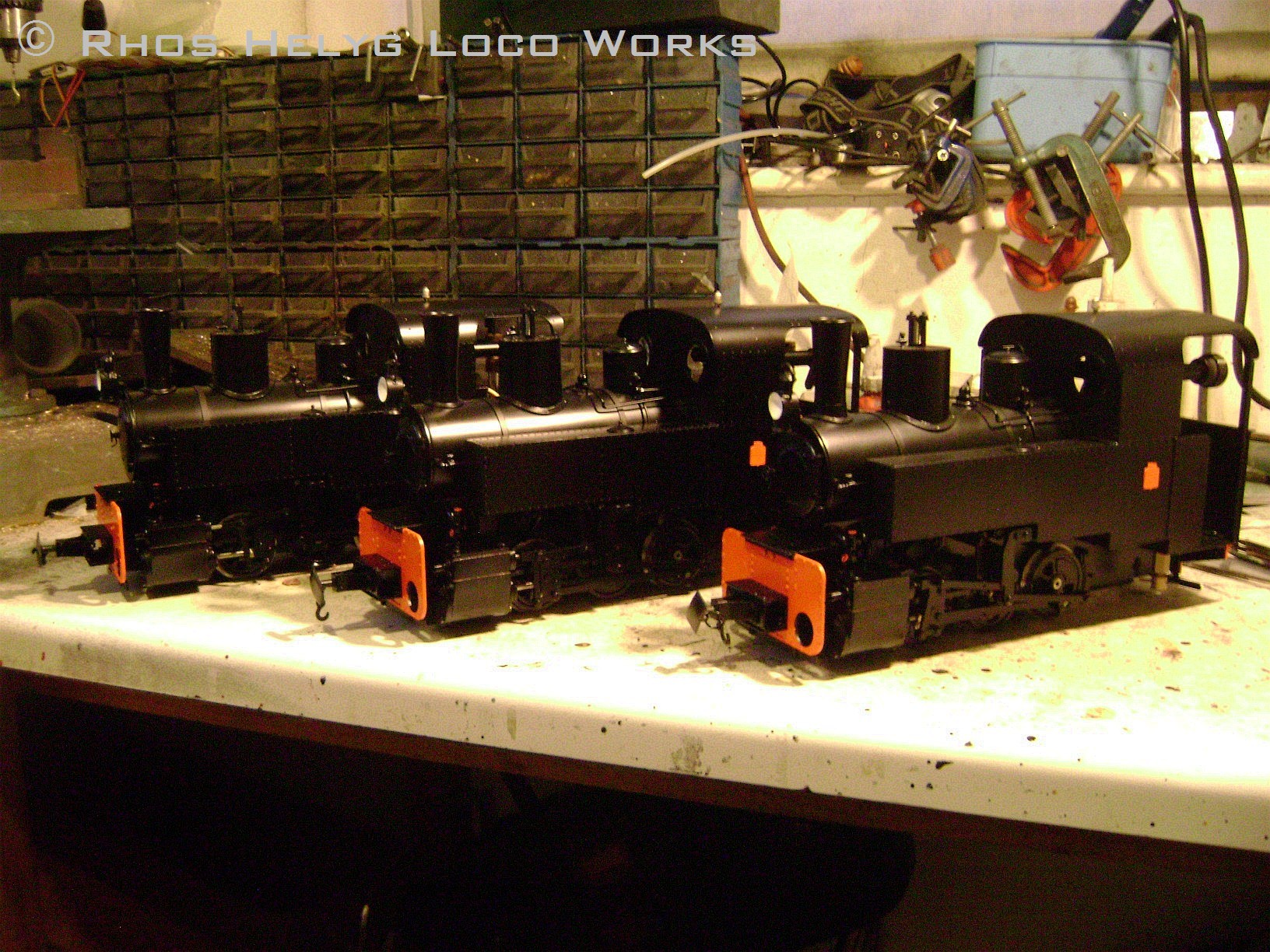
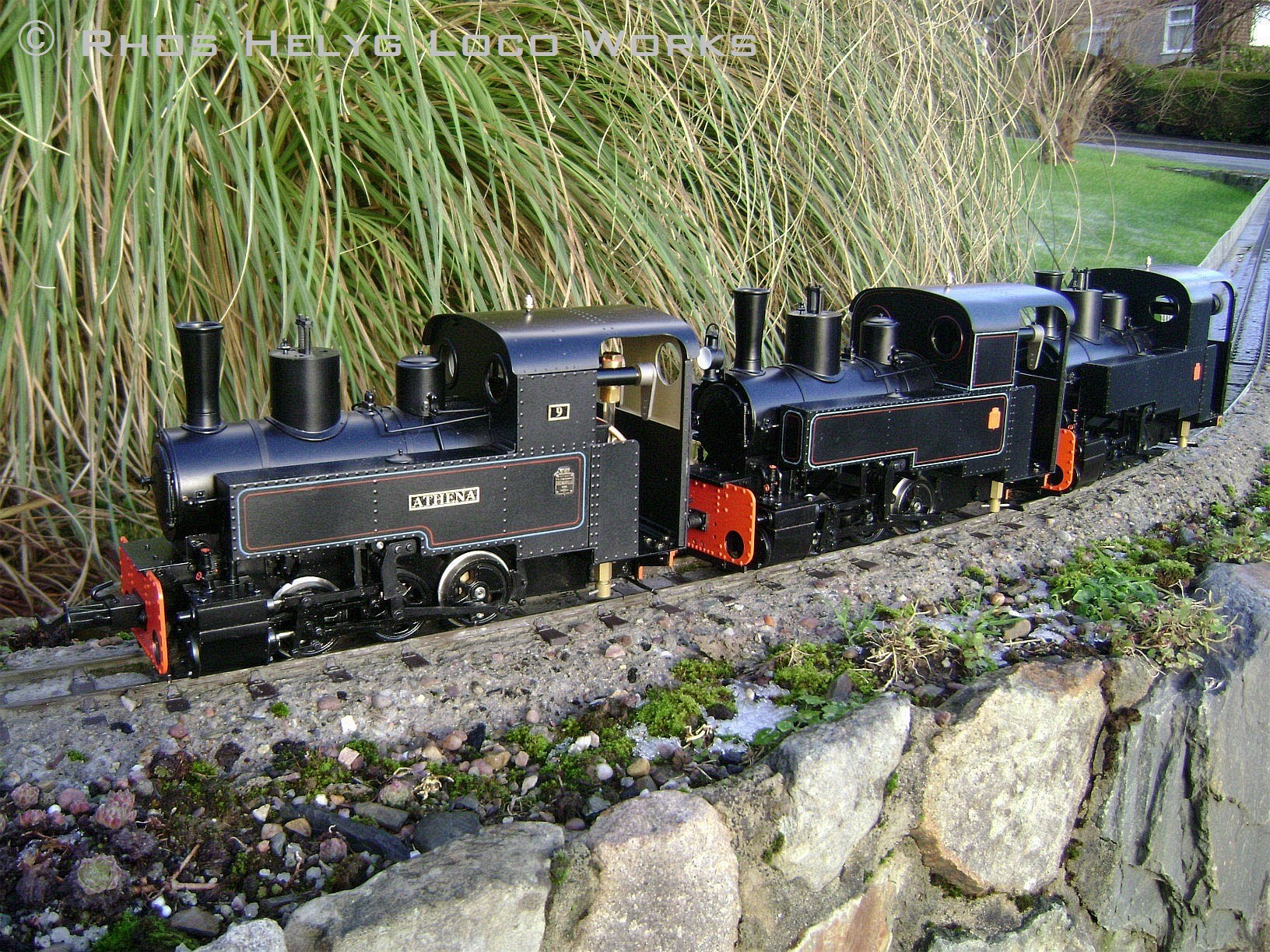
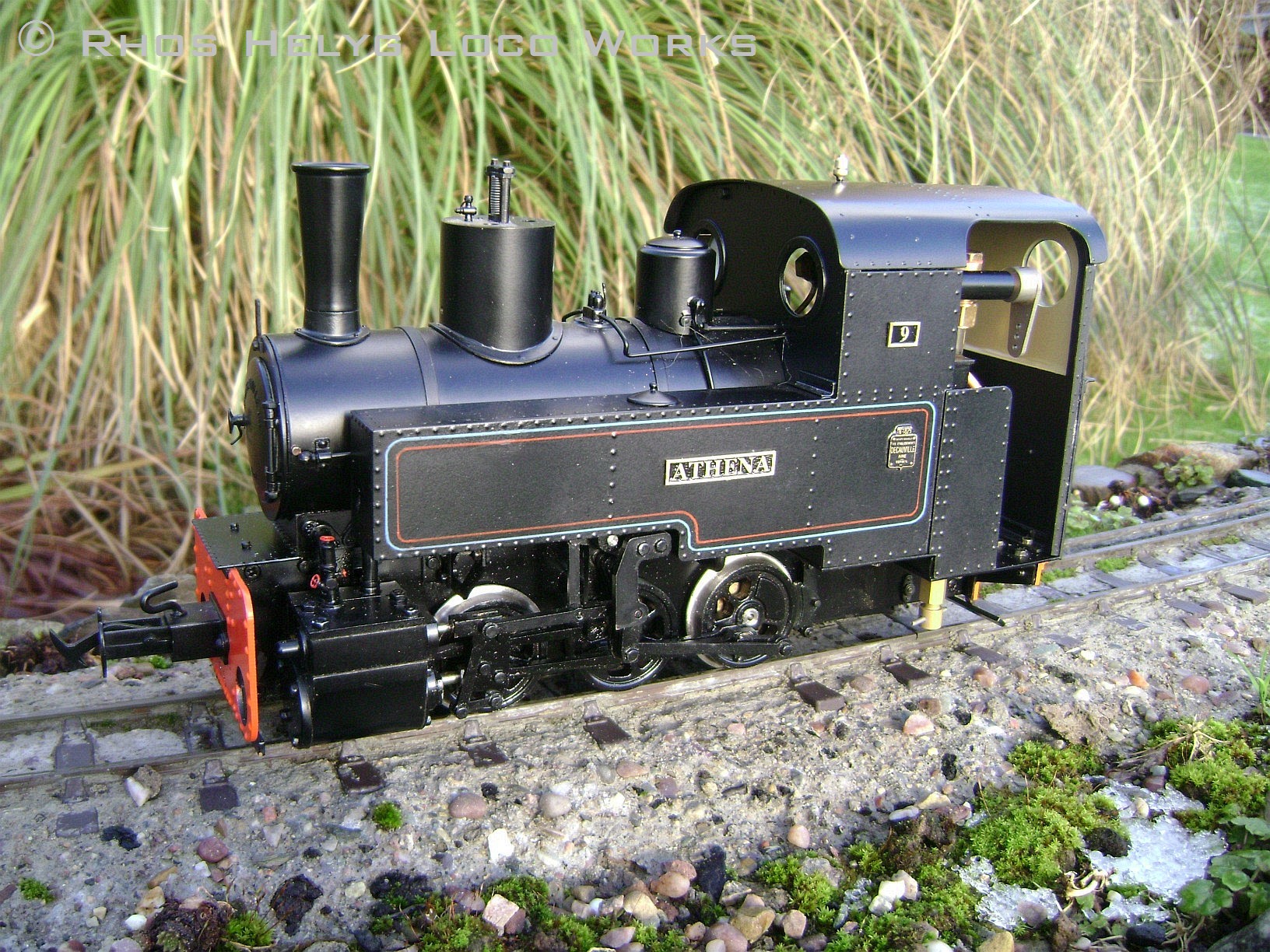
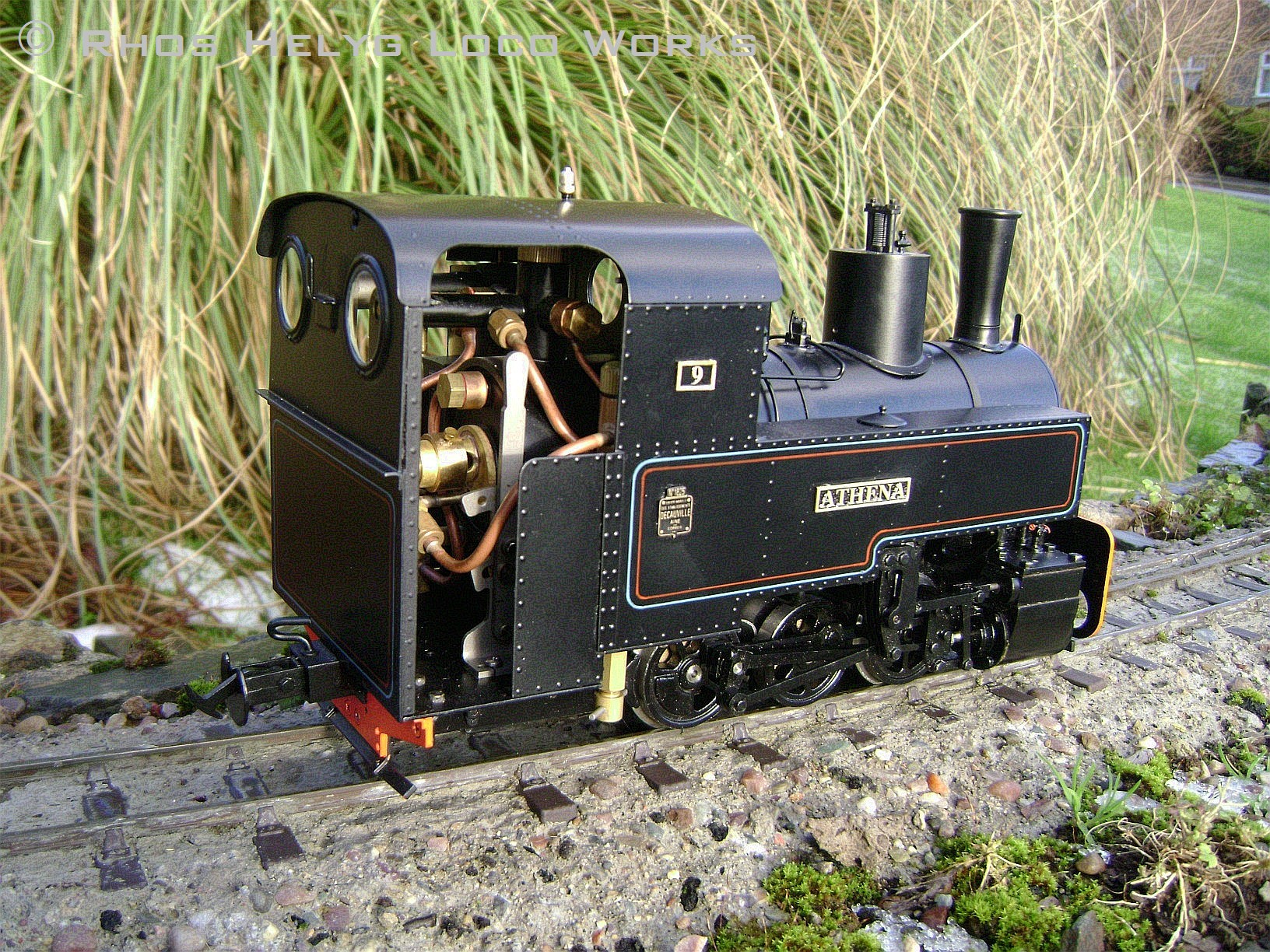
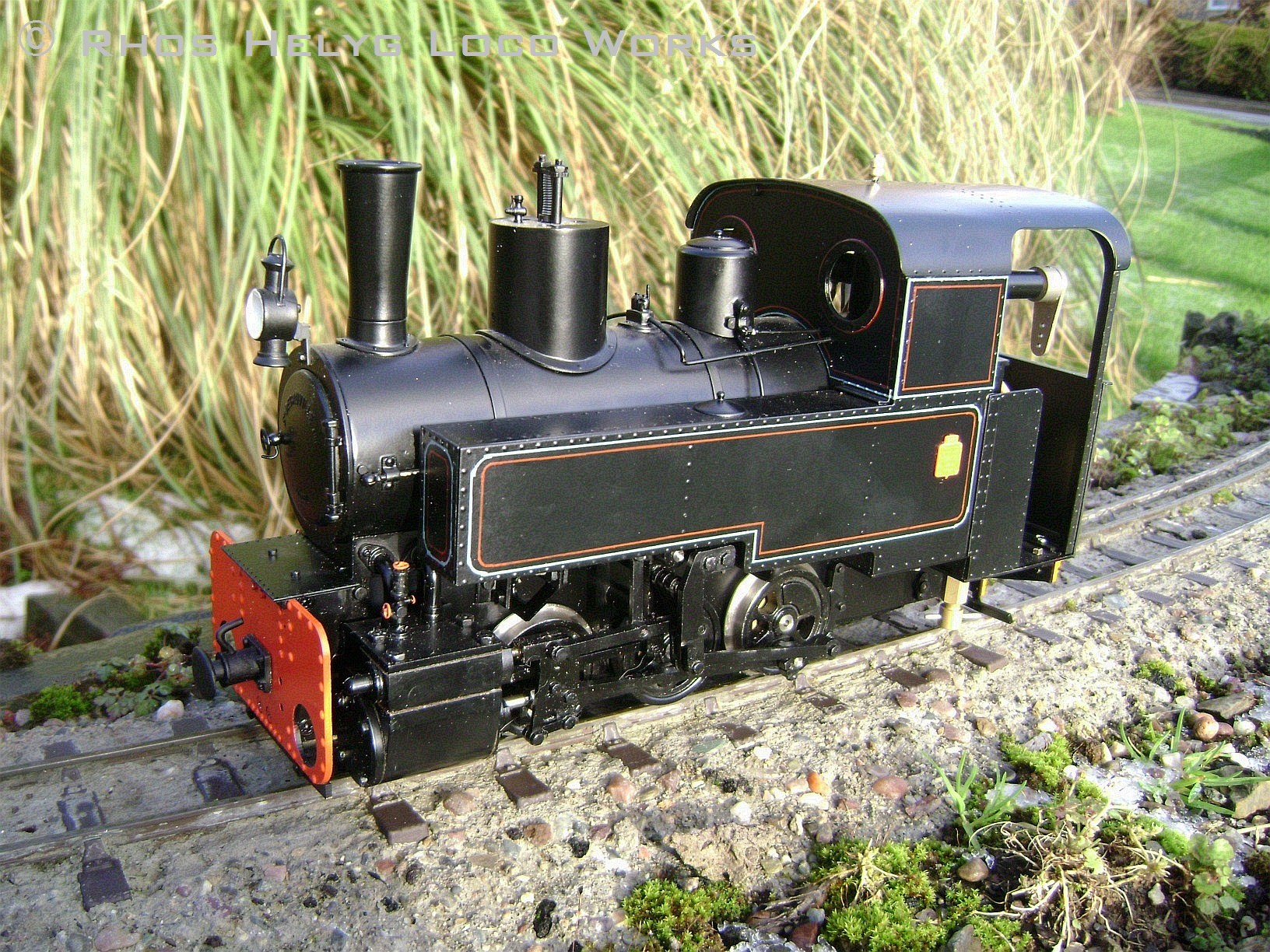
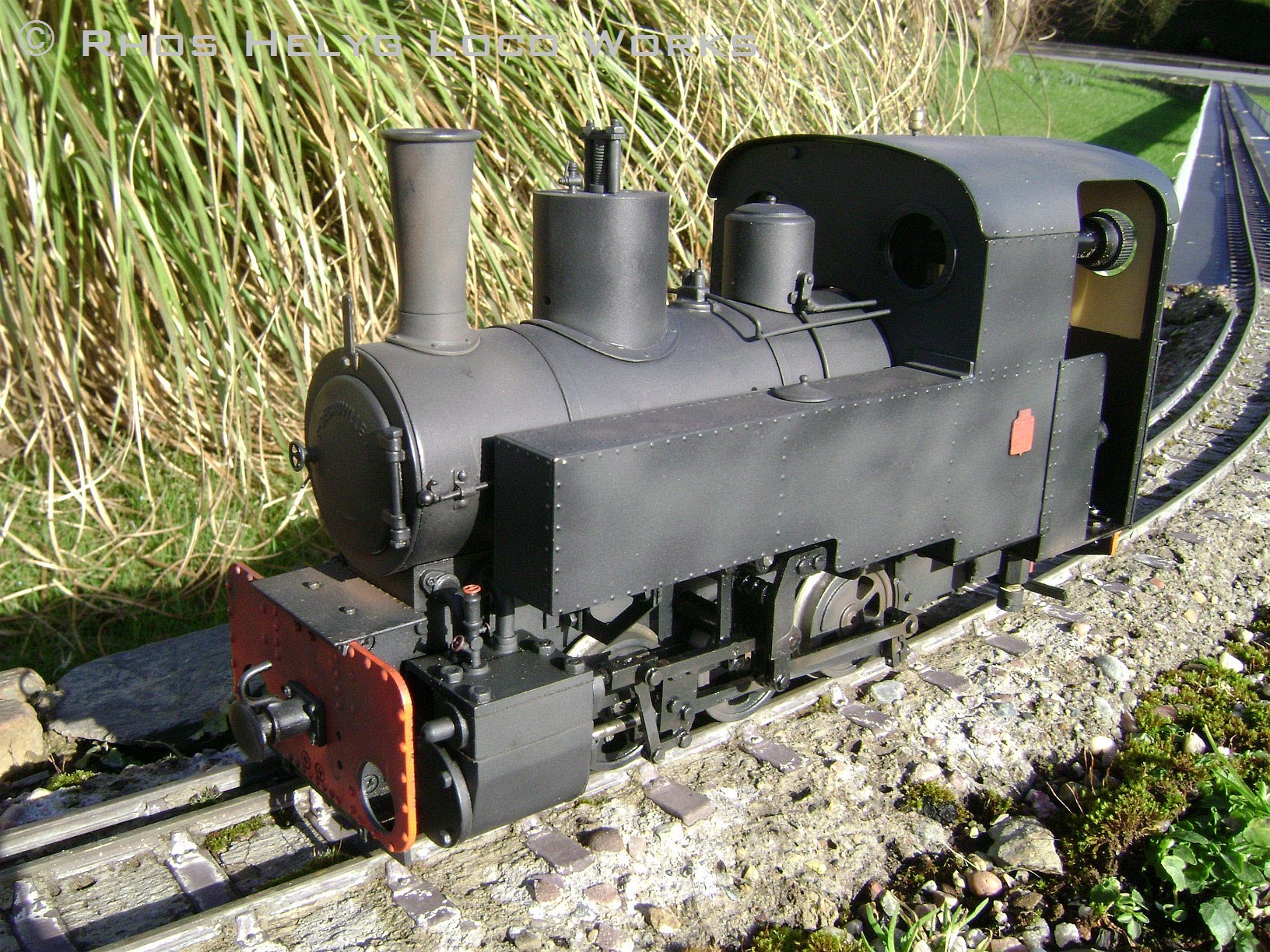
MBV Schug - Accucraft Europa Decauville 0-6-0T
I'm looking for a good collective noun for this lot ... a Decadence of Decauvilles maybe?
|
|
|
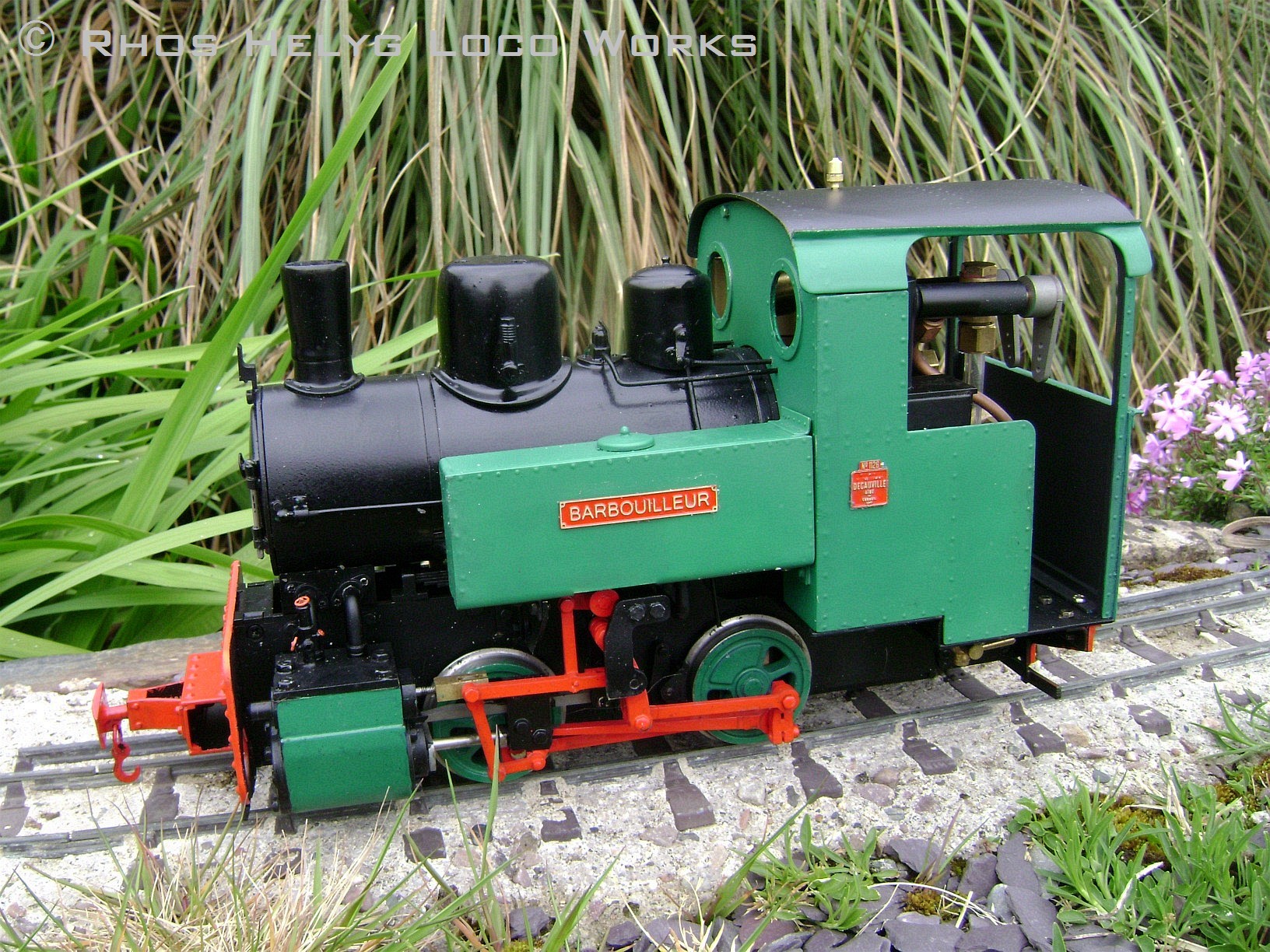
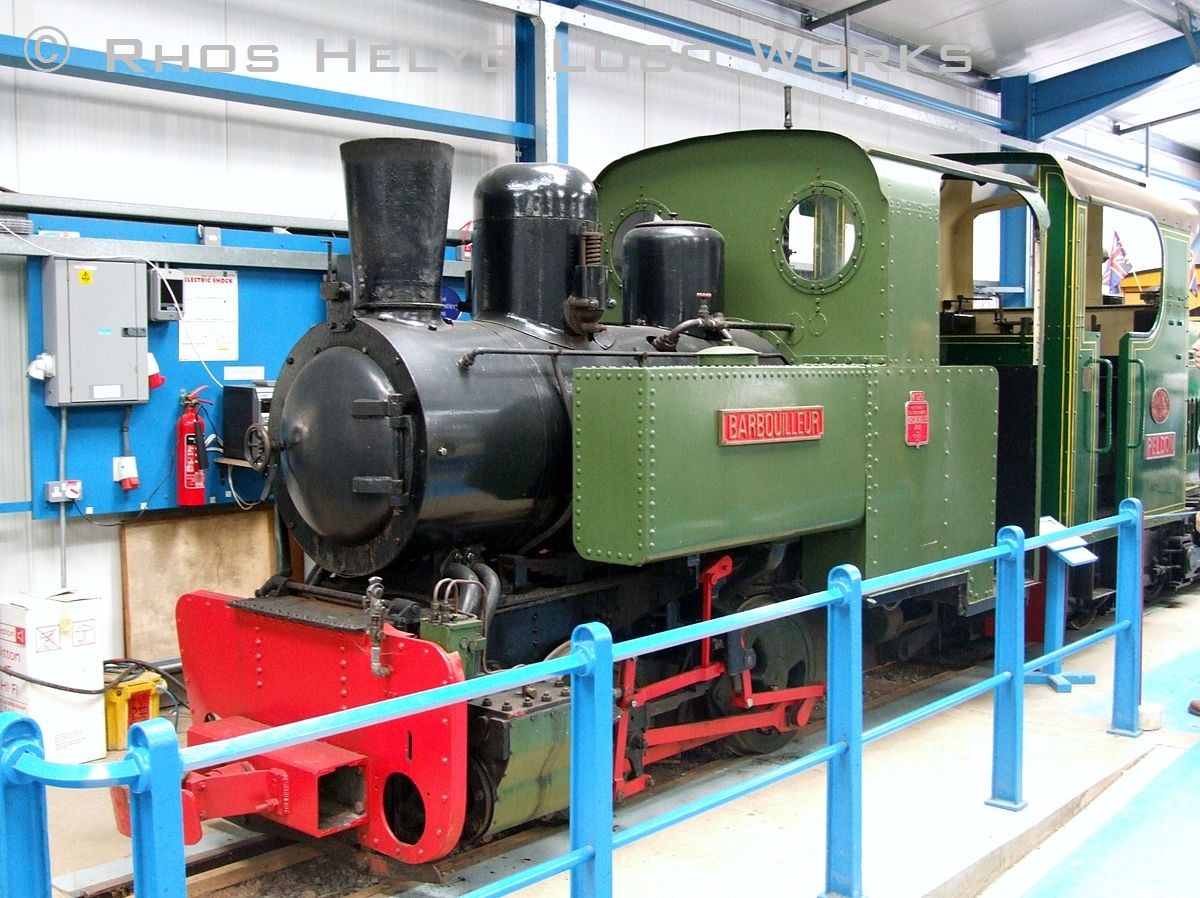
MBV Schug - Accucraft Europa Decauville 0-4-0T
This MBV Schug - Accucraft Europa Decauville 0-4-0T was converted to represent the full-size
BARBOUILLEUR housed in the Amberley Narrow Gauge and Industrial Railway Museum in West Sussex.
Conversion work included:
|
|
|
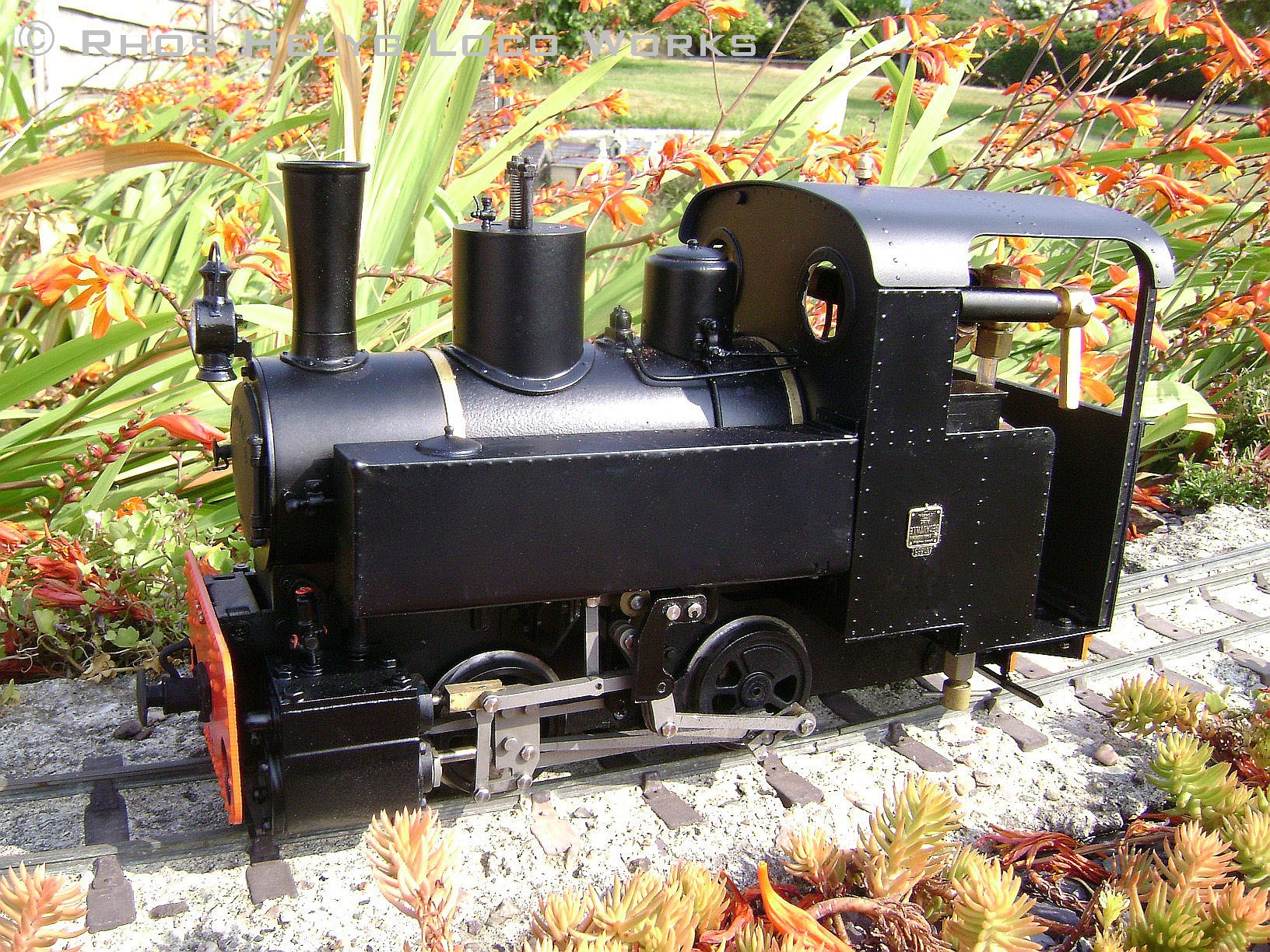
MBV Schug - Accucraft Europa Decauville 0-4-0T
This Decauville 0-4-0T came here for fitting of radio control, fitting of a Summerlands chuffer pipe and a bit of weathering. The tank tops and cab roof were also repainted black as they would never have been blue on the full-size loco. |
|
|
MBV Schug - Accucraft Europa Decauville 0-4-0T
The MBV Schug - Accucraft Europa Decauville 0-4-0T models were delivered with blue bodywork and wheels. The blue did not fit in with the owner of this one's railway, so it came to me for a repaint in to satin black, and received replacement and usable couplings while here. |
|
|
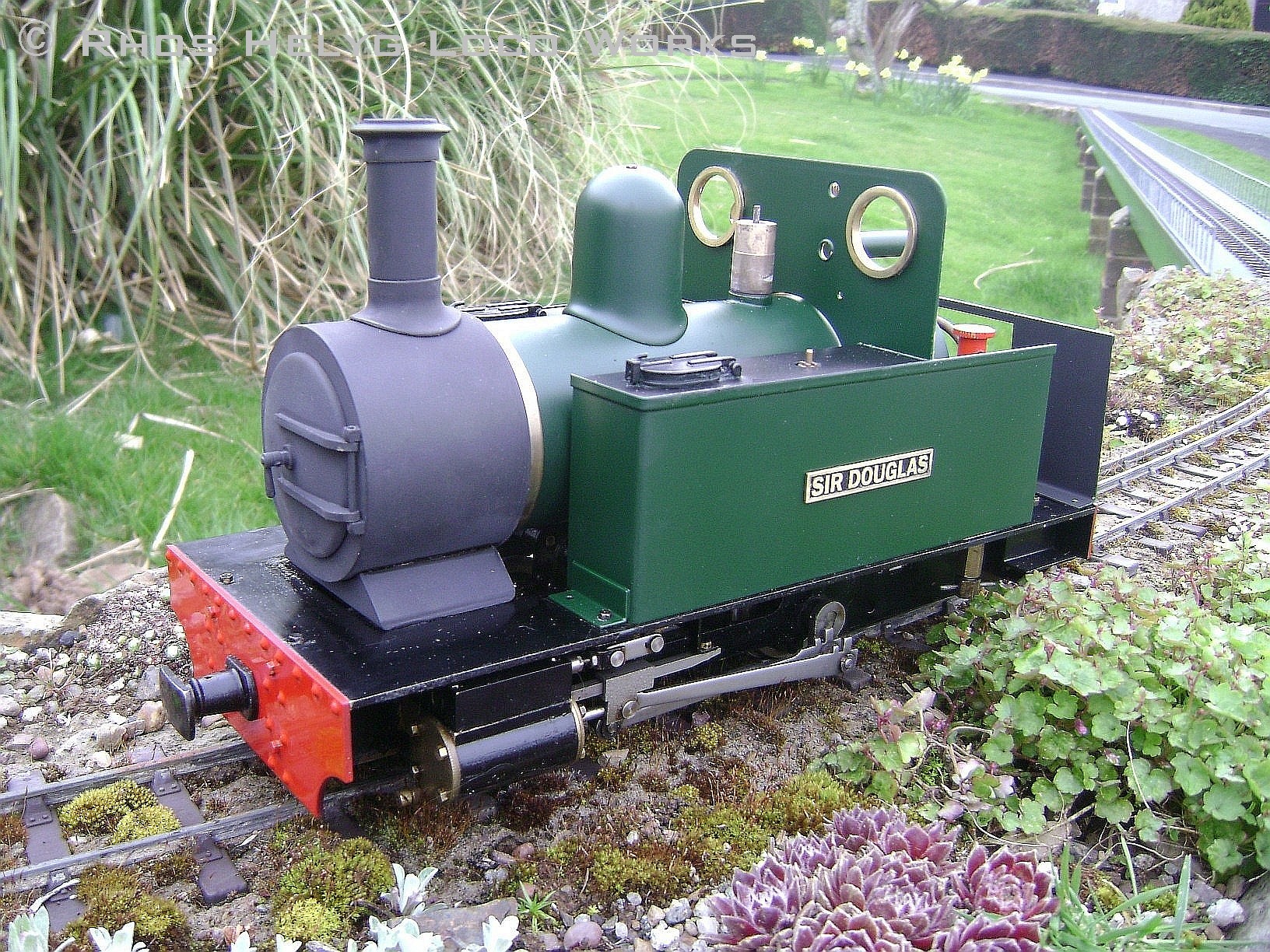
Accucraft Edrig 0-4-0T SIR DOUGLAS
This Accucraft Edrig came here for repair after an accident had caused it to nose dive in to the ground. This resulted in it suffering a bent front buffer beam and some damage to the paintwork. The buffer beam was straightened out and repainted, and the body was repainted in satin green with a cream and black cab interior. |
|
|
Accucraft Excelsior 0-4-2ST EXCELSIOR
First job on this this Accucraft Excelsior was to reset the valve timing and get it running
again, because it didn't. Further instructions were to do some modifications and repaint it
to make it look a bit more like the full-size loco that it was meant to represent. EXCELSIOR
ran at the Bowaters Paper mill in Sittingbourne and now runs on the Great Whipsnade Railway. Modifications included:
|
|
|
Accucraft Excelsior 0-4-2ST No.3 RIVER BUTLEY
This Accucraft Excelsior was repainted in an scheme inspired by that used by the Great Eastern Railway. |
|
|
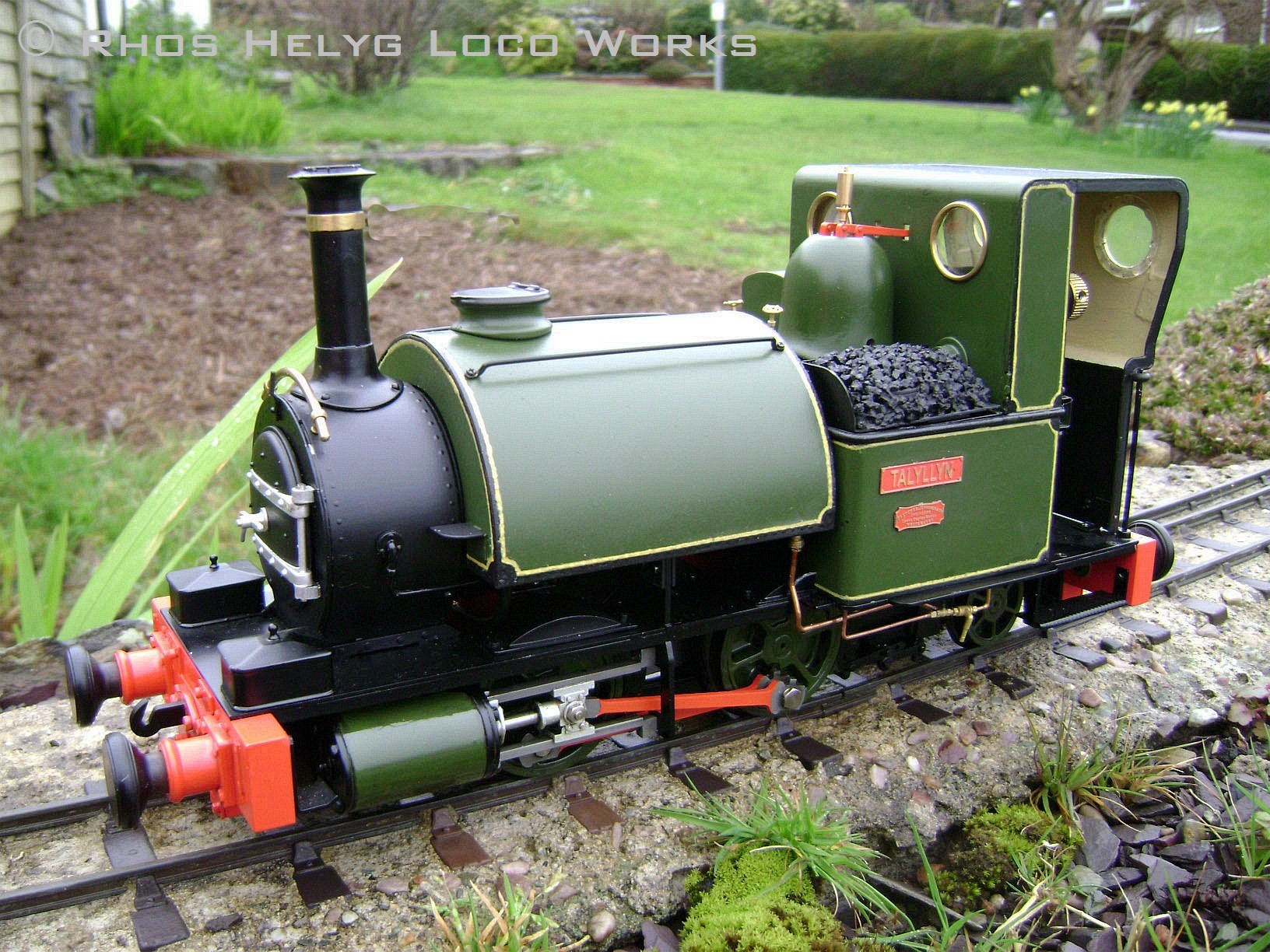
Accucraft Fletcher Jennings 0-4-2ST No. 1 TALYLLYN
The owner of this loco wanted a green one but could not find one, so bought a black one and had it repainted and lined. |
|
|
Accucraft / ANG / GRS Glyn Valley Tramway loco
This brand-new GVT tram loco had its factory lining and lettering removed and had the optional front spectacle plates supplied with the loco soldered in place. Penrhyn-style lining was then applied and the loco finished in satin black. |
|
|
Accucraft Joan 0-6-2T
This Accucraft Joan came here in citrus-inspired gloss black. It had a repaint in to maroon with black detailing and at the same time lost the excess red (edge of footplating, backs of buffer beams, firebox/ashpan, etc.) in order for it to resemble as closely as possible the full-size Joan based on the Welshpool & Llanfair Light Railway here in Wales. |
|
|
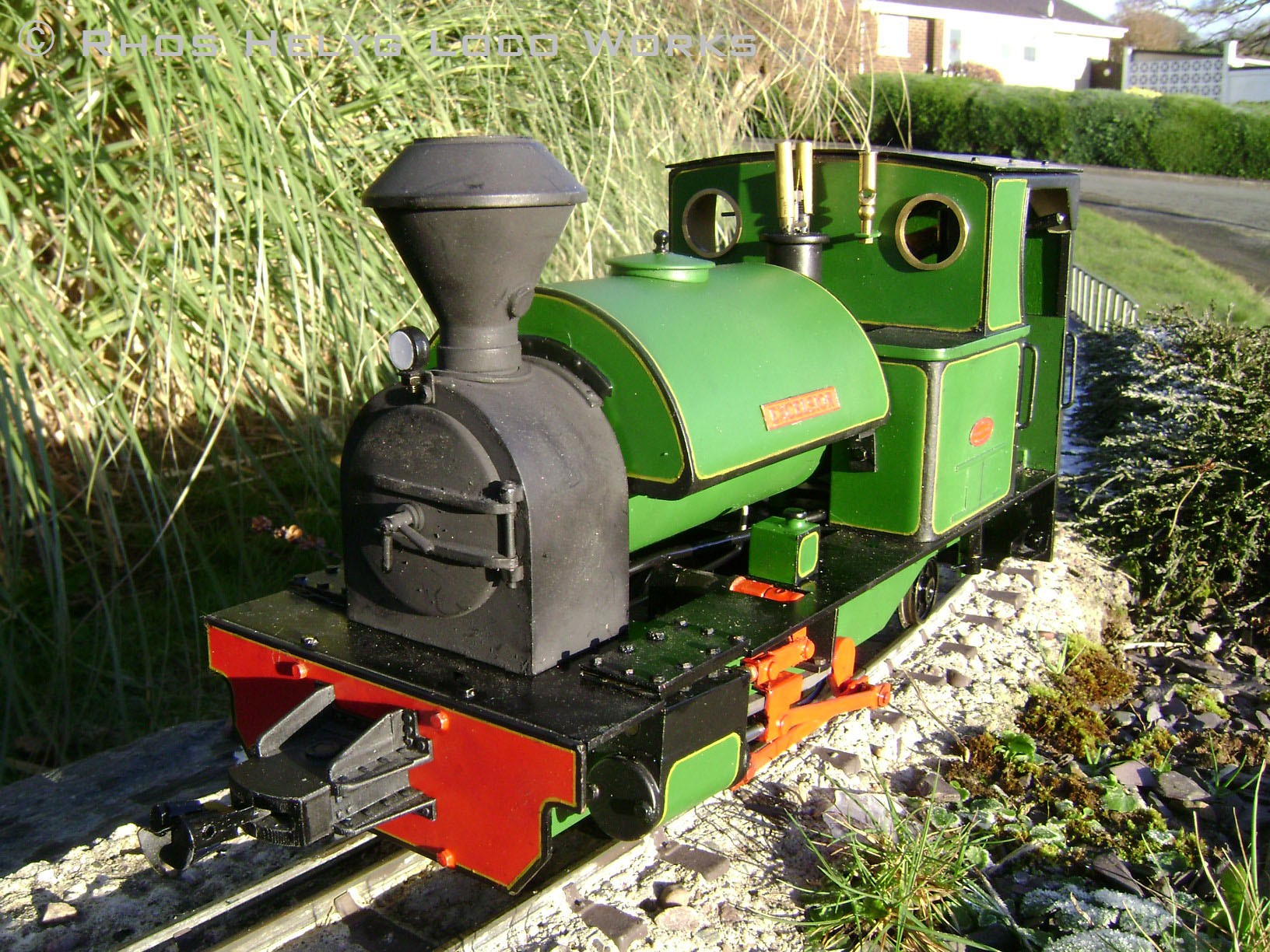
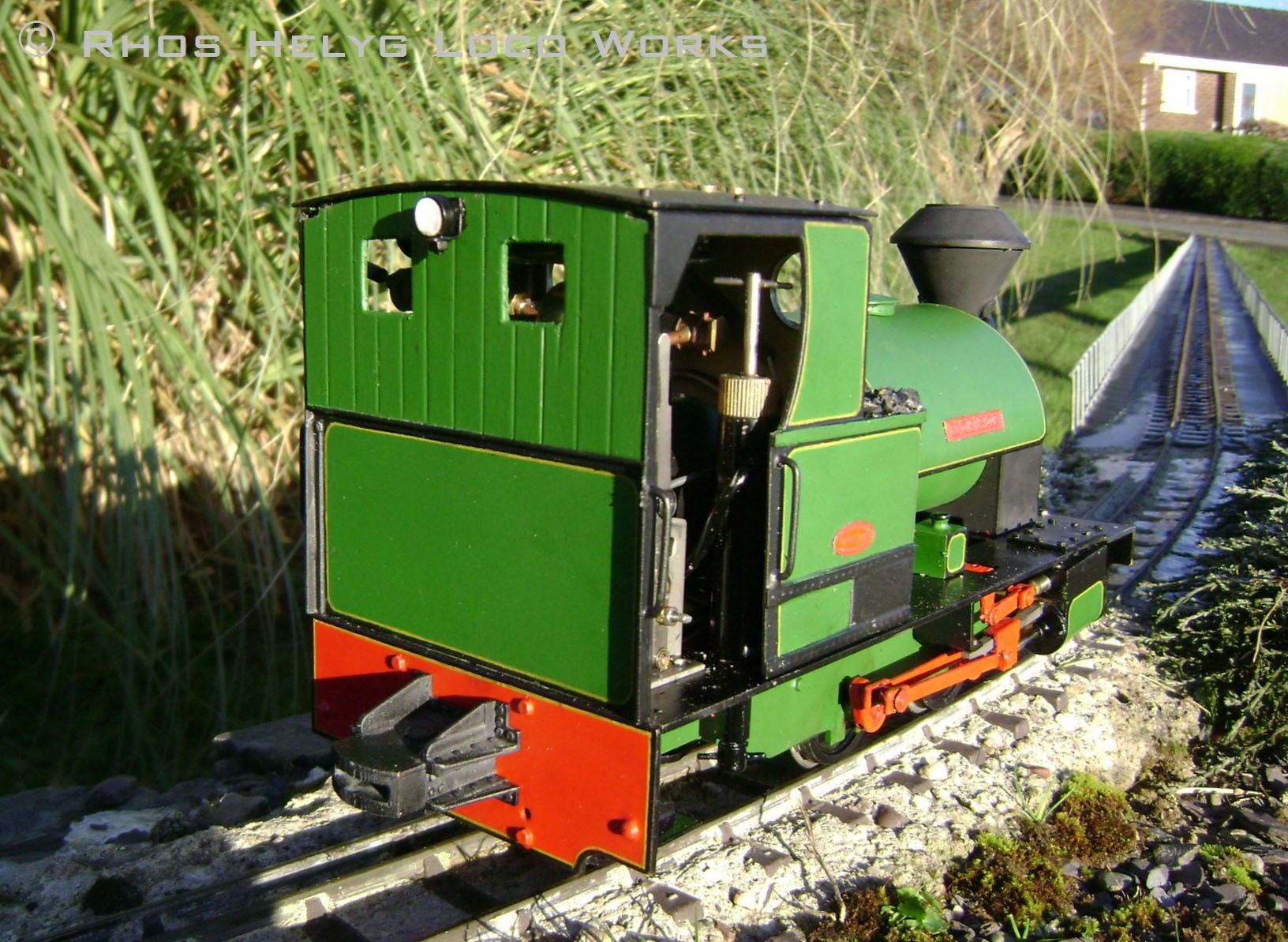
Accucraft Lawley 0-6-0T No. 3 DELILAH
This Lawley came here for the following work:
|
|
|
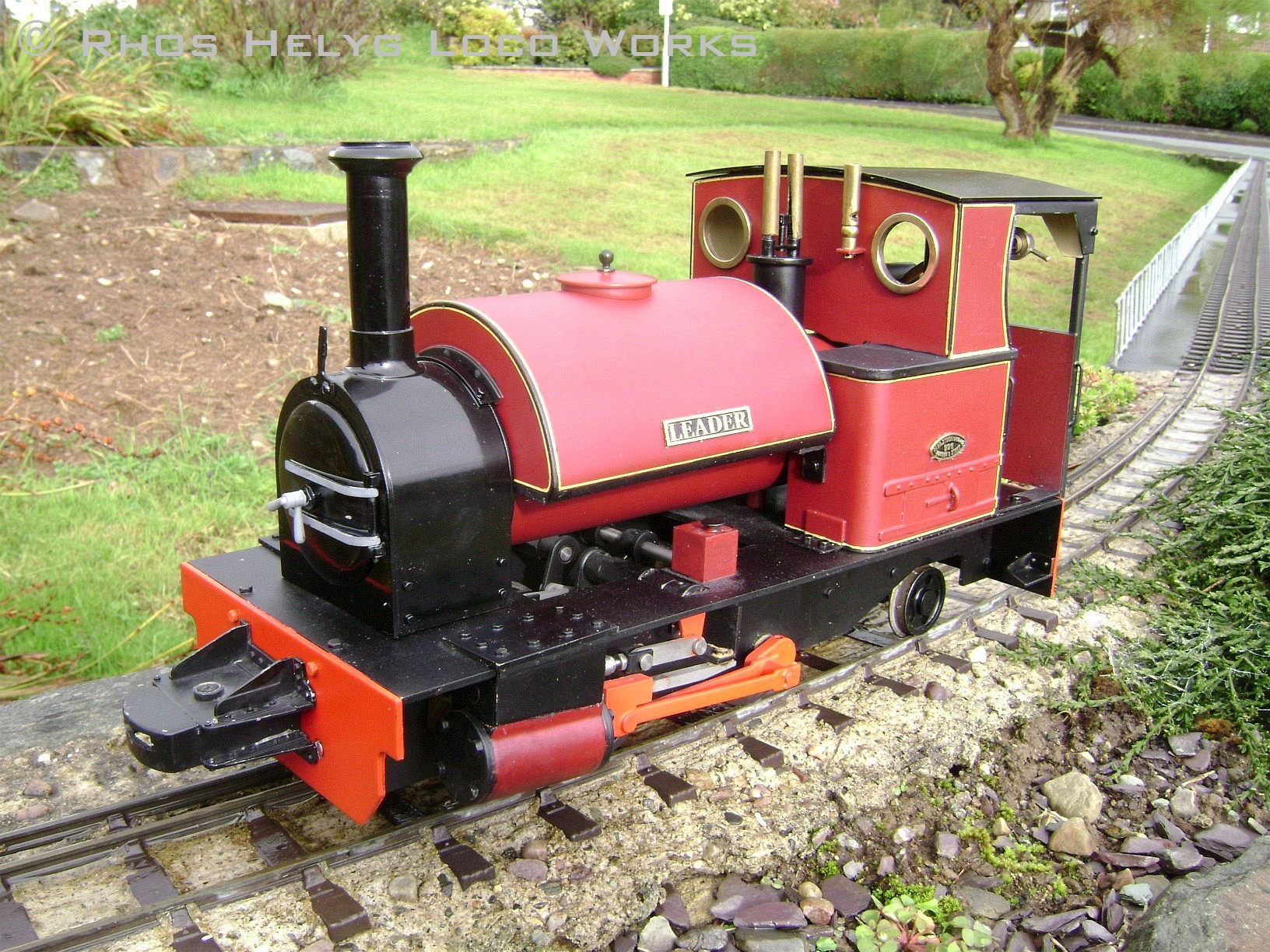
Accucraft Leader 0-4-2ST LEADER
This Accucraft Leader 0-4-2ST was finished with the intention of showing the loco as it was when it worked for Bowaters Paper in Sittingbourne during the 1960s, rather than as it is preserved now. With that in mind, the saddle tank was lightly weathered and Leader's distinctive rusty patch around the saddle tank filler was recreated. The factory green paintwork was lined in yellow with black edging and then finished in satin clear coat, with matt black smokebox and cab roof. Real coal in the bunkers completed the job. |
|
|
Since completion of my work, the owner has been working hard to make his loco look even more work-worn by dirtying the frames and cylinders and by adding a wealth of extra detail, including name plates and works plates supplied by MDC. The wonderful result is shown here and looking just like The Real Thing! |
|
|
Accucraft Leader 0-4-2ST LEADER
The owner of this Accucraft Leader wanted it to look like the full-size loco so it was modified and repainted to do just that, including a replacement smaller diameter chimney and dummy sliding doors on the cab side. |
|
|
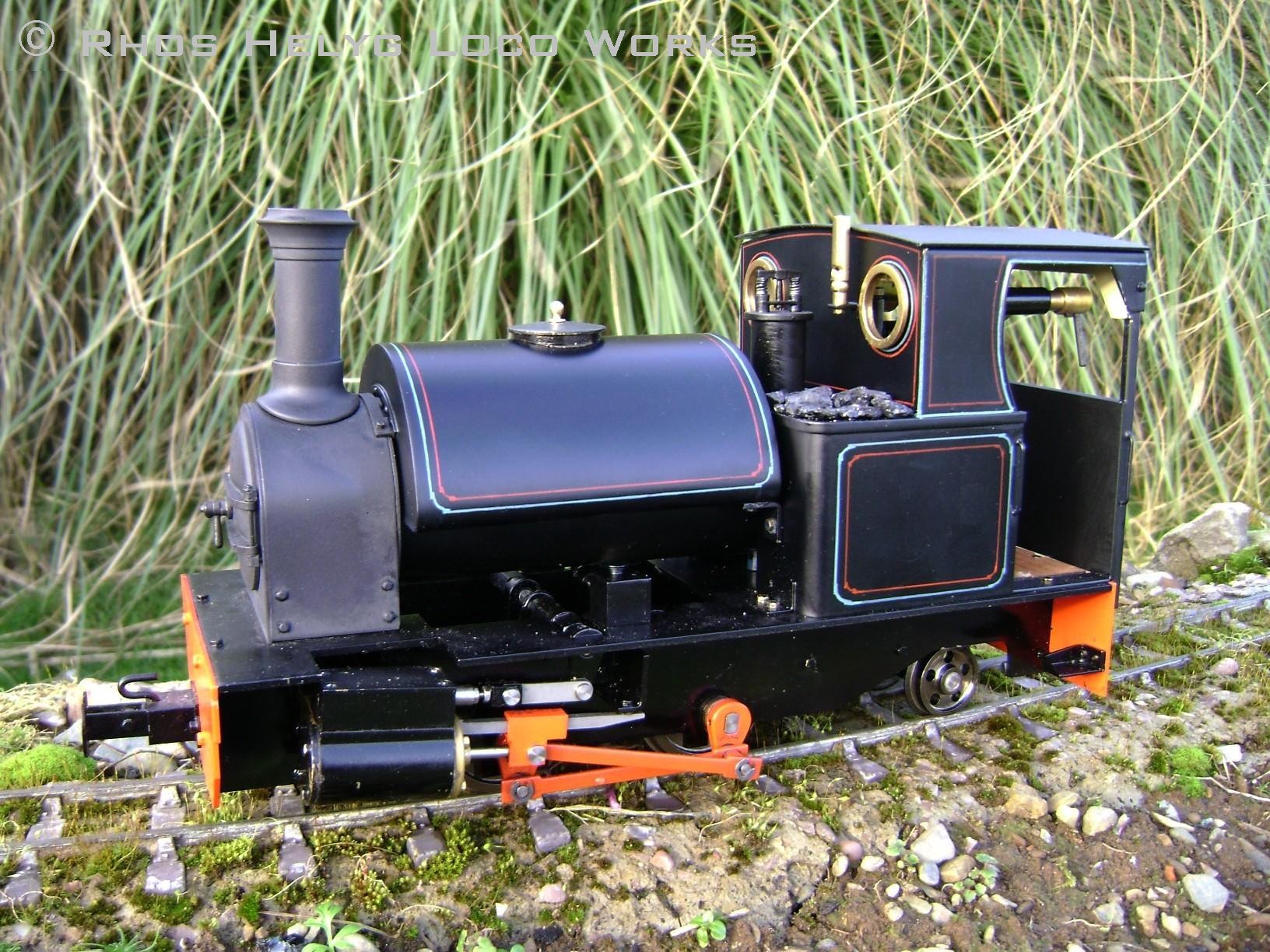
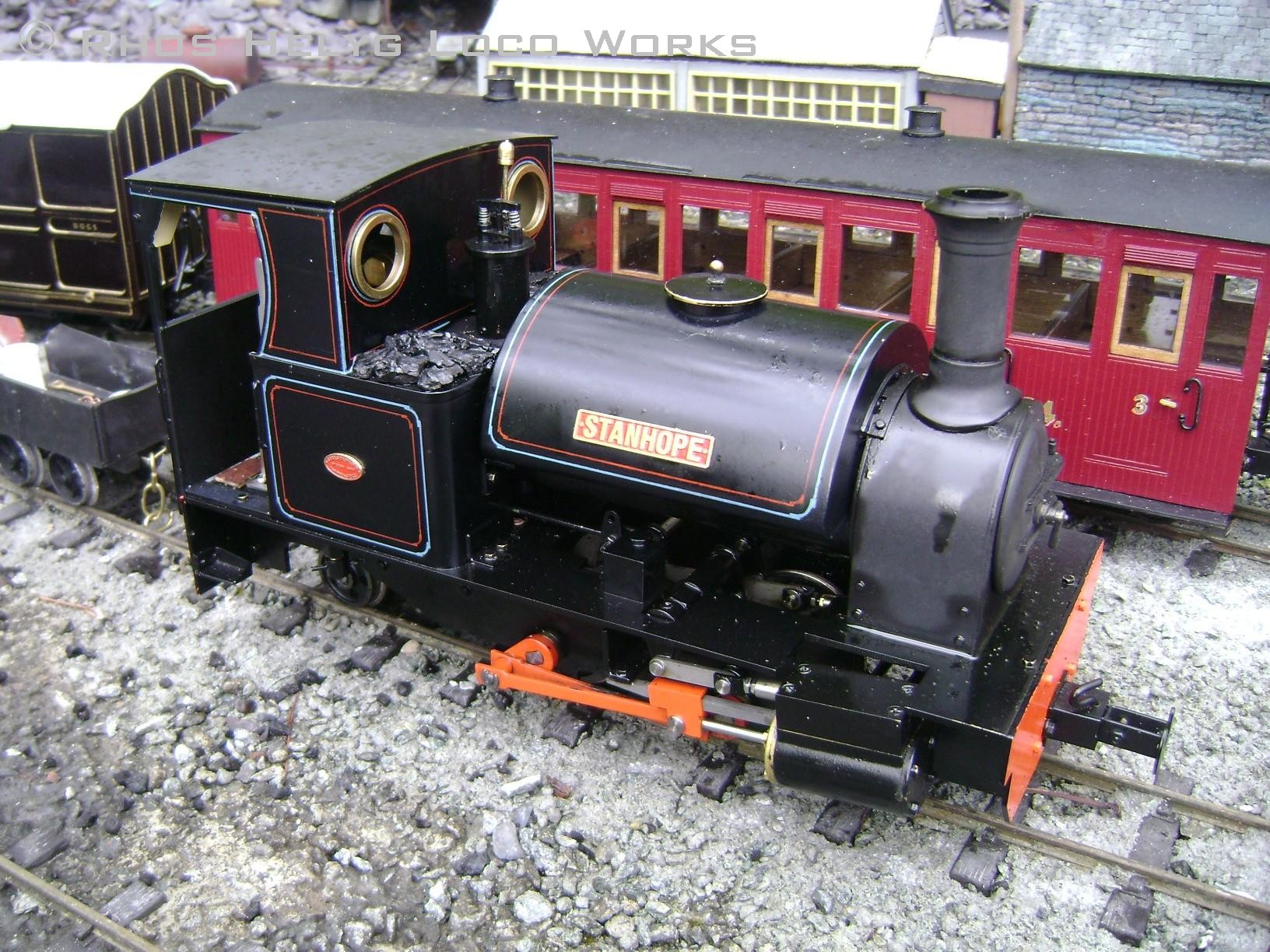
Accucraft Leader 0-4-2ST STANHOPE
Another Accucraft Leader 0-4-2ST, this time finished finished in Penrhyn Quarry Railway livery to represent their locomotive STANHOPE. This loco came here in factory blue and was repainted in black, lined in blue and red and then finished was a satin clear coat. Repainting the smokebox in matt black and putting real coal in the bunkers completed the job. The second picture shows the same loco with its name and works plates in place, and acquiring a nice workaday look. |
|
|
And another one... This brand-new Accucraft Leader was also turned in to Penrhyn Quarry's STANHOPE with some red and blue lining, satin black bodywork, a matt black smokebox, cream and black cab interior and name plates and Kerr Stuart works plates provided by MDC. Also included in this job was the fitting of two-channel radio control (for regulator and reverser). |
|
|
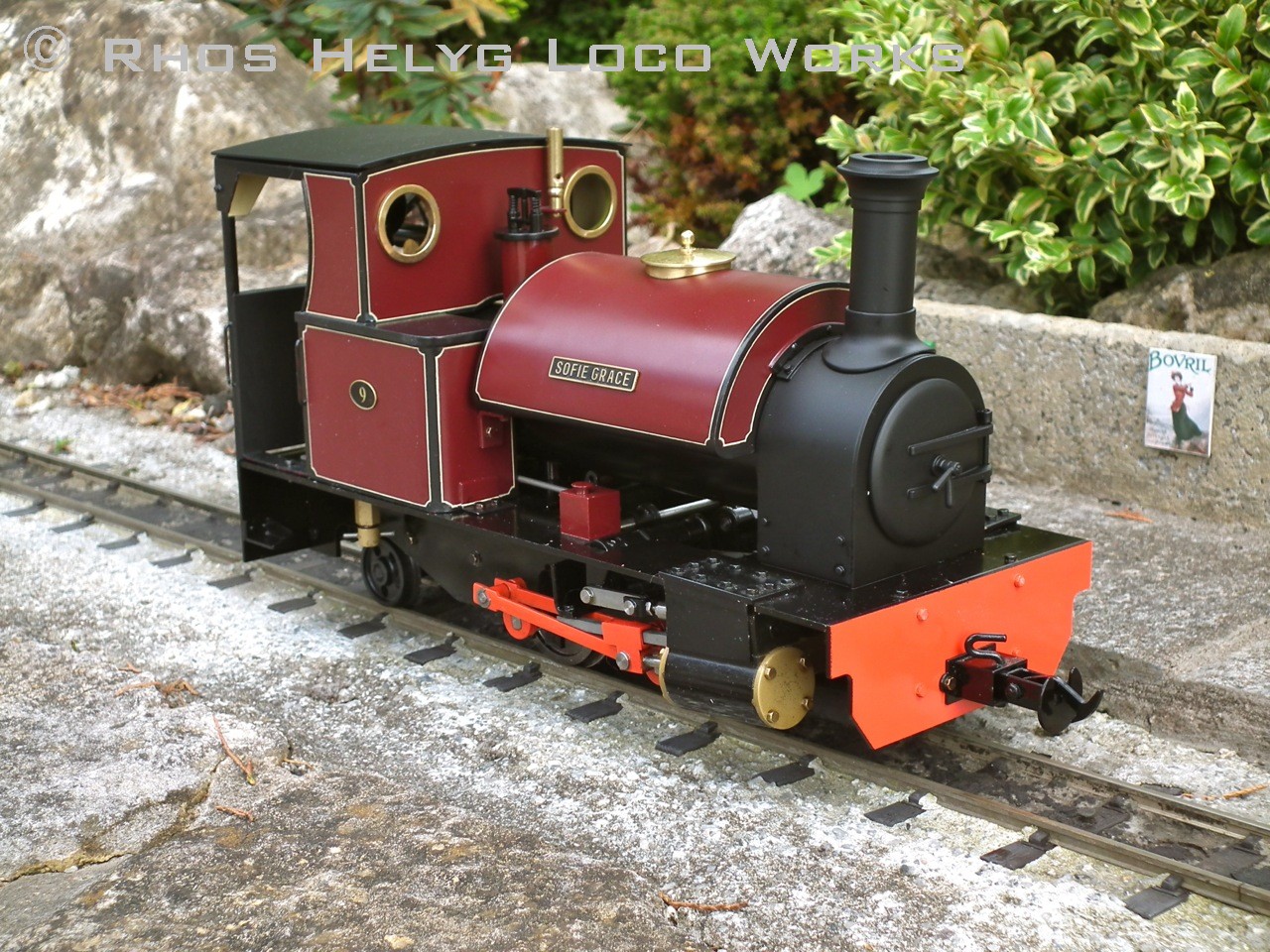
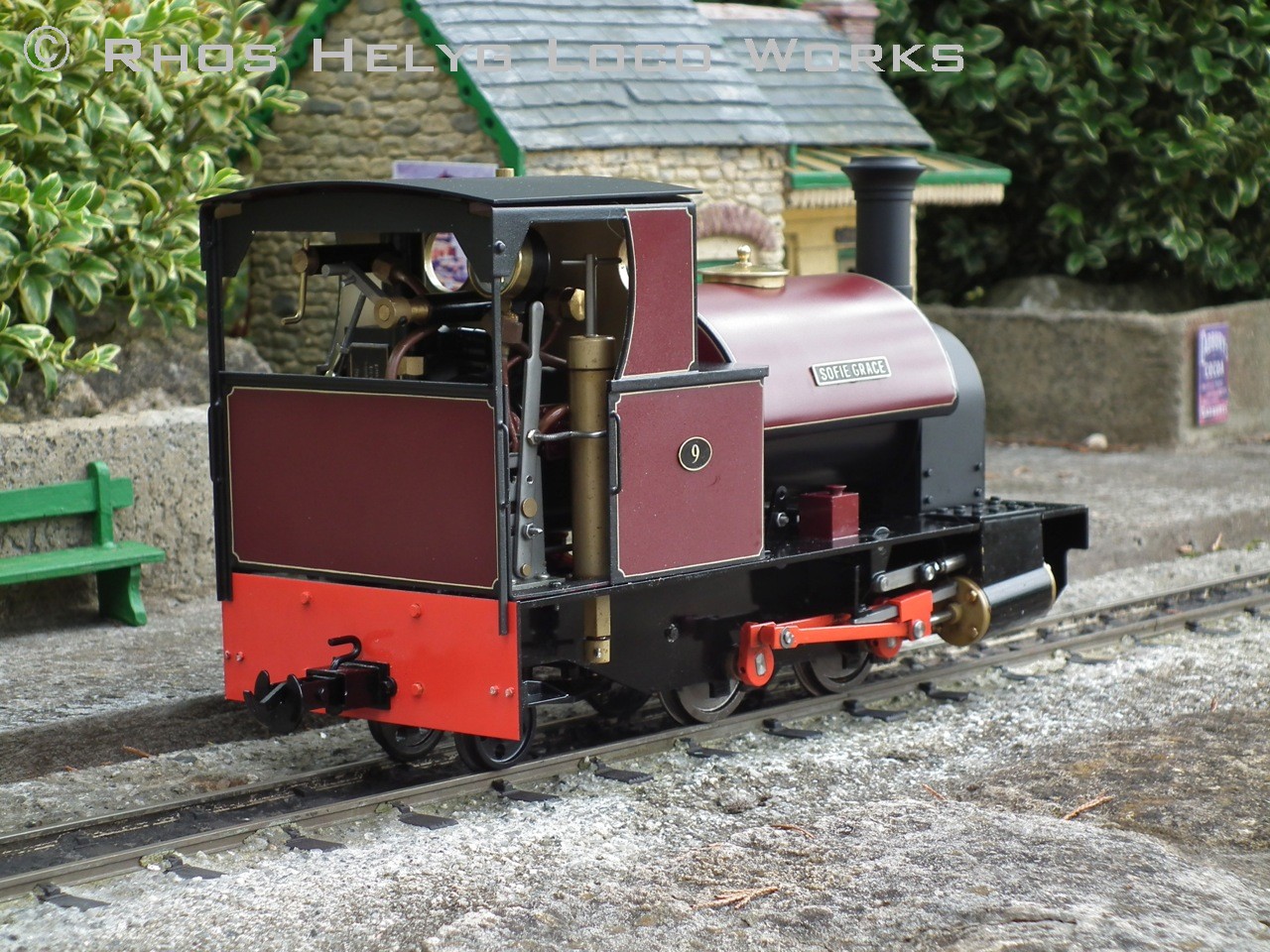
Accucraft Leader 0-4-2ST No. 9 SOFIE GRACE
These photos show the lining job on Chris Bird's Accucraft Leader. As with his Roundhouse Bertie, there was little point in sending the whole loco, so Chris only sent me the body for attention. The original factory maroon paint was retained and enhanced with cream lining and black edging, followed by a satin clear coat. Also like the Bertie, Chris has written a superb step-by-step guide to the modifications he has made to this loco to produce the result shown (note the cylinder covers - very nice!) and which can be found here. (Photos by Chris Bird) |
|
|
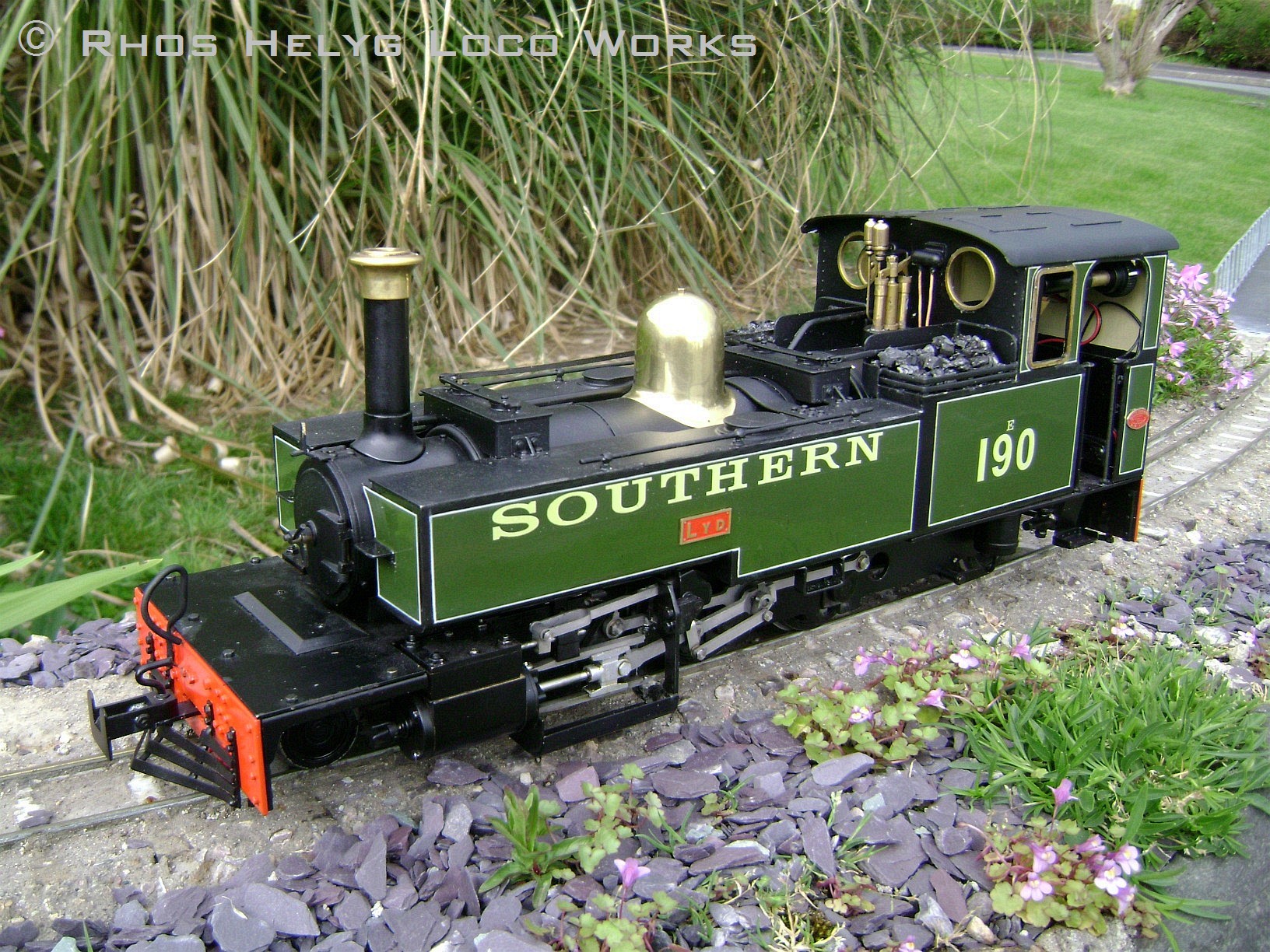
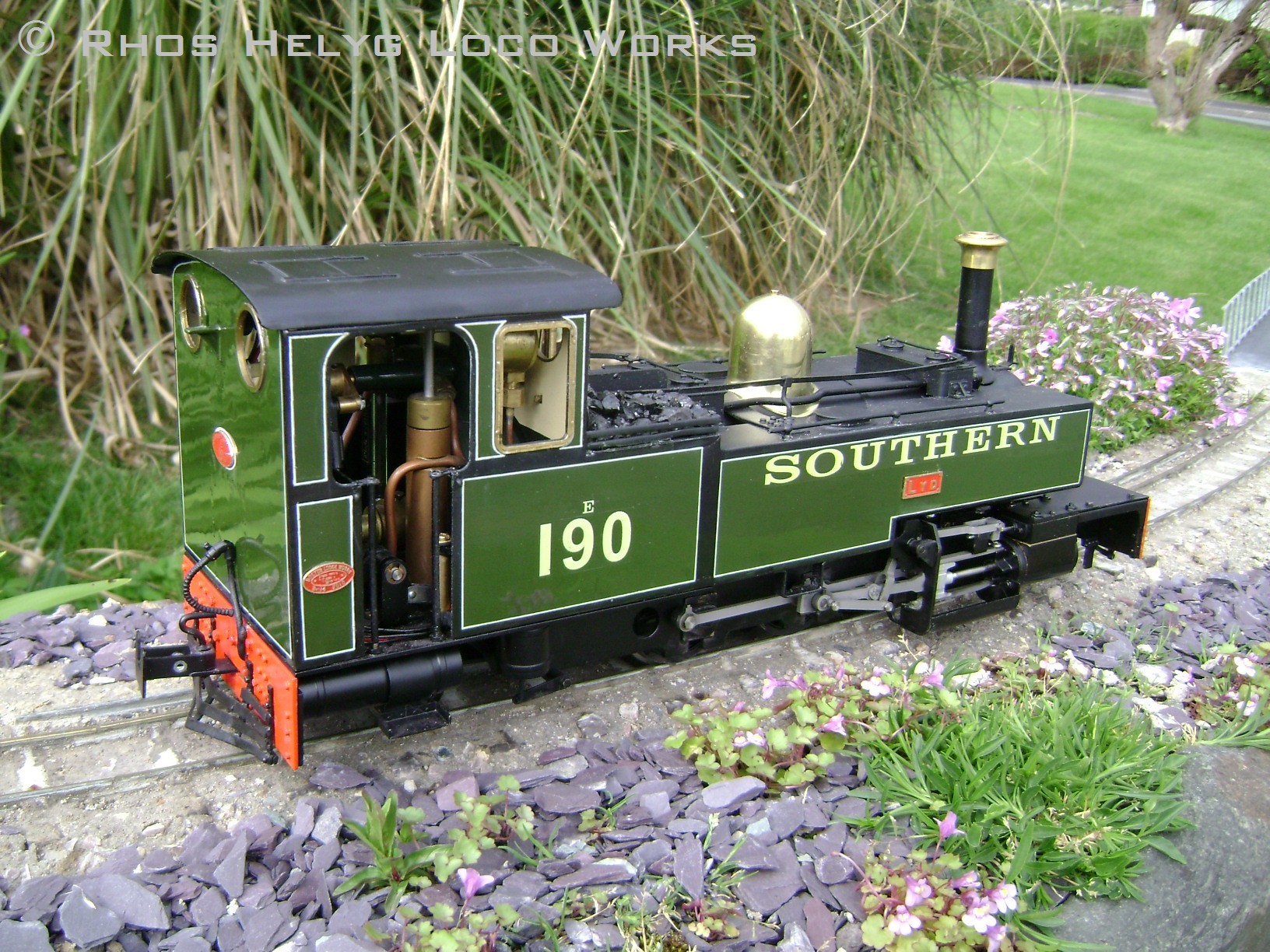
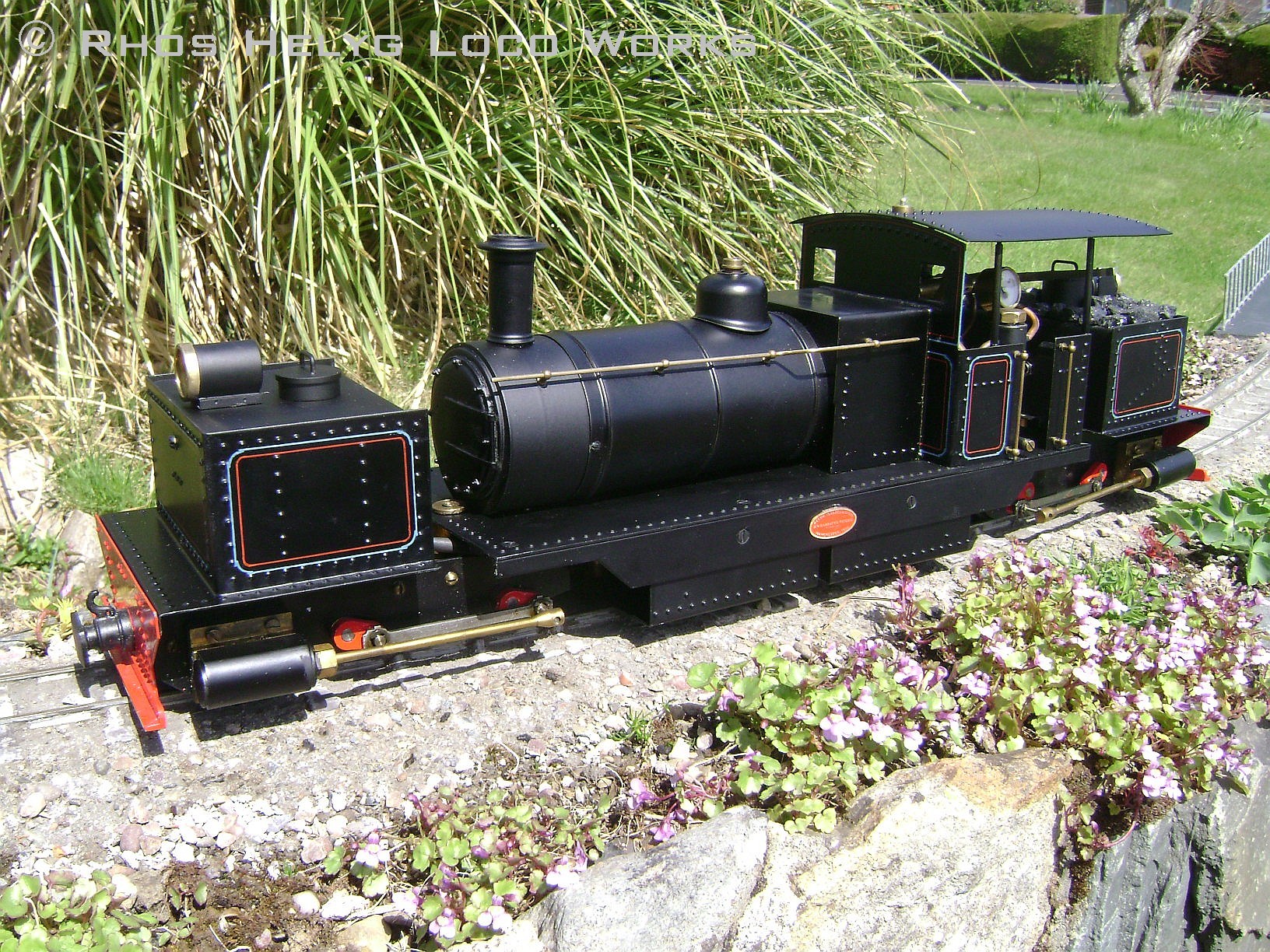
Accucraft Lynton & Barnstaple Railway 2-6-2T No. 190 LYD
An Accucraft L&B 2-6-2T modified to reproduce the look of LYD based at the Festiniog Railway
here in North Wales. The full-size LYD was completed only a few years ago and is a
reproduction of the original L&B Manning Wardle locos. It was based on last-built LEW and so
has a flat cab back, unlike the earlier locos which have a visible rear coal bunker, but it
is not an exact copy. Accucraft themselves produced a limited run of these locos in the
guise of LYD but these were simply done by changing the name and number and they did not
include the modifications made to allow its use on the Festiniog, The model shown here
has those modifications and reproduces the full-size LYD as closely as it has been possible
to do. The modifications included:
|
|
|
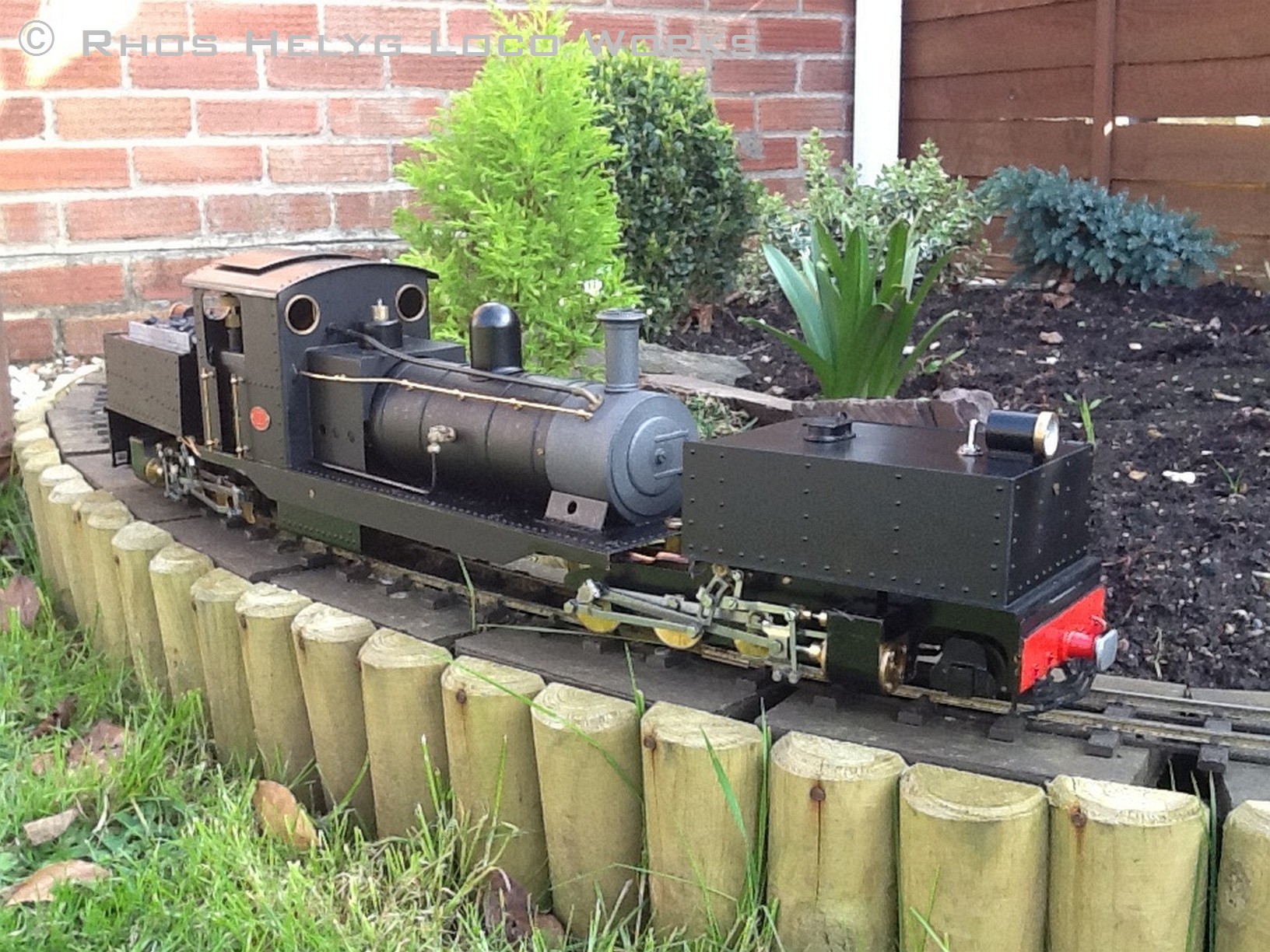
Accucraft Lynton & Barnstaple Railway 2-4-2T No. 762 LYN
This Accucraft Lyn had been suffering from jerky and uneven running characteristics, particularly in reverse gear, and so needed a good sort out of its valve timing and some mechanical issues to achieve smooth running in both directions. While here it also had its single-channel (reverser only) 40MHz radio control upgraded to a 2-channel Planet 2.4GHz system operating both regulator and reverser. The 40MHz aerial wire coil had been disguised as a dummy coal load in the rear bunker so this was replaced with real coal ... because nothing else looks like coal. |
|
|
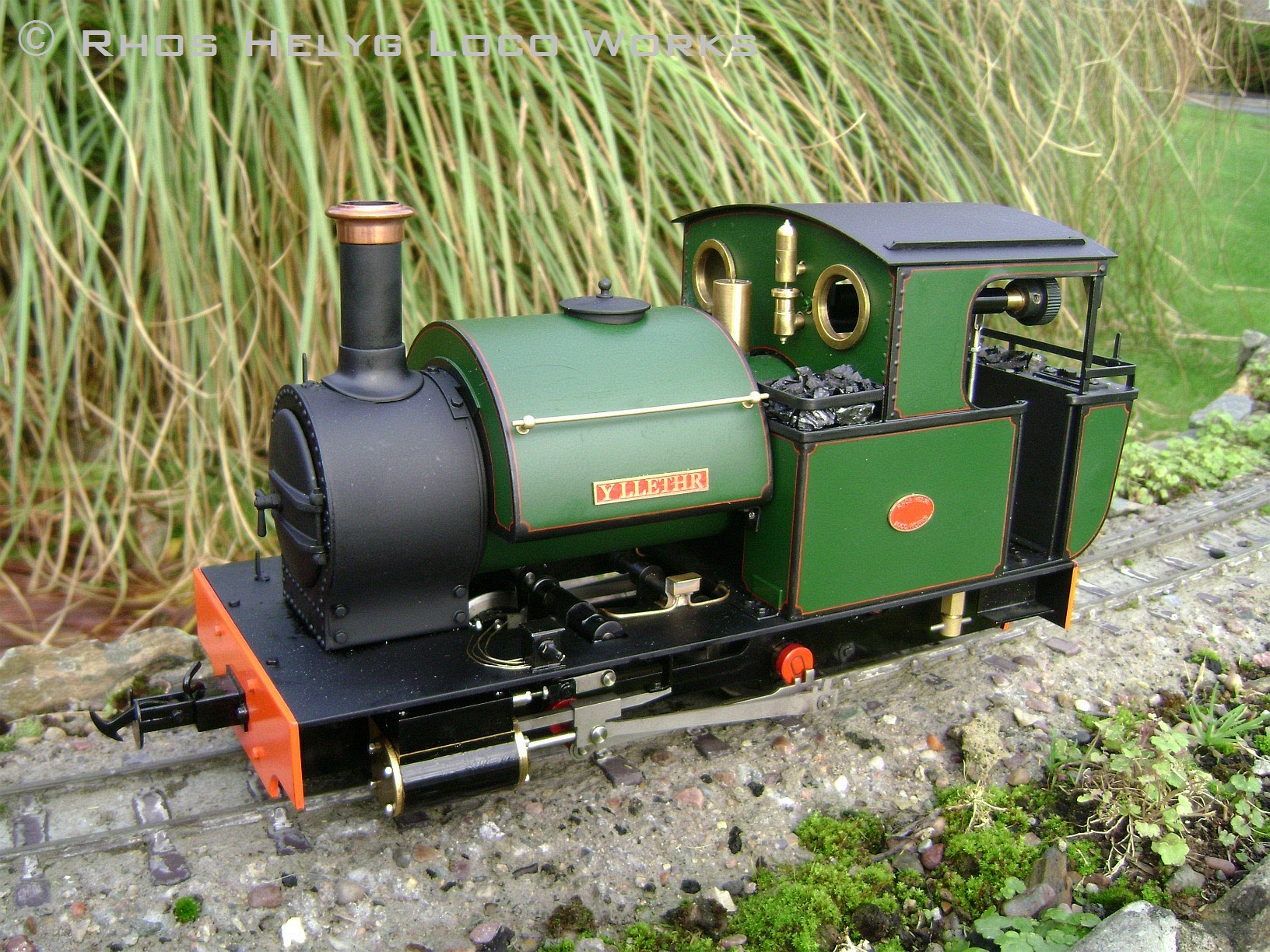
Accucraft Mortimer 0-4-0ST Y LLETHR
This Accucraft Mortimer was repainted in to a Festiniog-inspired livery of green with red lining and black edging, and the cab roof, footplating, smokebox and other parts received a coat of satin black. While here it also had a DJB Engineering whistle fitted, its radio control upgraded from 2-channel to 3-channel (an extra servo to work the whistle) and Locoworks lamp brackets, roof gutters, coal bunkers and dummy lubricators added. Name and works plates from MDC gave the final touch. |
|
|
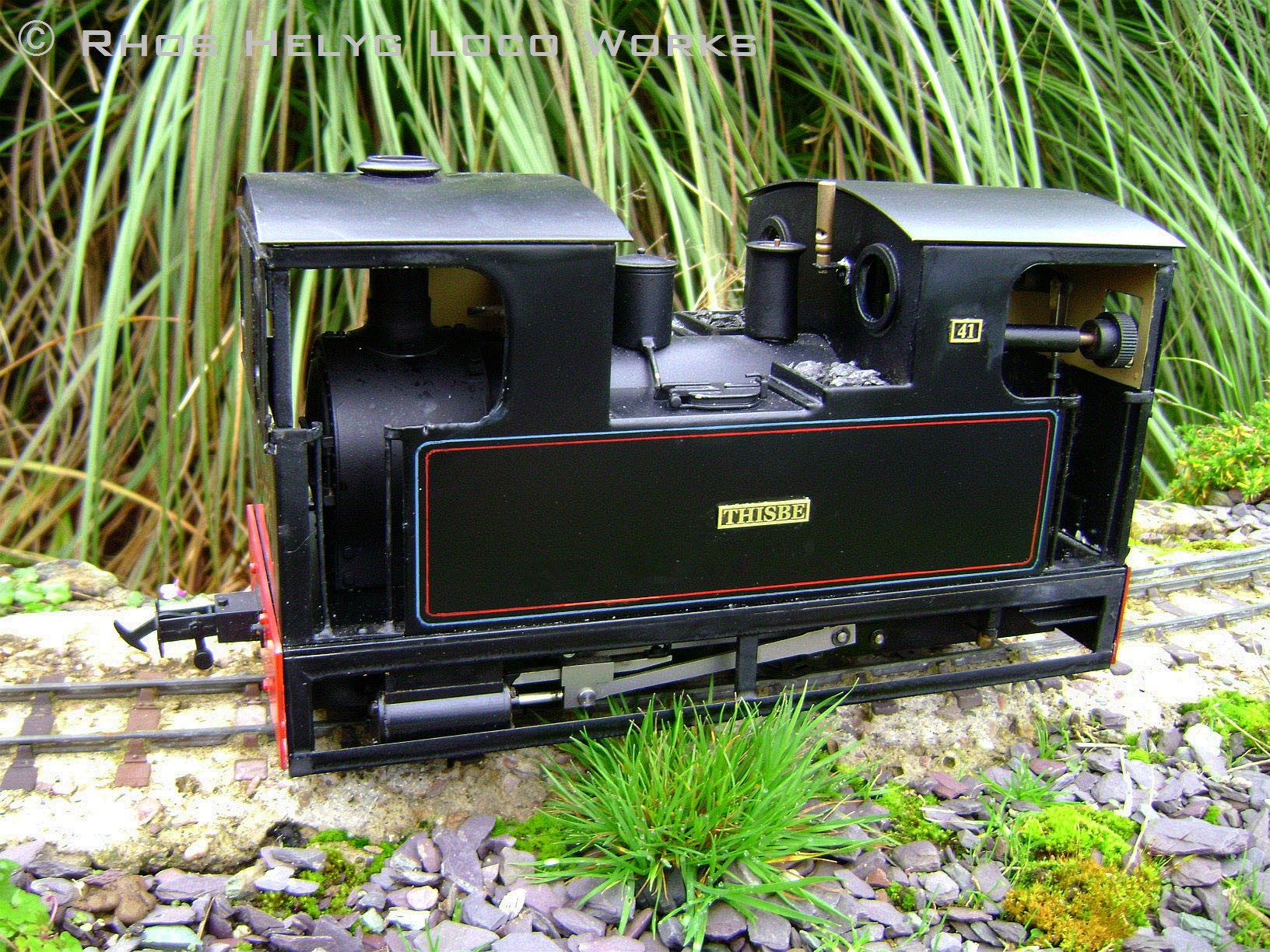
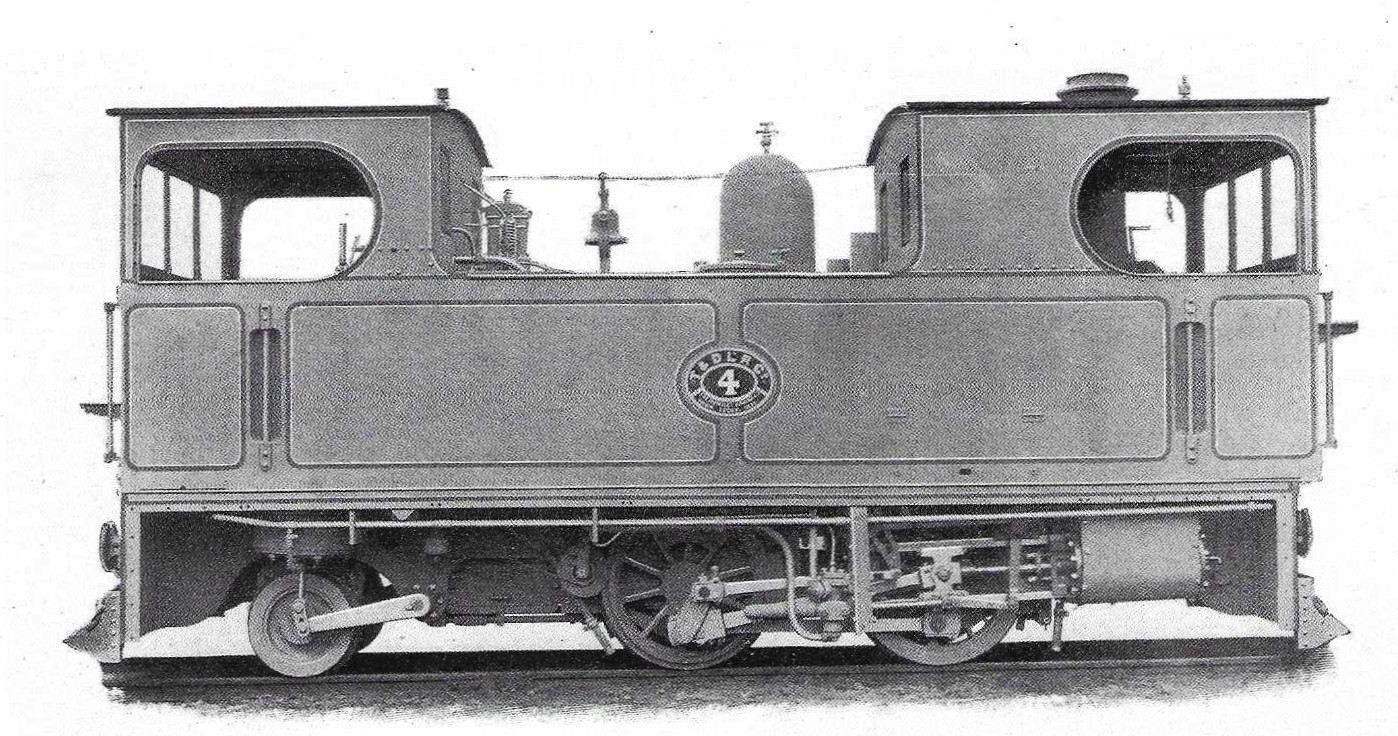
Accucraft Mortimer 0-4-0T No. 41 THISBE
THISBE started life as standard Accucraft Mortimer 0-4-0 saddle tank. It soon lost its rear
coal bunker but the owner is a Tralee & Dingle Railway fan, so he wanted something a
bit different. The inspiration was T&D No. 4 built by Hunslet in 1890 as a tram loco for use
on the Castlegregory branch. A duplicate set of controls were provided at the smokebox end to
give the driver a great view in both directions. I say inspiration as this is definitely not
a model of The Real Thing, but hopefully it captures the essence of it.
|
|
|
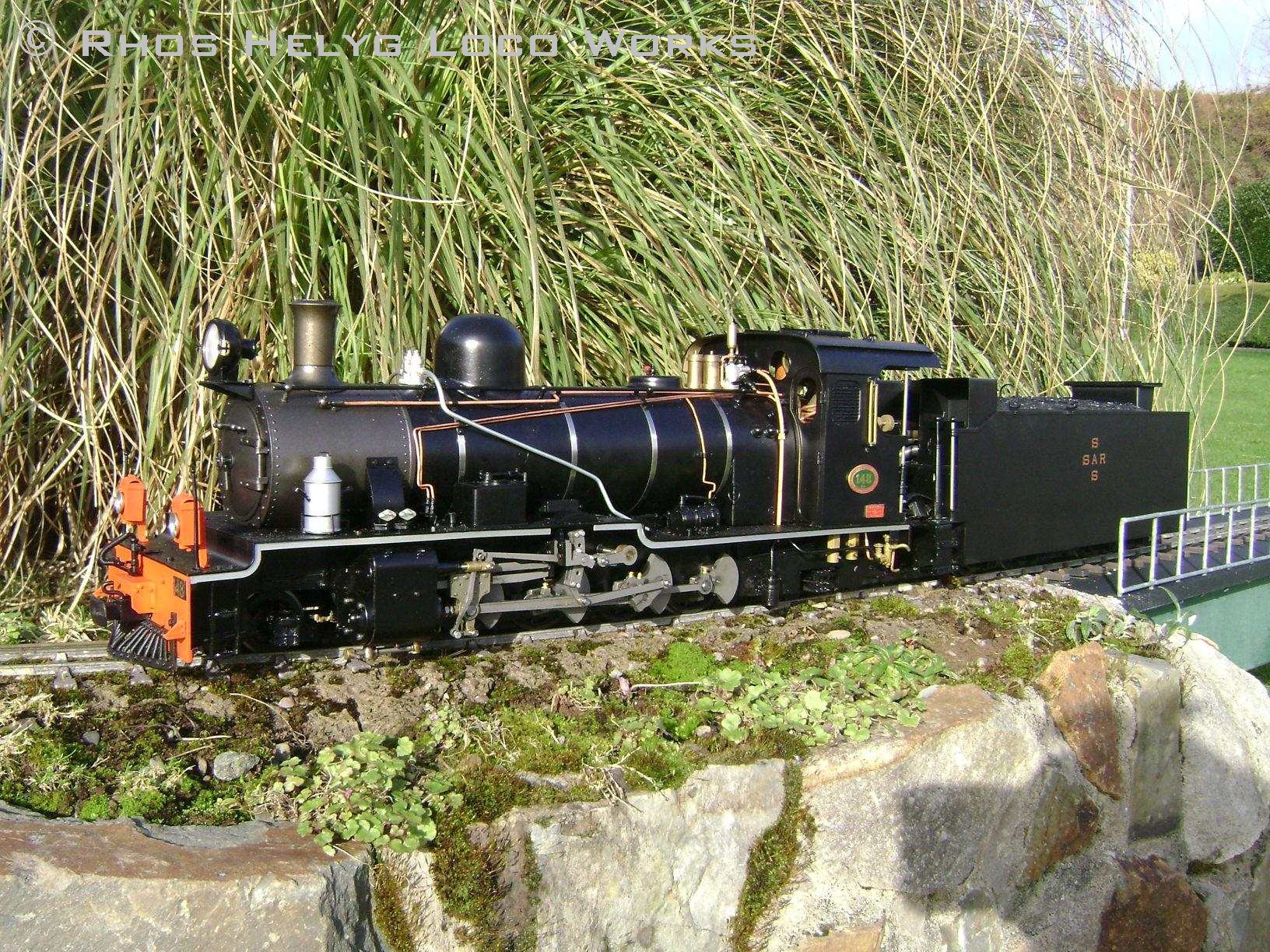
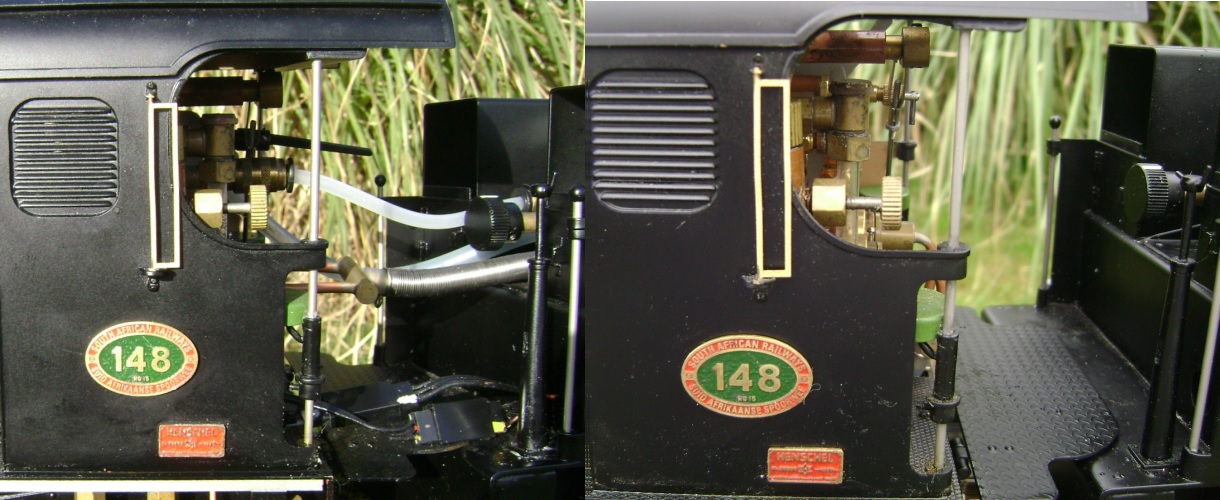
Accucraft NG15 2-8-2 No. 148
An impressive model, from any angle. This NG15 has had all of its wheel rims painted black, and the rear loco buffer beam also painted black as this should never have been painted red by Accucraft. It carries a replacement set of NG 148 buffer beam number plates and number and Henschel works plates supplied by MDC on its cab sides. |
|
|
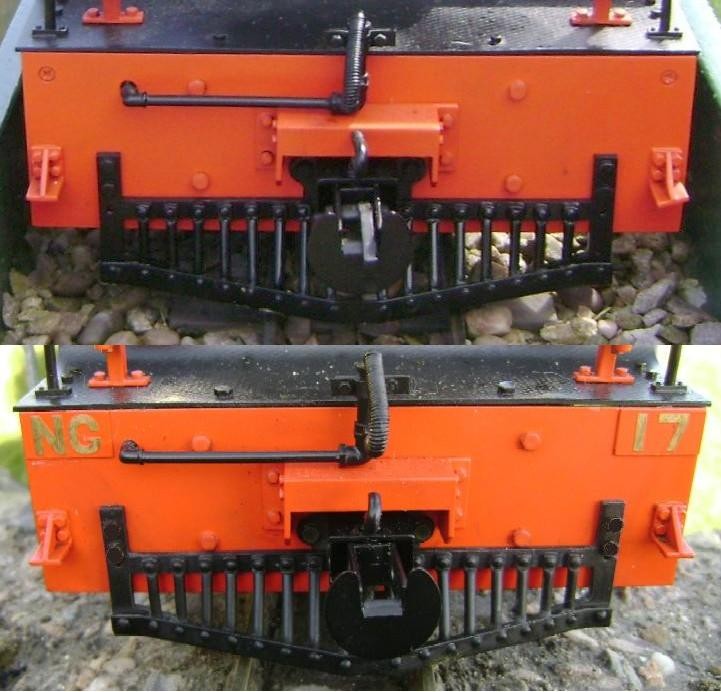
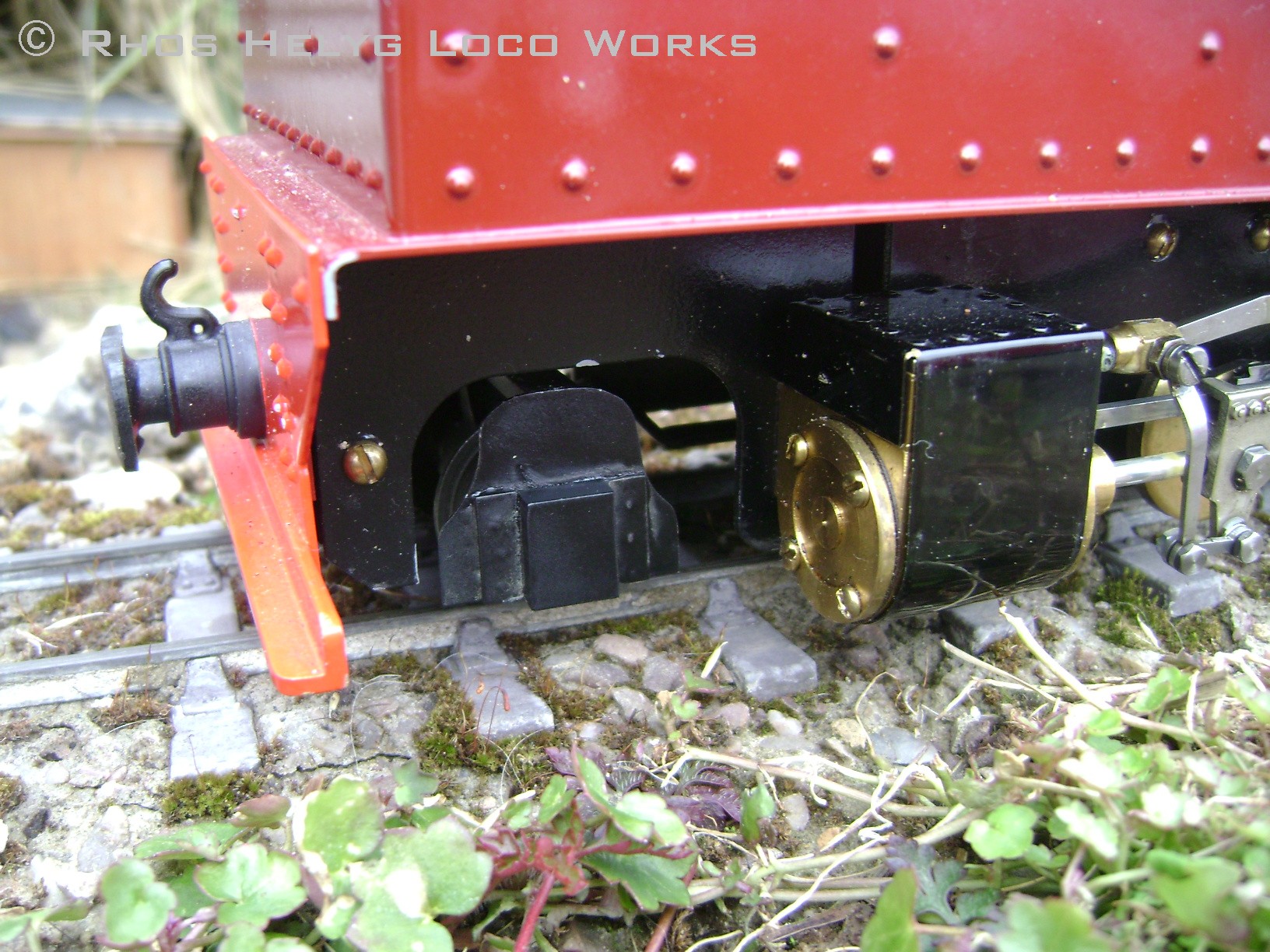
Most importantly, it has had its front cow catcher raised by about 2.5mm to give greater clearance over the rail head. As supplied, the cow catcher is very close to rail level and it would strike the smallest obstruction (moss, gravel, etc.) and could cause a derailment. A dip in the track could cause the cow catcher to slide along the rail head sufficiently to lift six of the eight driving wheels off the rails, so causing a lack of traction and a sometimes spectacular bout of wheelslip. The modification raises the cow catcher to avoid this problem and without changing its appearance significantly. The picture shows the cow catcher before and after modification. |
|
|
This picture shows before (left) and after (right) views through the cab after moving the gas hose, two water hoses and the radio control cables to where they should be: under the floor. This job took some thinking about, and involved drilling a lot of holes in a very expensive model. |
|
|
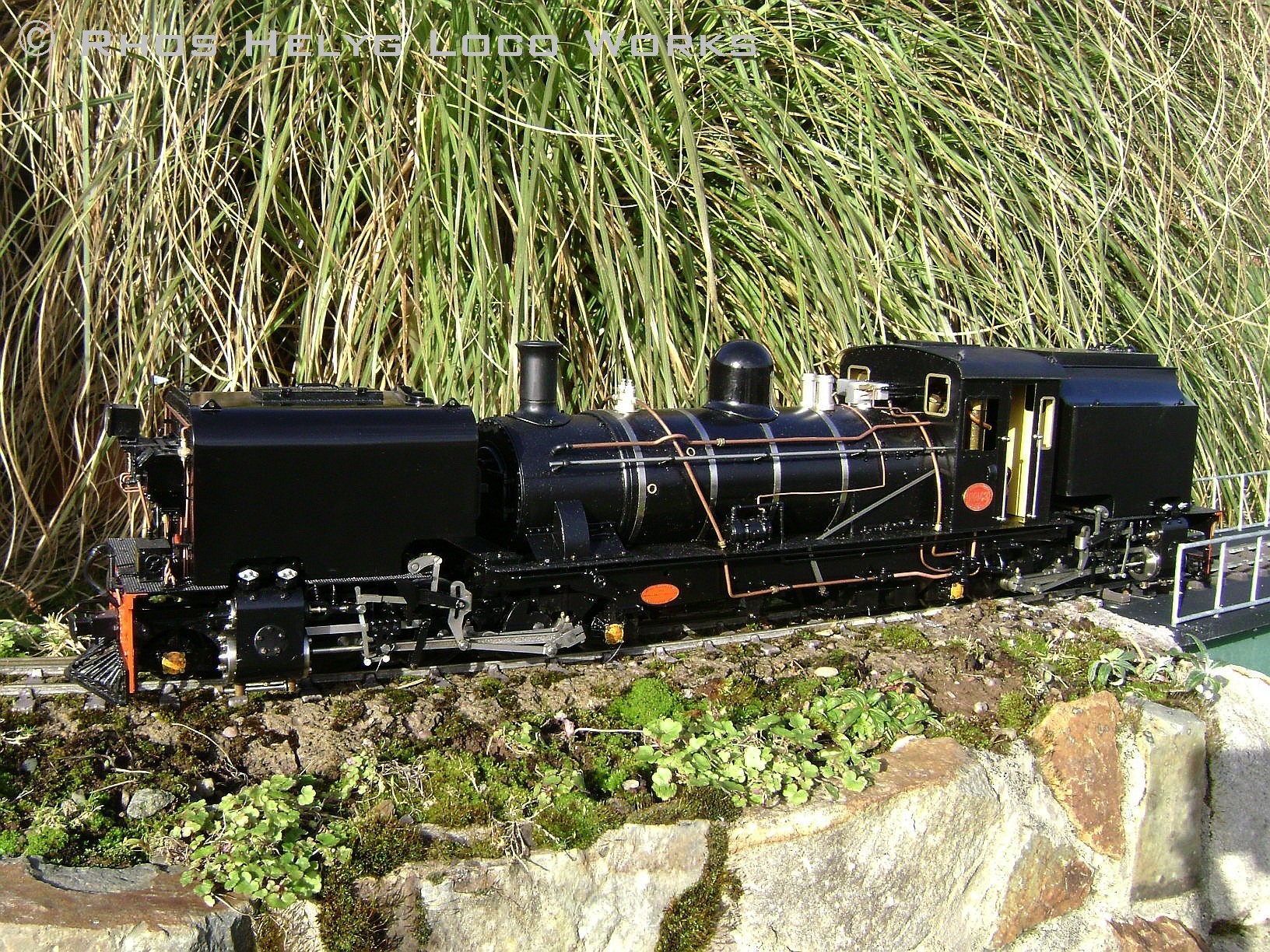
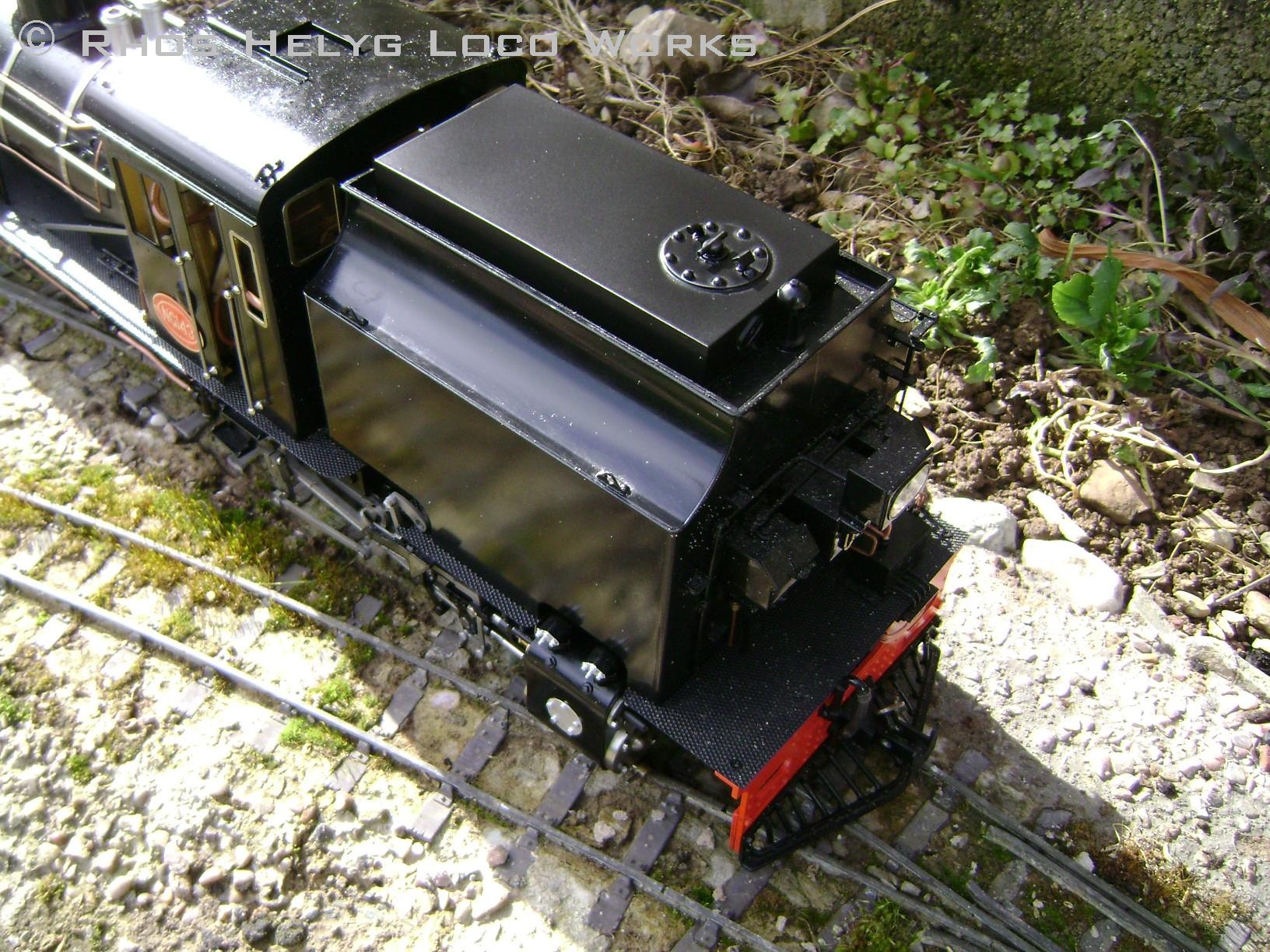
Accucraft NGG16 2-6-2+2-6-2 Garratt No. 143
Another impressive model. This NGG16 has received a number of modifications and details in order that it represents the full-size number 143 as running on the Welsh Highland Railway circa 2005. It has had all of its wheel rims and cylinder snifting valve covers painted black, and its smokebox and cab roof have been repainted from gloss to matt black. Detailing includes the steam sander indicator flag on the front right-hand sandbox, brass indicator plates on the lubricator reservoirs, a skull-and-crossbones warning board on the rear bunker (not shown in photo) and a dummy fuel oil tank as used on the WHR from 1997 until 2007. It carries a replacement set of number plates supplied by MDC on its cab sides. The model is from the third batch produced by Accucraft and suffered terribly from exhaust back-pressure affecting its performance. The most important change has been complete replacement of the exhaust steam pipework using a larger diameter tube than that supplied together with removal of the exhaust pipe in the smokebox and boring out of the remaining exhaust fittings to a larger diameter. These modifications eliminate the back-pressure problem and so increase the loco's power and top speed while significantly reducing water and gas consumption and increasing its running time. Further modifications to improve performance included replacement of the lubricator pipework to provide a bifurcated division of the supplies to the front and rear engines, and a pair of specially made replacement burners kindly supplied by Barley Pit Works. |
|
|
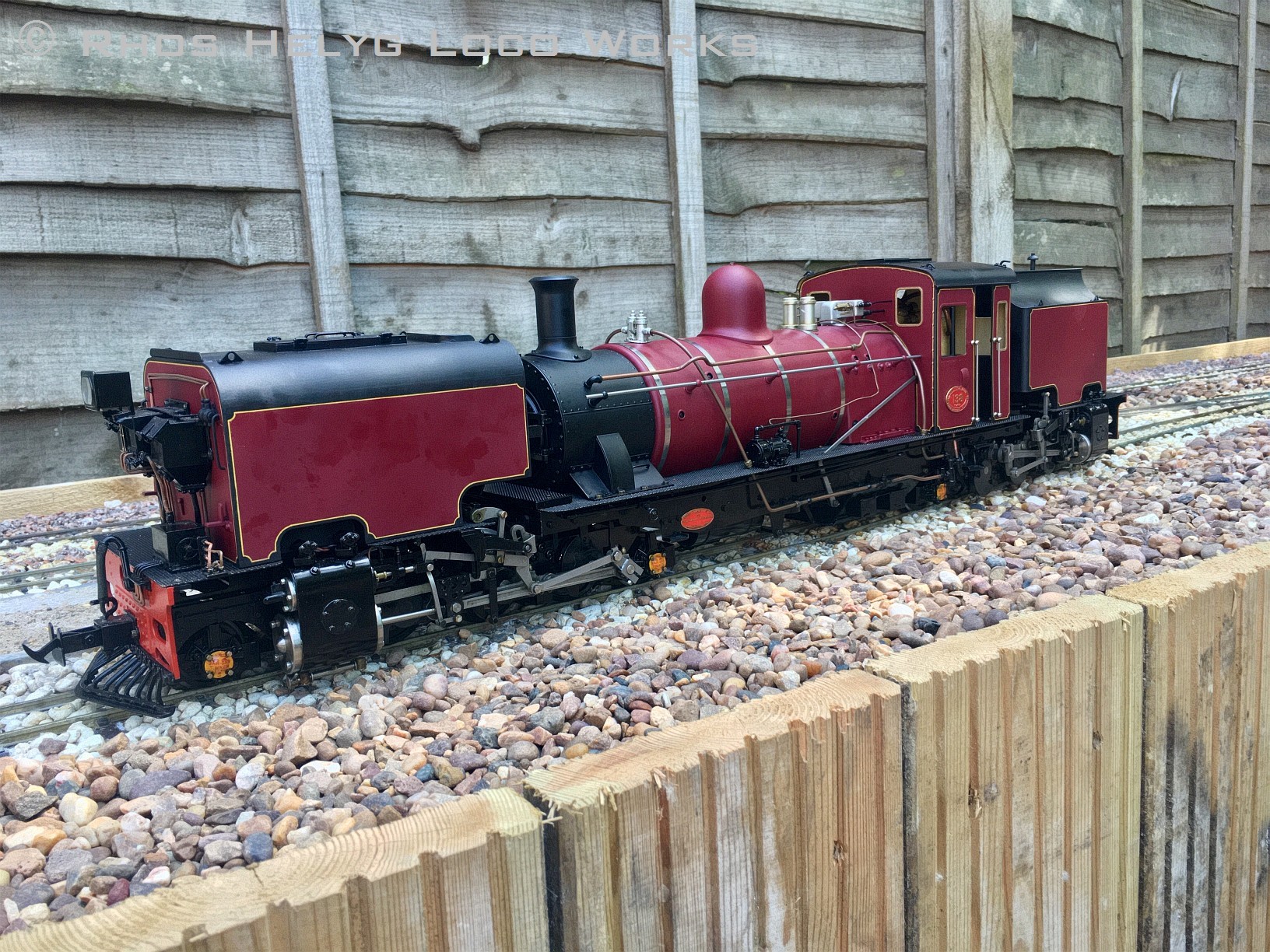
Accucraft NGG16 2-6-2+2-6-2 Garratt No. 138
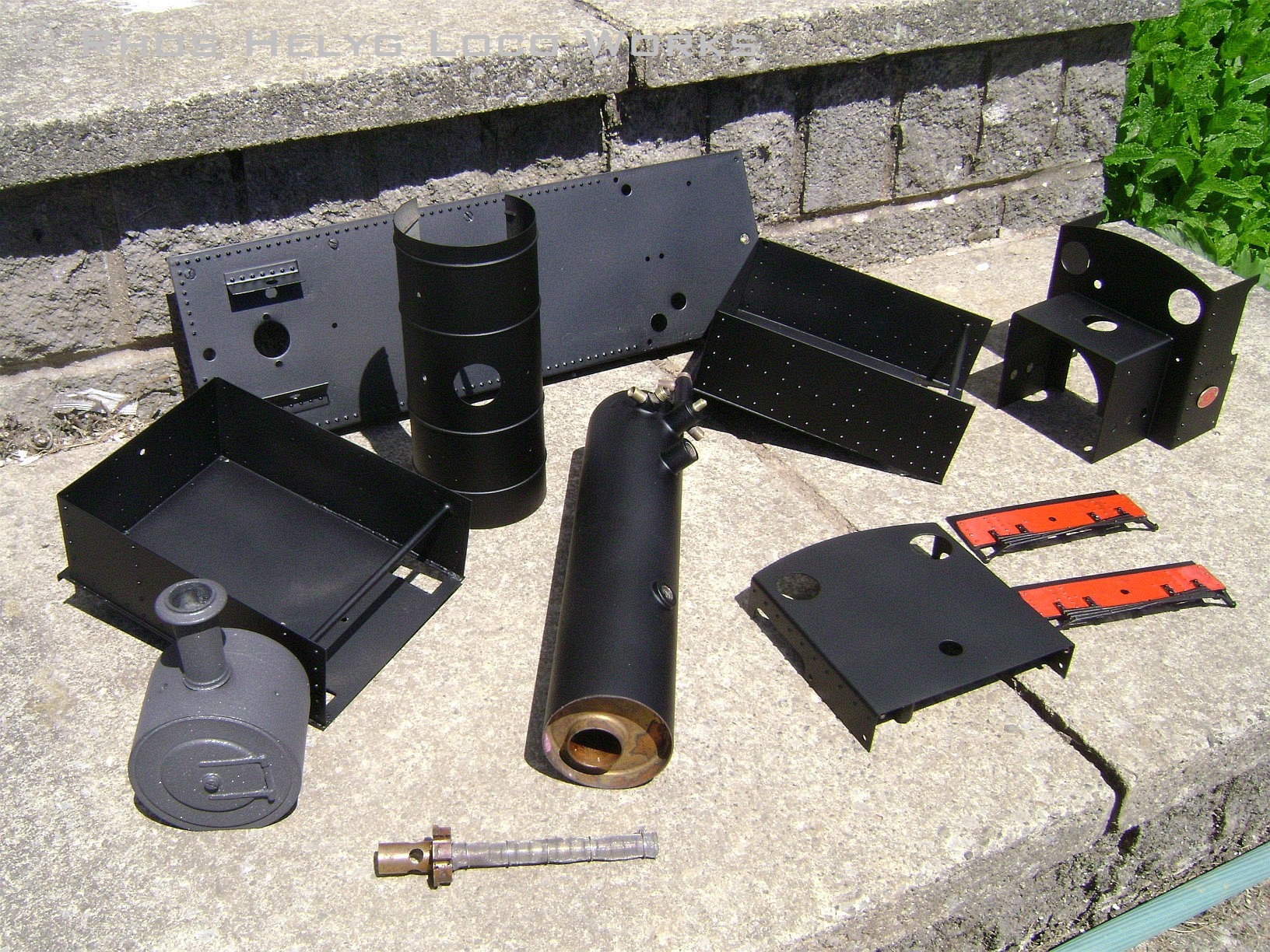
This Accucraft NGG16 was purchased by the current owner in the particularly lurid blue/green colour scheme carried by full-size No. 138 for a short time. The owner dismantled the loco and the parts seen in the picture came here for attention. The various lumps were completely dismantled and the body components (water tank, coal bunker, cab and boiler wrapper) had their existing paint removed as required. They then received etch primer followed by black and maroon with much masking in between. Lining in yellow with black edging followed, as per full-size 138's current livery, with correct pattern and size number plates supplied by MDC. Finally, the myriad of parts were put back together in preparation for the owner to complete final assembly and a return to working order, as shown in the second picture (by Jon Carter). |
|
|
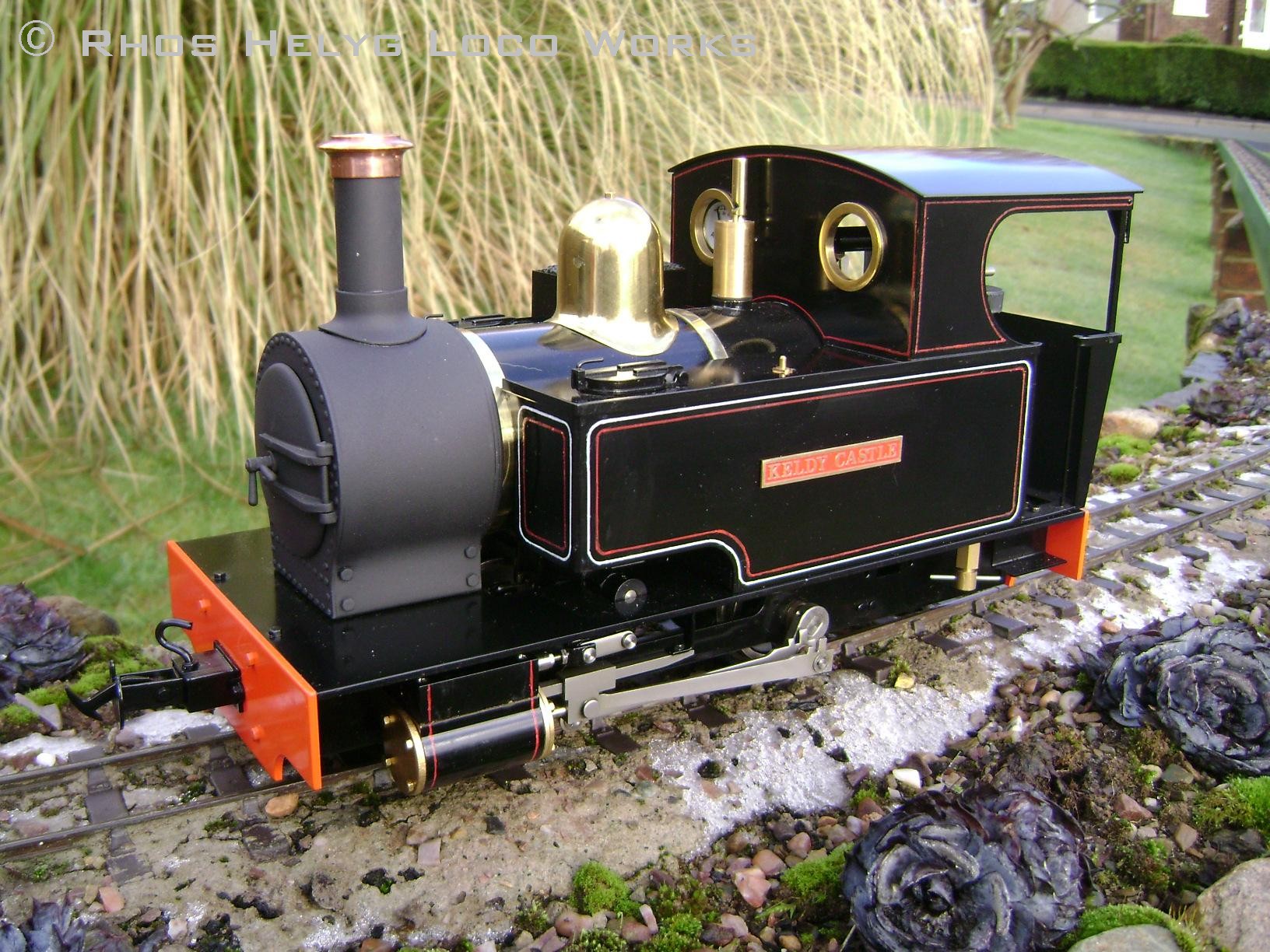
Accucraft Ragleth 0-4-0T KELDY CASTLE
This brand-new loco was sent direct to us by an Accucraft dealer for lining in this attractive red and white scheme together with a matt black smokebox. The name plates were supplied by MDC. |
|
|
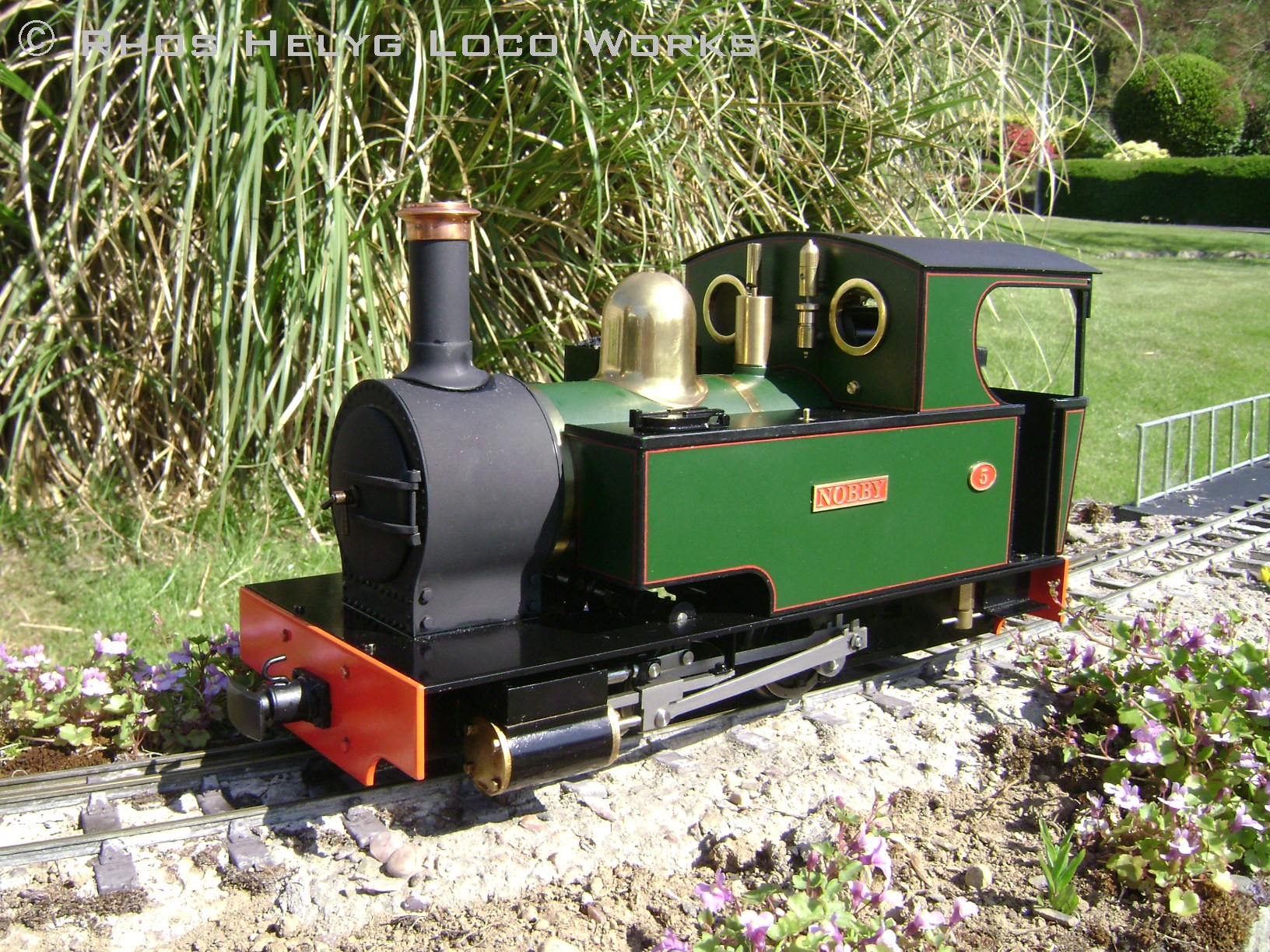
Accucraft Ragleth 0-4-0T No. 5 NOBBY
This Ragleth came here for the following work:
|
|
|
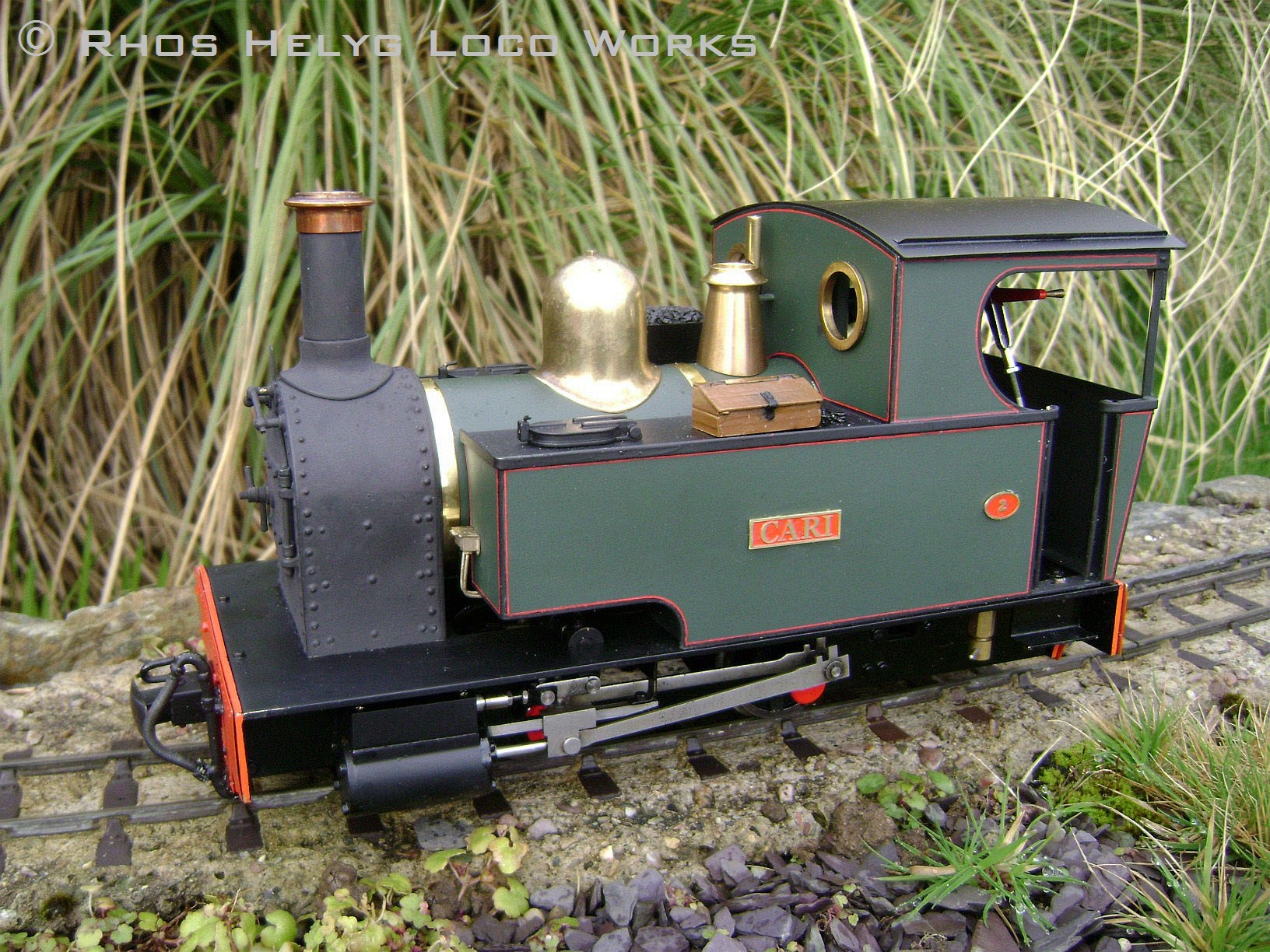
Accucraft Ragleth 0-4-0T No. 2 CARI
Accucraft Ragleth "CARI" has been on its second visit to RHLW. It first came here a few years ago for fitting of a second channel radio control for the regulator. The most recent visit has been for fitting of a replacement DJB Model Engineering Ltd smokebox, repairs to the r/c components. fitting of vacuum pipes and various other detailing parts, including a dummy tool box over the gas filler valve. This was all followed by lining in red with black edging. |
|
|
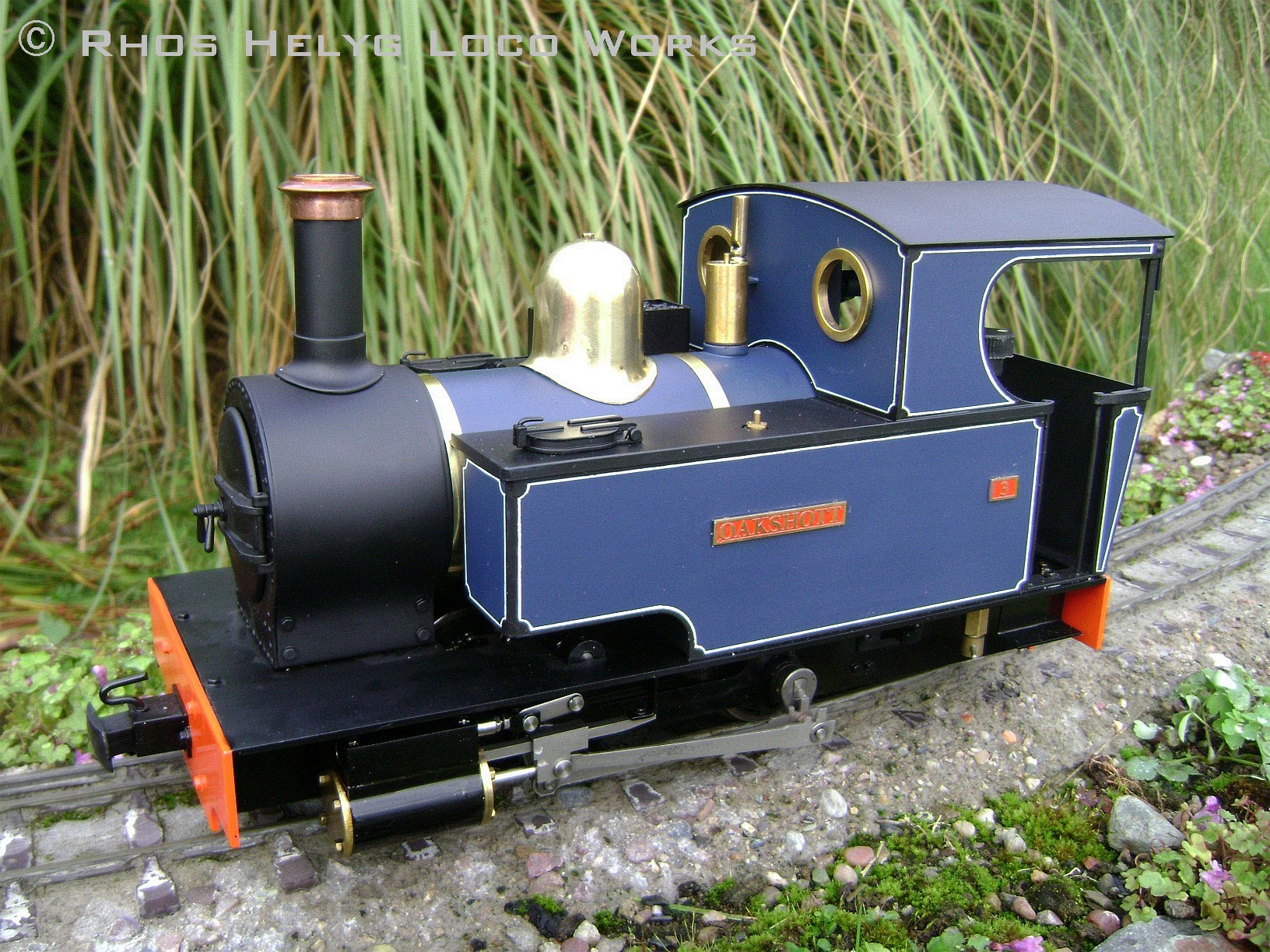
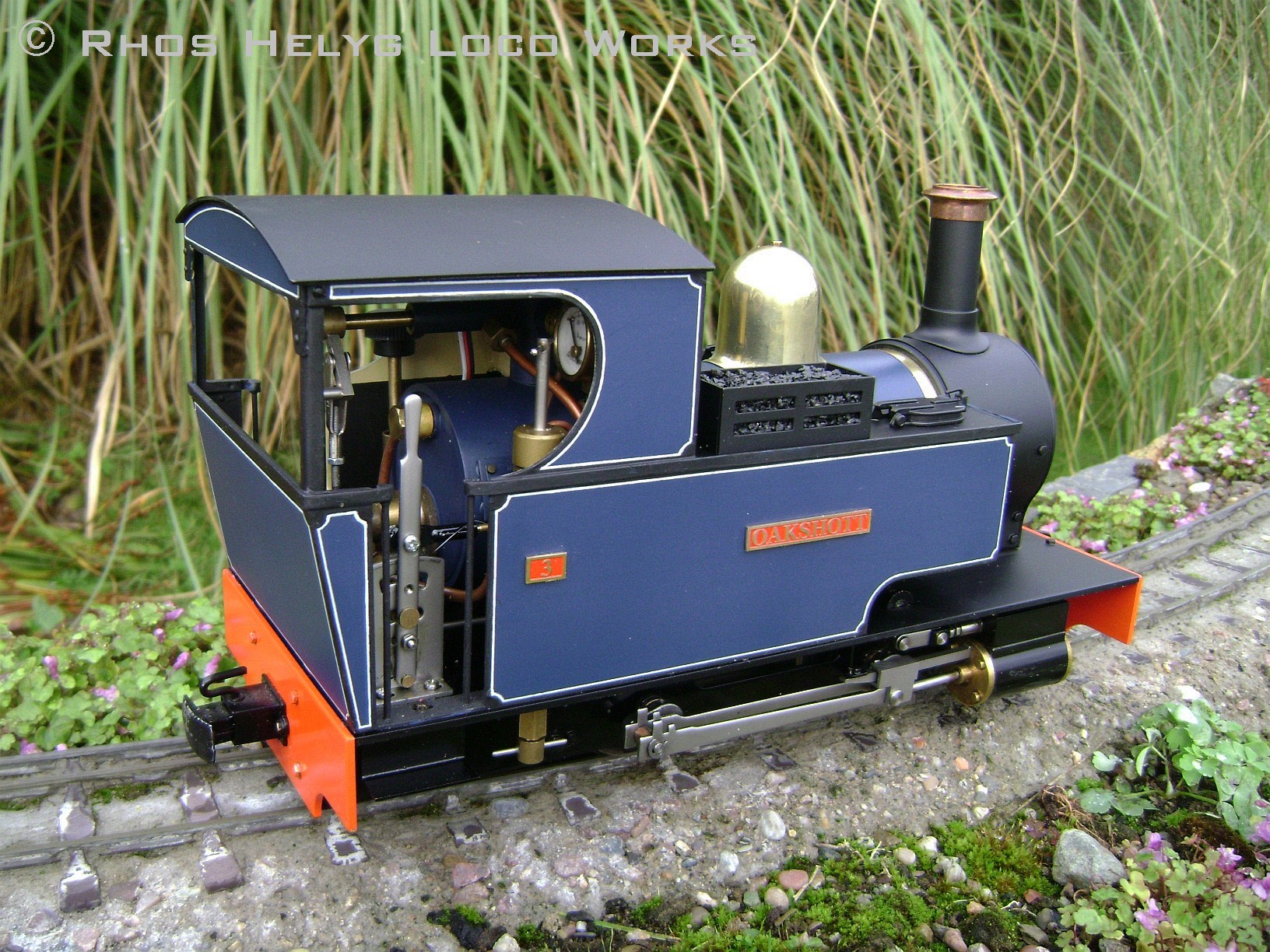
Accucraft Ragleth 0-4-0T No. 3 OAKSHOTT
OAKSHOTT came here for lining of its original blue paintwork, plus application of satin black to the smokebox, footplating and cab roof. While here it also had its existing radio control upgraded from single servo controlling only the reverser to two servos controlling both reverser and regulator. |
|
|
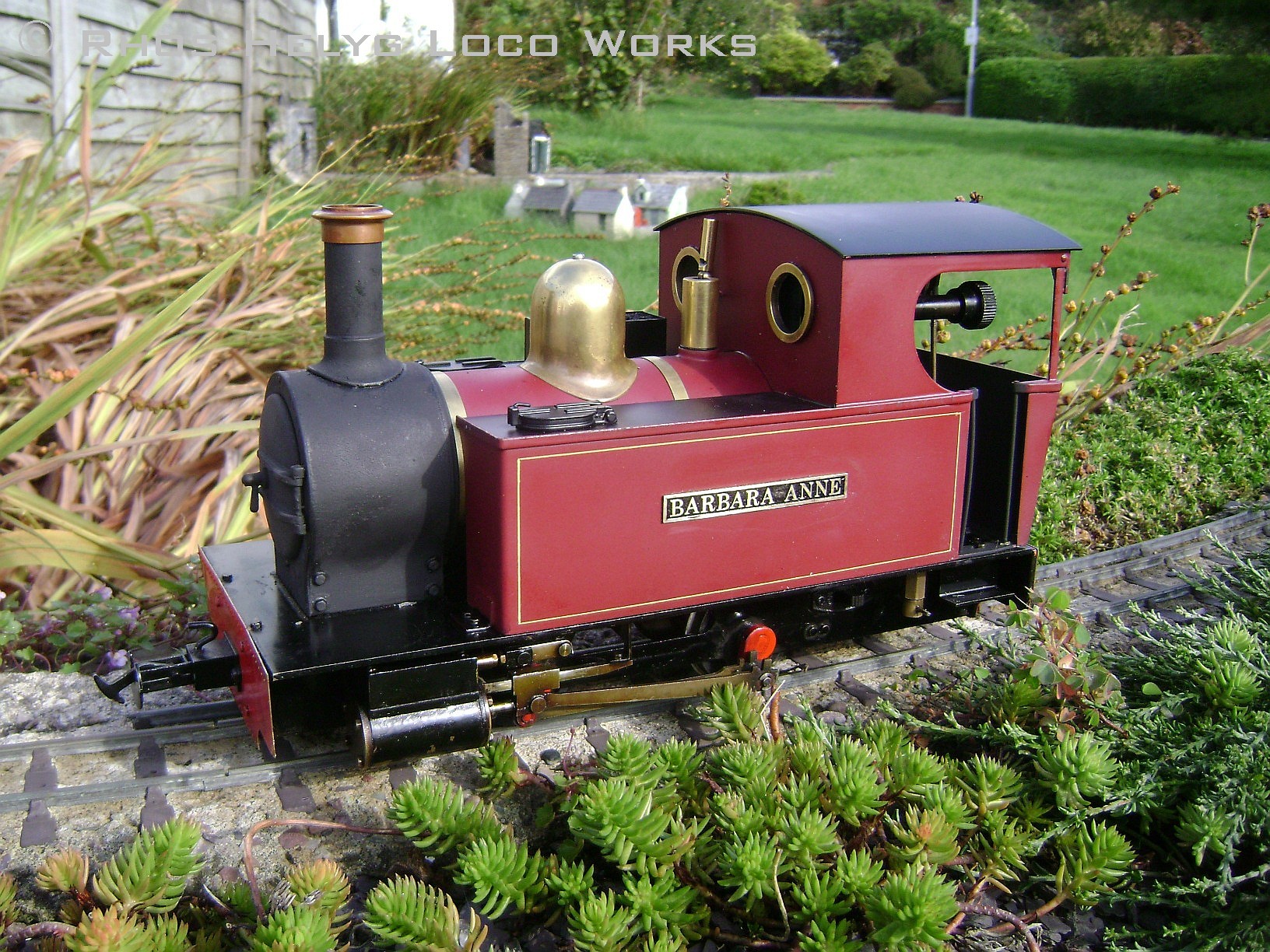
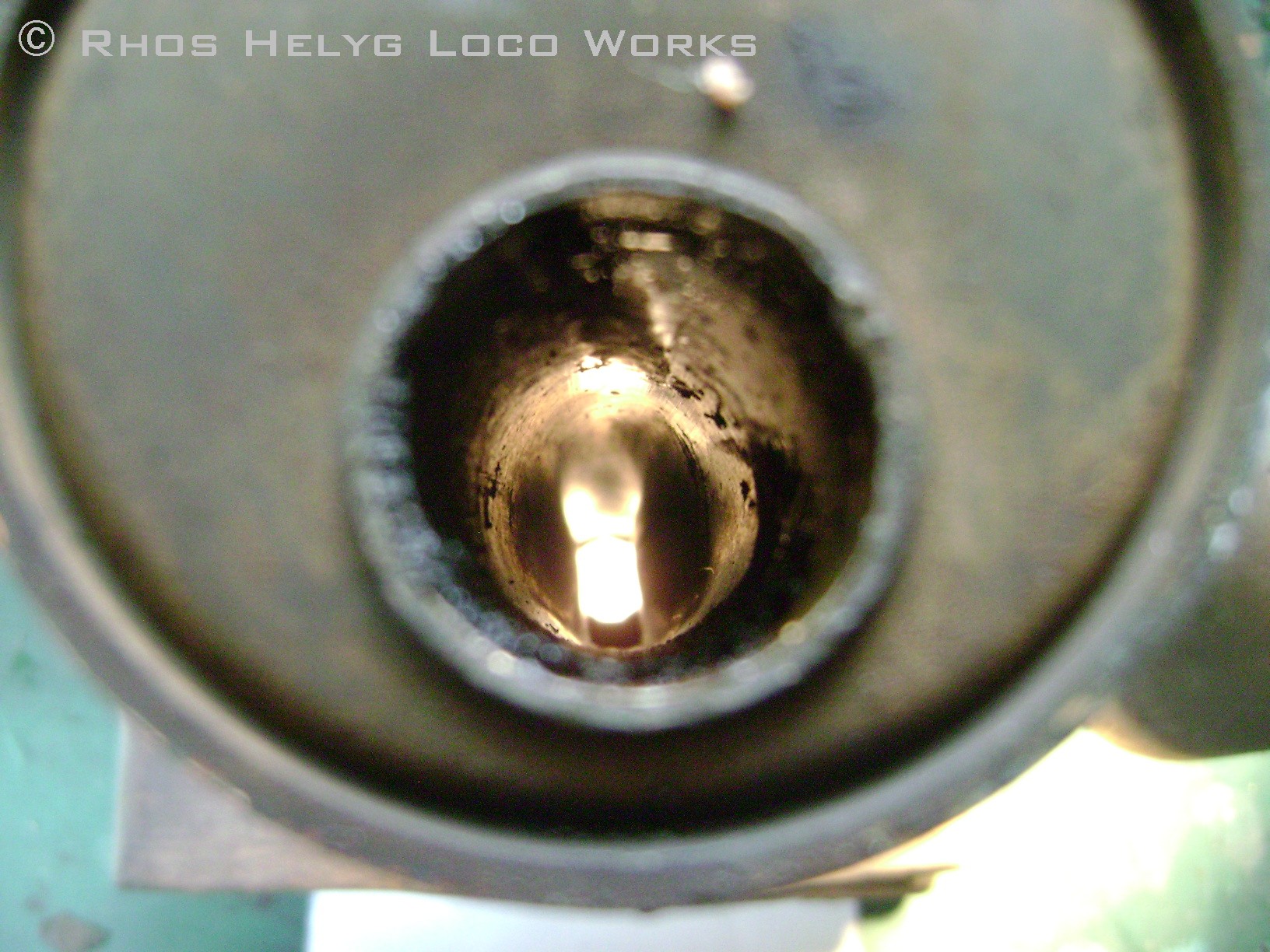
Accucraft Ragleth 0-4-0T BARBARA ANNE
This Ragleth initially came for a repaint along with reports that it would only run in reverse,
and that the burner was noisy and tricky to light. A minor adjustment to the reversing piston
and use of the correct radio control settings cured its running issues. The burner issue was
more complicated...
|
|
|
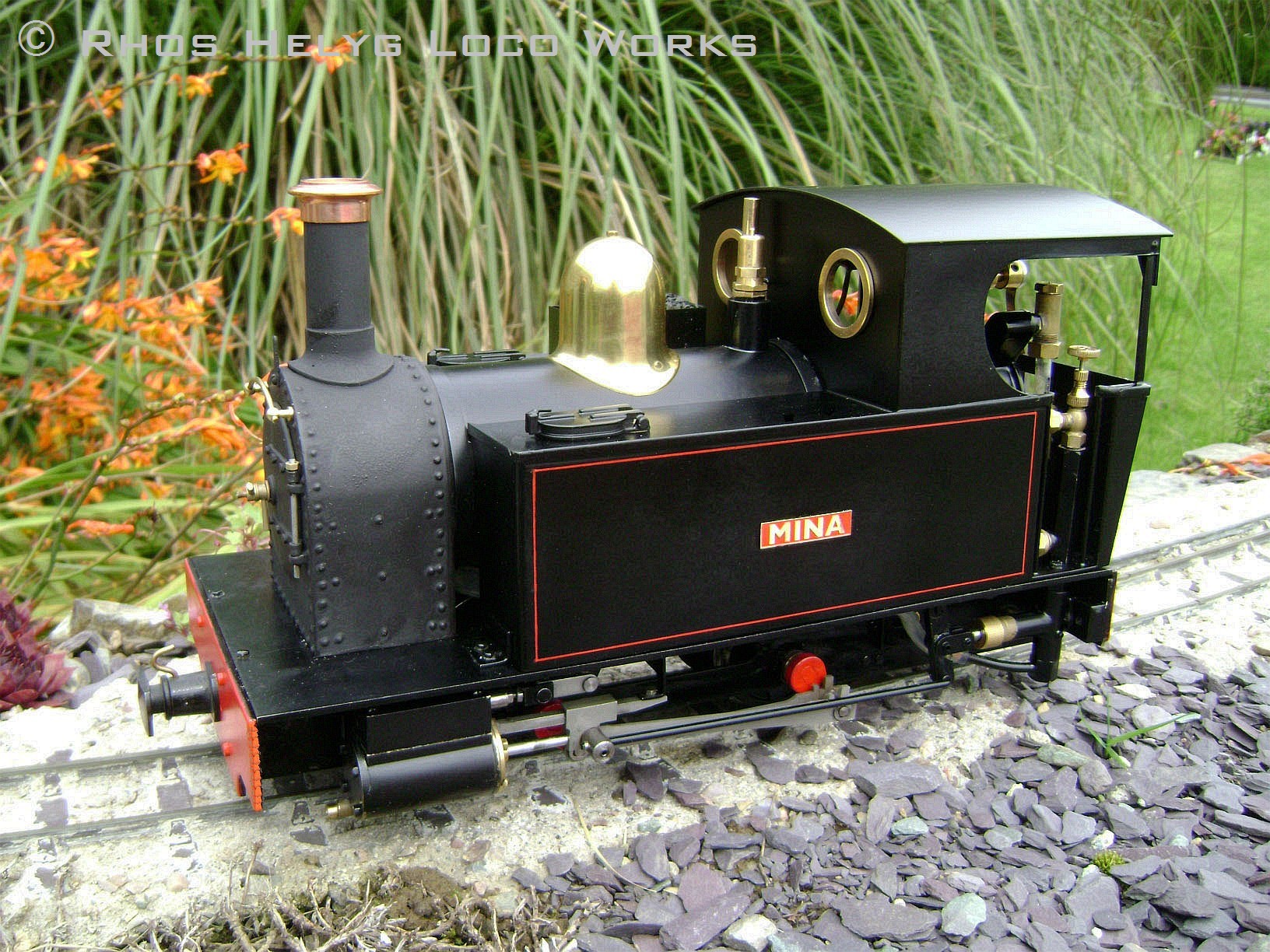
Accucraft/DJB Engineering coal-fired Ragleth 0-4-0T MINA
This Accucraft Ragleth came here very much as a kit of parts, along with the coal-firing
conversion kit made by DJB Model Engineering Ltd. The kit includes a replacement boiler,
water pump, boiler filling system, water tanks, smokebox and all of the other components
needed. The job was completed with a repaint from dark green in to satin black with simple
red lining to avoid it looking too much like a black blob.
|
|
|
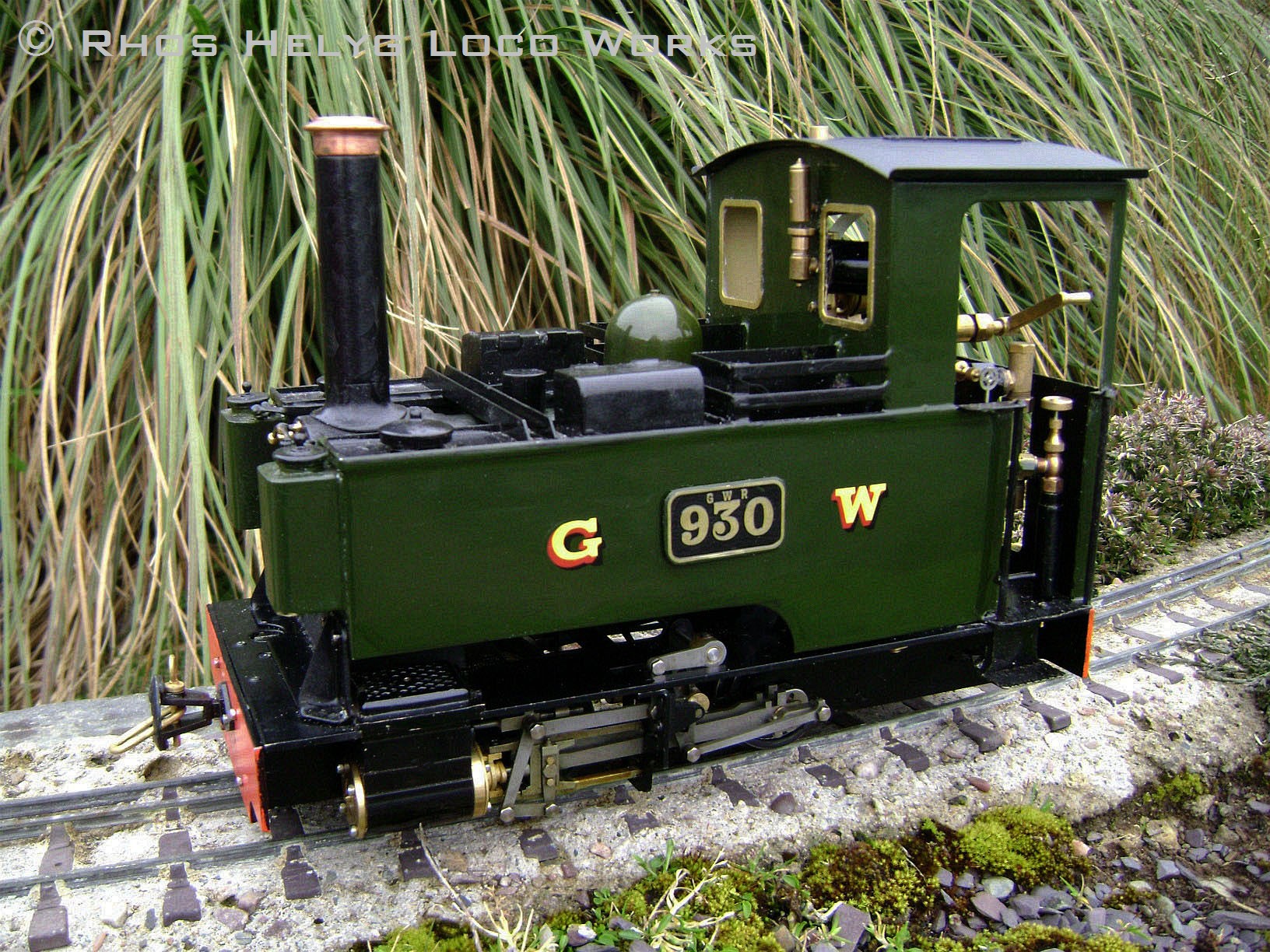
Accucraft/DJB Engineering ⅞ths-scale coal-fired Talgarth 0-4-0T GW 930
I don't venture in to the mystical world of 7/8ths (of an inch to the foot) scale very often, but here is one I've just finished. This loco has an Accucraft Talgarth chassis incorporating a DJB Model Engineering coal-fired kit (boiler, fittings, axle pump, pipework, etc.) housed in a Simply ⅞ths Baldrig body. The latter needed a lot of modifications for coal firing, in particular the building of proper water tanks to supply the axle pump and the associated pipework. The GW transfers were supplied by Fox and the number plates came from MDC. My thanks go to Paul at DJB for his assistance with this one. I doubt it will ever be this clean again! |
|
|
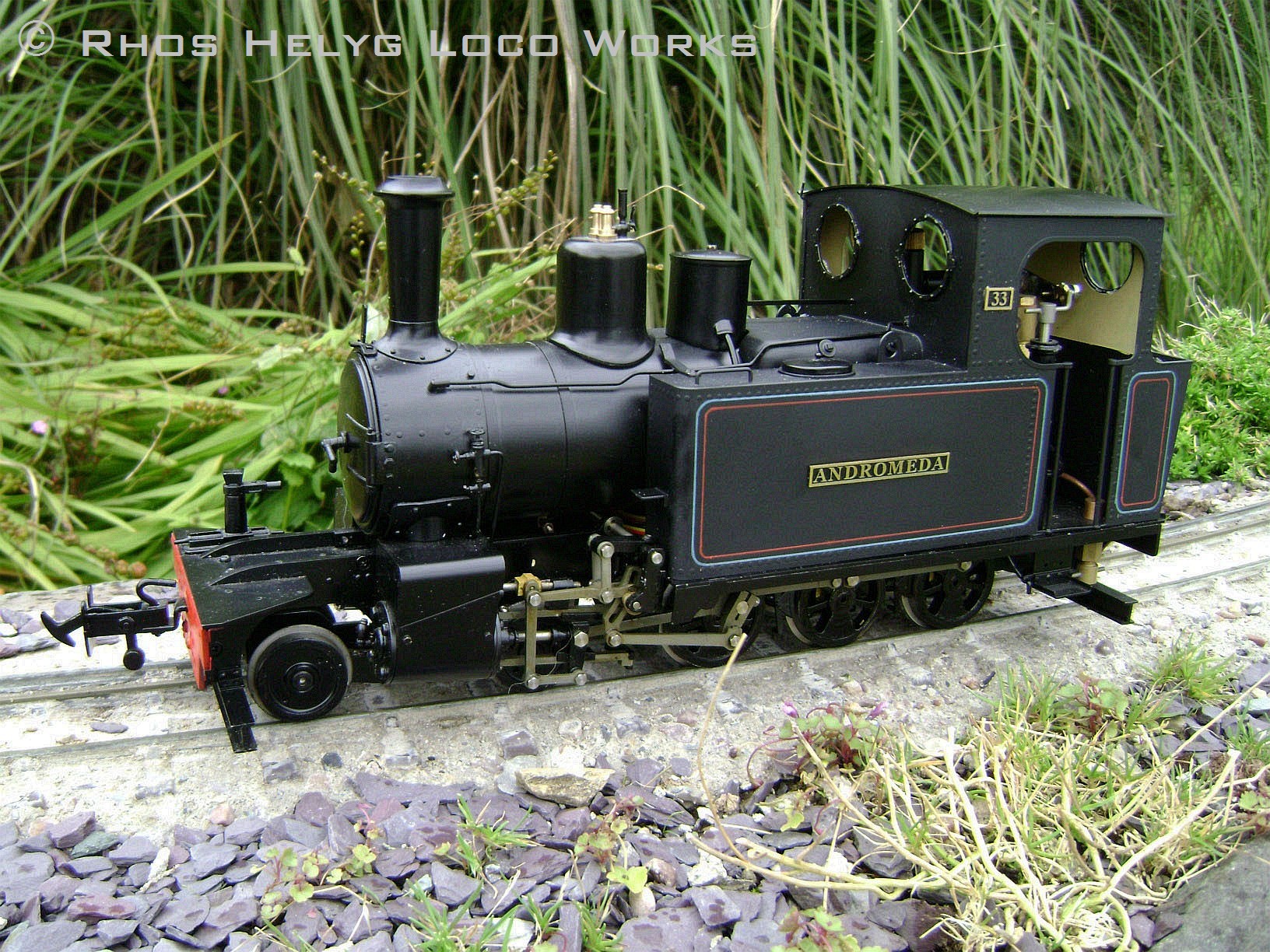
Accucraft WD Hunslet 4-6-0T No. 33 ANDROMEDA
This loco was fitted with two-channel radio control and received blue and red lining along with a significant reduction in the amount of bare metal usually exhibited by this model. |
|
|
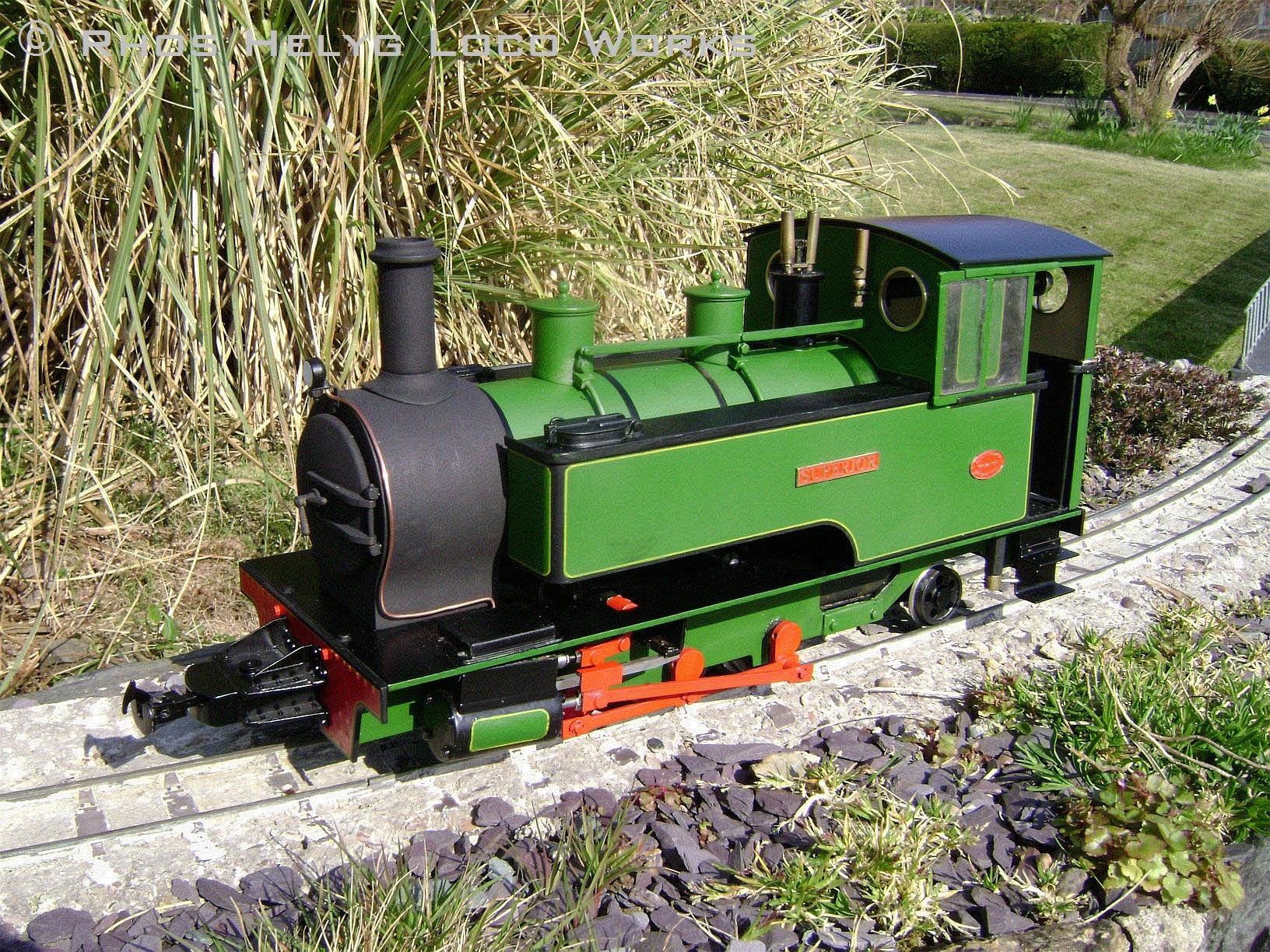
Accucraft Superior 0-6-2T SUPERIOR
It was a few years ago that Accucraft made an 0-6-2T called Superior, supposedly based on the
loco of the same name formerly based at Bowaters paper works in Sittingbourne but now to be
found at Whipsnade Zoo. That they were both 0-6-2s and both had side water tanks was
undeniable, but there the similarities pretty much ended. Compared to the full-size loco, the
model was too long, too tall, lacked the upper cab back sheet and had the wrong chimney.
|
|
|
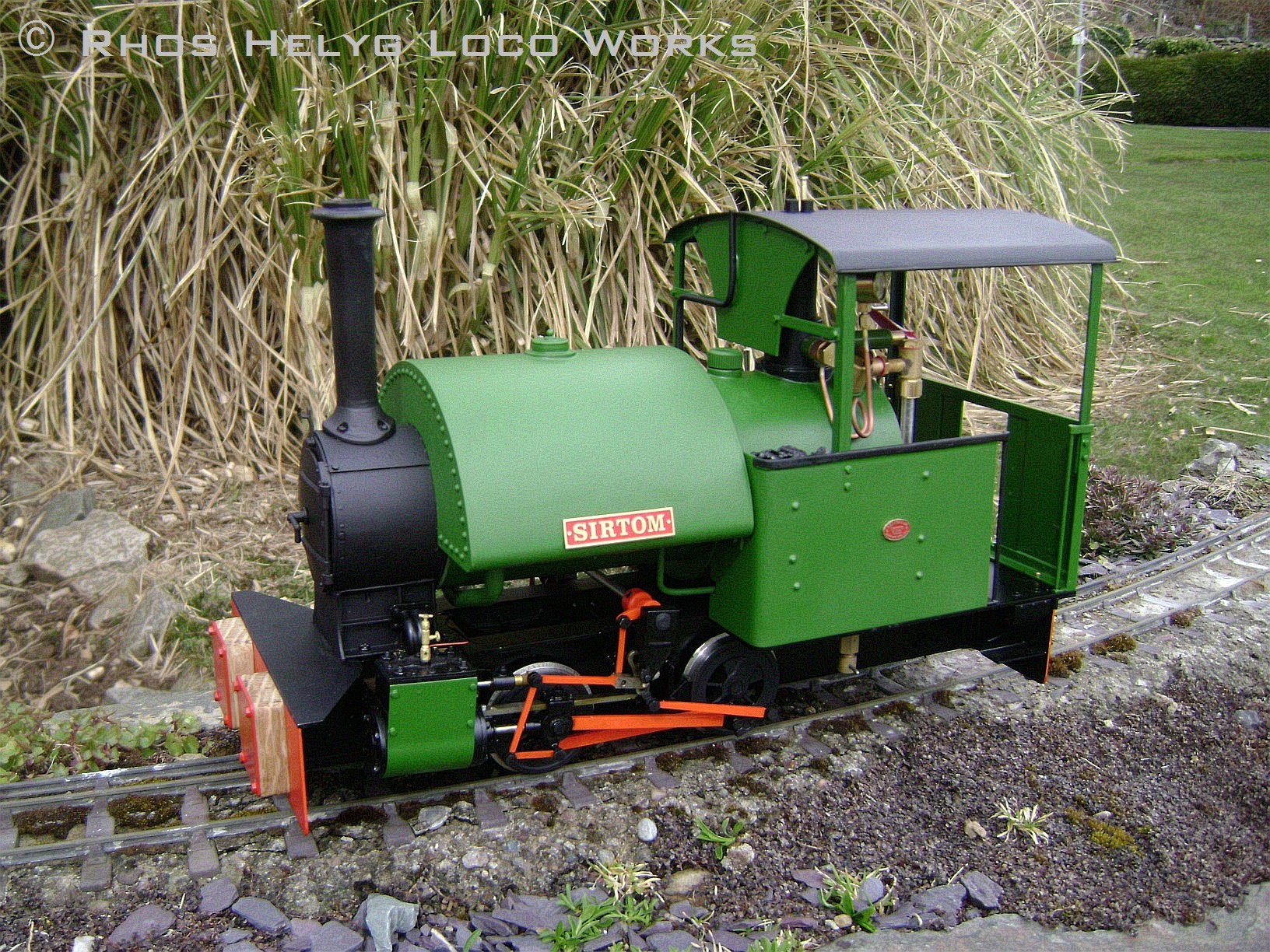
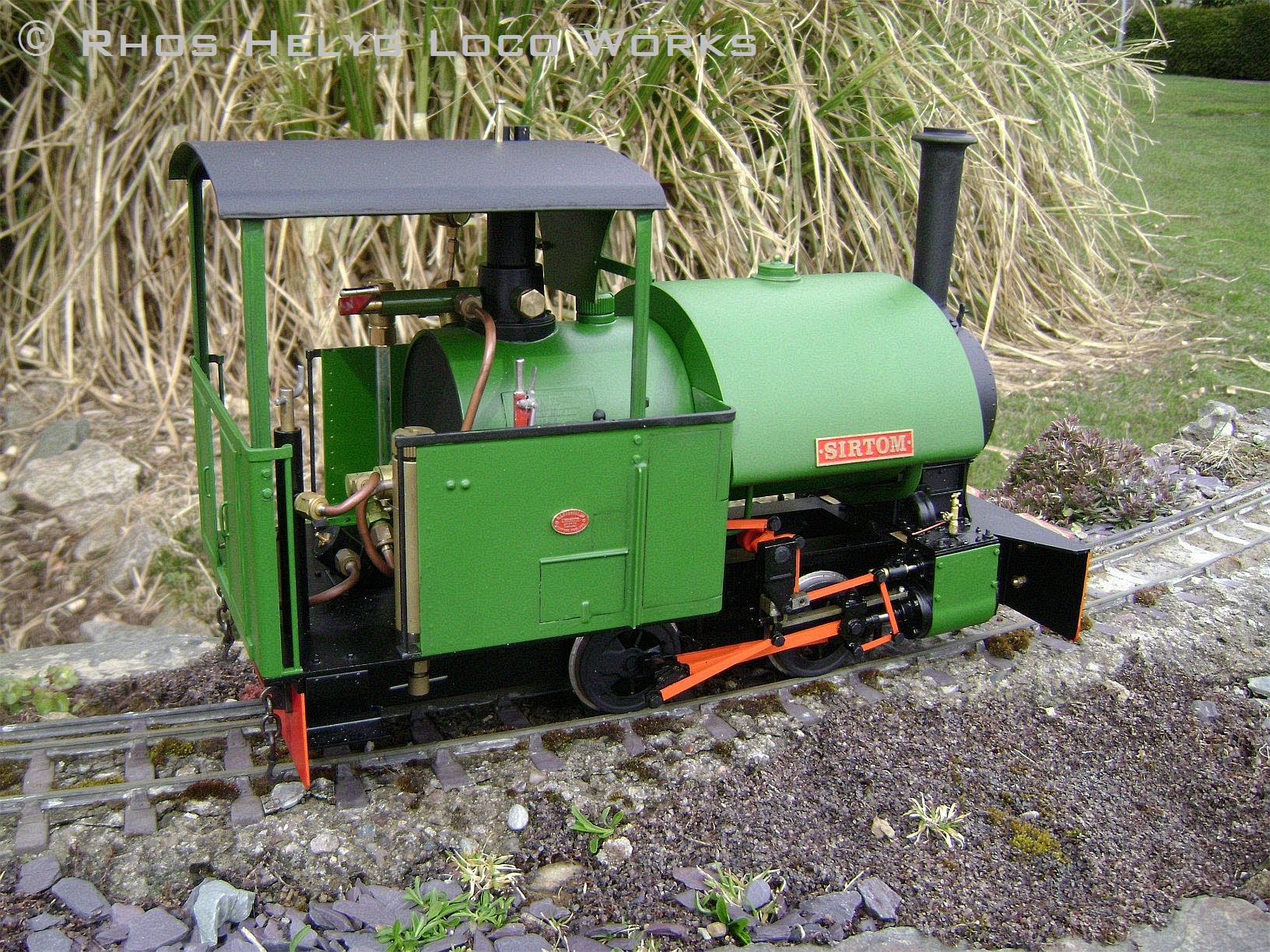
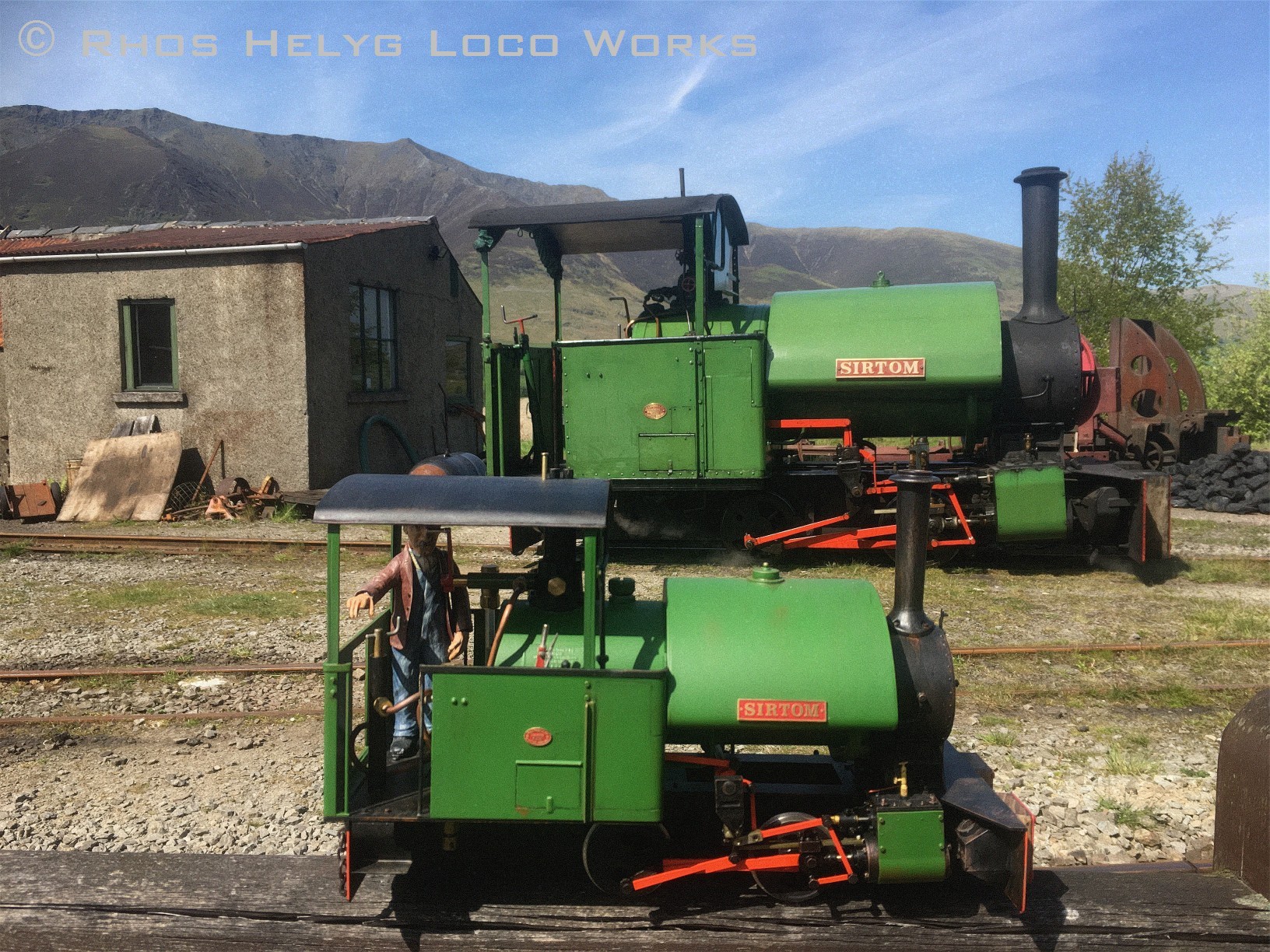
Accucraft ⅞ths-scale Bagnall 0-4-0ST SIR TOM
The full-size SIR TOM or, as the nameplate says, SIRTOM lives and operates at the
Threlkeld Quarry & Mining Museum
and is used on short passenger trains to and from the quarry. It is well worth a visit!
Accucraft's 7/8ths-scale model of the typical Bagnall 0-4-0ST provided the basis for this
model of SIR TOM, and the owner and I strove to get as close as we could to replicating the
full-size loco. Lots of changes were made, some by the owner (*) before the loco came to me,
and they included:
|
|
|
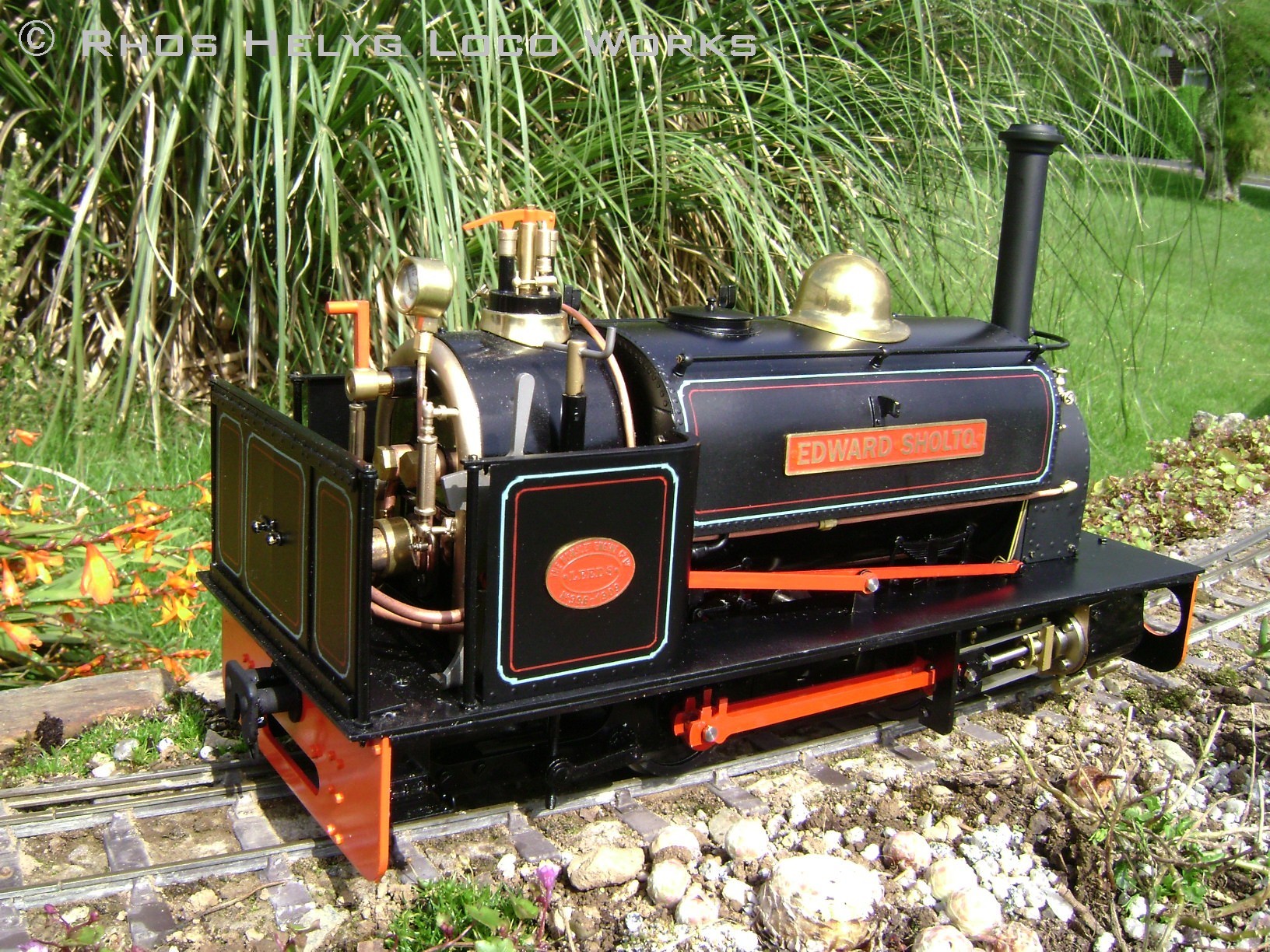
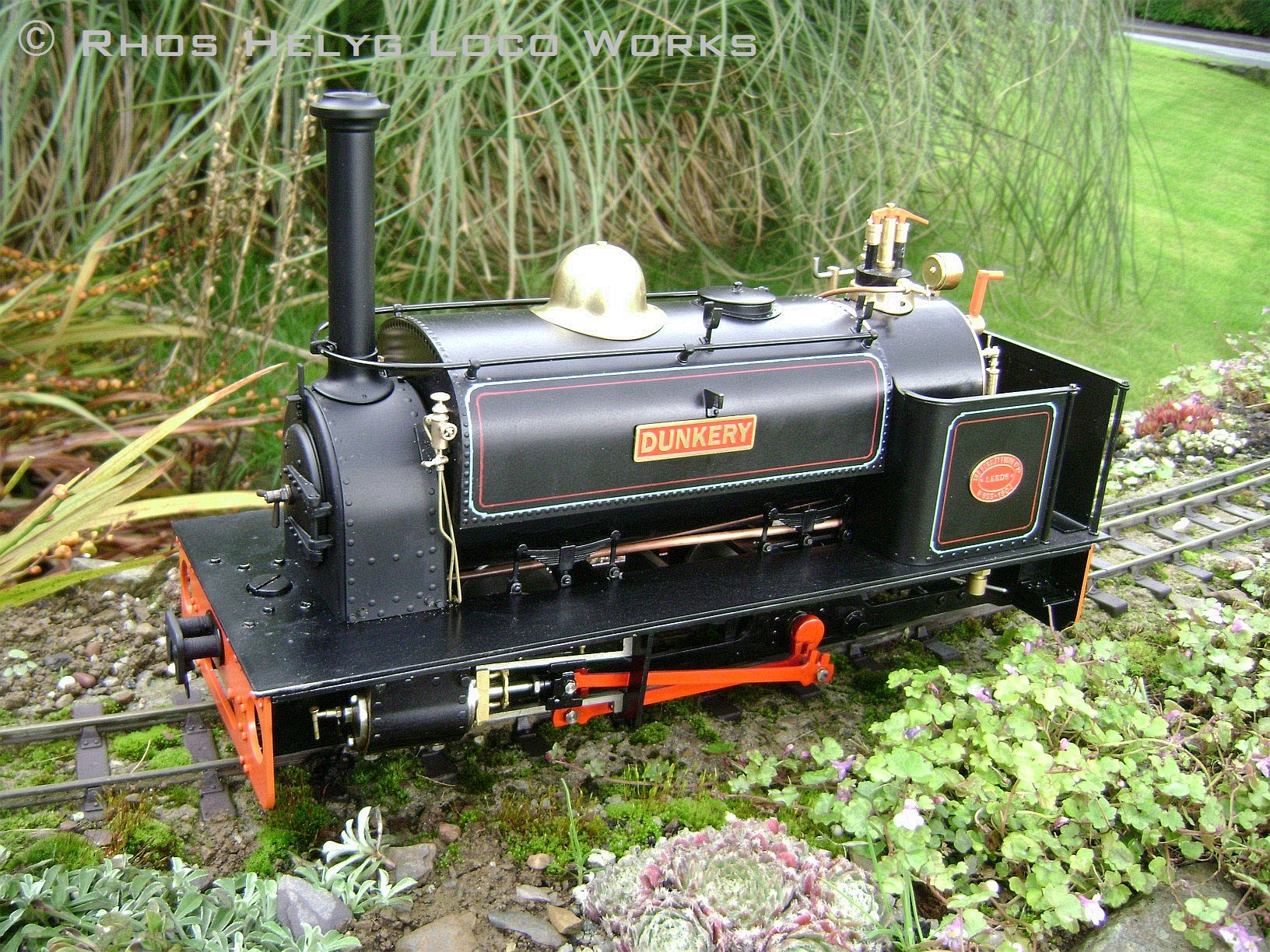
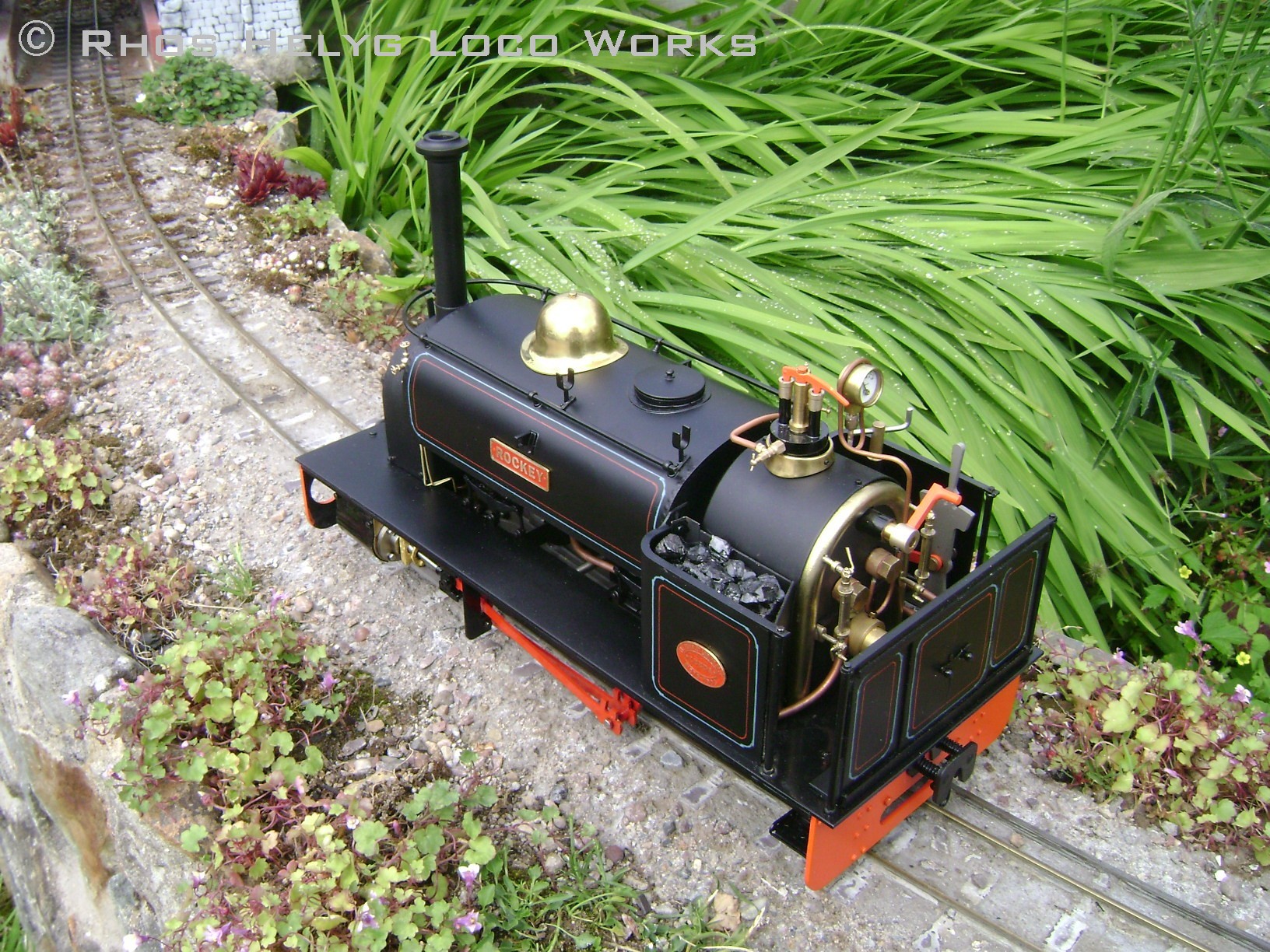
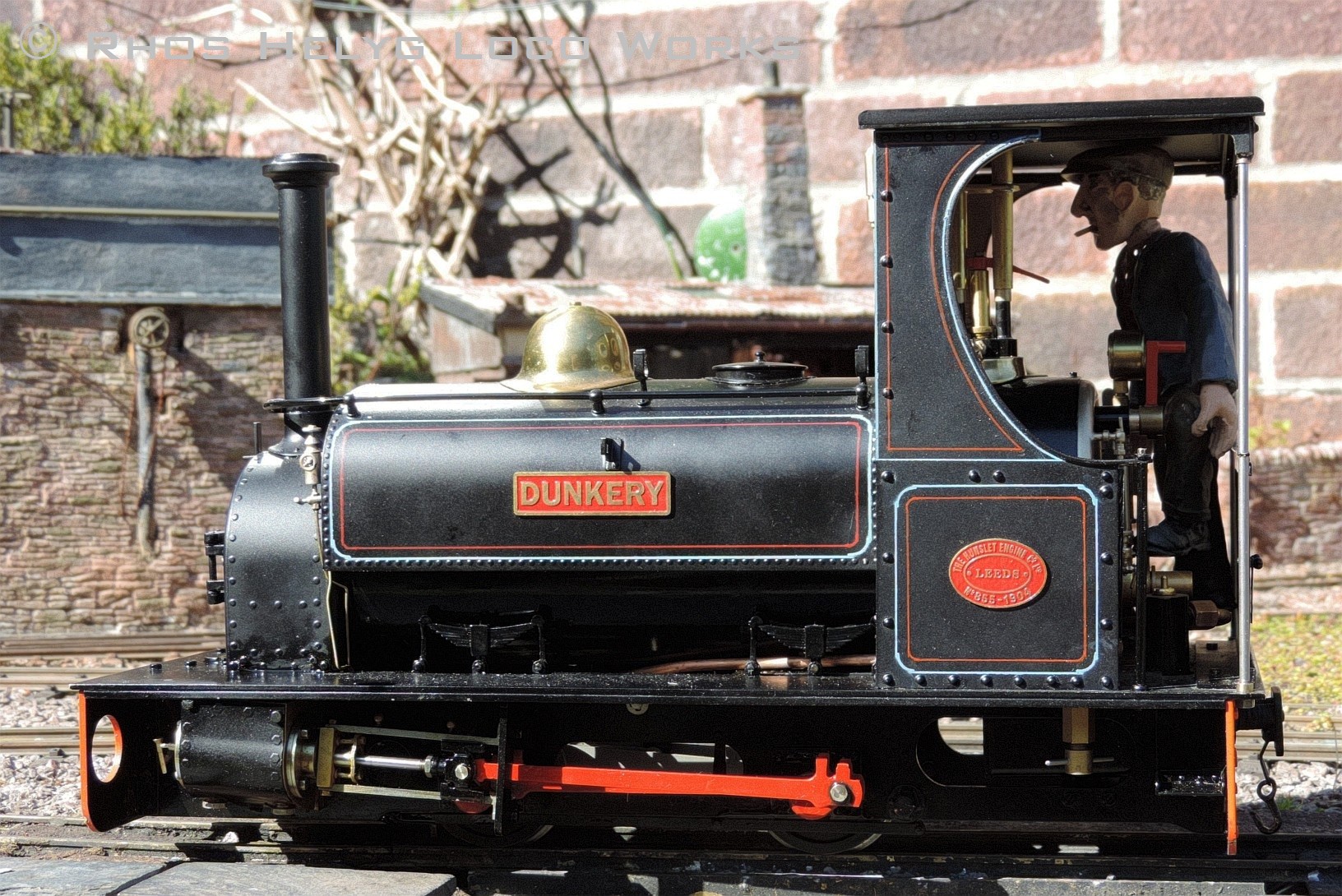
Accucraft ⅞ths-scale Quarry Hunslet 0-4-0ST
Accucraft ⅞ths-scale Quarry Hunslets repainted in Penrhyn Quarries livery, including:
|
|
|
This one was also fitted with a coal bunker in the left side of the cab and a replacement pressure gauge syphon pipe provided by Chuffed2Bits. |
|
|
DUNKERY was later fitted with a replacement brass cab which also came here for painting and lining to match. (Photo by Chris Tilley) |
|
|
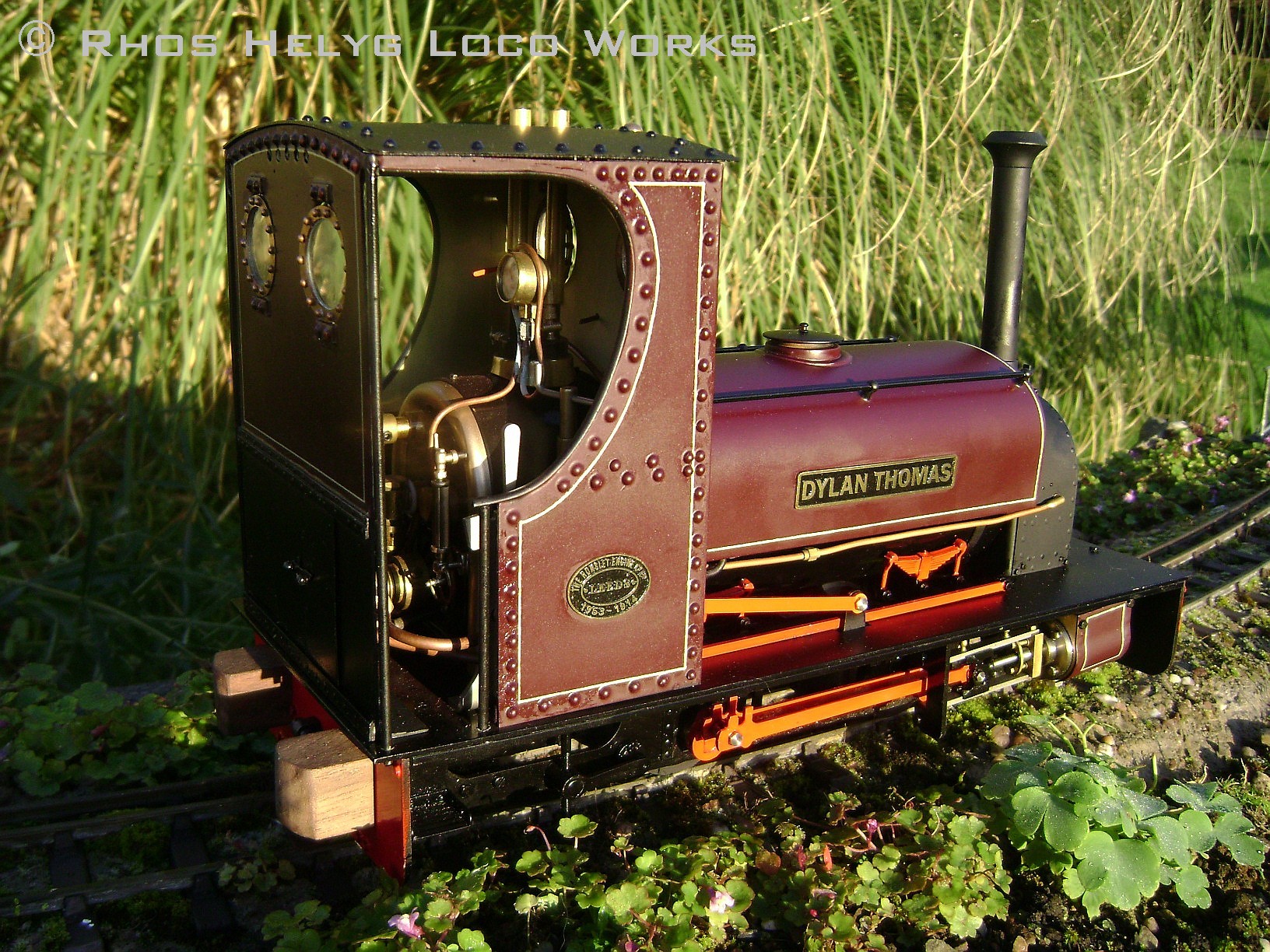
Accucraft ⅞ths-scale Quarry Hunslet 0-4-0ST DYLAN THOMAS
The owner did a lot of work on this loco before it came here, and my task was to complete the
assembly and apply the paintwork and lining, Tasks undertaken by the owner before delivery
included: |
|
|
Accucraft ⅞ths-scale Wren 0-4-0ST
Accidentally damaging a loco must be soul-destroying for its proud owner. Fortunately, I offer a full repair service for such an occasion. This Accucraft Wren came to me after it took a tumble and ended up with a very bent cab. The roof itself was not repairable so was replaced with new, but the uprights straightened out again nicely, with one exception where a fracture had occurred at a screw hole. Everything else was found to be in good order. |
|
|
Steve Acton 0-4-2ST EDWARD THOMAS
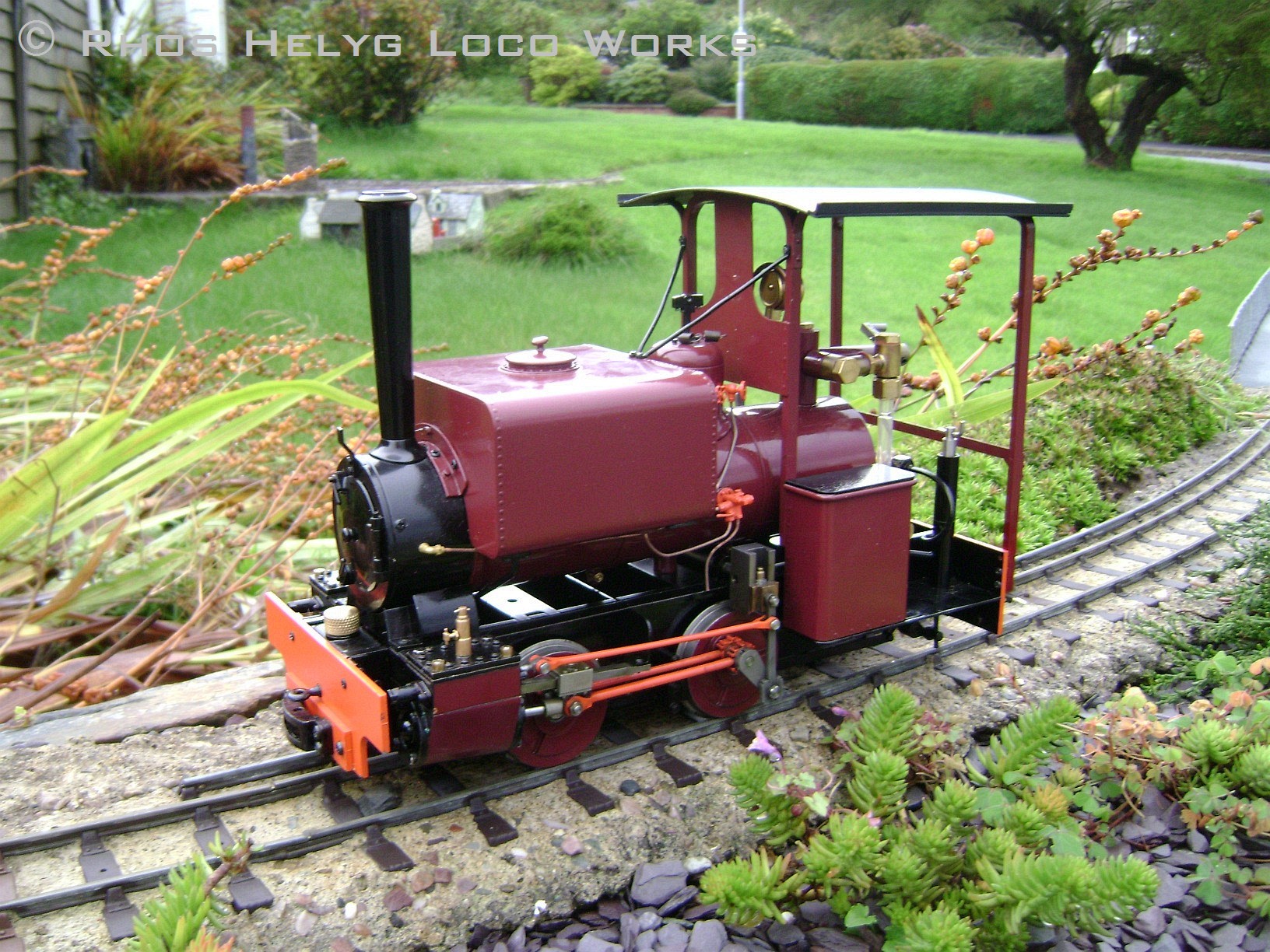
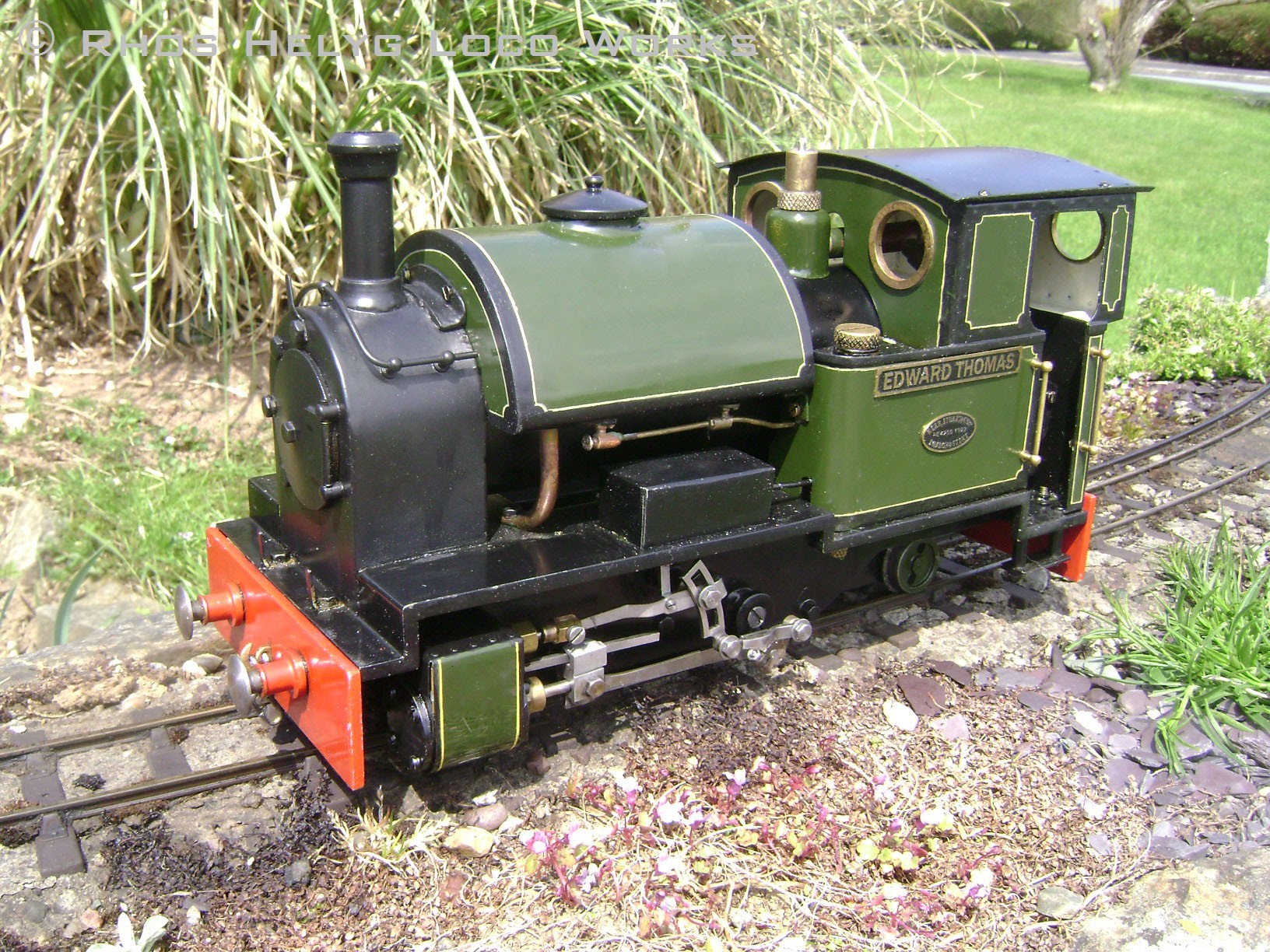
A representation of the Talyllyn Railway's Edward Thomas built by Steve Acton using Roundhouse Engineering chassis components. It came here for repainting of its boiler, smokebox and cylinder covers, some attention to the existing lining, a valve timing check and servicing of the safety valve. |
|
|
Peter Angus 0-4-0 No. 6 LUMPY TOM
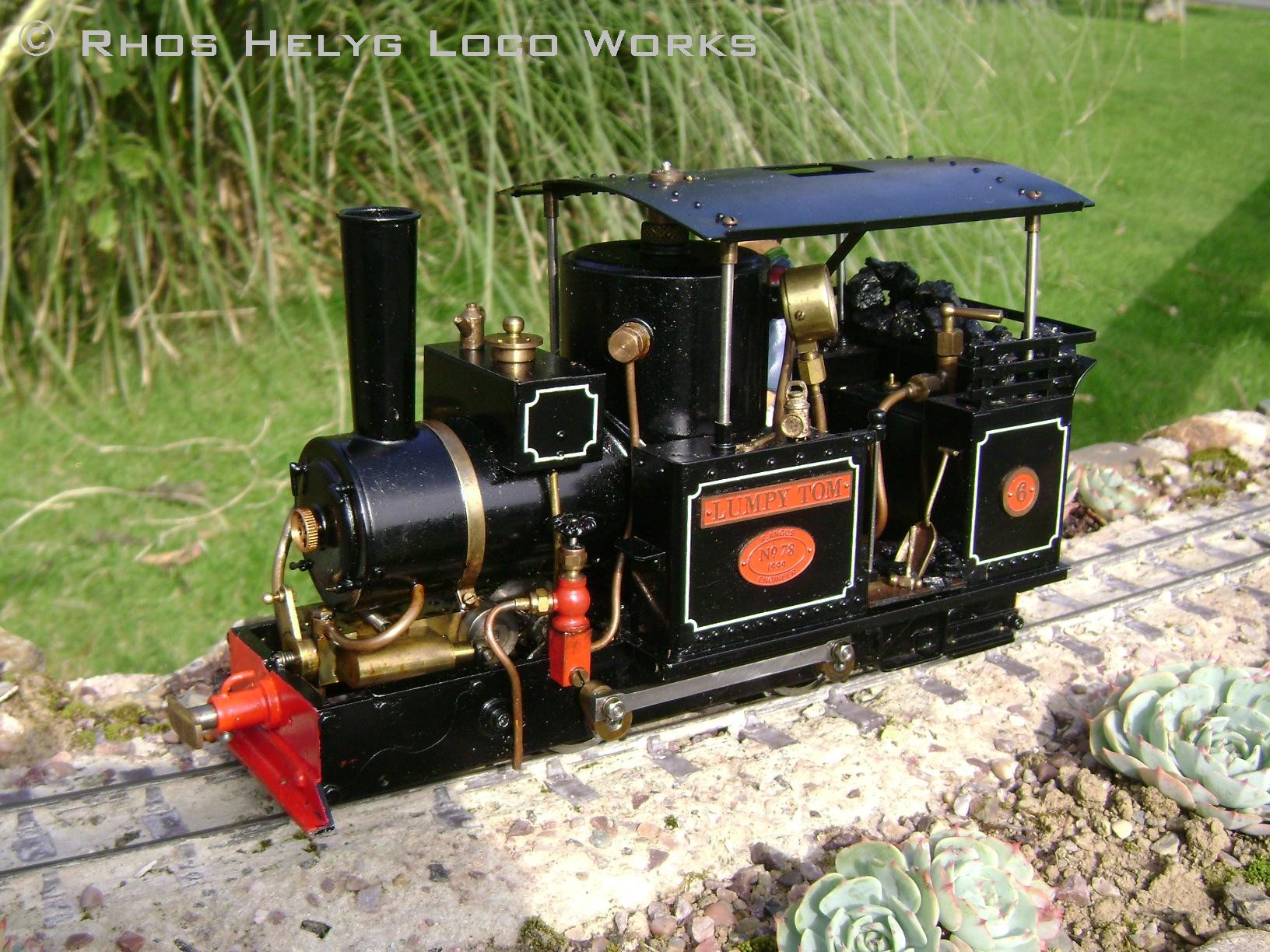
One of Peter's delightful creations, Lumpy Tom came here for replacement of its cylinder retaining springs and attention to a recalcitrant gas burner. |
|
|
Peter Angus Glyn Valley Tramway loco GLYN
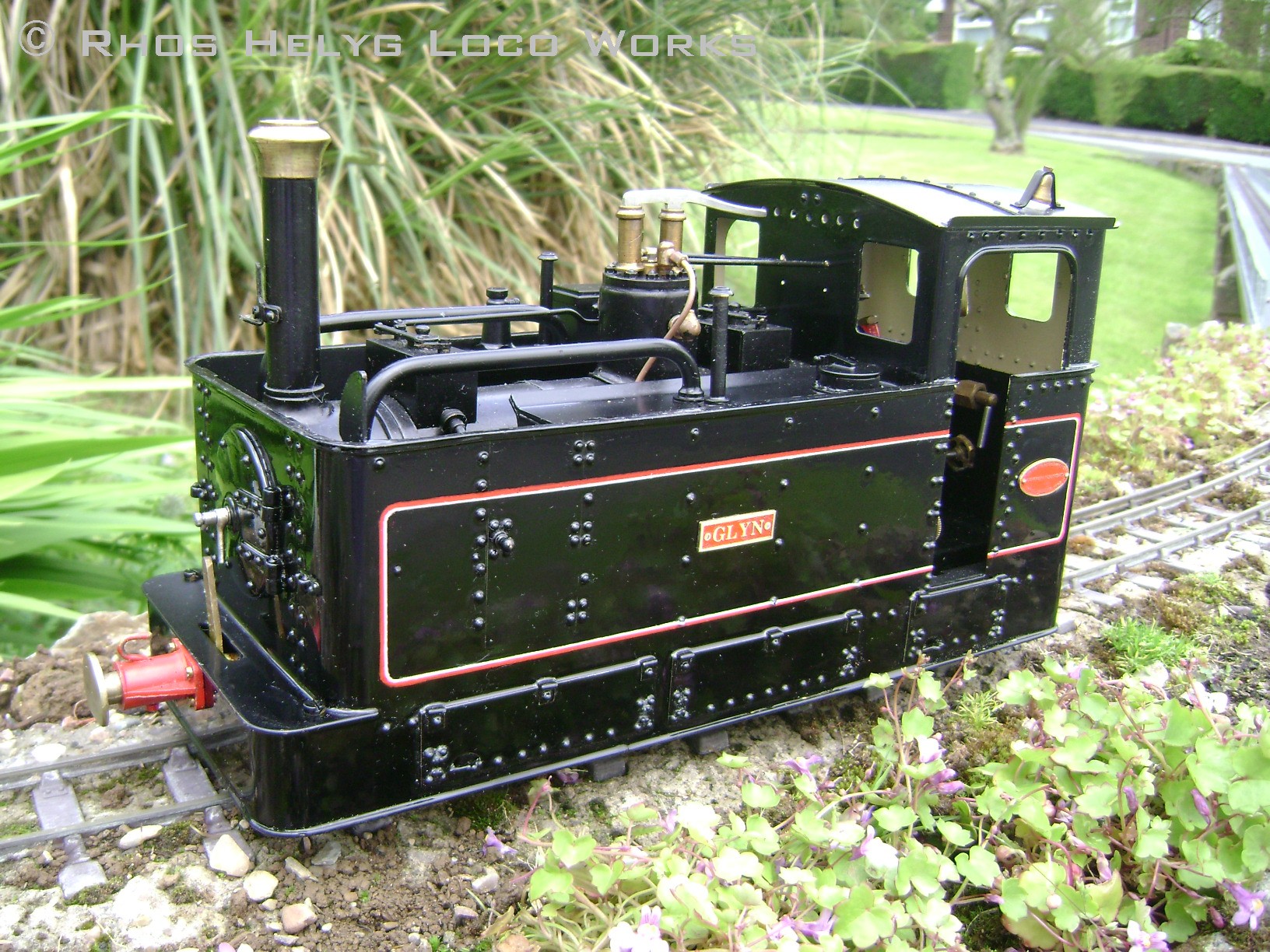
Another of Peter's delightful creations, GLYN came here for stripping, repainting and lining before shipment to its new owner in the USA. |
|
|
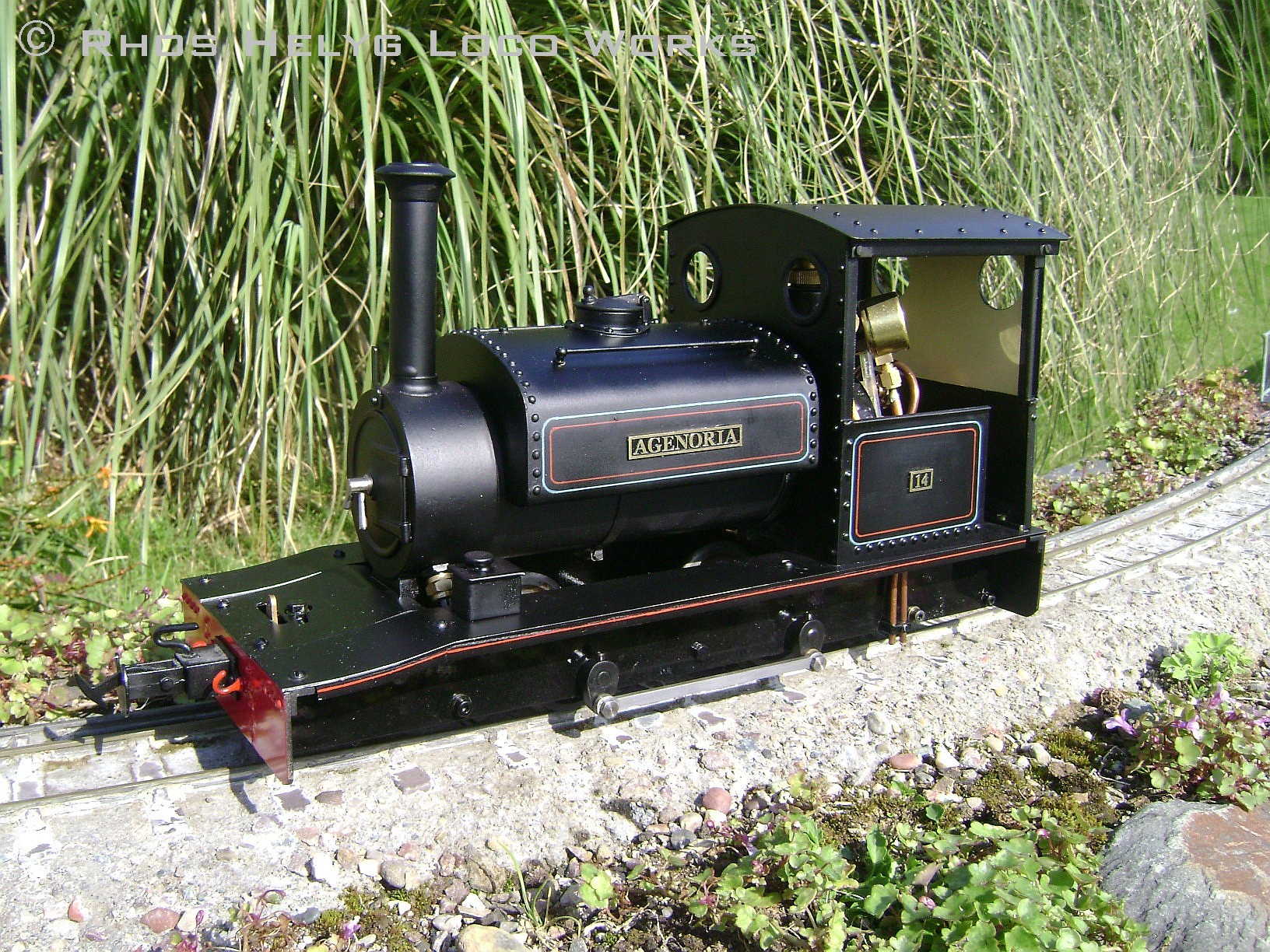
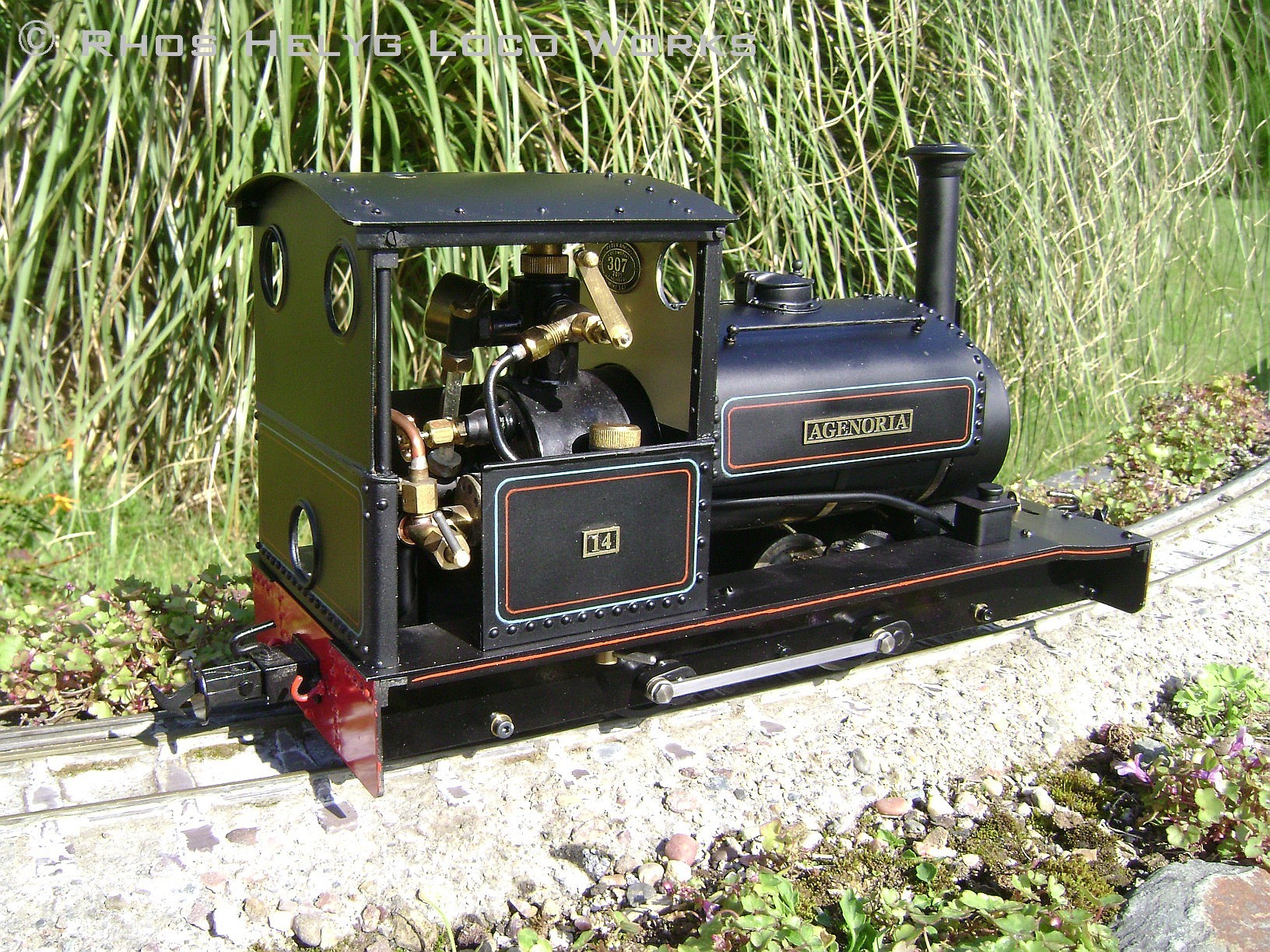
Peter Angus / Mike Lax Robey 0-4-0ST No. 14 AGENORIA
This Peter Angus / Mike Lax Robey geared saddle tank came here for the addition of a cab back sheet followed by painting and lining. It is finished in the owner's standard satin black with blue and red lining that all of his locos carry. |
|
|
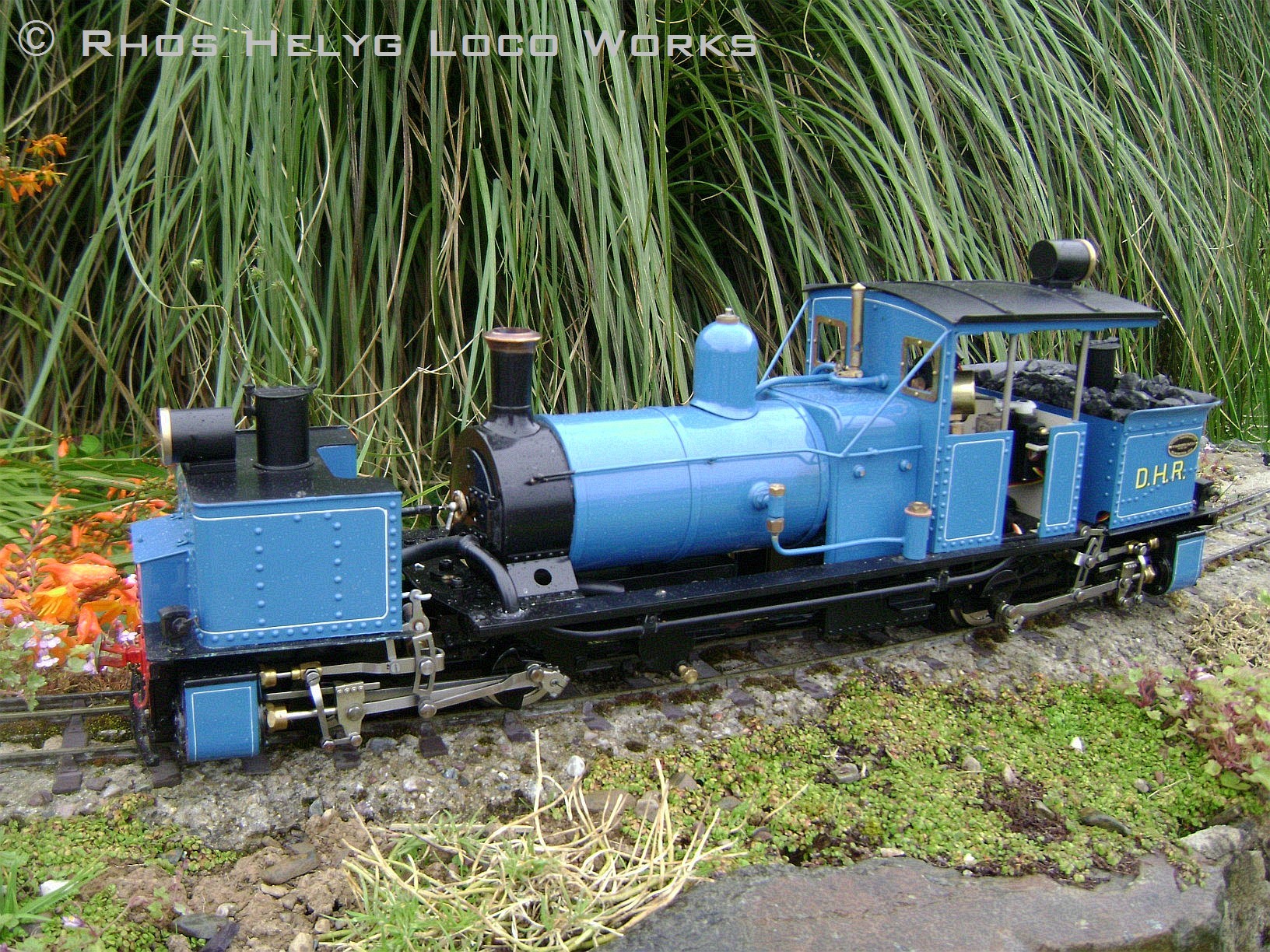
Peter Angus / Mike Lax Darjeeling 'D' Class 0-4-0+0-4-0 Garratt
This is a Peter Angus / Mike Lax model of the Darjeeling & Himalaya Railway's Garratt. It uses
Roundhouse Engineering running gear and is very similar to Roundhouse's model of the same
loco. The major difference is that this model has a ceramic gas burner in a tubed boiler and
so needs an electric blower to raise steam and then uses its steam blower to maintain a
draught through the fire.
|
|
|
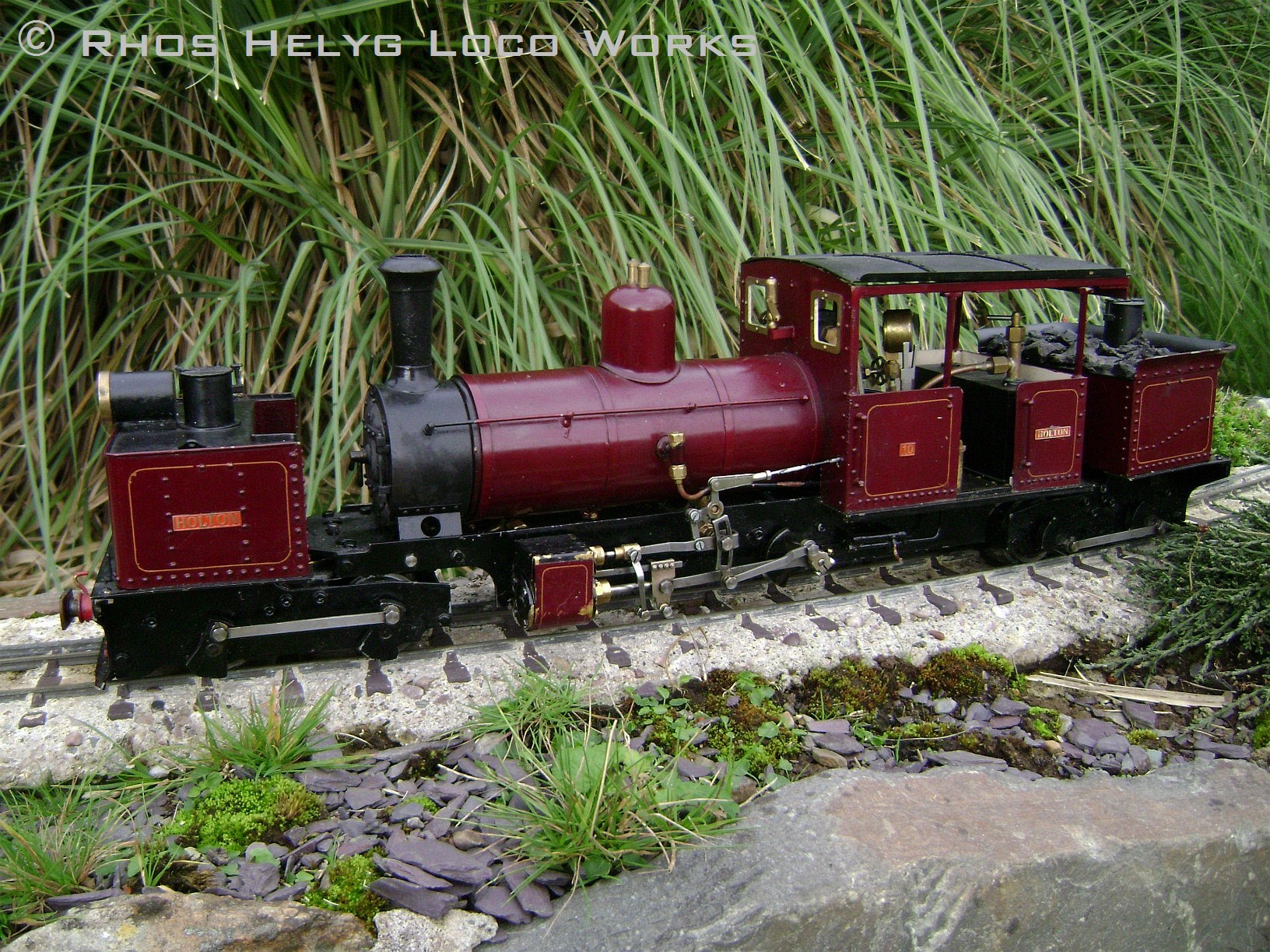
Peter Angus 0-4-4-0 Climax No. 10 HALTON
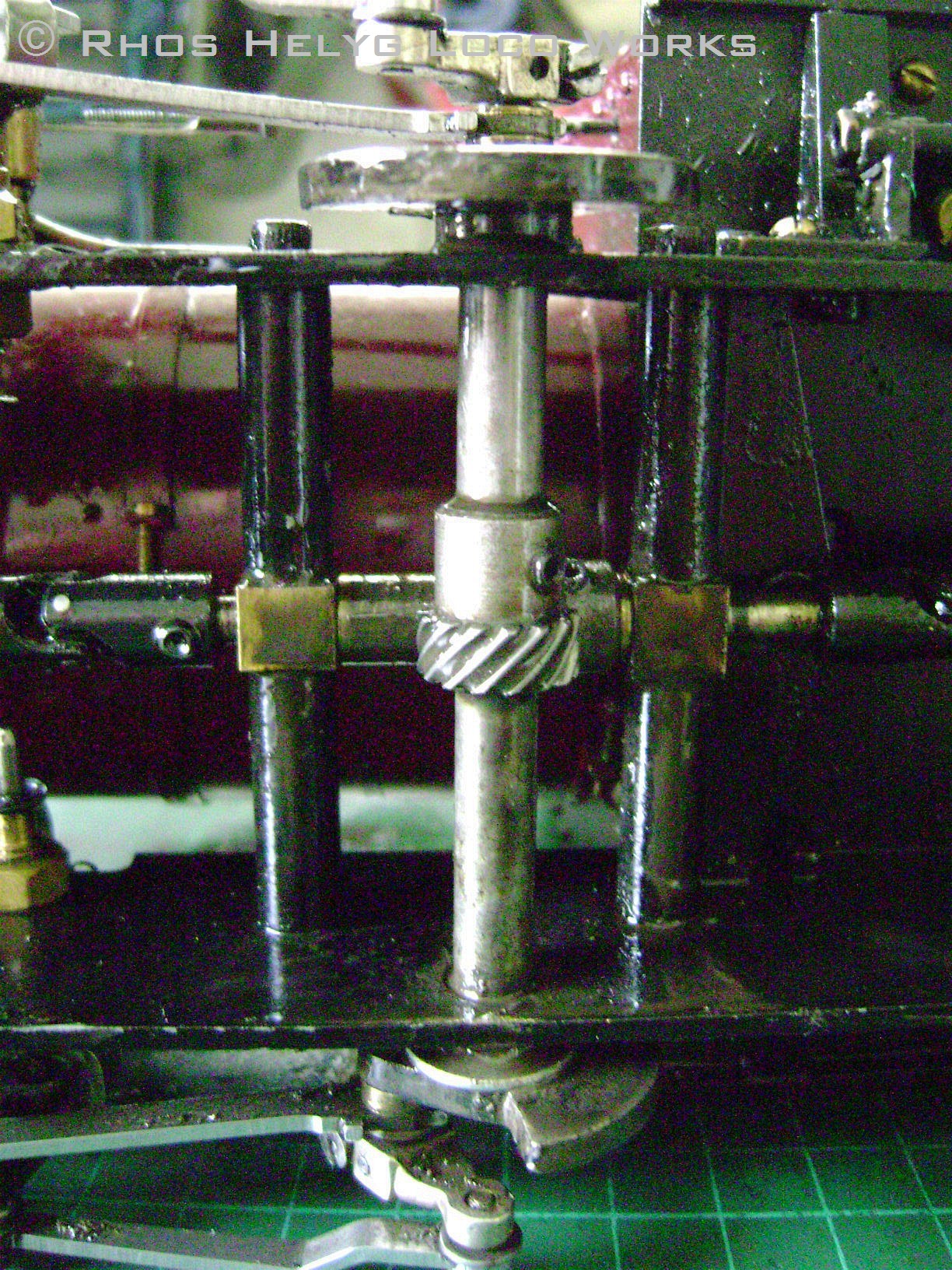
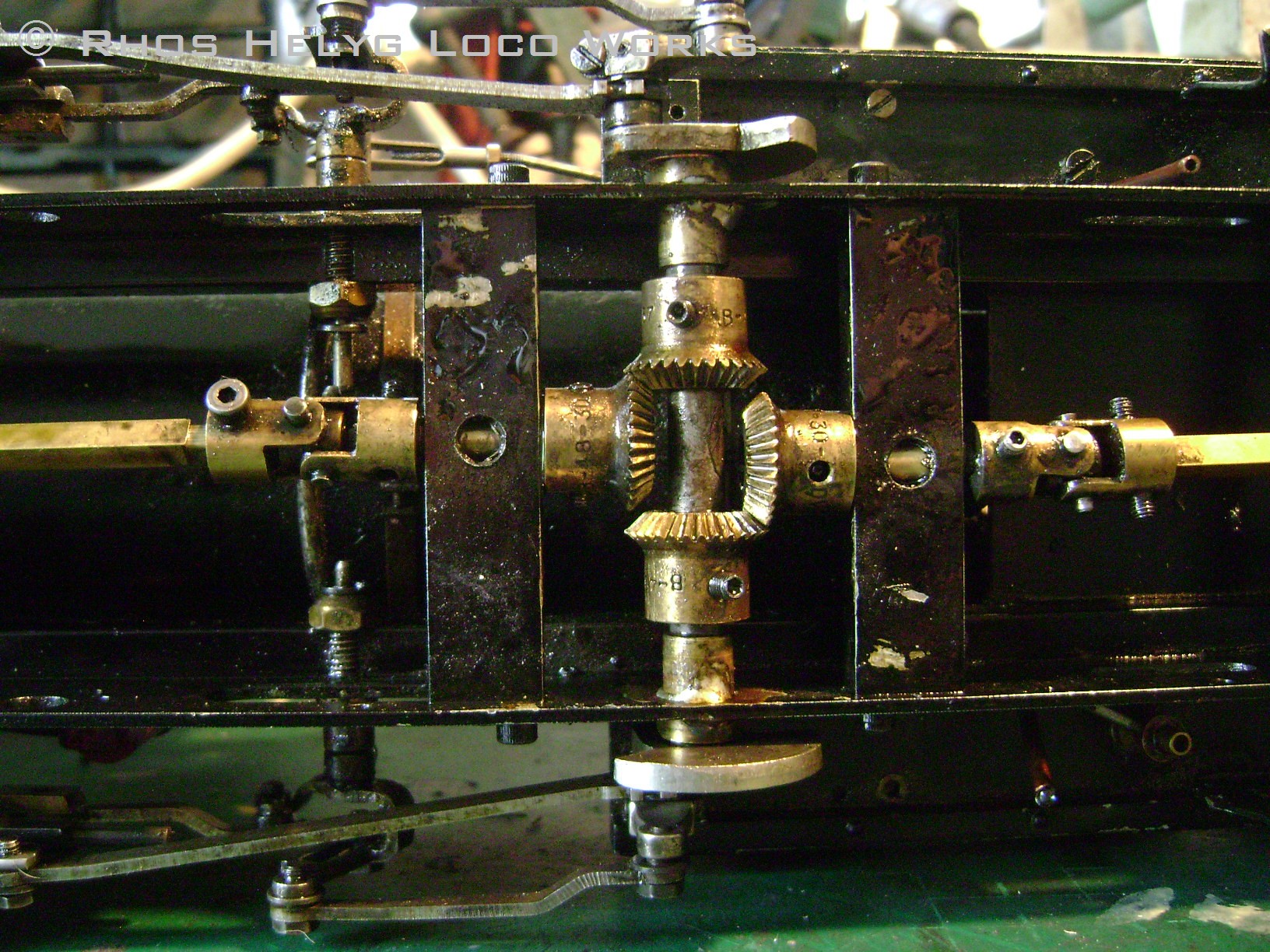
A Peter Angus Climax, driven by the usual Roundhouse set-up that powers a cross-shaft to which is attached a skew gear. This drives another skew gear on an end-to-end shaft fitted with universal joints and more skew gear pairs to drive the outer axles of each bogie. By consequence, it has a lot of chuffs for the distance travelled. An odd arrangement, but it works, even if not particularly mechanically efficient in my view. It came here with a litany of leaks, poor valve setting, broken pipework, and needing a smokebox repaint. One problem was with the cross shaft, which had some side-to-side movement, allowing the gears to not mesh correctly. |
|
|
Peter Angus 0-4-4-0 Climax No. 74
Another Peter Angus Climax, which came to me for an overhaul (mainly the cylinders which were showing their age) and a full strip and repaint. It is quite cleverly constructed, with the boiler cradle being nothing more than a Roundhouse Jack / Katie 0-4-0 chassis with end extensions for the power unit pivots. The cylinders are mounted in their normal position on the frames, the drive shaft is mounted in the rear axle holes and the front axle holes are unused. |
|
|
Peter Angus ⅞ths-scale Overtype 0-4-0WT
This unusual loco was built by Peter Angus and is powered by a 2-cylinder oscillator steam motor. Arriving in bare brass (third photo) my task was to paint it to its owner's detailed specification. |
|
|
Archangel Corpet-Louvet 0-6-0T No. 75
This Corpet-Louvet 0-6-0T for 45mm gauge track was built by Stewart Browne of Archangel fame.
|
|
|
Archangel Darjeeling A-Class 0-4-0ST
This loco is a delightful Darjeeling A-Class made by Archangel. Unlike other A-Class locos that have been here it is (a) made to scale and (b) beautifully made. It arrived here in bare metal and so has received etch primer, paint and lining. . |
|
|
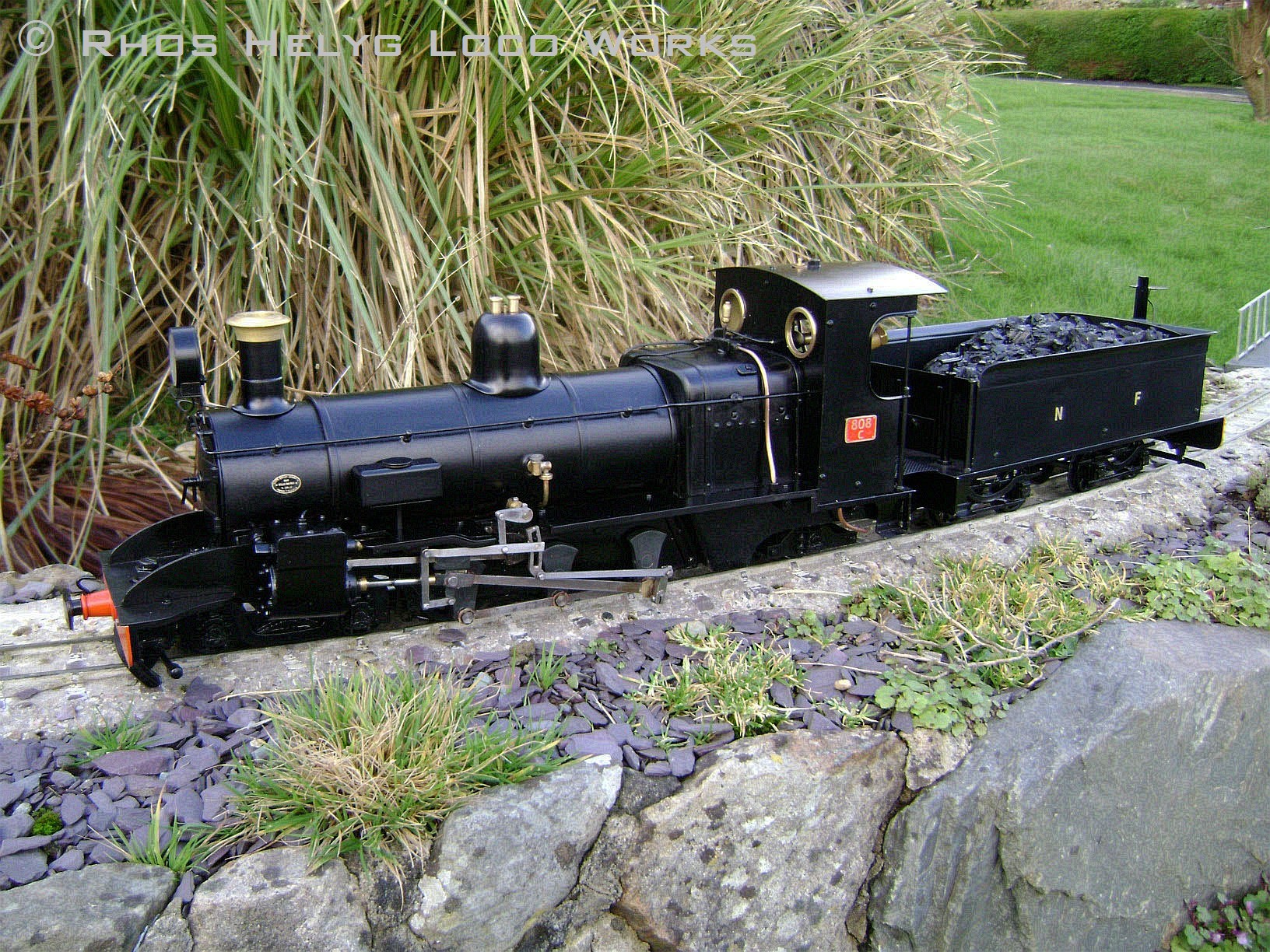
Archangel Darjeeling C-Class Pacific 4-6-2 No. 808
This model of a Darjeeling C-Class Pacific was built by Stewart Browne of Archangel fame.
|
|
|
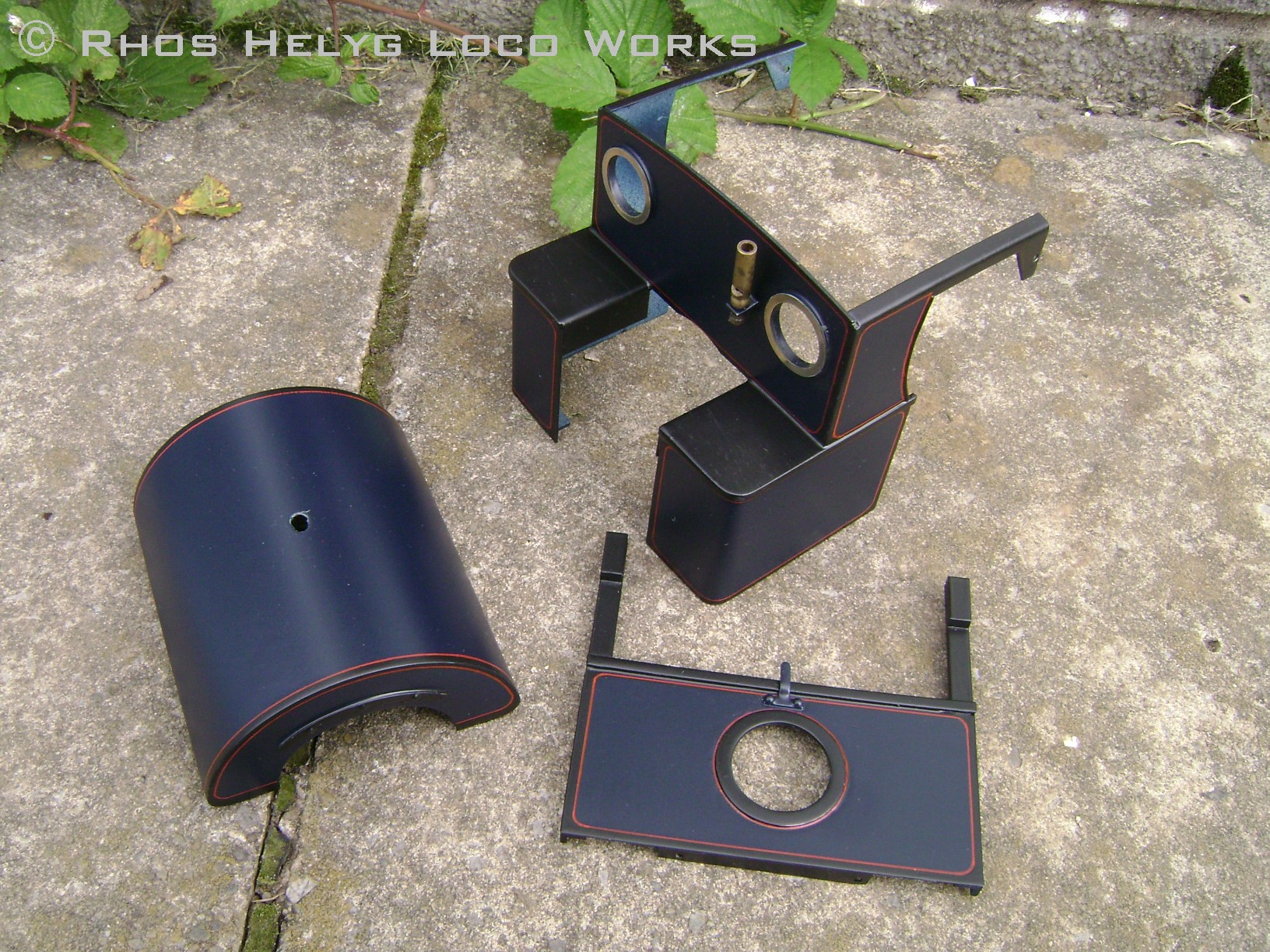
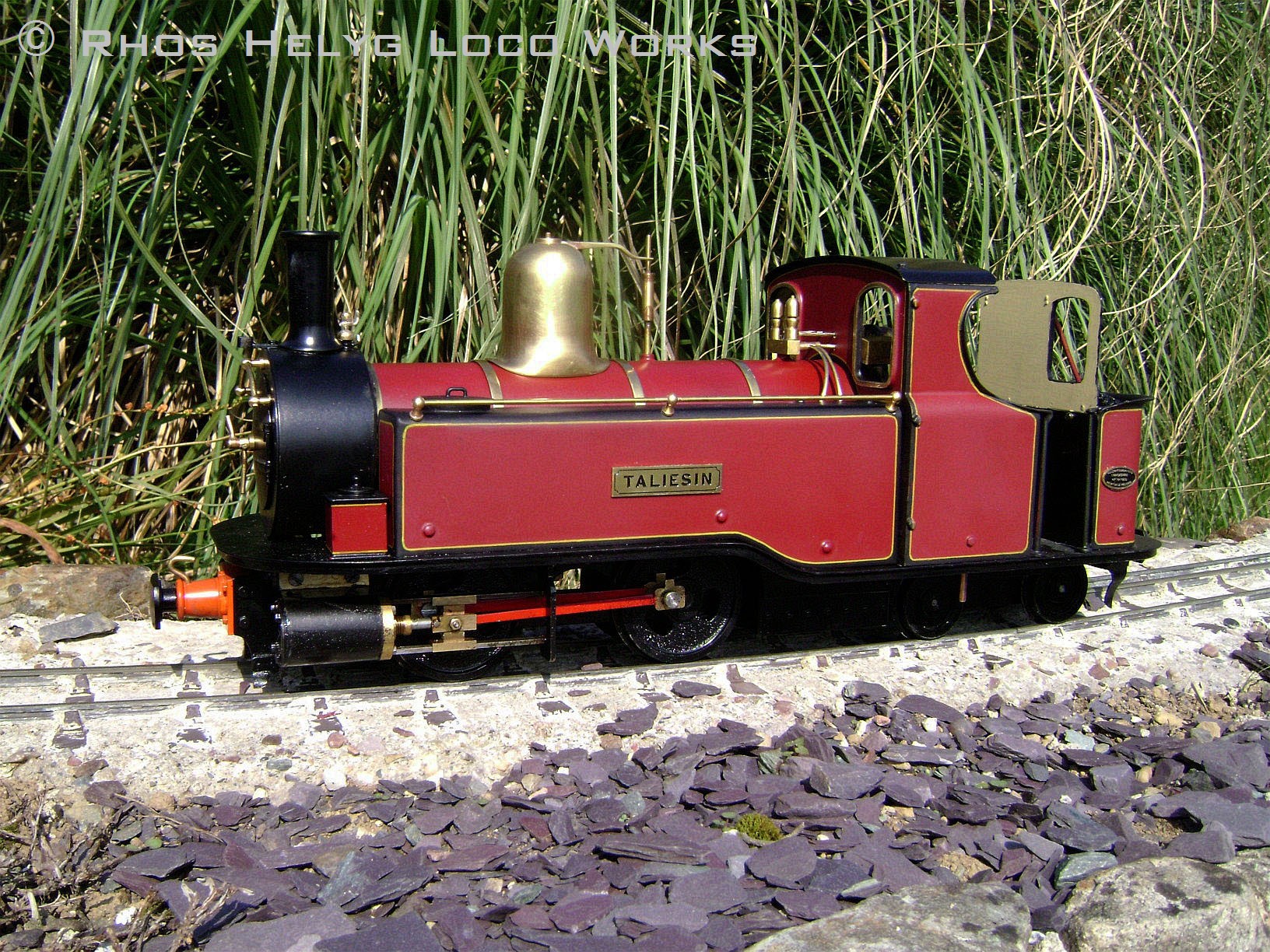
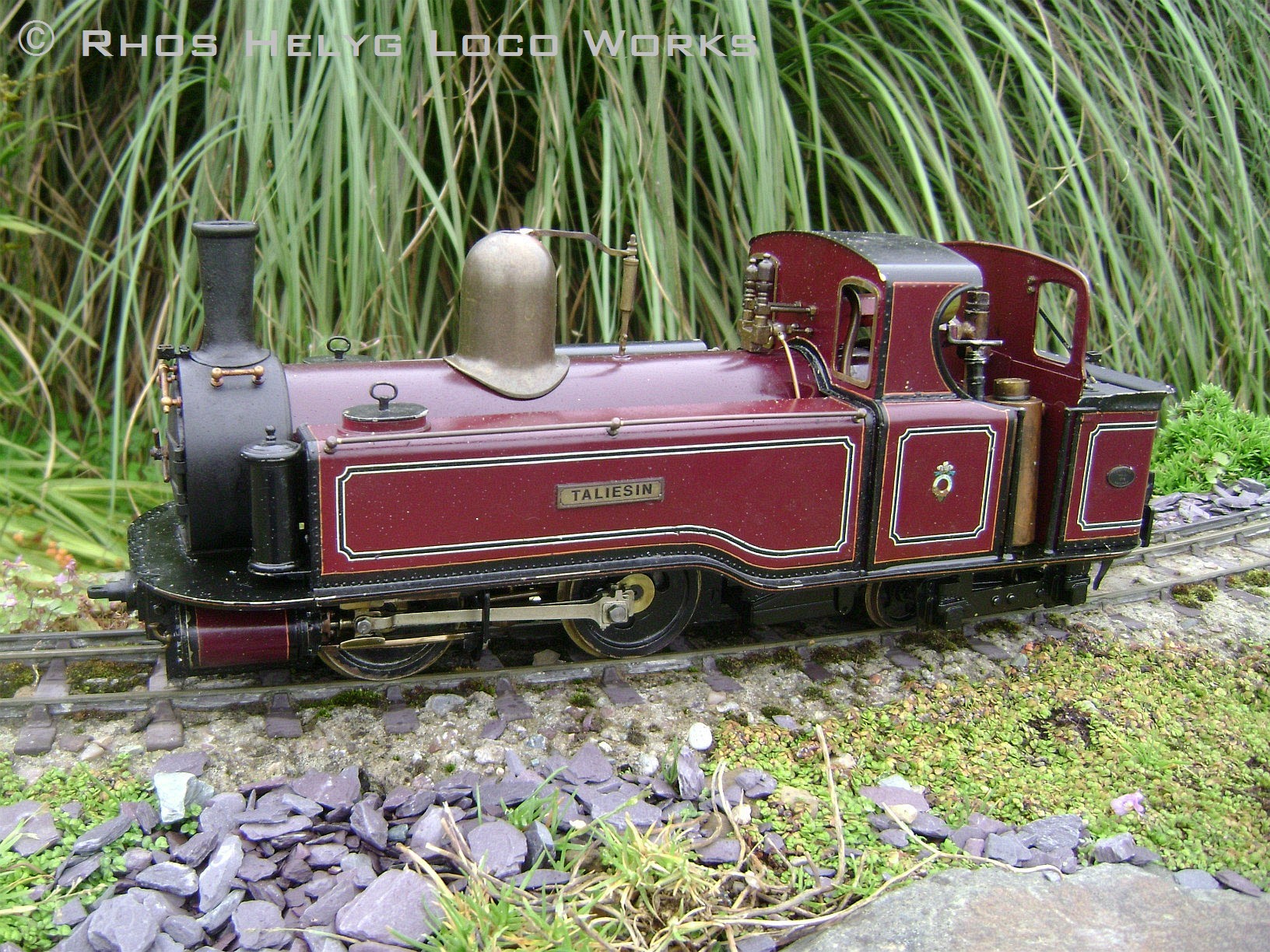
Archangel Festiniog Railway Single Fairlie 0-4-4T TALIESIN
The Festiniog Railway's Single Fairlie TALIESIN is seldom modelled in other than its current form, but this one bucks that trend with the loco seen in its earlier form with lower tanks, tapered chimney and open cab. It was built by Stewart Browne of Archangel Loco Works and arrived here with only the frames painted and the rest in either bare brass or primer. It was painted and lined to the owner's specification with name and works plates supplied by MDC. |
|
|
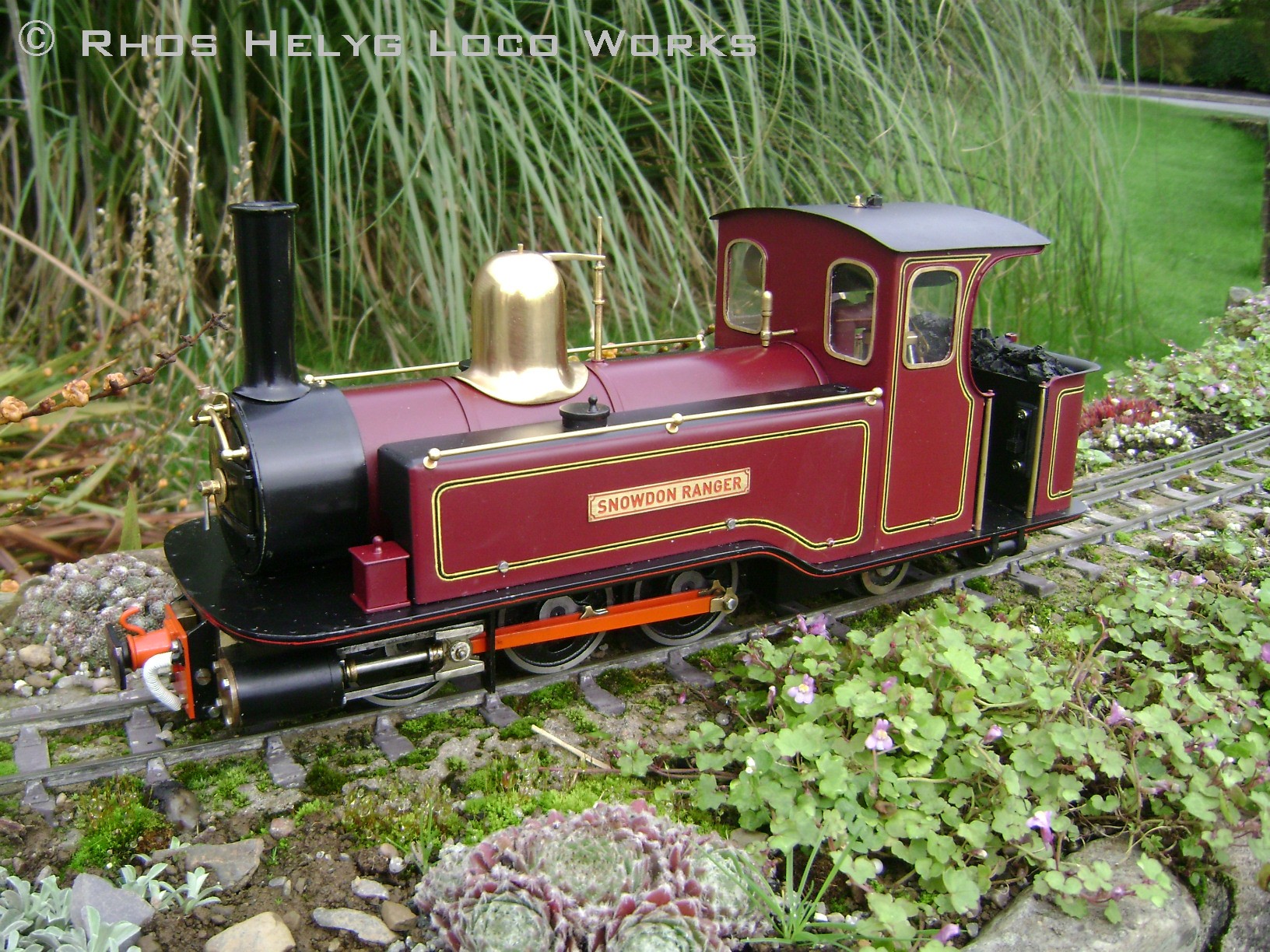
Archangel 0-6-4T SNOWDON RANGER
The lucky owner of this brand-new Archangel Snowdon Ranger sent his model here for lining and fitting of radio control. This locomotive uses slip-eccentric valve gear so only a single-channel radio control system was needed. The lining was applied to the matt Archangel paintwork and then given a satin clear coat. The cab interior was painted in cream and black and the tank tops were also painted black. |
|
|
Archangel 2-4-0T RHEIDOL
This loco was built in December 1978 and it was certainly showing
its age when it entered my workshop for a comprehensive overhaul and repaint. The work has been
done in a way that is sympathetic to its heritage and pedigree but a number of improvements
have been incorporated that improve its usability and operation. The work included:
|
|
|
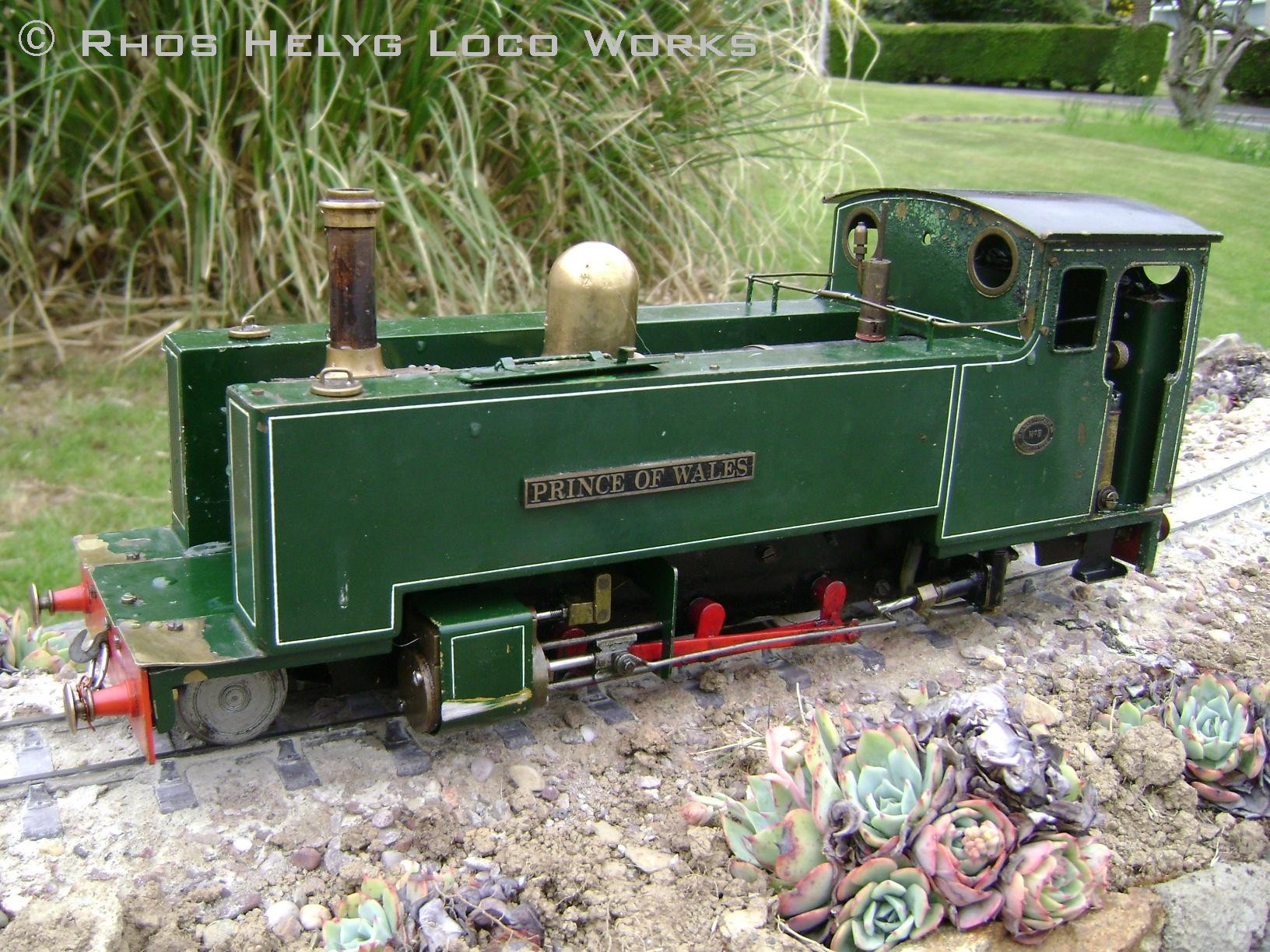
Archangel Vale of Rheidol 2-6-2T No. 9 PRINCE OF WALES
Dating from the 1980s, this meths-fired Archangel loco had been bought at an auction but had not steamed for some time. The new owner asked us to do a full inspection and repair as necessary with a view to returning it to working order. A number of faults were found and corrected, including non-working pressure gauge, blocked blower, stuck clack valves and a missing cab step. The loco had its first run on a track for many years early in May 2010. A 4-page instruction booklet for the owner was also produced which explained the various controls and how to operate an internally-fired meths locomotive. Unfortunately, I was not asked to repaint the locomotive! |
|
|
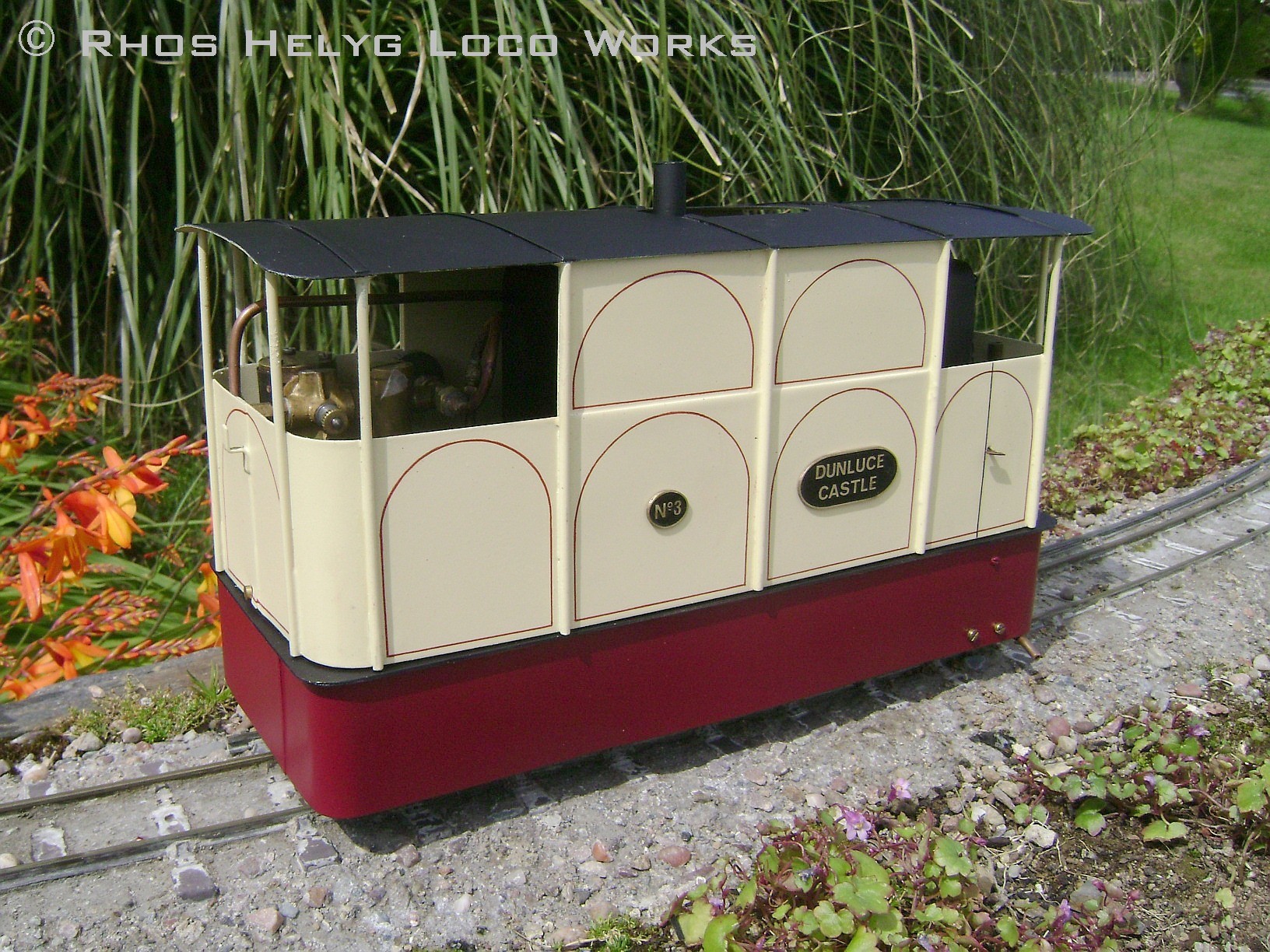
Archangel tram loco 0-4-0 No. 3 DUNLUCE CASTLE
Certainly the oldest 16mm scale loco that has been here for work is this one ... an Archangel tram loco. When the current owner acquired it he was told that it had been built by Archangel, but there were no markings on the loco to suggest that that was the case. An email to Stewart Browne at Archangel confirmed that it had indeed been built by him. He kindly wrote, "The model is an impression of 'The Giants Causeway' tram loco. Two were built in the early seventies. The power plant is a Stuart Turner boiler and oscillating cylinder, chain drive, forward only!". Bearing in mind that it is over 40 years old I found it to be in remarkably good condition and it only needed some repairs to leaking pipework, repairs to the bodywork (which is mainly copper sheet) and a new set of wicks for the meths burner. It runs very nicely but it is fixed for 45mm gauge track. The only thing that had really suffered over the years was the paintwork so it was stripped back to bare metal and repainted in colours to match the original paintwork and lining. Hopefully it will be good for another 40 years now! |
|
|
Argyle Locomotive Works Bantam 0-4-0ST
If there is a word that can be used to describe an Argyle Loco Works "Bantam" it might well be
"cute". This one came here showing no signs of a lot of use, but definite signs of trauma.
|
|
|
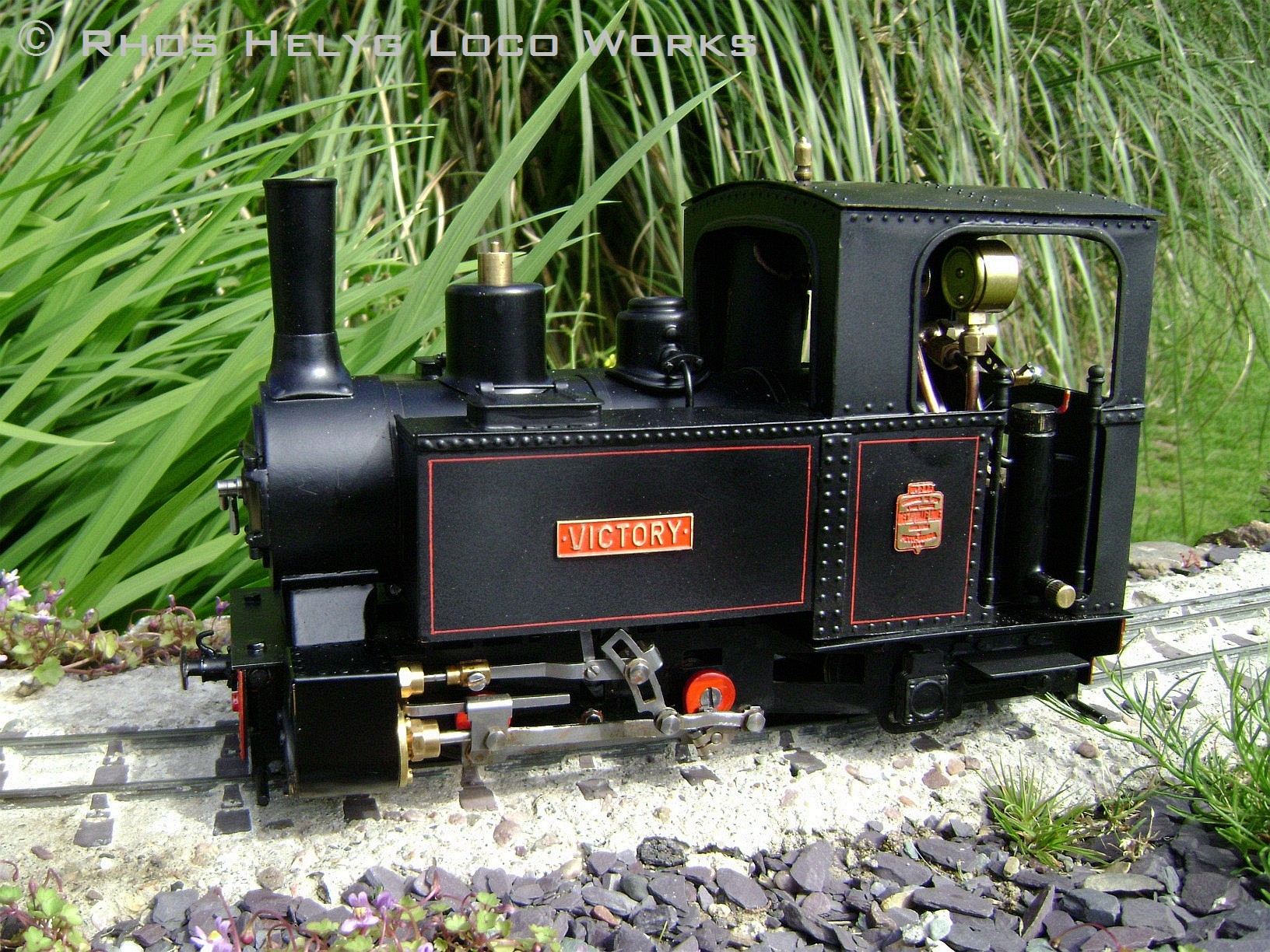
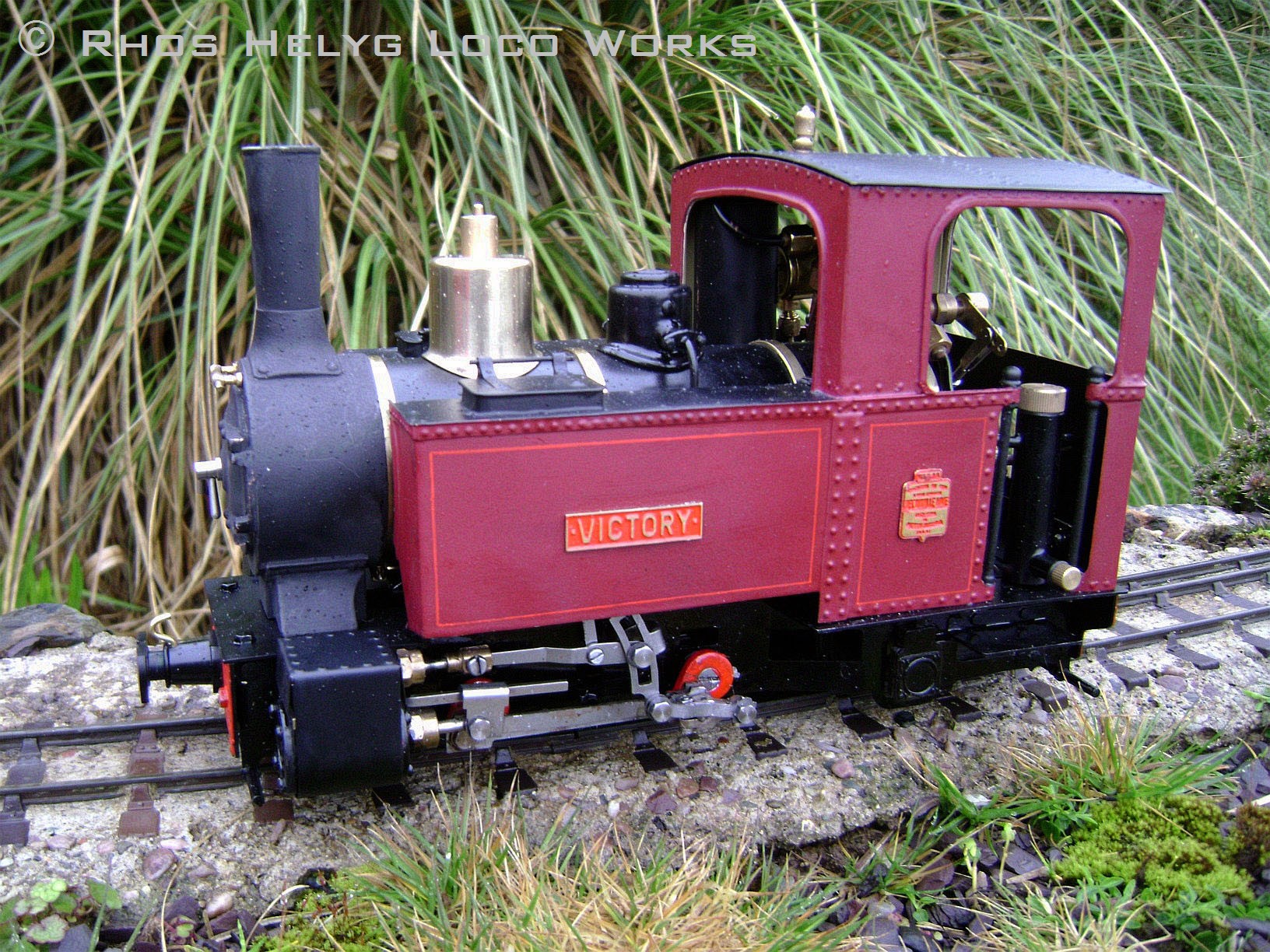
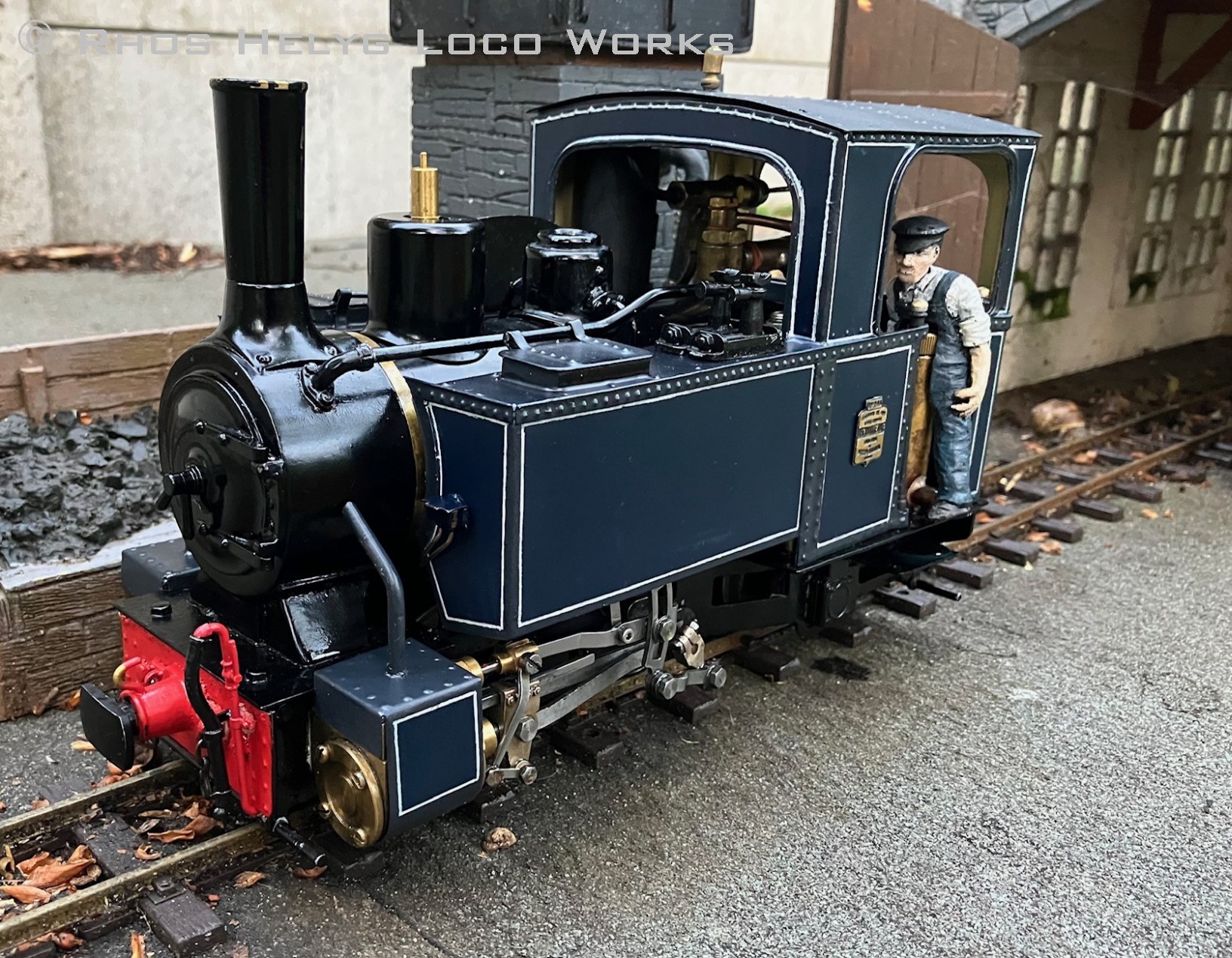
Association of 16mm Modellers Victory 0-4-2T VICTORY
The initial email from the owner of this 16mm Assocation Victory asked me simply to repaint it
from grey to satin black, and sort out the valve timing. He had bought the loco second-hand and
was not responsible for its construction or choice of colour. Satin black is the colour I spray
the most so it was not an issue to fit it in the other work going on at RHLW. However, I did
ask the owner to strip the grey paint, which he did. When it arrived here the body was in bare
brass but every piece of the etched brass detailing (rivet strips, beading, etc.) had detached
and was loose in a box of bits. Enquiries with the owner revealed they had detached during the
paint stripping process. I began to smell SuperGlue.
|
|
|
Association of 16mm Modellers Victory 0-4-2T VICTORY
The owner of this Victory had bought it as a kit several years ago, had assembled the chassis,
but was now stuck with the rest of its construction. It arrived me with me as a complete
chassis and sheets of etched brass bodywork. A number of errors were identified in the chassis
and it was soon running sweetly, Although a small start had been made on the bodywork it was
not to my standard so was dismantled, cleaned up, and then the whole body assembled.
Two-channel radio control was also fitted.
|
|
|
Association of 16mm Modellers Victory 0-4-2T VICTORY
The owner of this Victory had built and painted the loco but was not happy with the paint finish he has achieved. The body and cylinder covers came to me for painting and lining. (Photo by Richard Hay) |
|
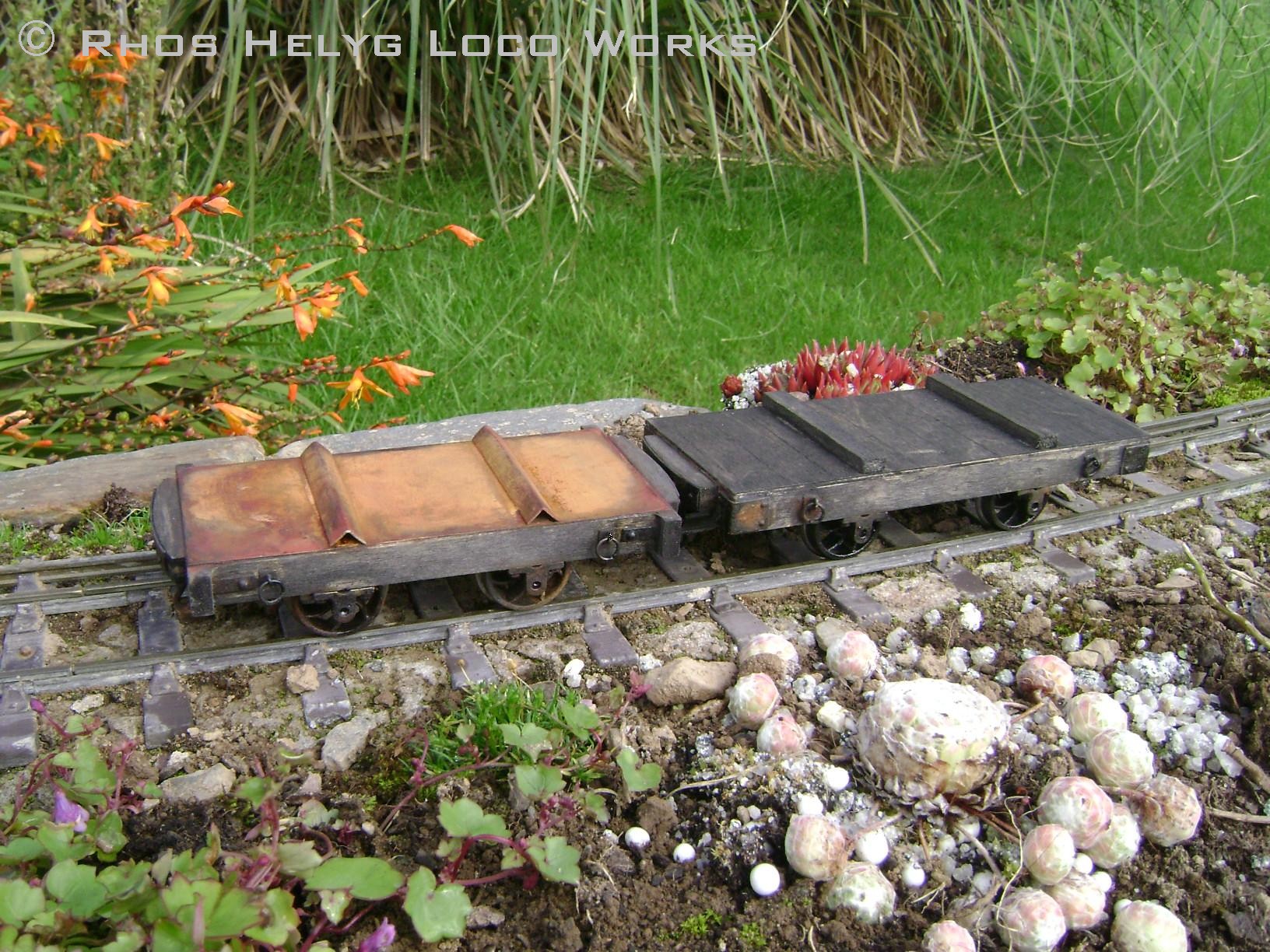
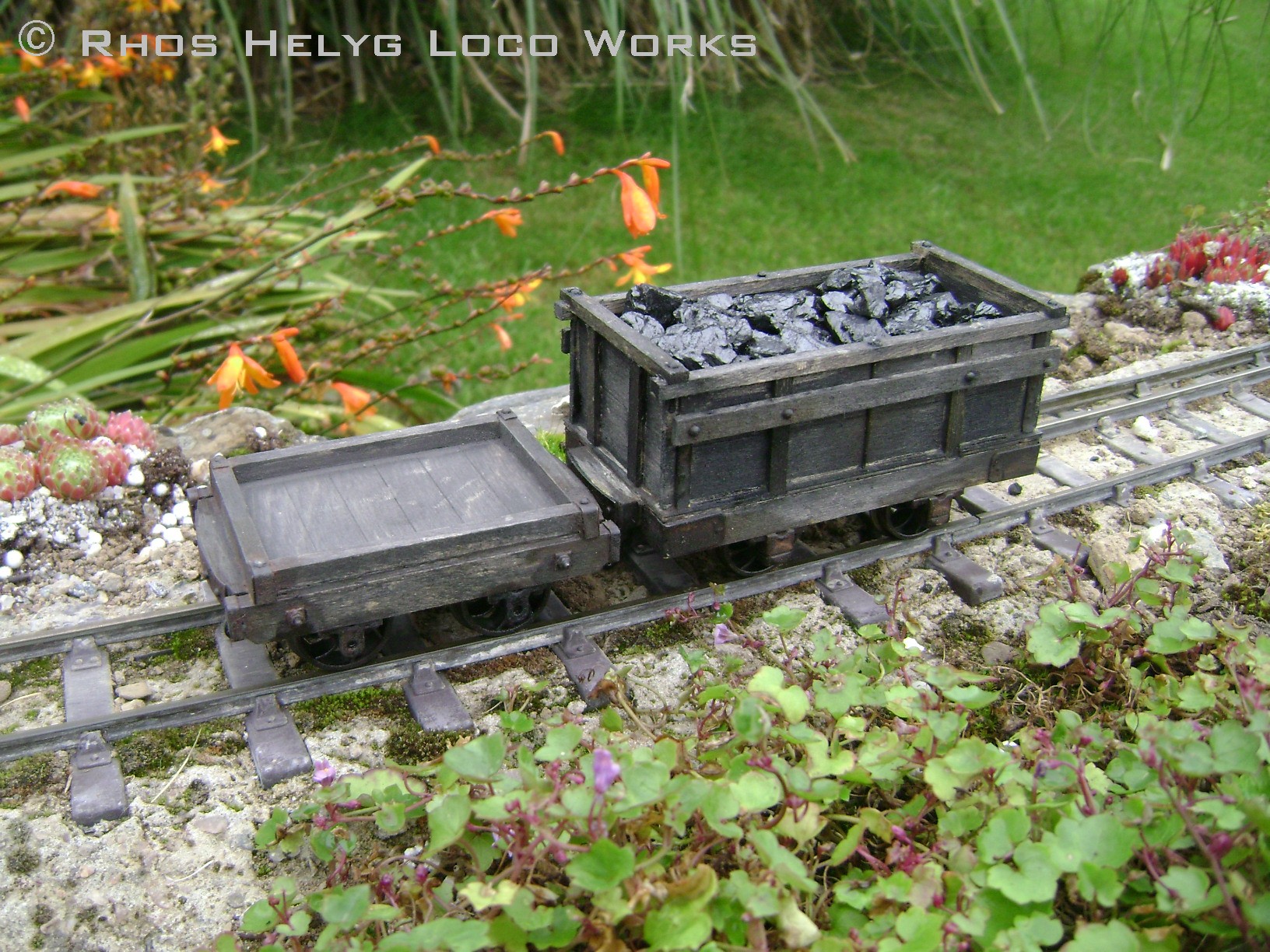
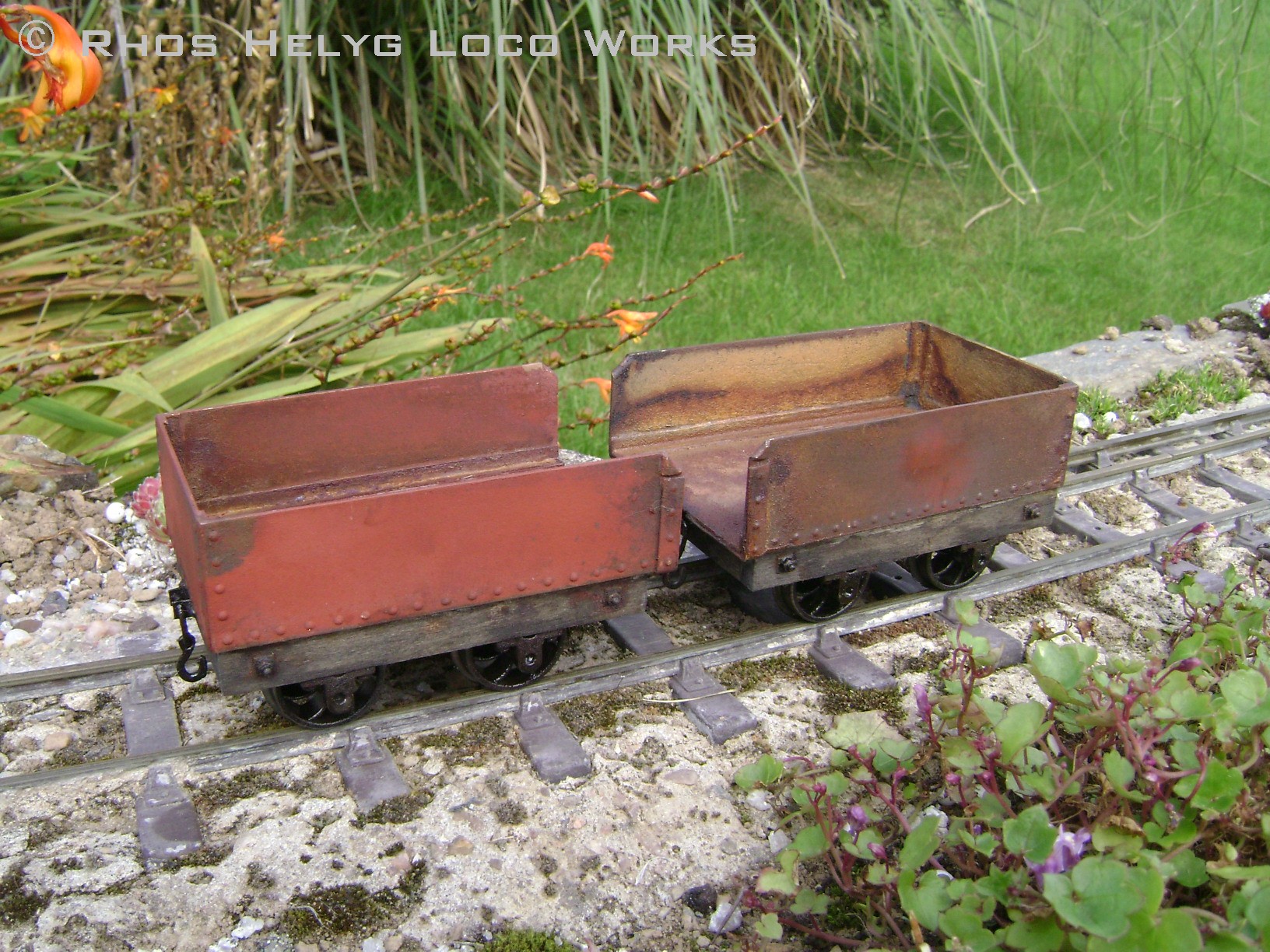
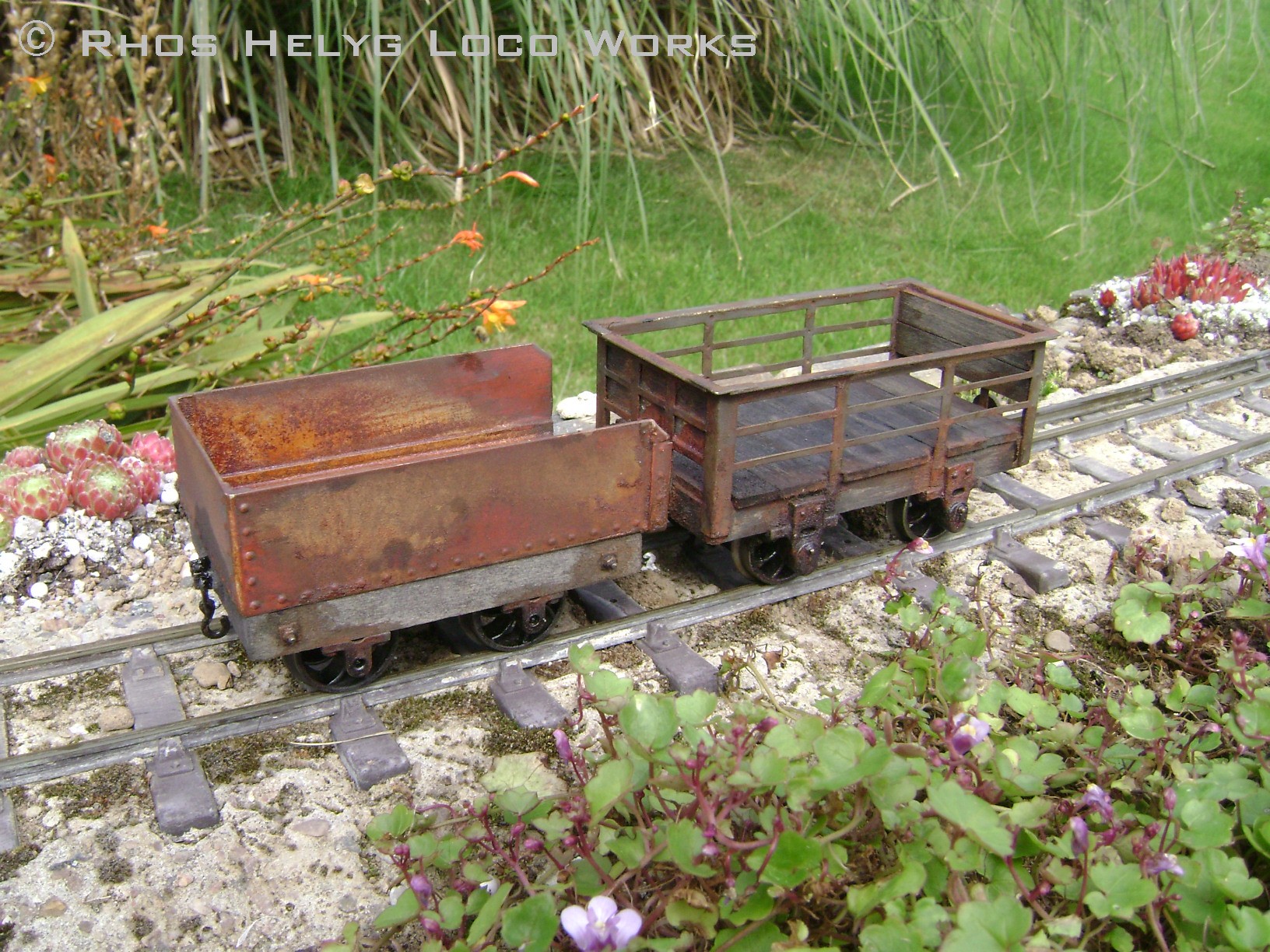
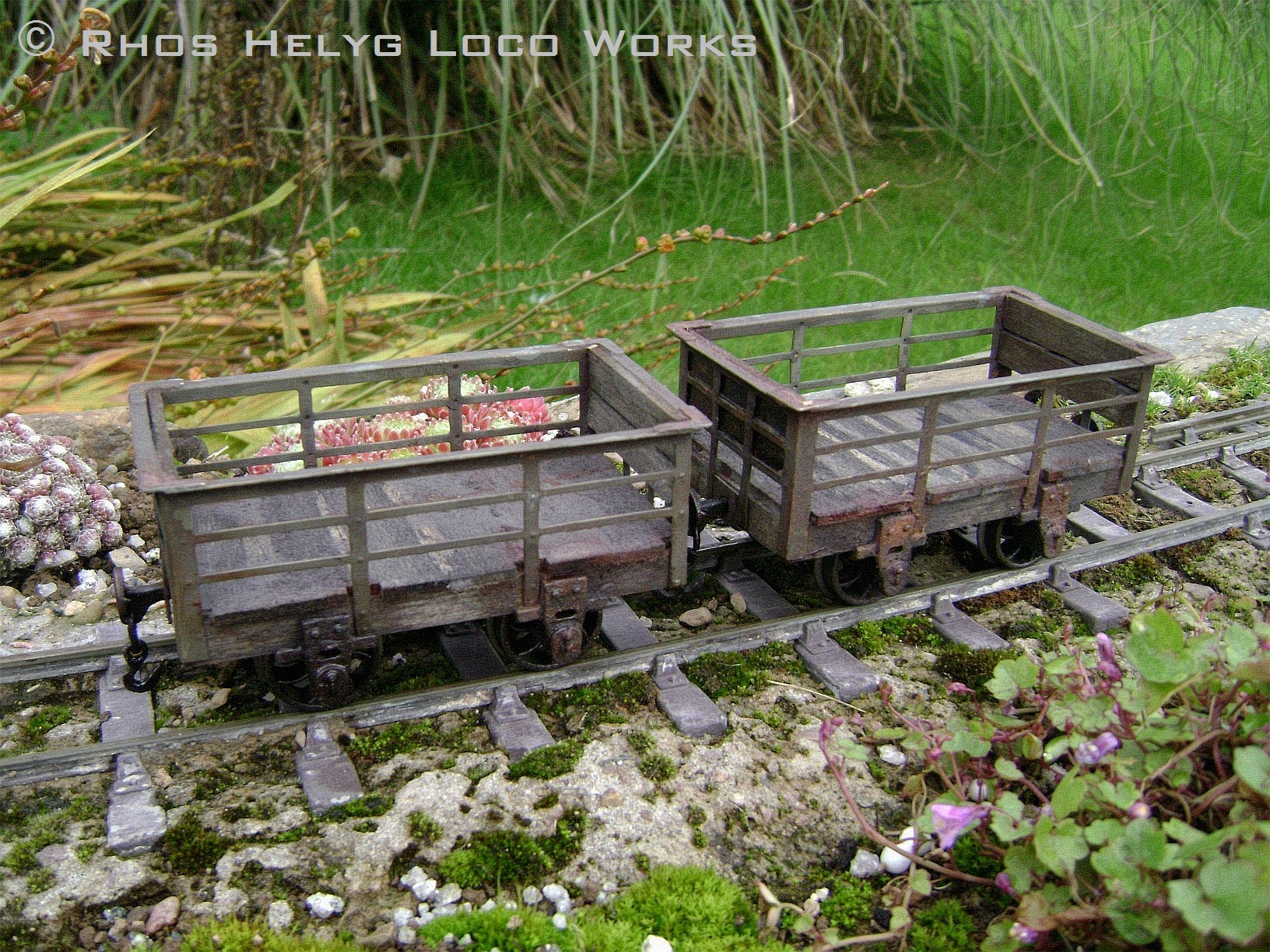
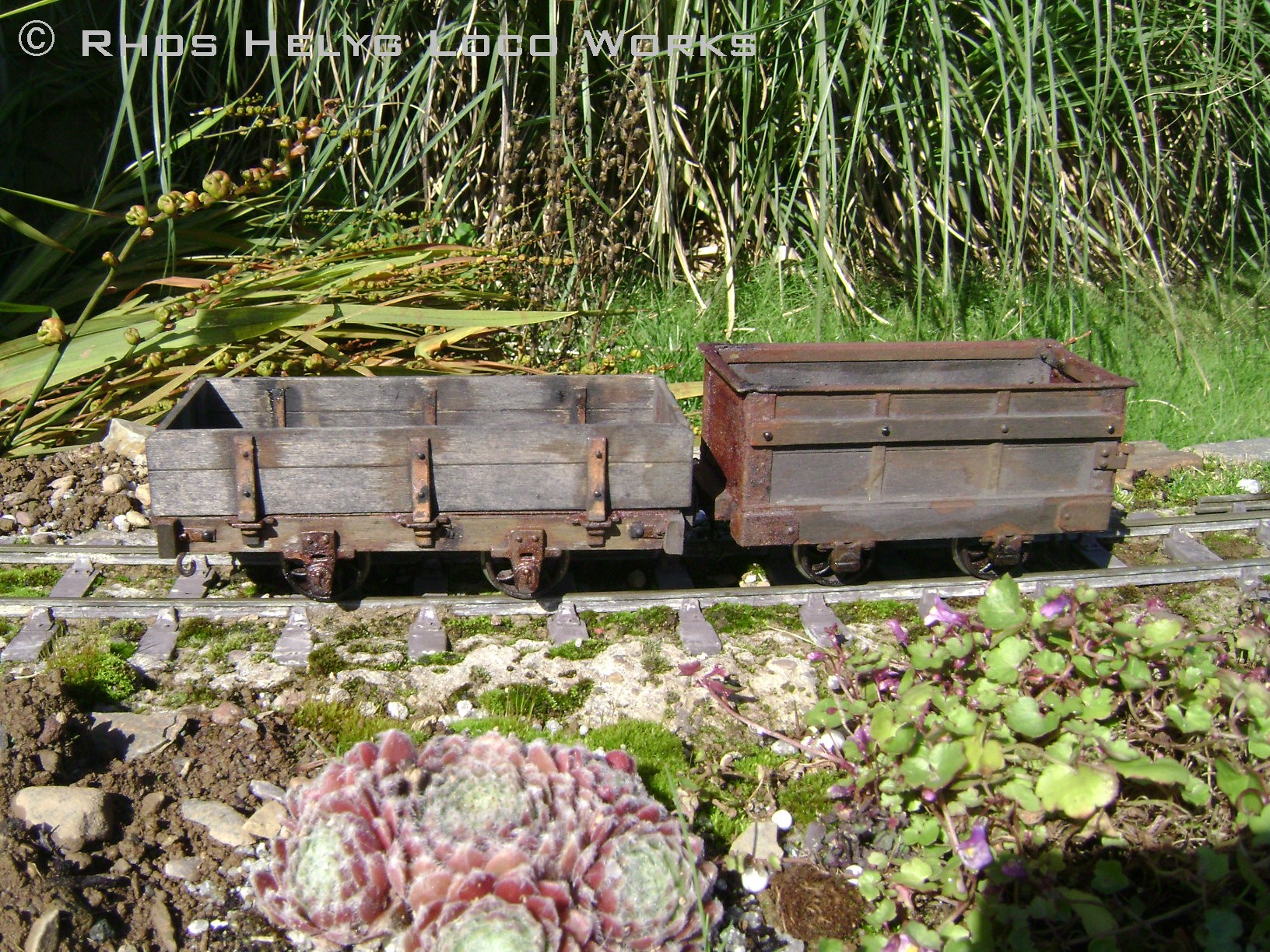
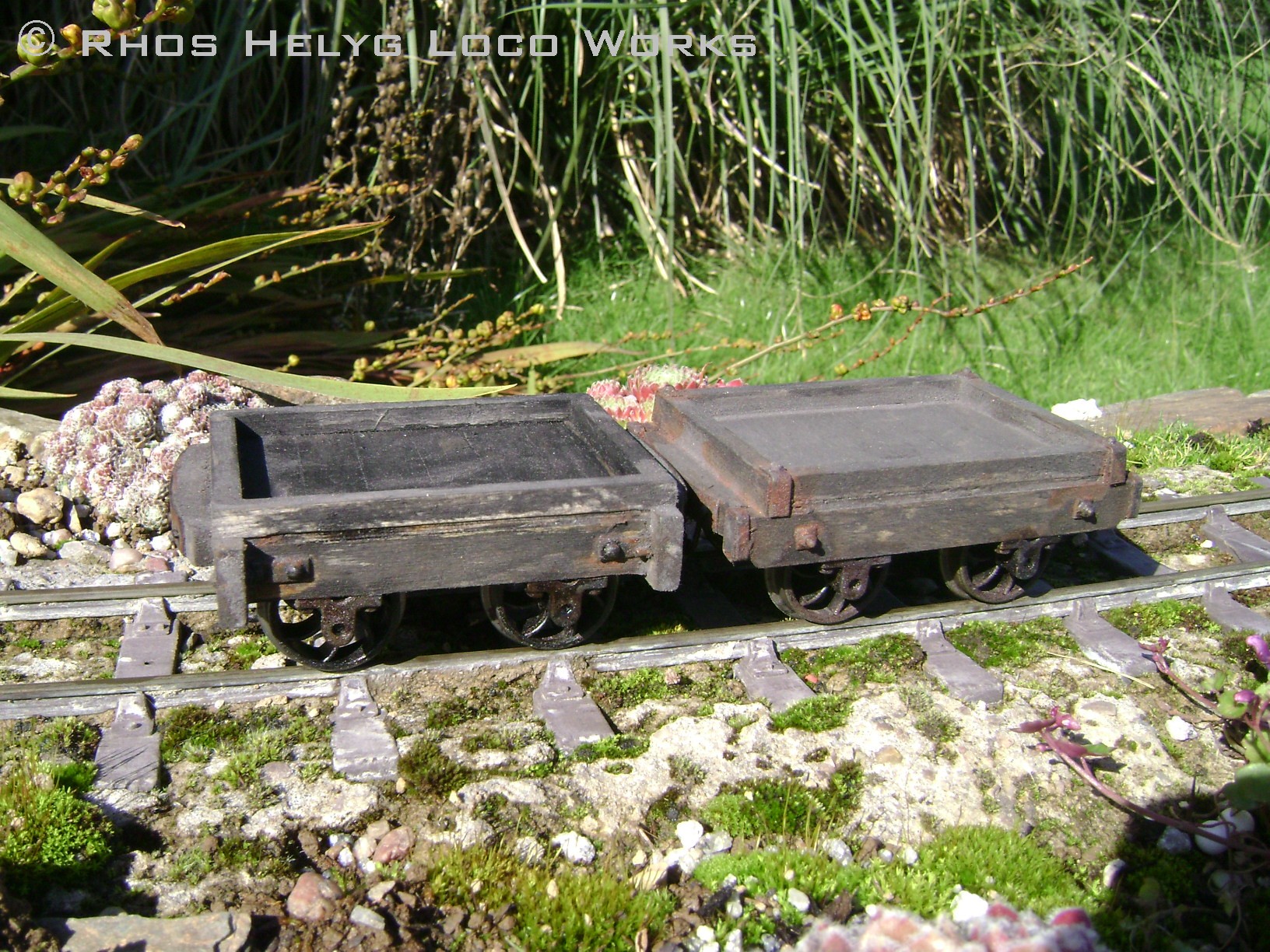
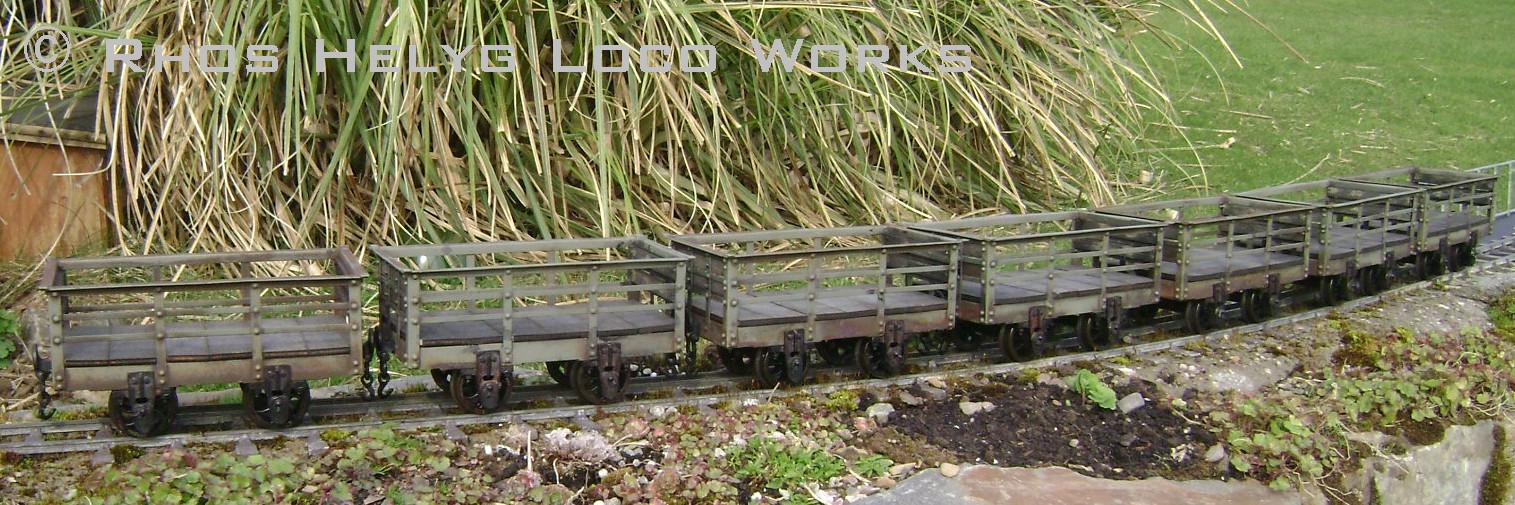
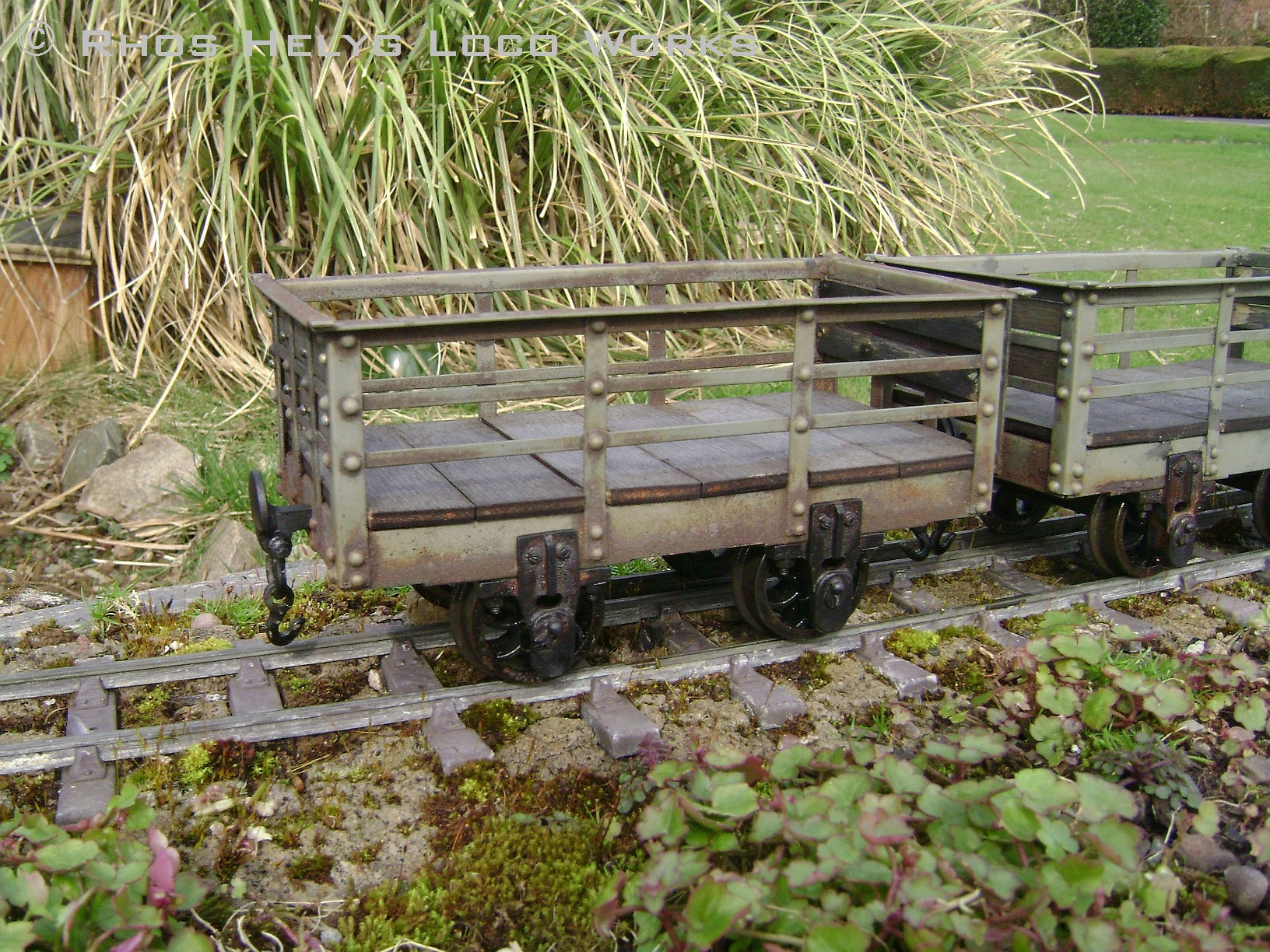
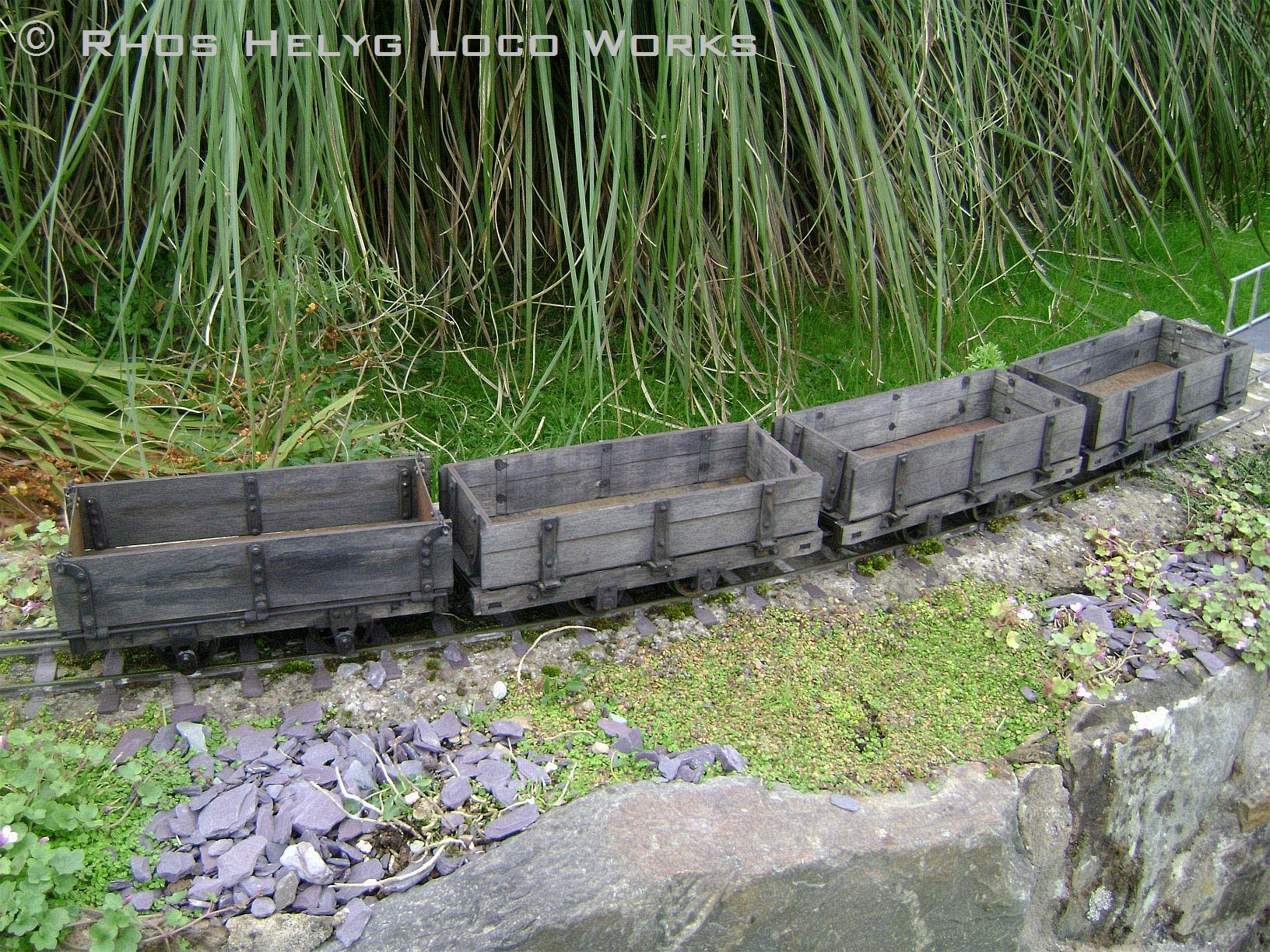
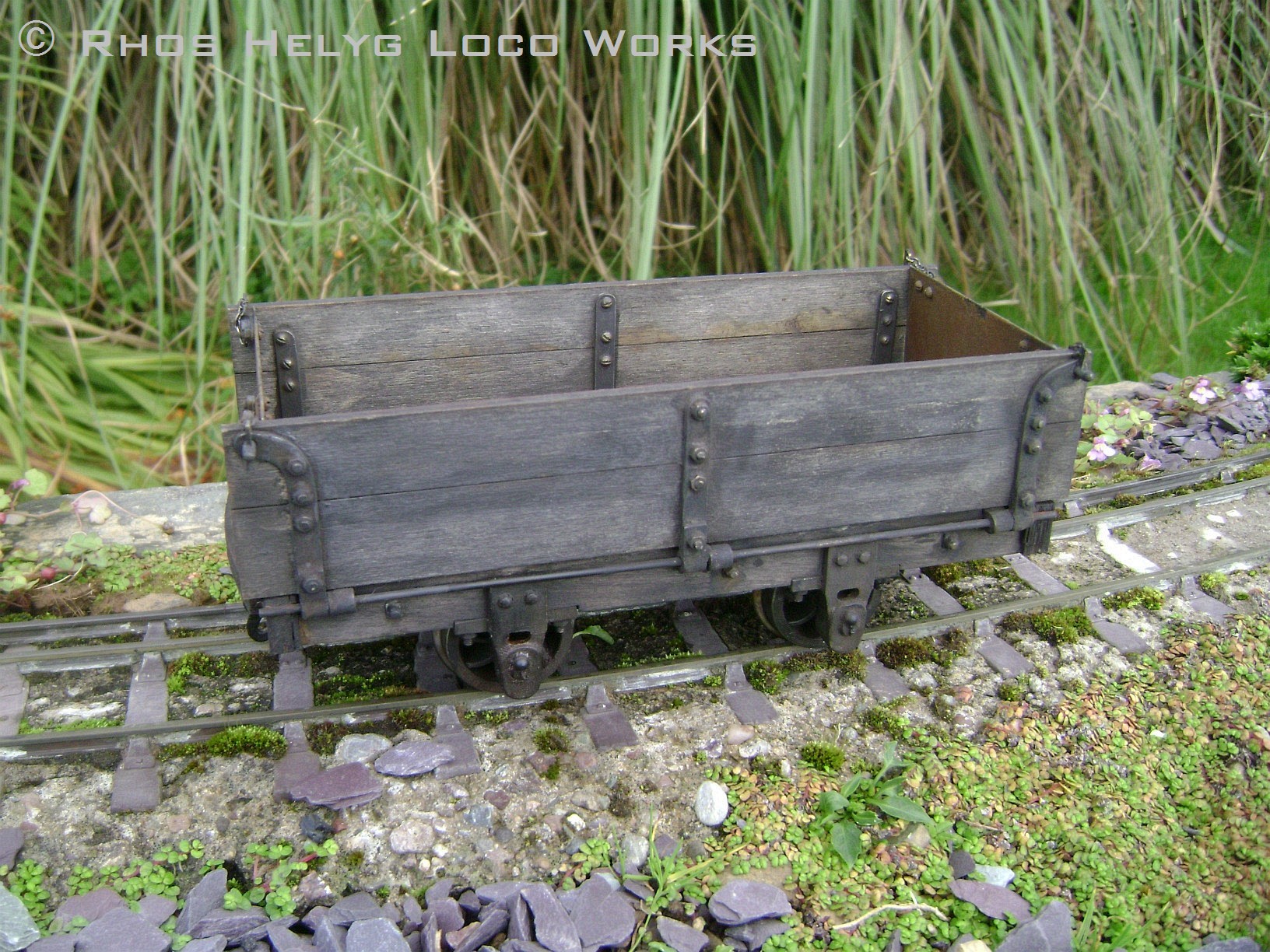
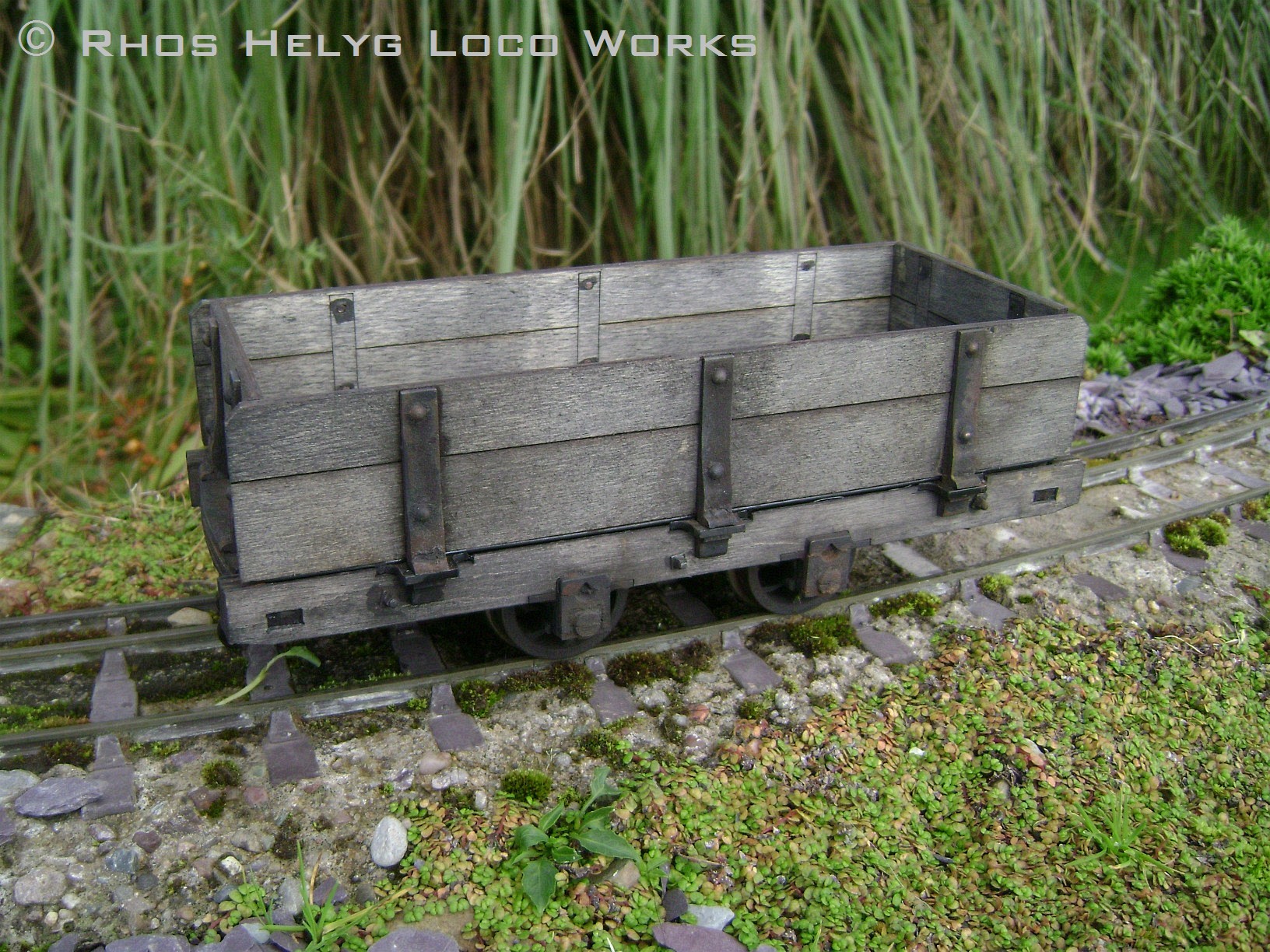
| Atropos Penrhyn Quarry wagons | |
|
|
|
|
|
|
|
|
|
|
|
|
|
|
|
|
|
|
|
|
|
|
|
|




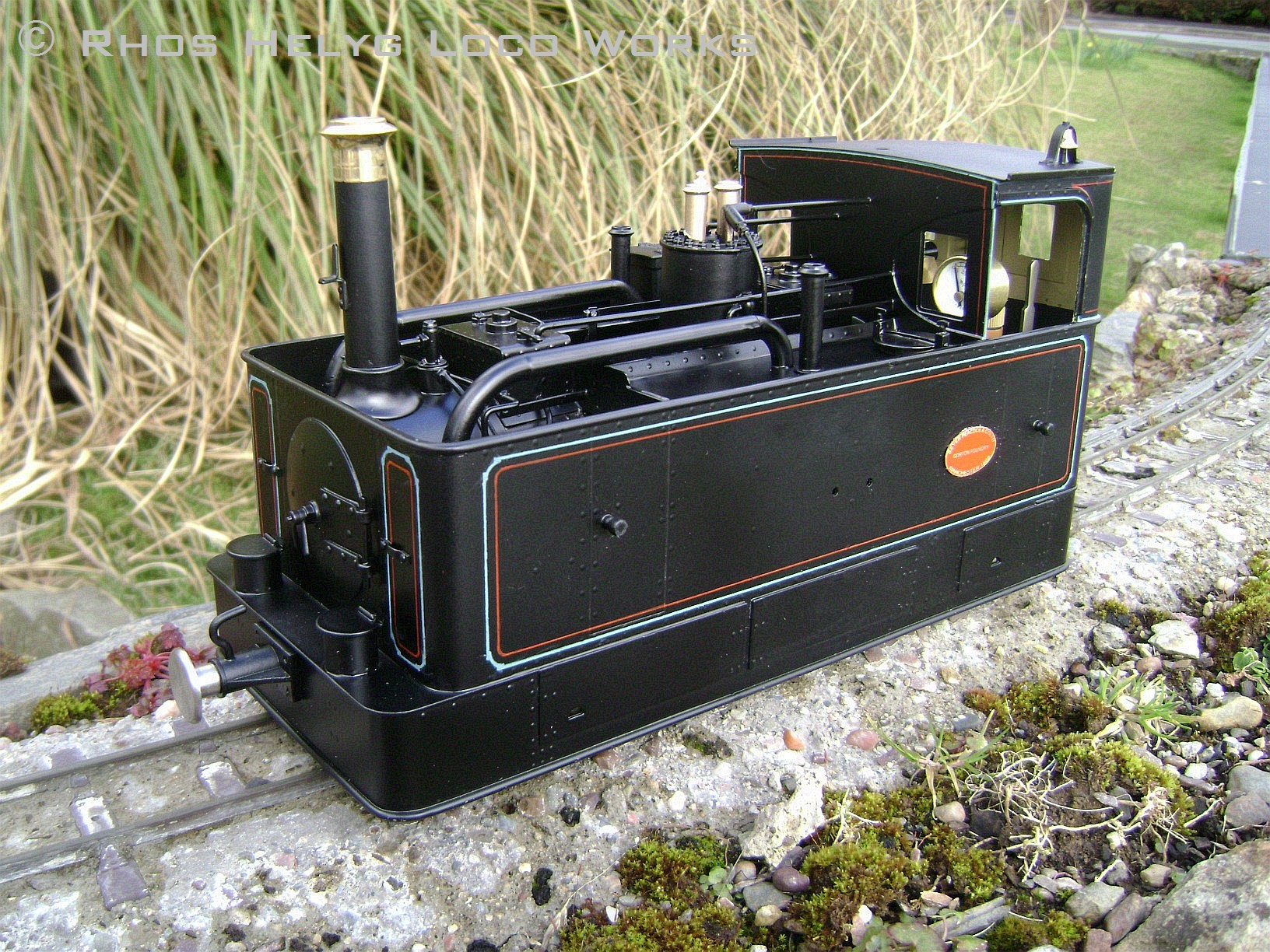
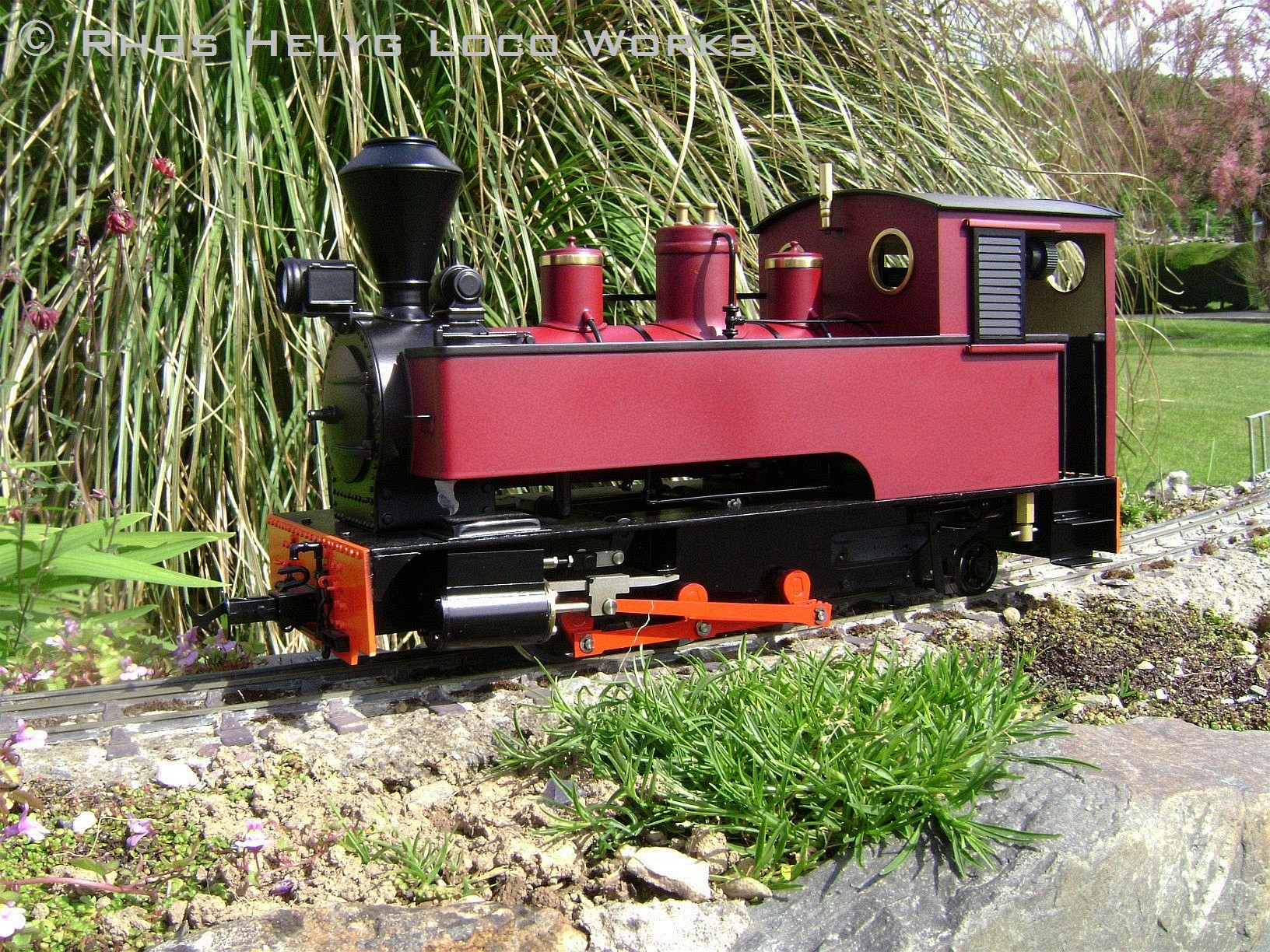

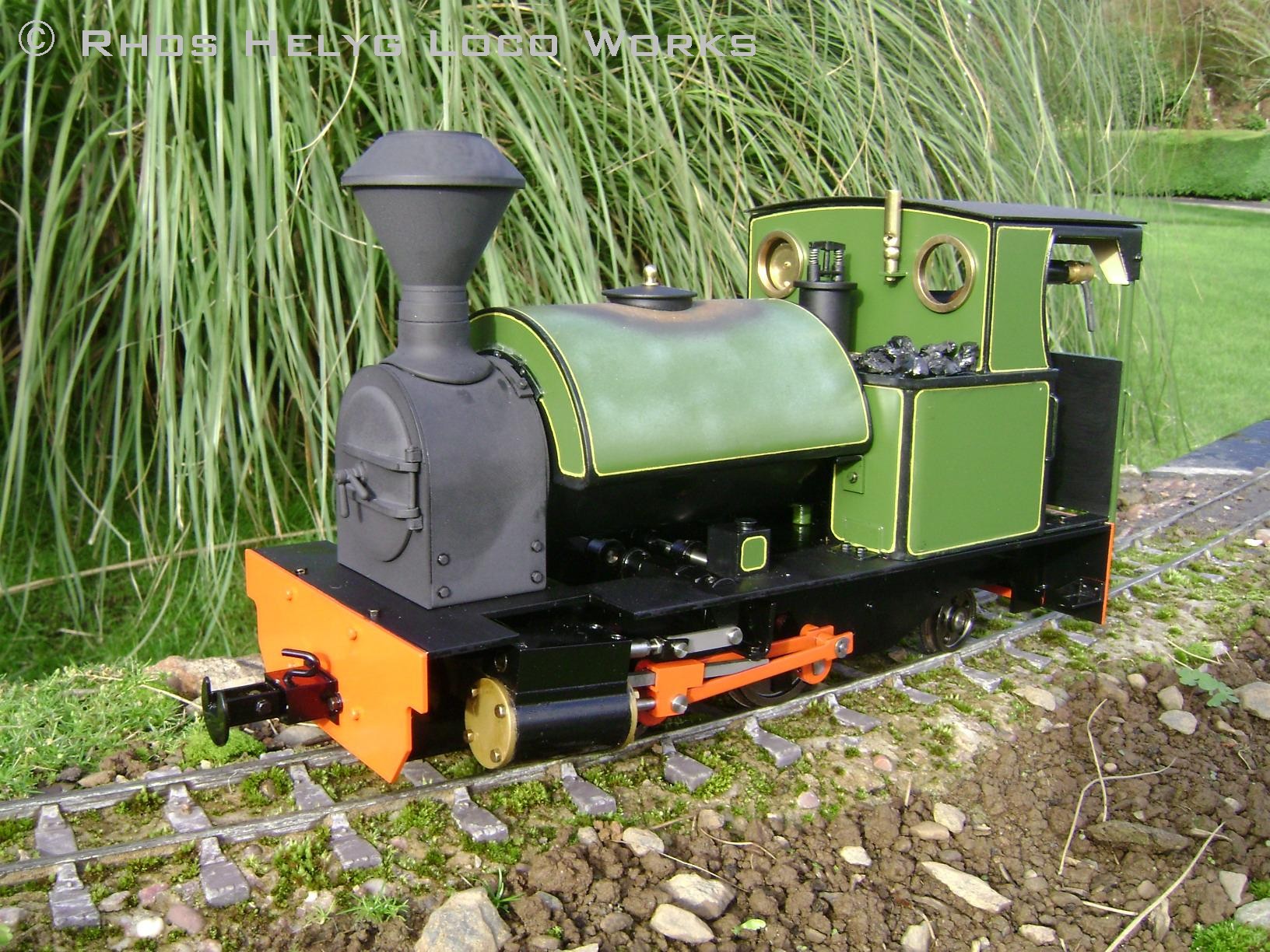
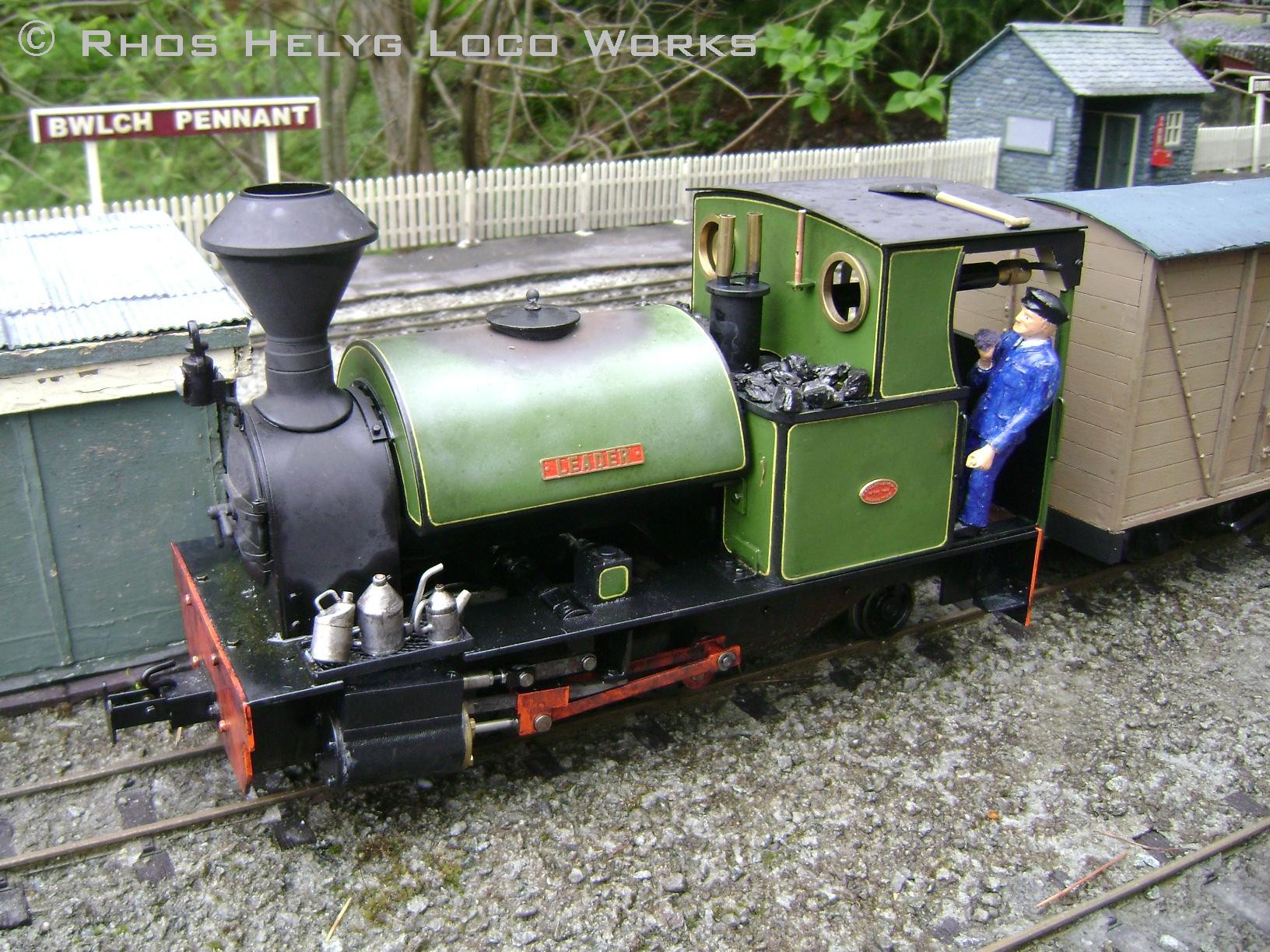







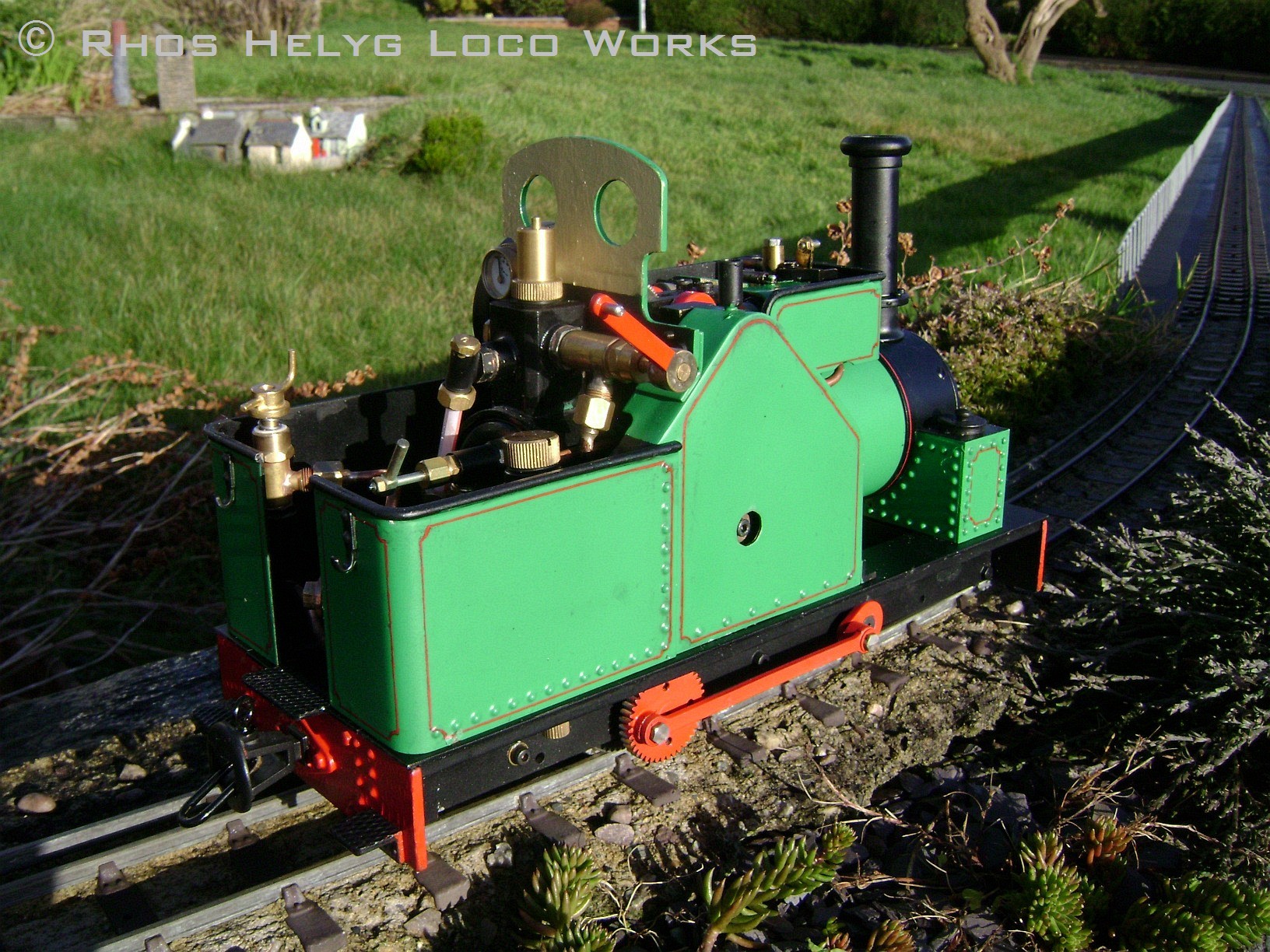
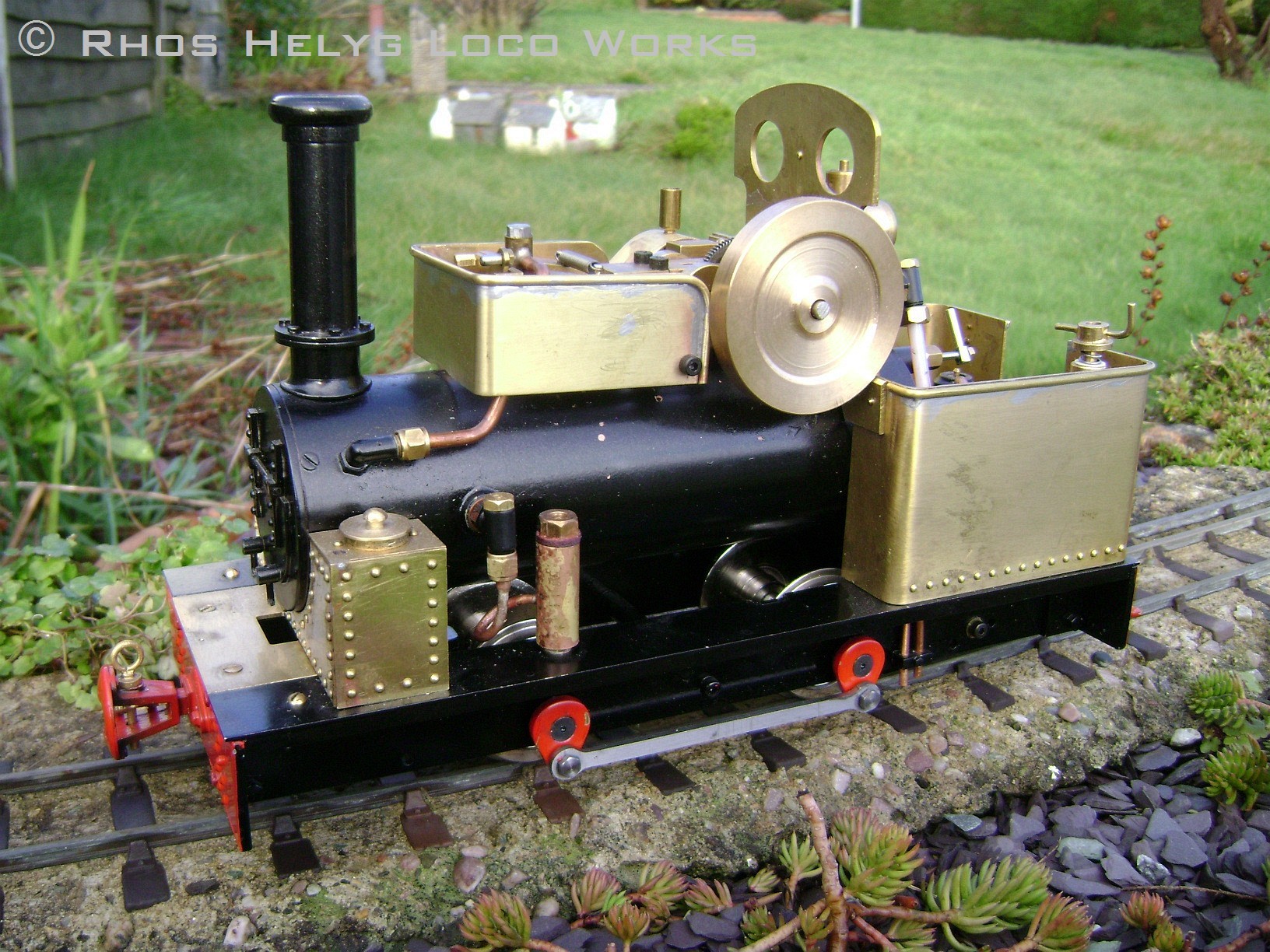




|
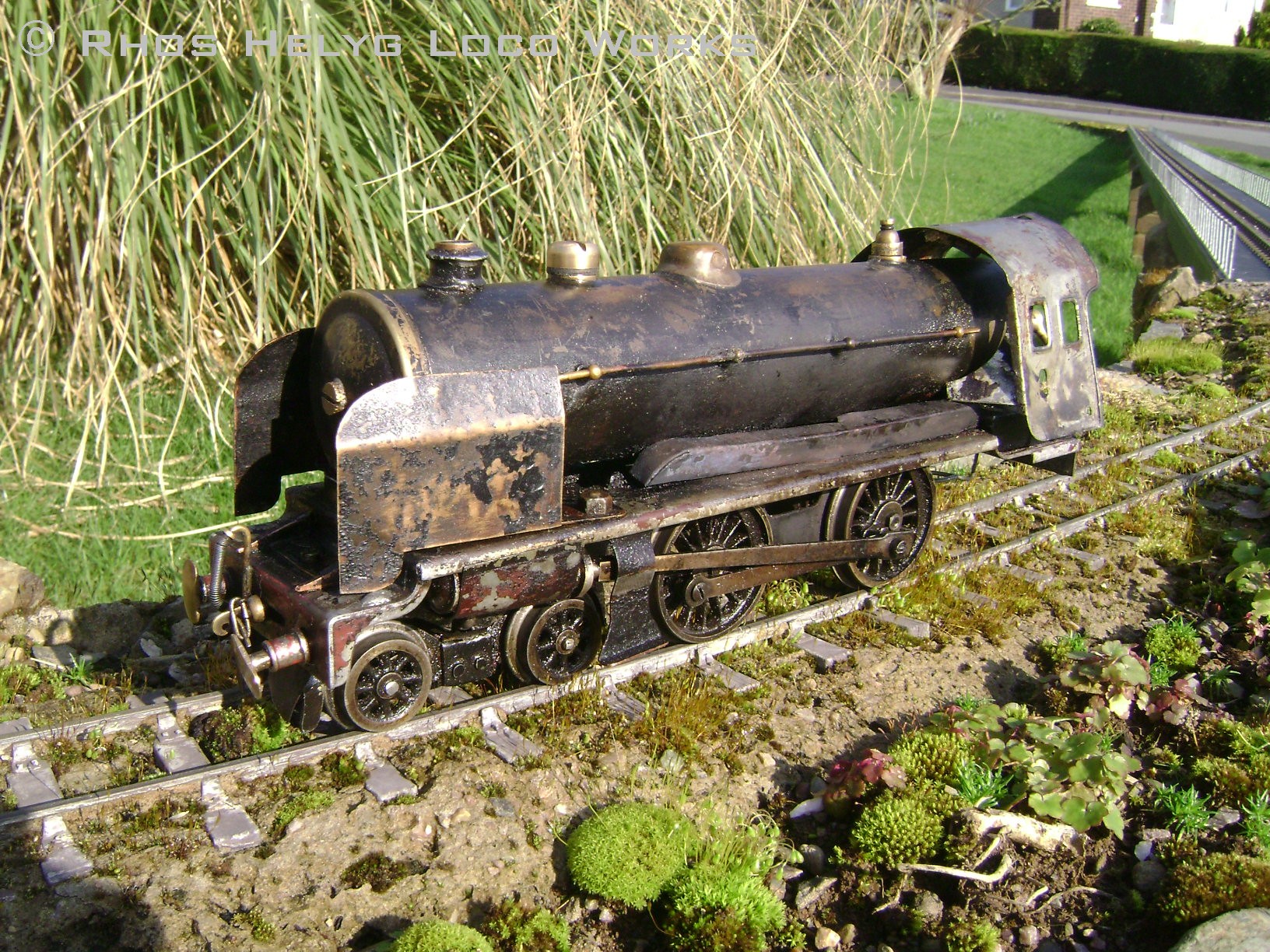
Bassett-Lowke Enterprise 4-4-0
You can't win them all... The owner of this Bassett-Lowke Enterprise contacted me to see if I would be interested in restoring his loco to its former glory. The loco dates from the 1930s and he told me "It has had some adventures in its lifetime, but ran quite well until the meths burner leaked, and led to a fairly spectacular fire". The result of that fire is seen here. After fixing a number of leaks and refixing the cylinders to the frames, I did manage to get it running, but only eratically. I found that the safety valve threads in the brass boiler had partially stripped and so it was impossible to raise more than a few pounds of steam pressure. The wheels would rotate when the loco was suspended on blocks but it did not have enough power to drag itself along a track. The owner and I agreed that further repair was uneconomic. |
|
|
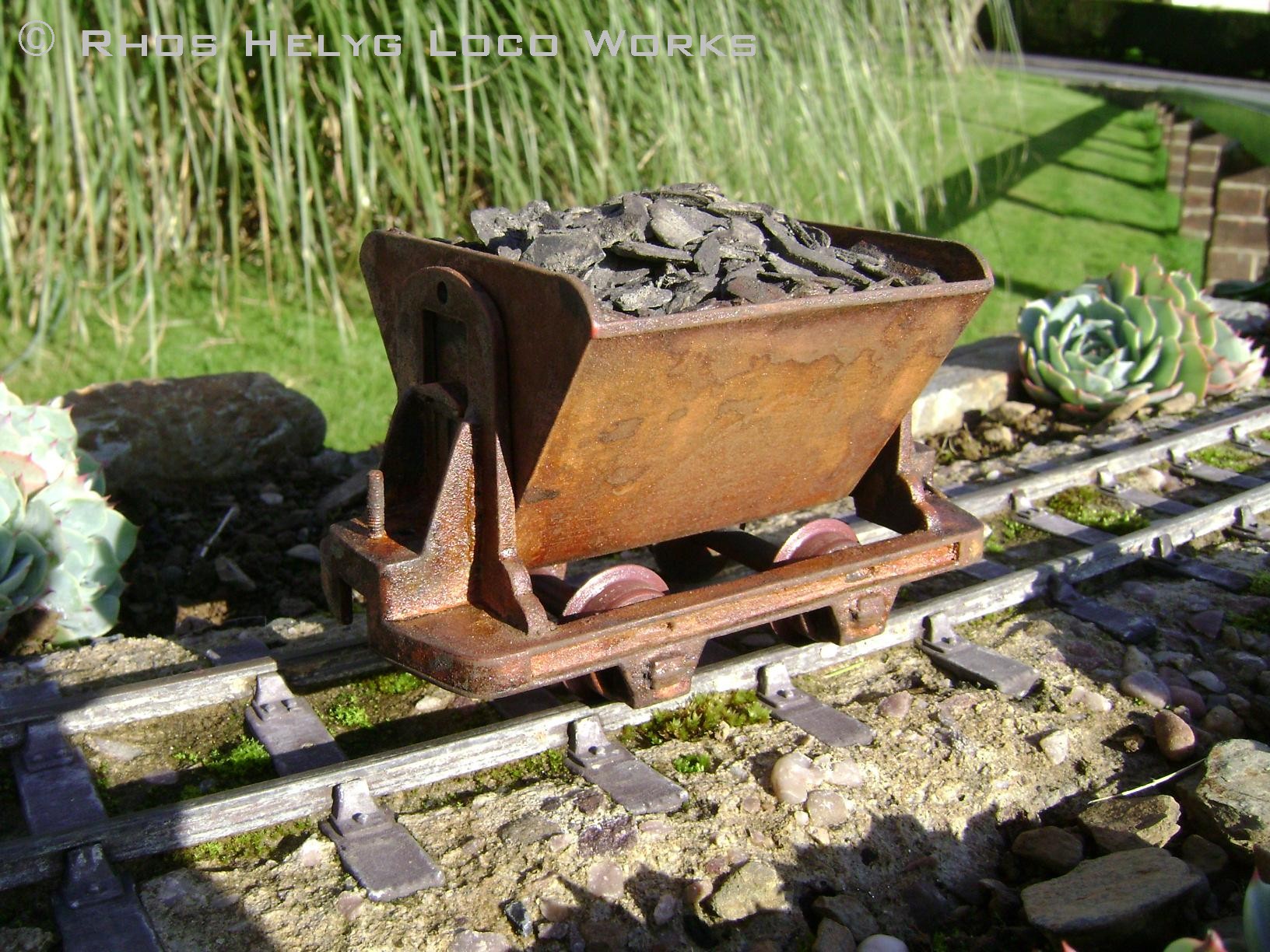
Big Big Train plastic tipper wagon
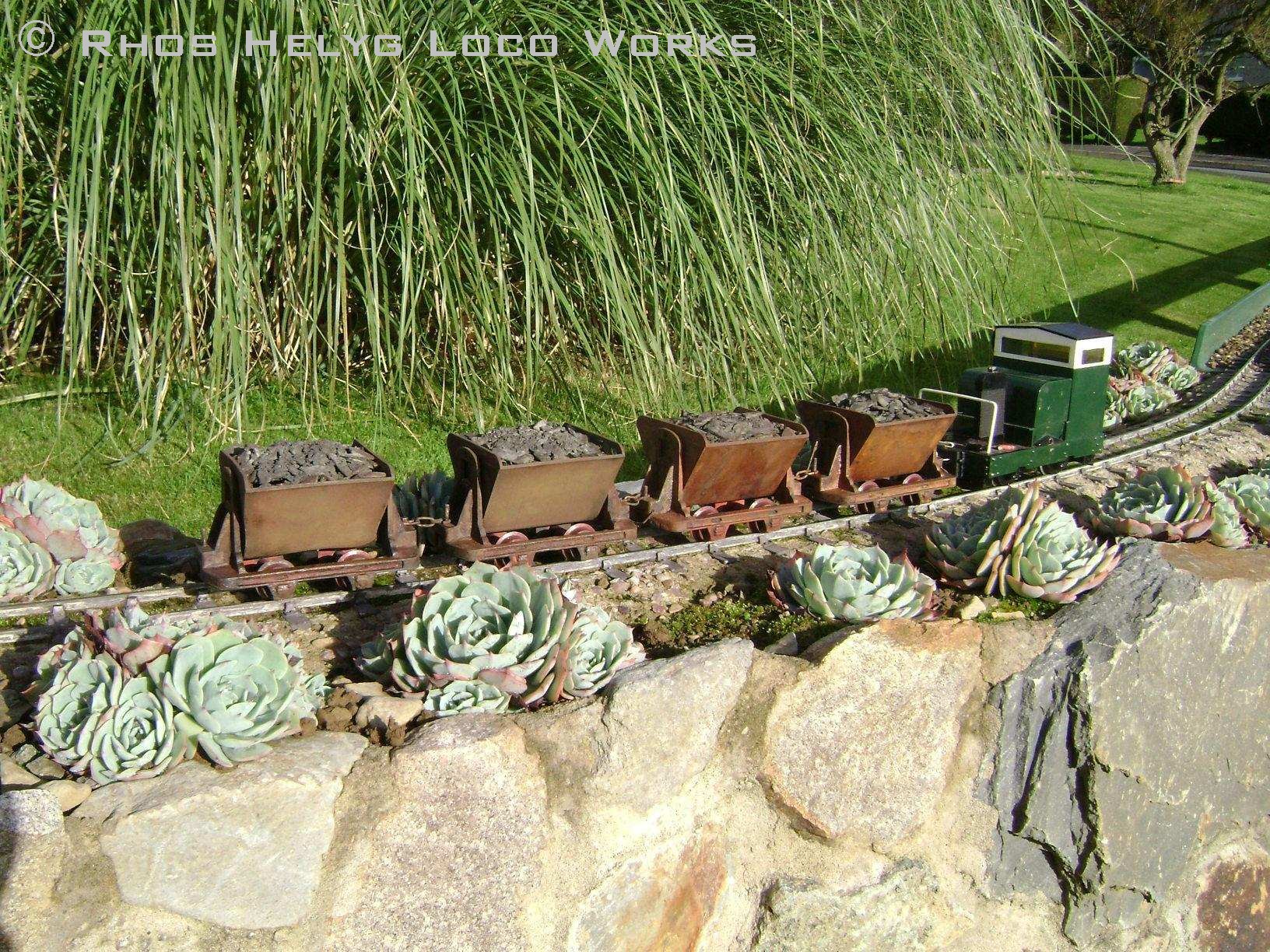
Big Big Train plastic tipper wagon with slate chippings load, with steel wheels and red oxide and rust paint finish. The second photo shows a short rake of these wagons being hauled by a Saltford Models Simplex. |
|
|
Binnie Engineering Festiniog Railway wooden slate waggon
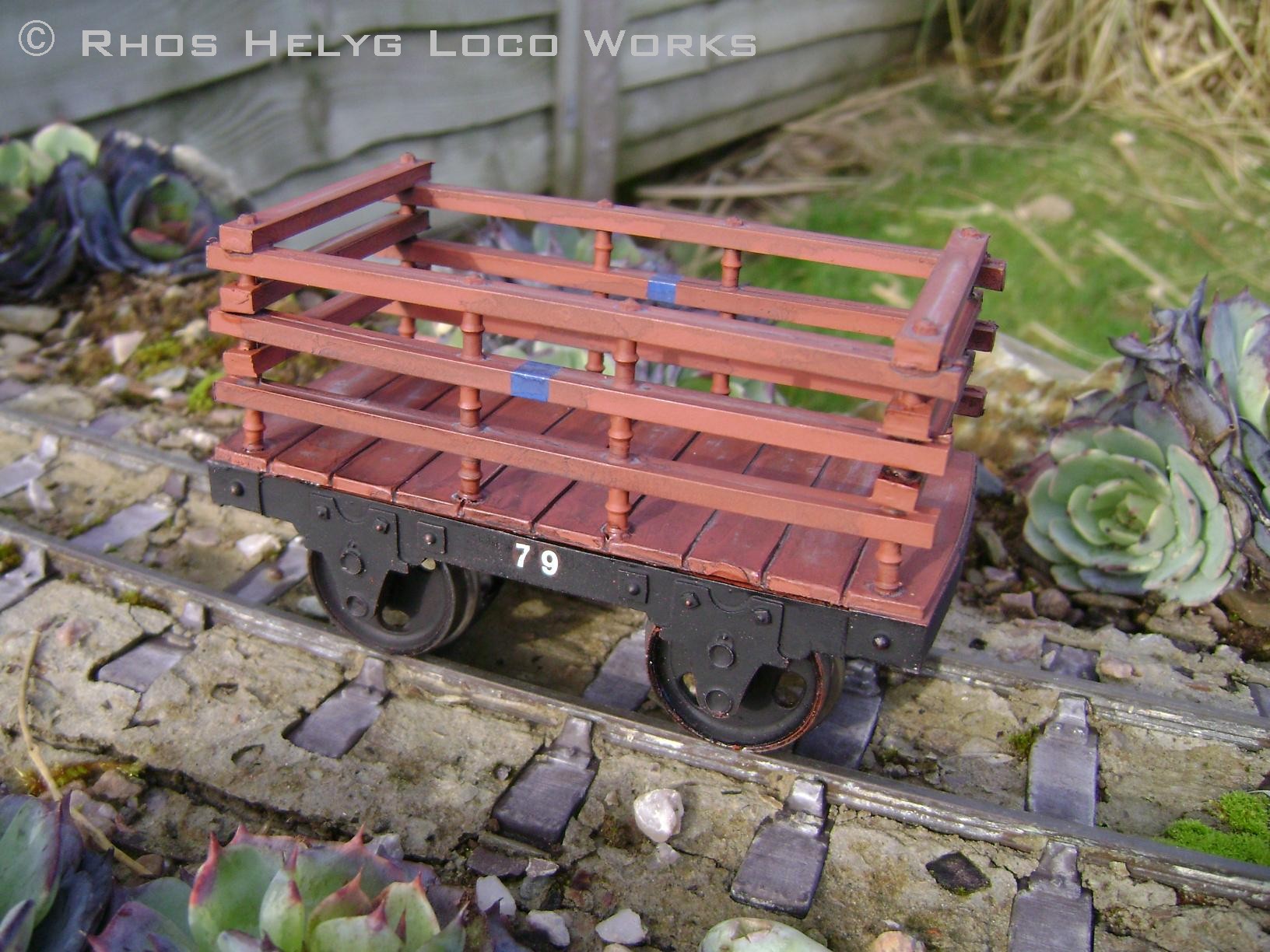
Binnie Engineering injection-moulded plastic Festiniog Railway wooden slate waggon with correct pattern three-hole wheels running in brass bearings. Total weight is about 112 grams. After completion they are spray painted in red oxide, either all over and numbered 475 or with a matt black underframe (as shown) and numbered 79, to represent the preserved waggons of this type. |
|
|
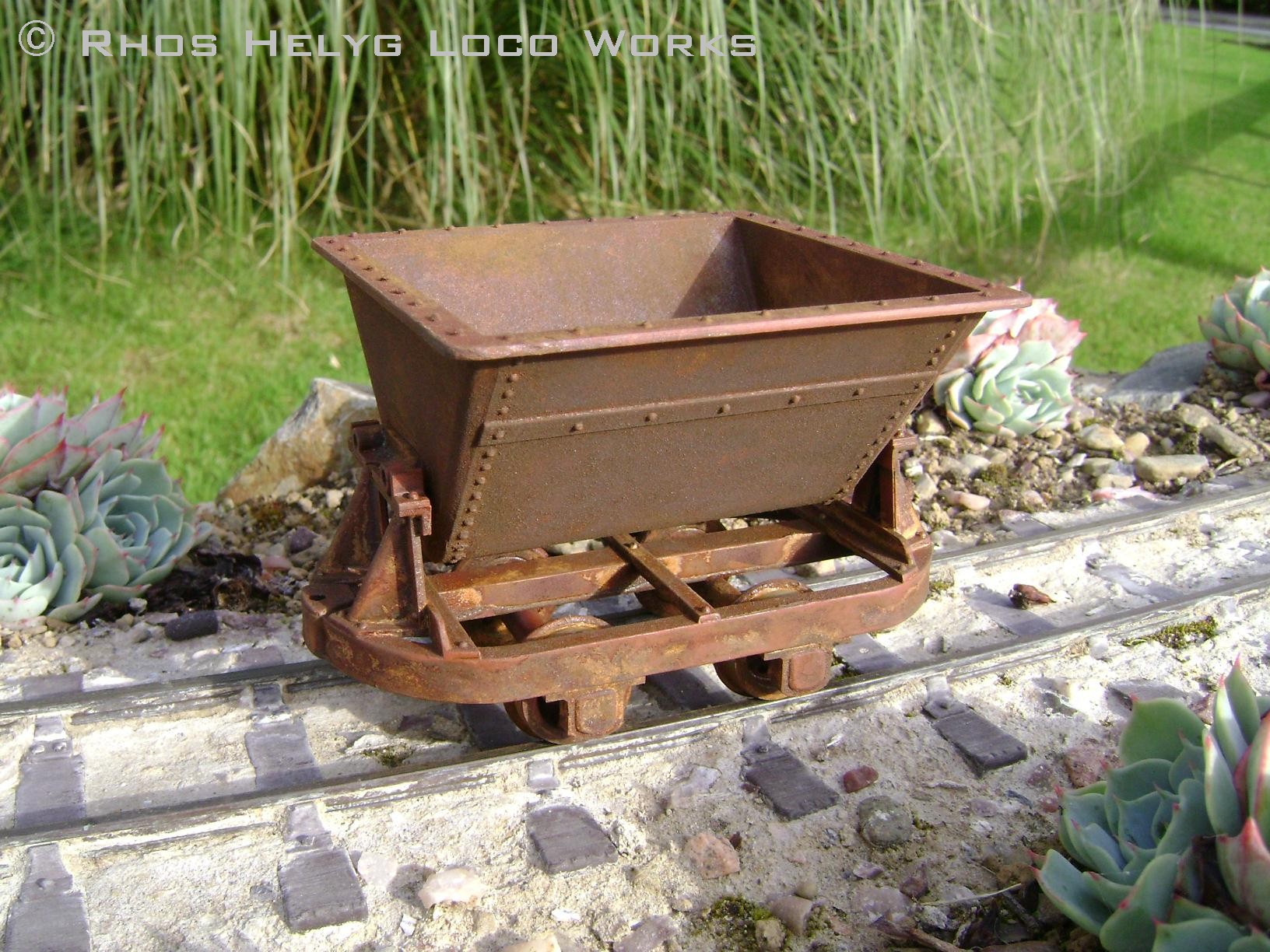
Binnie Engineering tipper/skip wagon
Binnie Engineering injection-moulded plastic tipper (or skip) wagon with all joints made using
Plastic Weld solvent. Correct pattern Slater's four-hole steel wheels running in brass
bearings were also fitted. Total weight is about 63 grams.
|
|
|
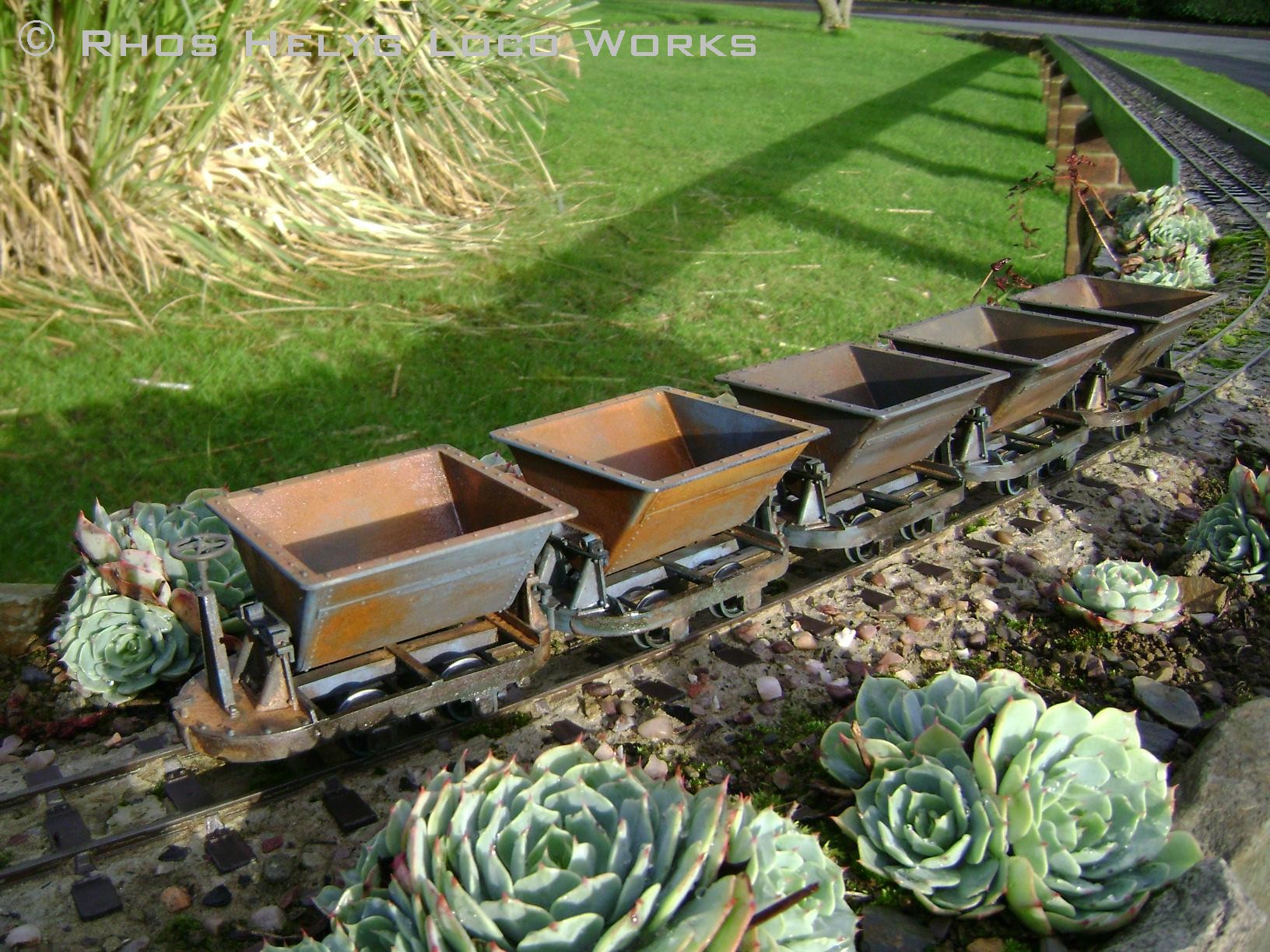
The lower photograph shows a set of five skips in pale blue with "rusting", with the nearest one being built on a GRAMODELS frame incorporating a dummy handbrake and brake gear. The appearance of these skips was based on those that were used at the Liverpool Corporation Waterworks filter beds near Oswestry. |
|
|
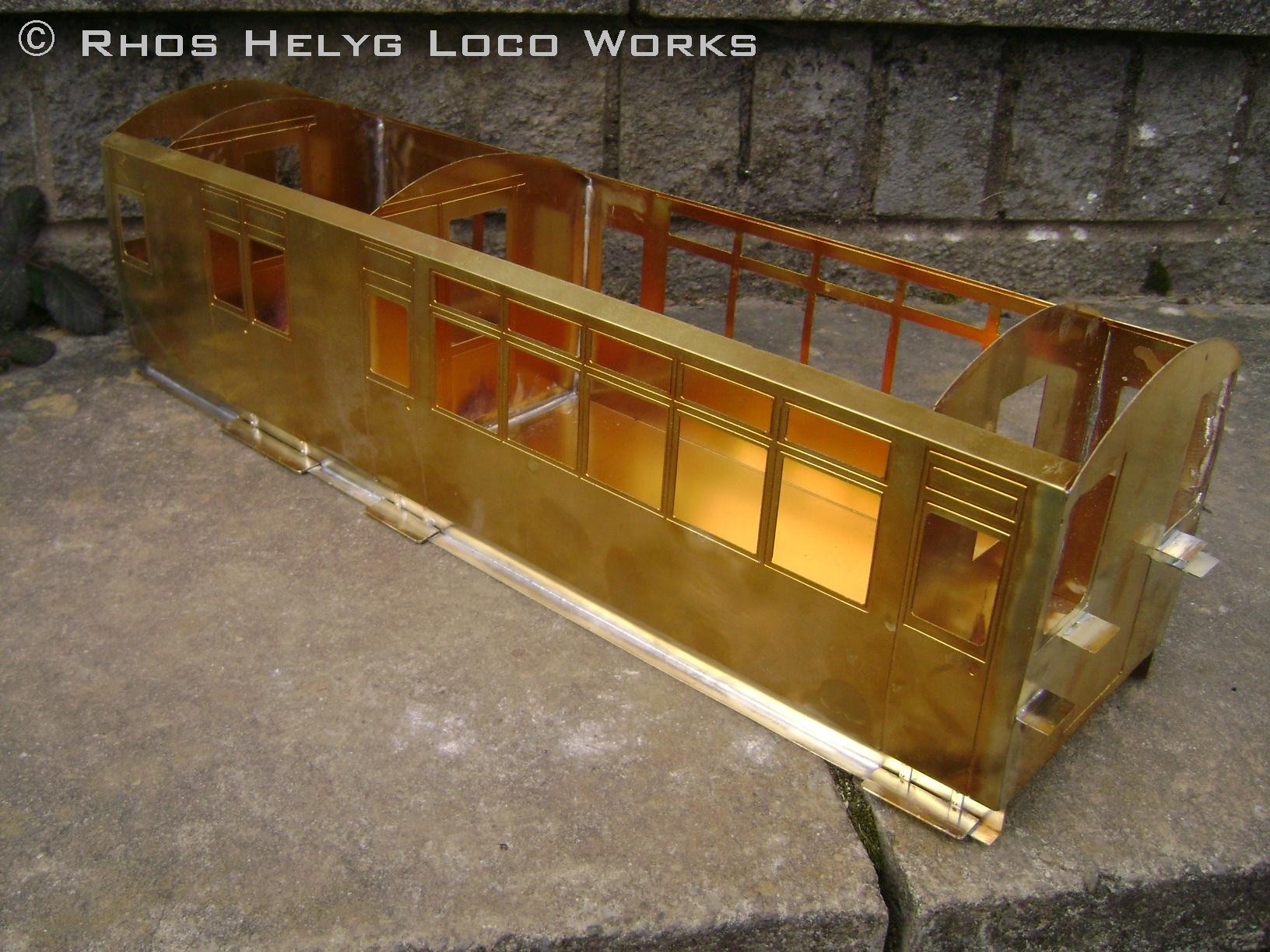
Bramble Line railcar
Another kit assembly job, this time for a Bramble Line railcar. The body parts were formed
to shape and soldered together, as shown here. The owner took on the task of turning it in
to a fully-finished working model.
|
|
|
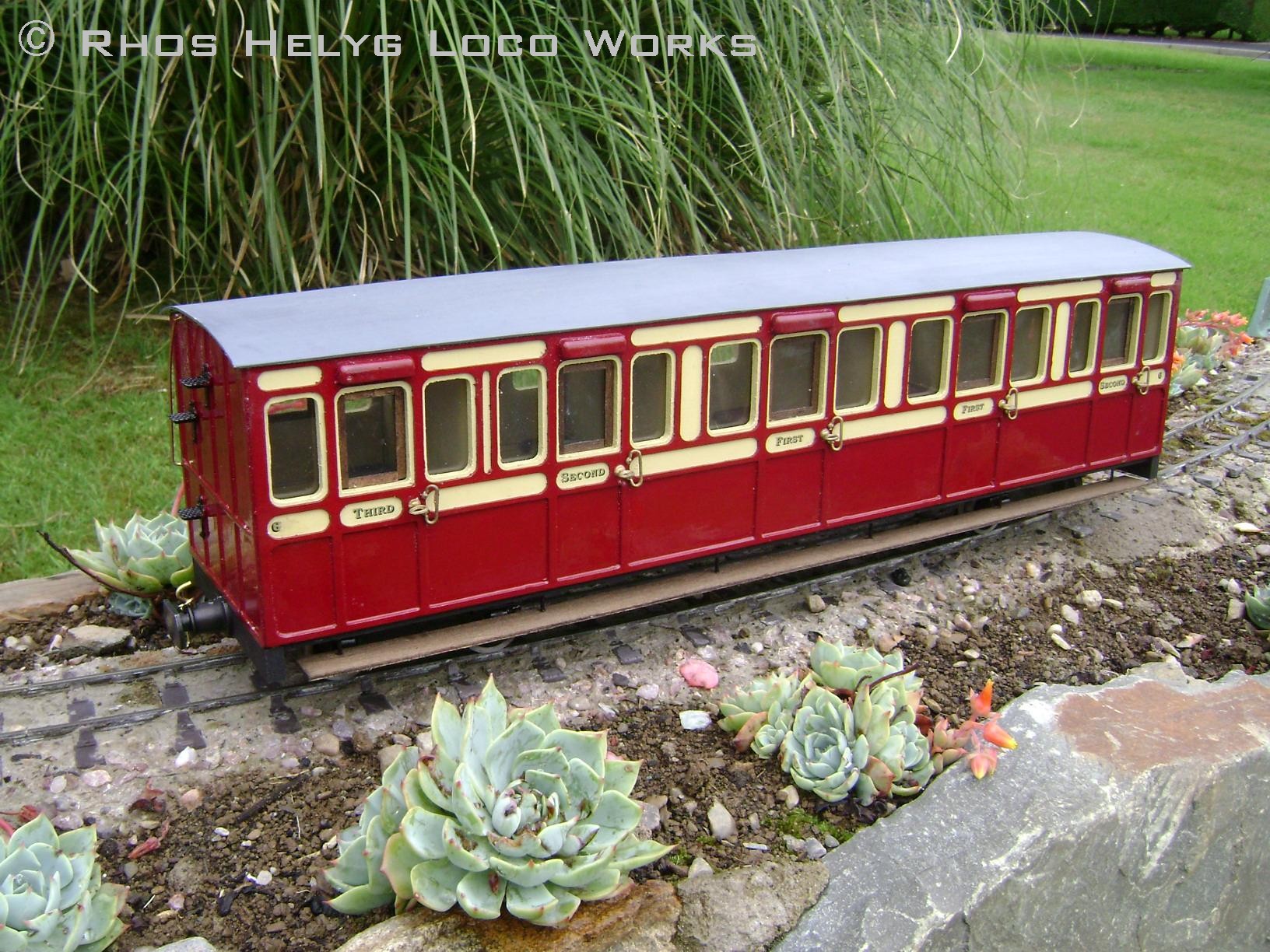
Brandbright PS19 bogie carriage
A Brandbright PS19 bogie carriage constructed and painted at the Rhos Helyg Locomotive Works. |
|
|
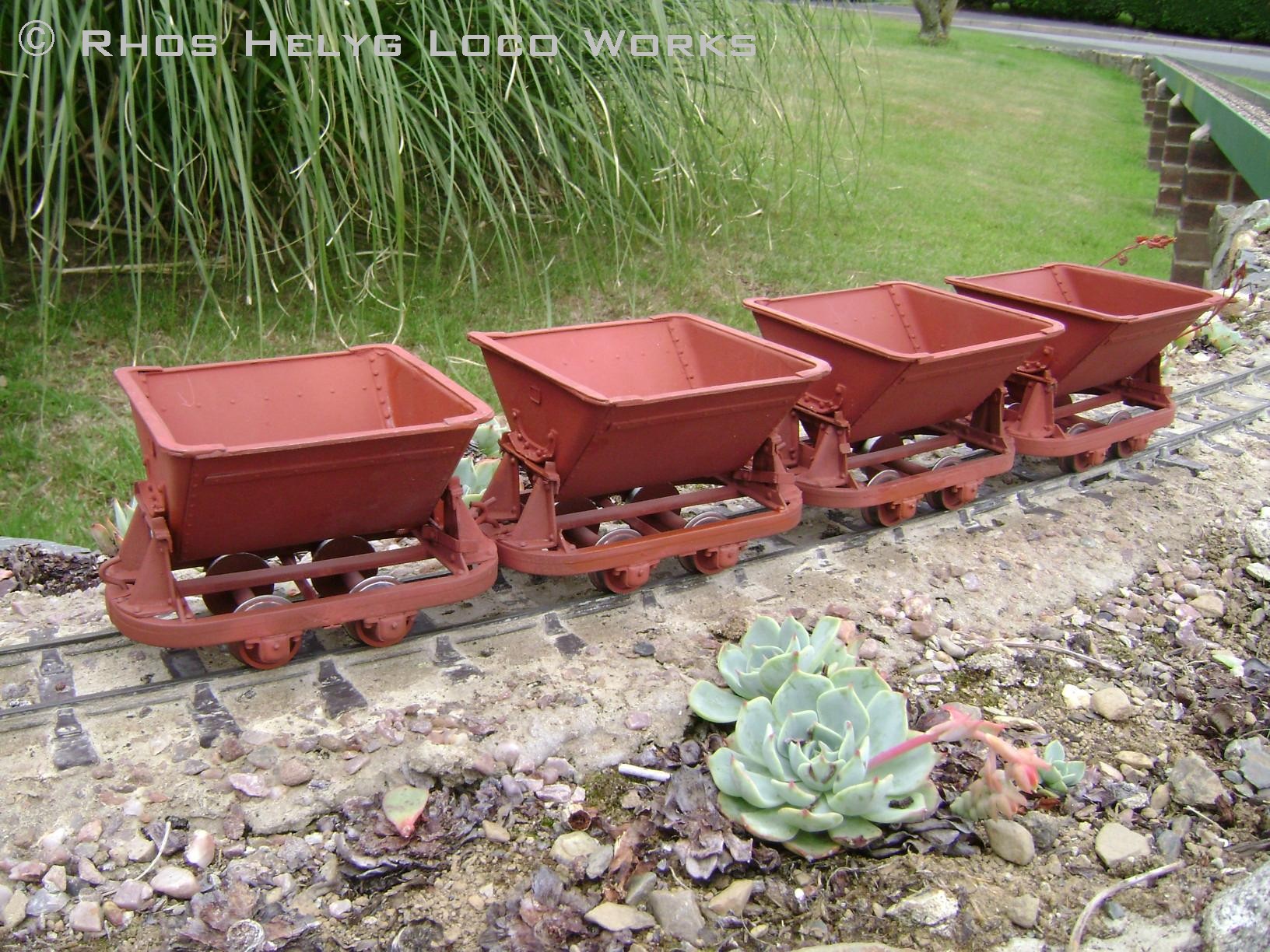
Brandbright Quality Quarry whitemetal/brass tipper wagons
These four tipper wagons were constructed from Brandbright Quality Quarry kits. They feature a white metal chassis with a brass and white metal tipping body and steel wheels. |
|
|
Burton Leech Jinty 0-6-0T
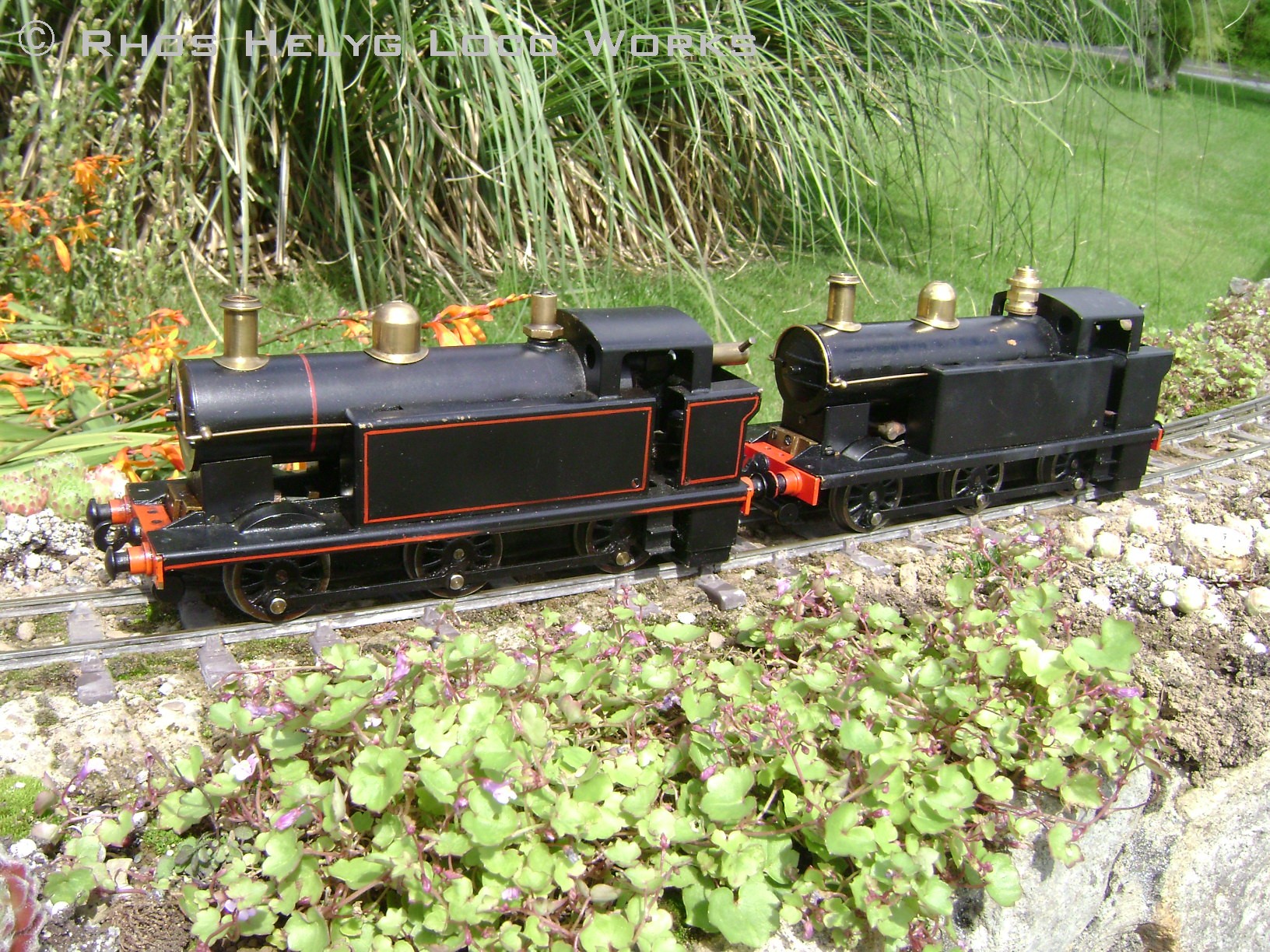
Shown here are a pair of Burton Leech Jinties, ostensibly built for coarse scale O-gauge and which, despite their appearance, date from the 1980s. They have meths-fired pot boilers and are powered by a single cylinder and slip-eccentric valve gear between the frames. Neither had seen use for some time and one was found to be in reasonably good order after some attention to its burner wicks. The other was a different story and required attention to its piston, valve and several loose wheels to make it run. A replacement meths burner was also fabricated as its own was missing. |
|
|
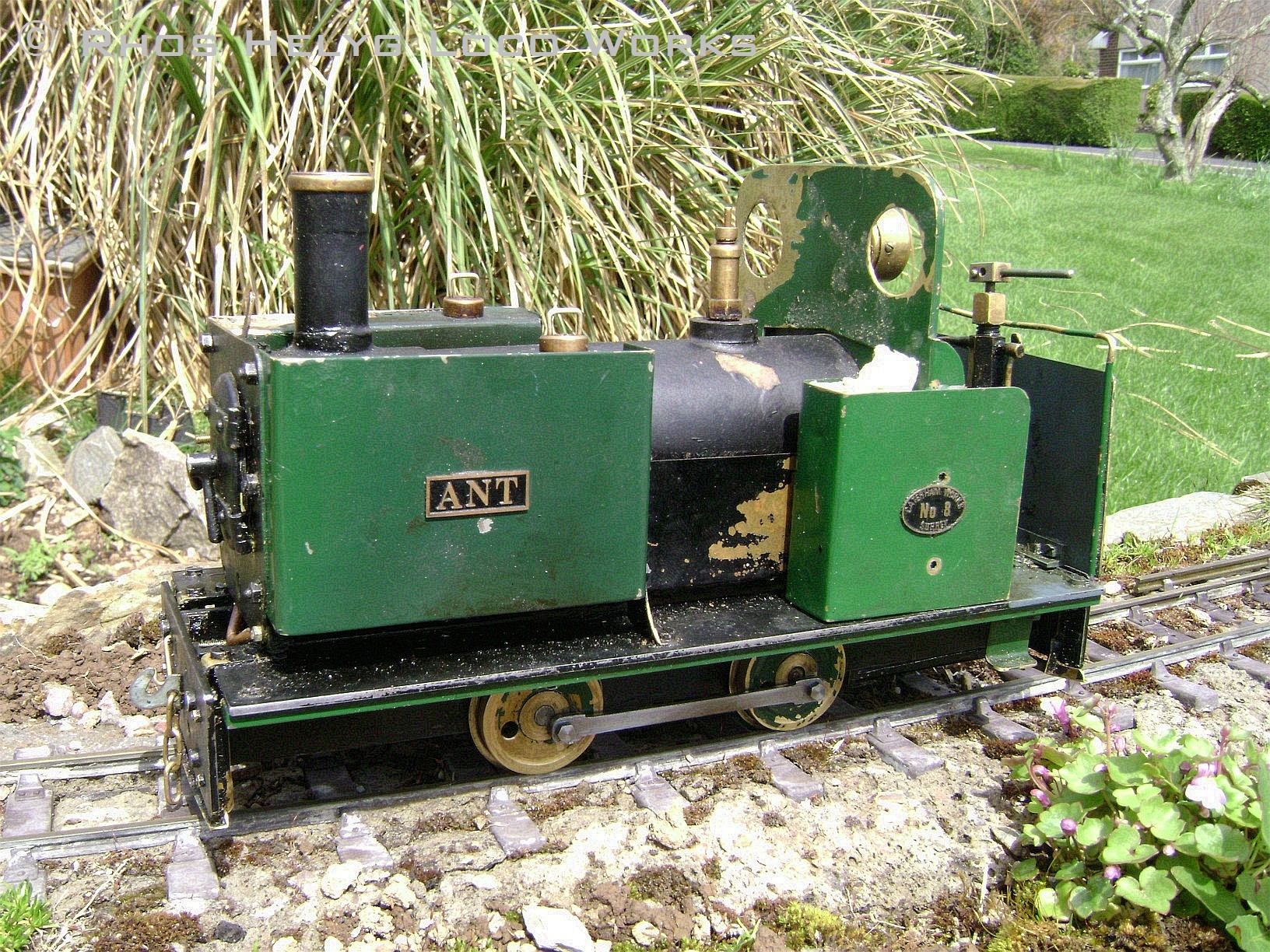
Caterham Works / Mike Gaskin 0-4-0 No. 8 ANT
A bit of 16mm heritage... Mike Gaskin (Caterham Works) No. 8 ANT was here for attention
after suffering from old-age and some accidental damage, including:
|
|
|
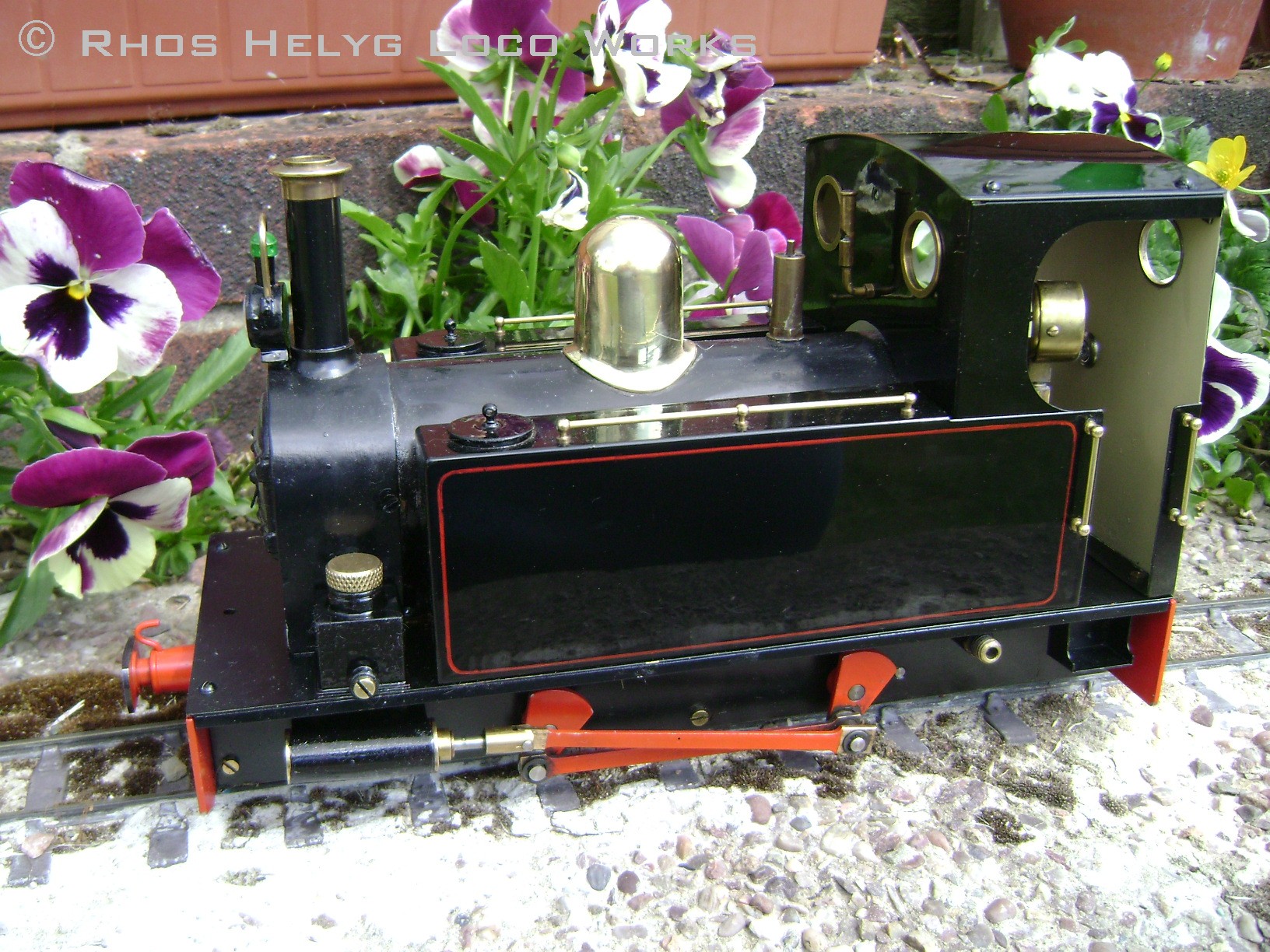
Mike Chaney Hero 0-4-0T
This Mike Chaney loco was repainted from maroon in to gloss black with red lining. |
|
|
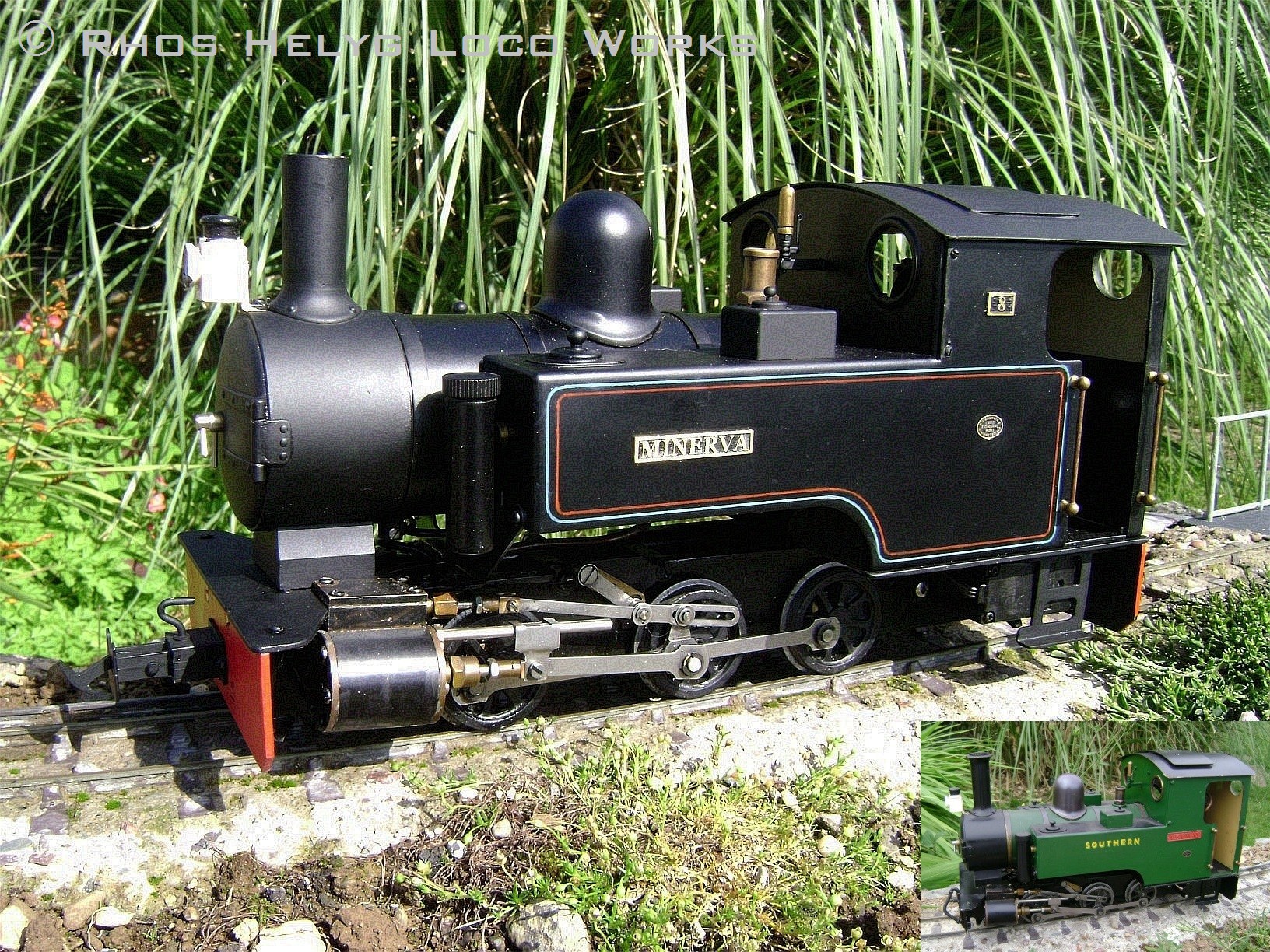
Cheddar Models Goliath 0-6-0T No. 8 MINERVA
Quite a rare machine this one. When comparing it with his other locos the current owner soon decided that something had to be done to reduce its overall height. We looked at dropping the boiler, smokebox and the cab down but this would have involved some difficult but not impossible major surgery to achieve due to the smokebox and plumbing arrangements on this loco. The eventual solution agreed was to remove 12mm from the height of the cab and the chimney. Fortunately the dome was already short enough to not need any modification. The original plan with the chimney had been to chop and sleeve it, retaining the original cap. However, after making the first cut the stovepipe look appealed to me and a quick check with the owner found that he agreed. A full repaint in the owner's fleet colours of satin black with red and blue lining followed along with an upgrade from 40MHz to 2.4GHz radio control using Saturn equipment. The large picture includes an inset of the loco as received here. |
|
|
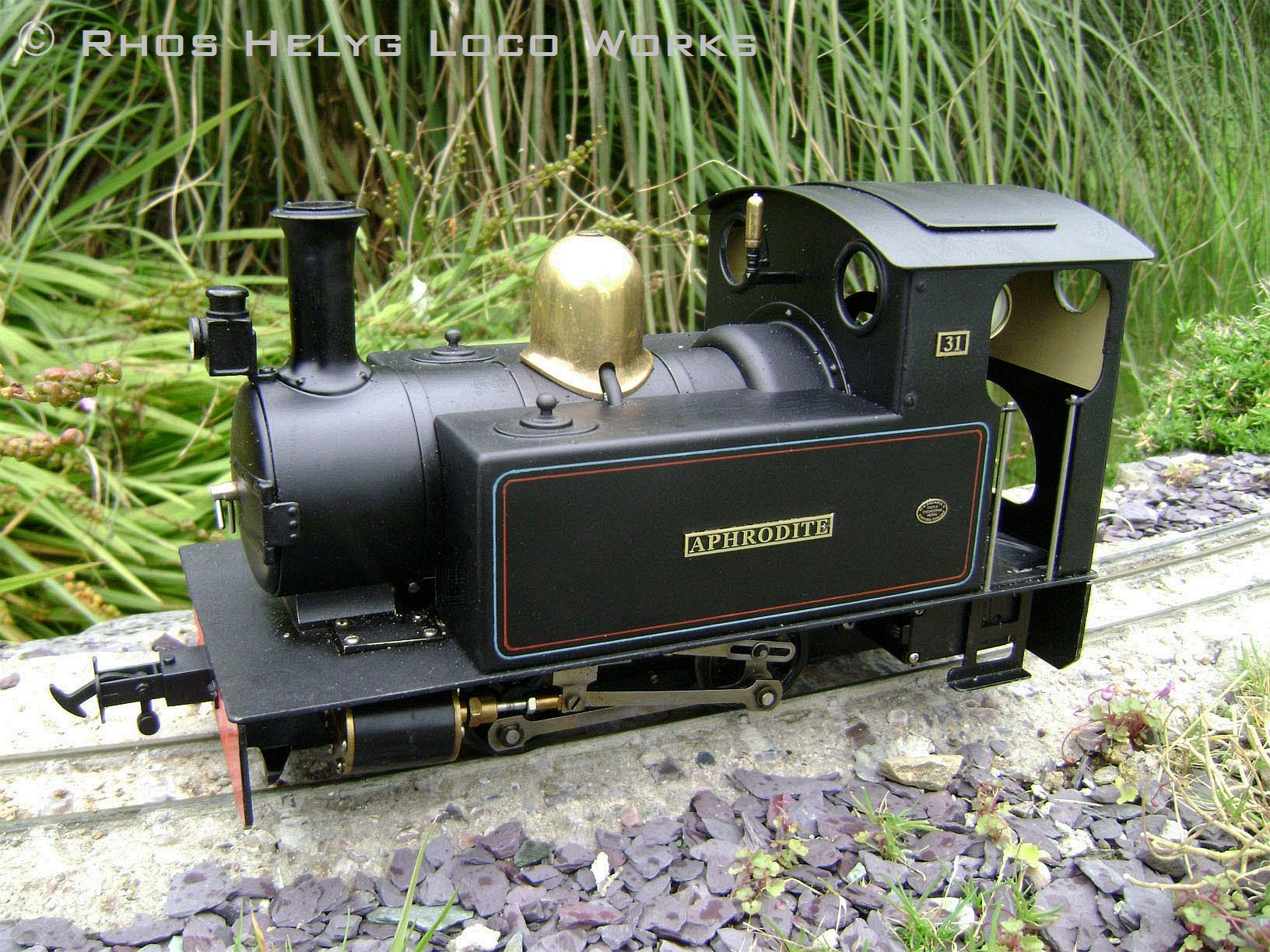
Cheddar Models Samson 0-4-0T No. 31 APHRODITE
This Cheddar Models Samson, like the same owner's Hercules, has been lowered by about 12mm by reducing the height of the cab and chimney. The body, boiler and smokebox were repainted and lined. |
|
|
Cheddar Models Hercules 0-6-0 No. 14 TINY TIM
Anything but tiny, Tiny Tim came here for replacement of various O-rings and adjustment of its lubricator control valves. |
|
|
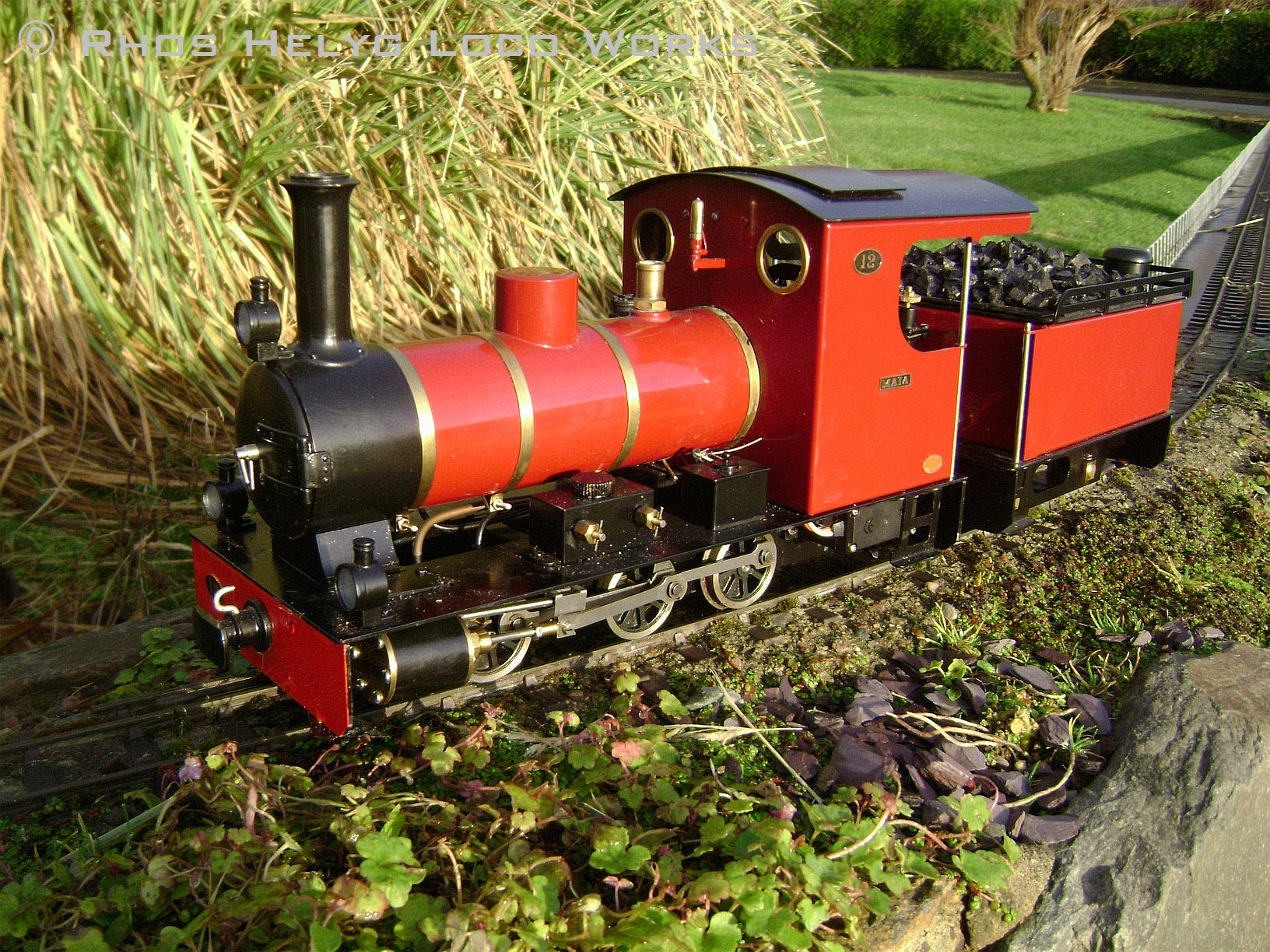
Cheddar Models Hercules 0-6-0 No. 12 MAIA
MAIA had been in store for a number of years before coming here for inspection and repair before being used again. A number of problems soon came to light, and all caused by use of exceptionally hard water at some point. Chalky deposits were everywhere, including the tender water tank. This had resulted in the tender hand pump, the whistle valve and the boiler filler Goodall valve all ceasing to function as they should. The bottom fitting on the boiler water gauge glass was also blocked, and so gave a false reading of the boiler water level. A thorough descale and clean improved matters, and the various fittings were individually cleaned and checked. While here it also had its regulator and reverser servos replaced (one was dead when it arrived), had a Summerlands chuffer pipe fitted and had a Yatton Models TRXS radio control system installed. |
|
|
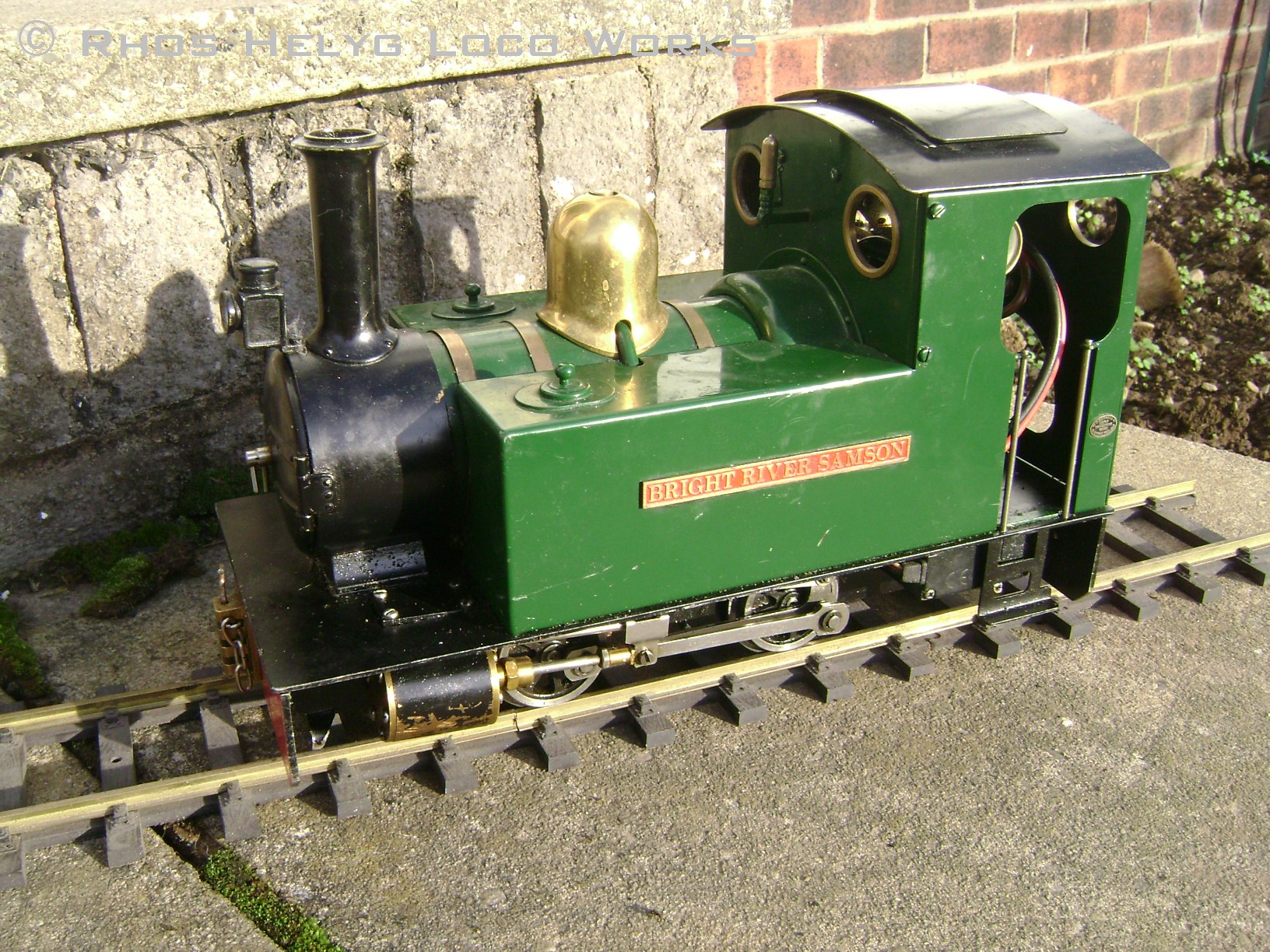
Cheddar Models Samson 0-4-0T BRIGHT RIVER SAMSON
This Cheddar Models Samson came here for a general check over after purchase second-hand
by its owner. All of the Cheddar Models locomotives were robustly built and beautifully
engineered, although they do have their own particular quirks! It is a real shame that they
are no longer manufactured. This one had a heavily scaled boiler, and the chalky deposits had
blocked the passages to the water level gauge glass causing it to give a false reading. A
couple of days treatment with descaler resolved that problem. It had also been fitted with a
40MHz radio control system that was prone to interference, so this was replaced with a
Planet T5 2.4GHz system.
|
|
|
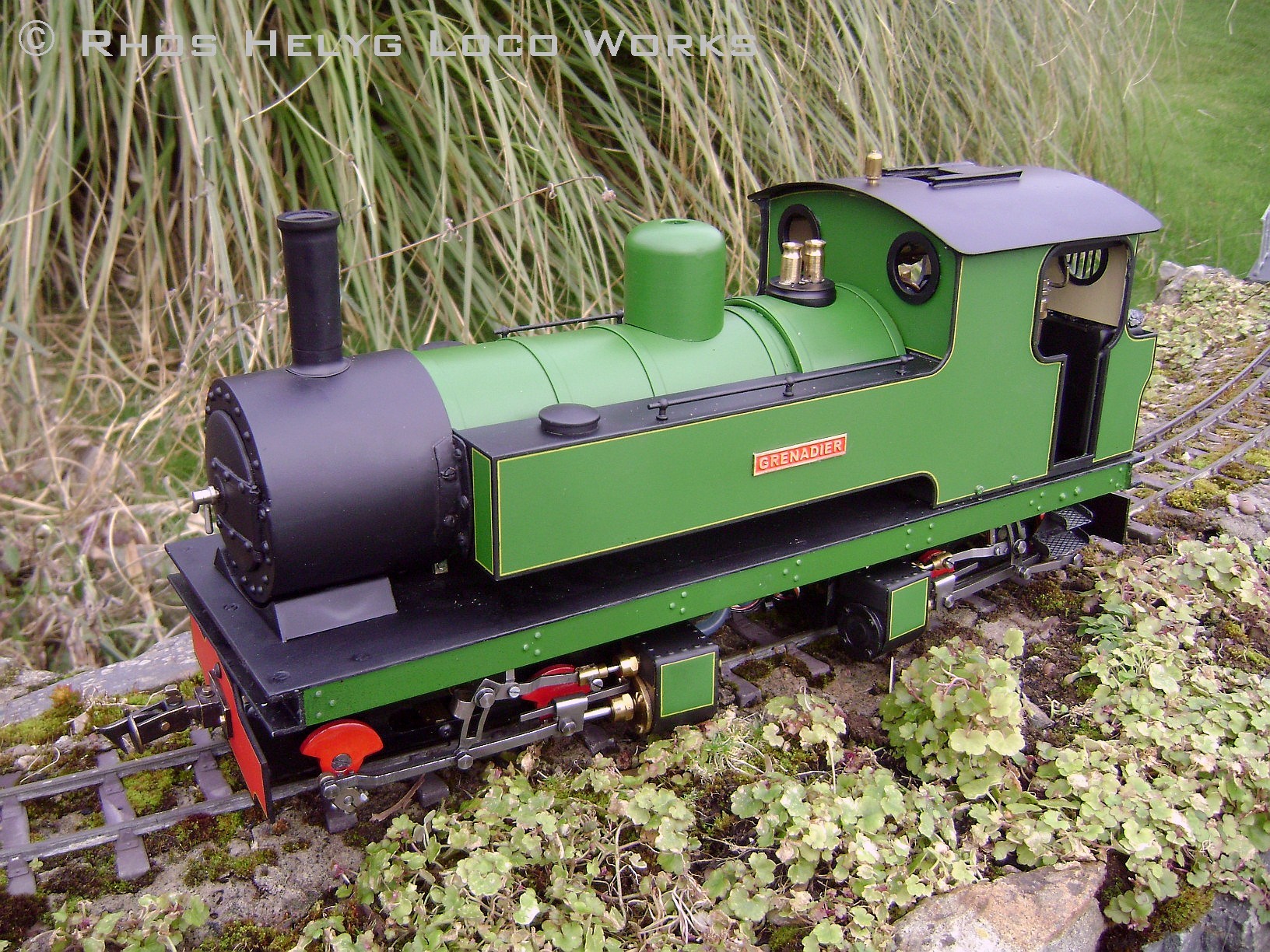
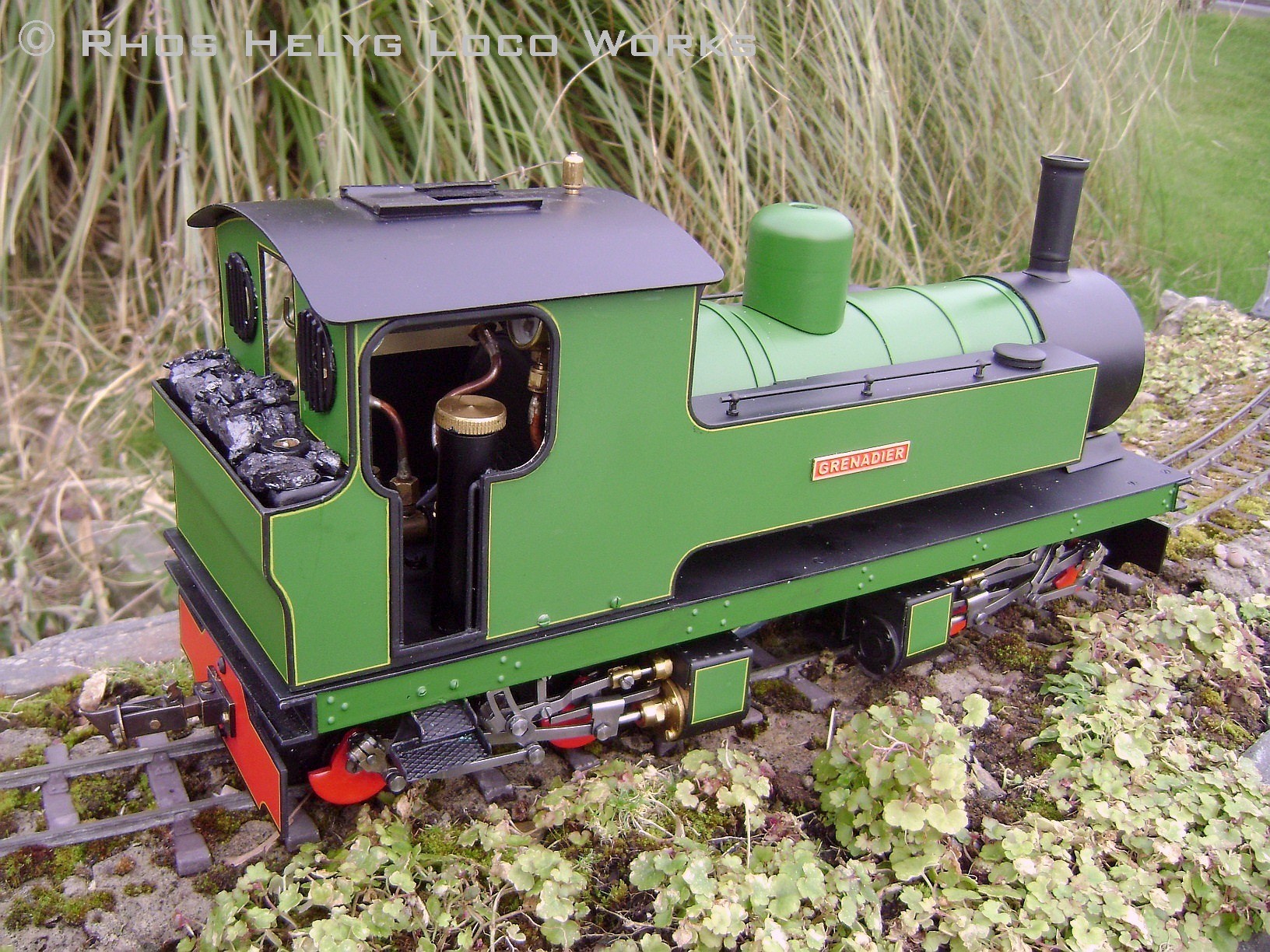
Larry Cheeseman Bagnall 0-4-4-0T GRENADIER
This is a BIG loco ... a model based on the Bowaters/Welshpool & Llanfair Bagnall 0-4-4-0T MONARCH. It came here for stripping back to bare metal and a repaint and lining in to the scheme carried by the full-size loco. |
|
|
Cooper Craft Festiniog Railway 2-ton slate waggon
Cooper Craft injection-moulded plastic Festiniog Railway 2-ton slate waggon fitted with Brandbright steel axles and wheels and an underfloor weight to increase its weight to about 165 grams. After completion it was painted and "rusted". |
|



|
David Bailey Designs ⅞ths-scale Penrhyn Quarry slate waggons
Each wagon uses 100 individual copper and brass rivets in its construction, although all joints are soldered for extra strength. After completion they are painted with etch primer and then in a colour of the customer's choice, followed by weathering. |
|
|
David Bailey Designs ⅞ths-scale Penrhyn Quarry Fullersite waggons
Four Penrhyn Quarry Fullersite waggons of two different designs made up from David Bailey Designs kits and then suitably aged and weathered. |
|
|
DJB Engineering Festiniog Railway 0-4-4ST TALIESIN
The model depicts Taliesin in its original open-cab form. It came here for replacement of its interference-prone 40MHz radio control with an Ikonnik KA-6 2.4GHz system, and a repaint of its boiler. The paint on the boiler was going soft when the boiler was hot, which had resulted in it being covered in finger prints, rag marks and fluff. |
|
|
DJB Engineering Lynton & Barnstaple Railway 2-6-2T No. 759 YEO
This loco came here in a non-authentic British Railways lined green livery so the bodywork was stripped back to bare metal and repainted in to the authentic Southern Railway scheme of green lined in black and white with yellow lettering (supplied David Bailey Designs) and correct pattern name and works plates (supplied by MDC). It was also converted from radio control to manual control and had a Summerlands chuffer pipe fitted. |
|
|
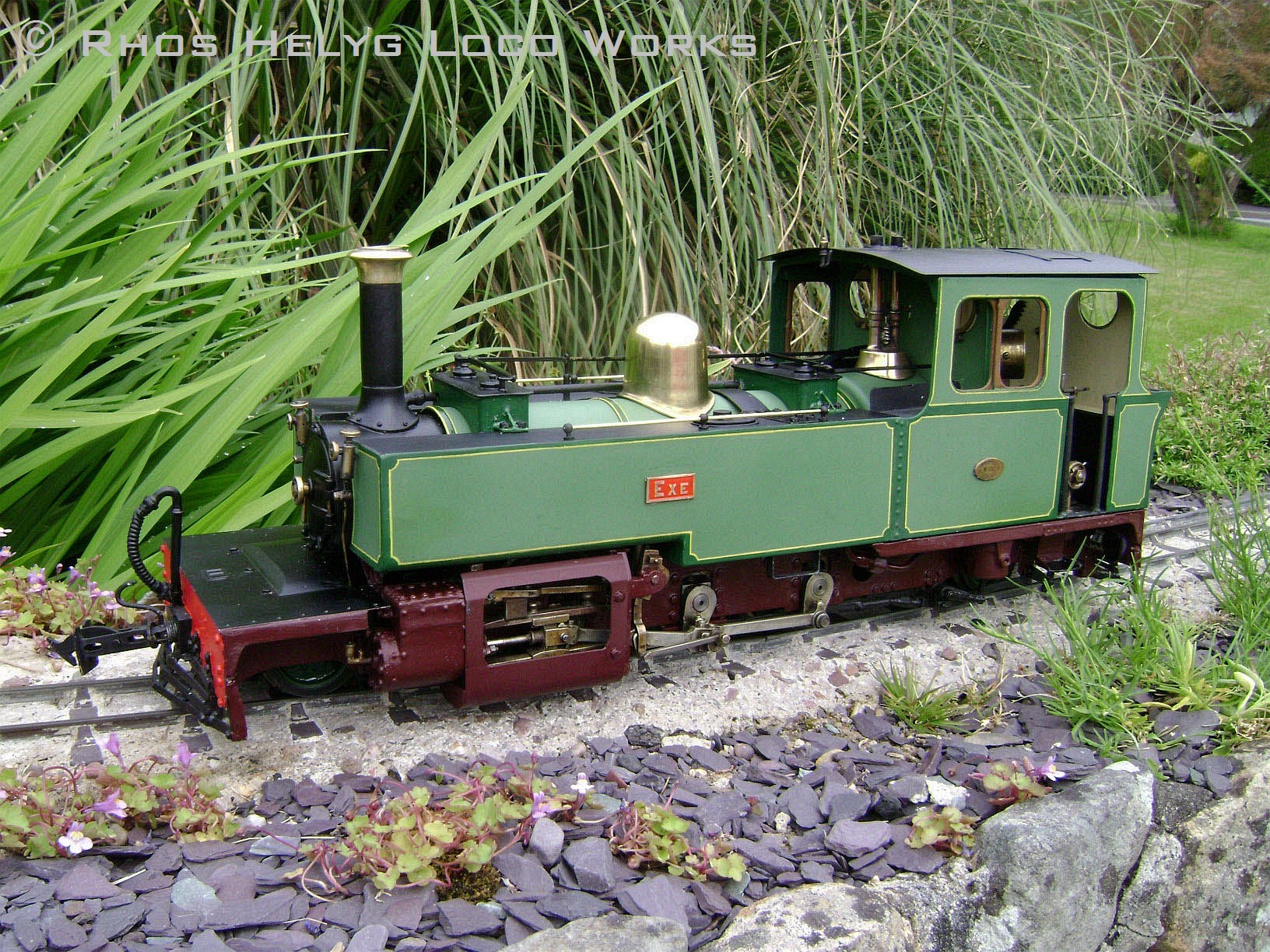
DJB Engineering Lynton & Barnstaple Railway 2-6-2T EXE
As well as supplying their Lynton & Barnstaple 2-6-2T locos in ready-to-run form DJB
Engineering also supplied them in kit form, and this loco is one of those. Cosmetically it
was in rough condition when it arrived here but the paint hid a multitude of sins.
|
|
|
DJB Engineering Penrhyn Quarry slate wagons
DJB Engineering etched brass Penrhyn Quarry slate wagons featuring soldered construction for extra strength and with correct pattern curly spoked wheels running in brass axleboxes. After completion they are painted with etch primer and then in a colour of the customer's choice, followed by "rusting". |
|
|
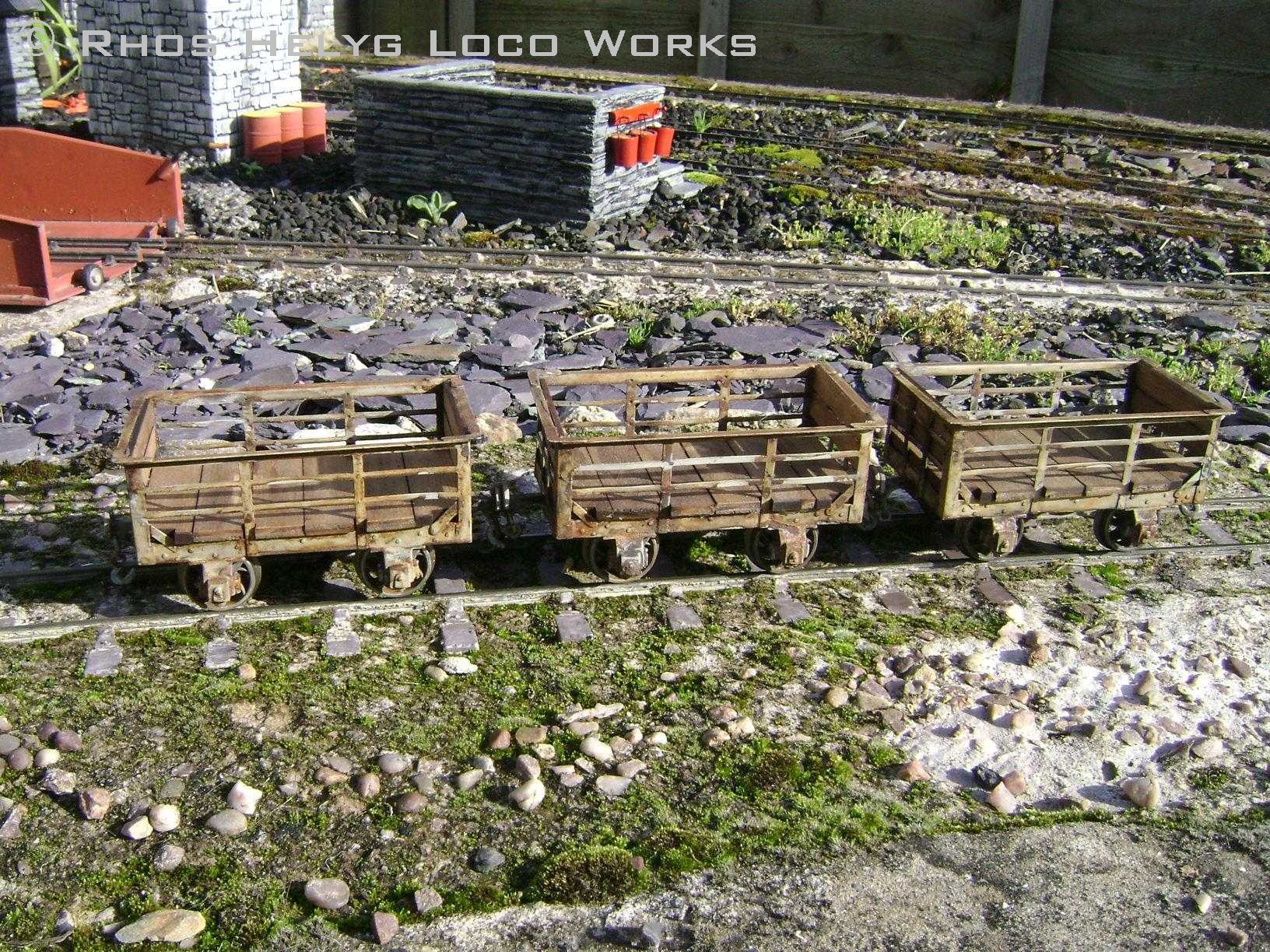
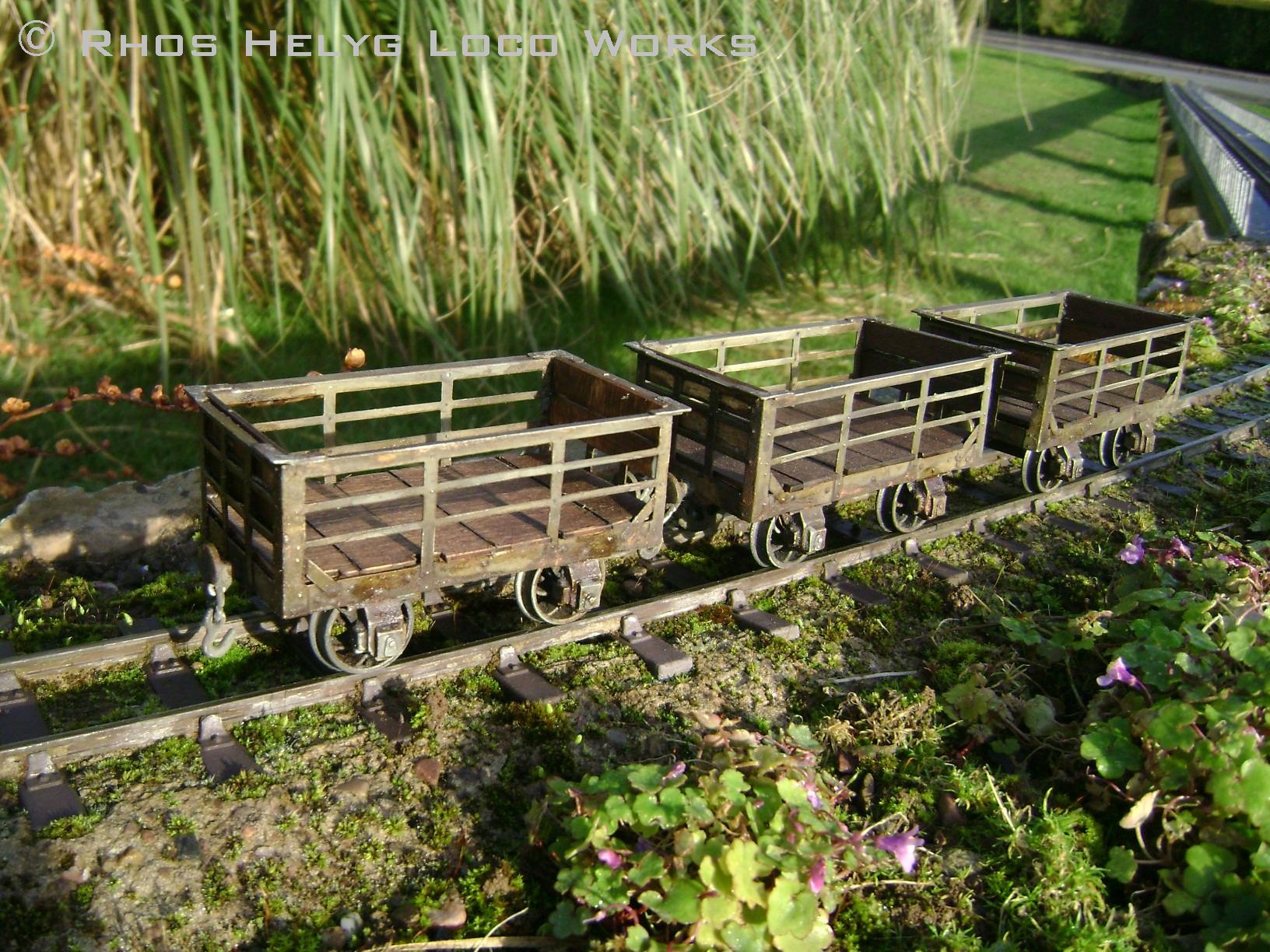
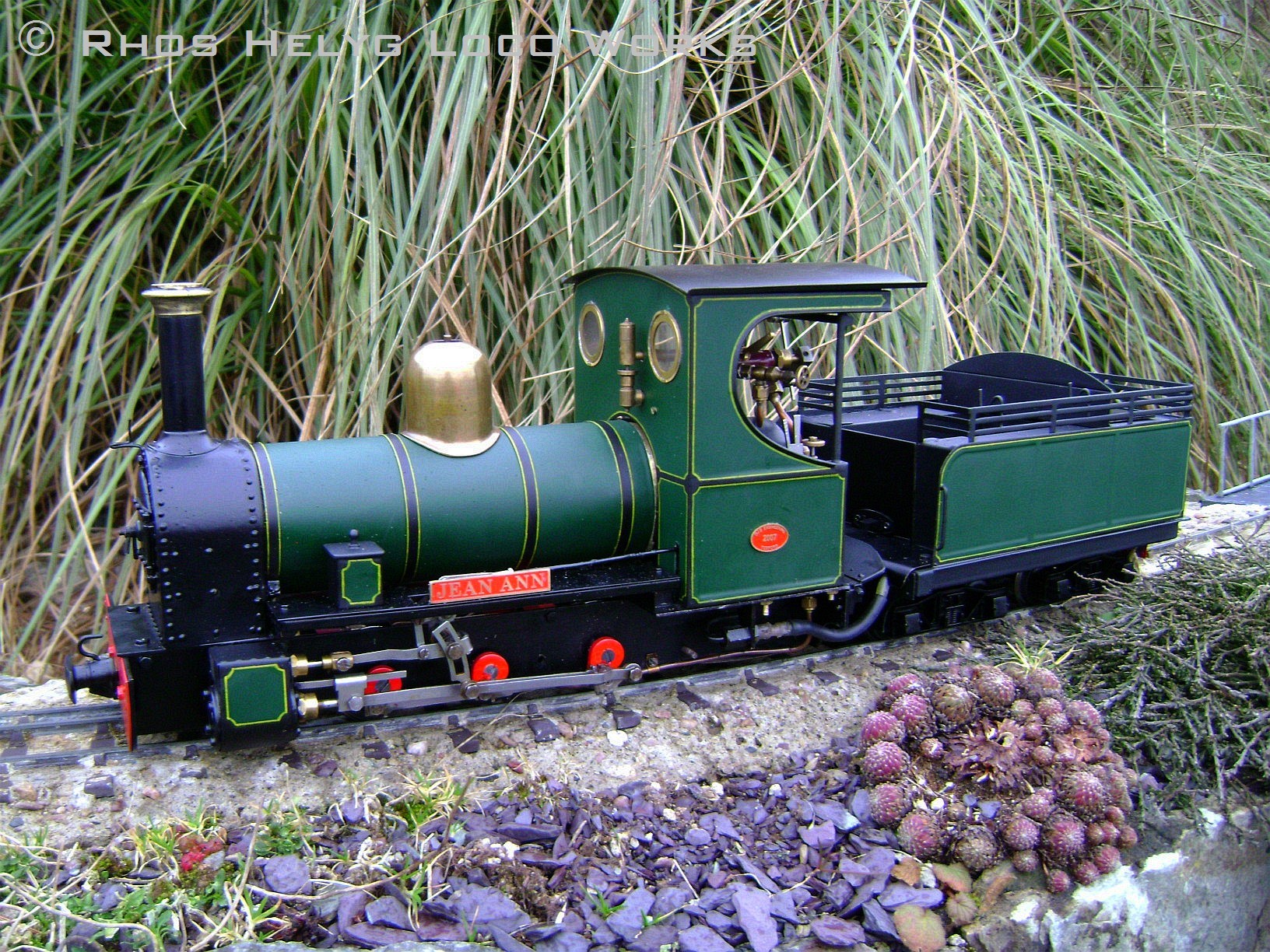
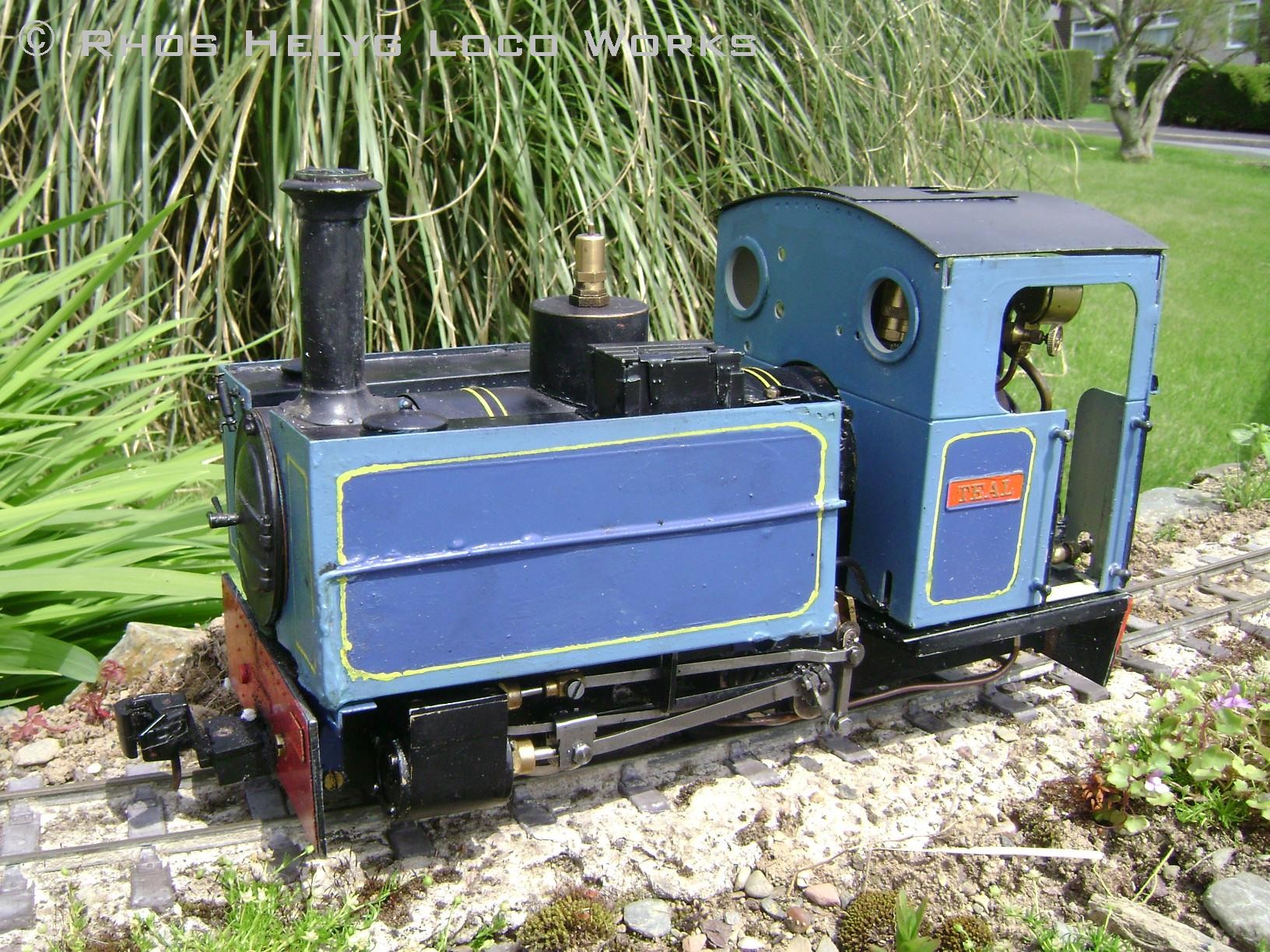
DJB Engineering Emma coal-fired 0-6-0 JEAN ANN
The owner of this coal-fired DJB Emma was not happy with the original cab so it was rebuilt with new sides with a Hunslet-style look. While here it also had attention to its axle-driven water pump, repair of tender and bogies, attention to valve gear and running gear and fabrication of a tender coal space that could actually be used to store coal. All of this was followed by stripping of all paint and a repaint in Deep Brunswick Green with yellow lining. My grateful thanks go to Paul Bailey at DJB Model Engineering for his assistance with the axle pump repair. |
|
|
DJB Engineering Robert coal-fired 0-4-0T
From this... |
|
|
To this...
|
|
|
The owner sent it back here two years later after it suffered a fall on to hard surface. It
landed on the chimney, pushing it backwards and sideways, and also bending the bodywork
and the frames. While the body and frames were relatively simple to correct the boiler was
a different matter. The smokebox on these locos is an extension of the boiler barrel and so
it was not easily removable or replaceable. On impact the chimney had collapsed the smokebox
immediately in front of the boiler's front tubeplate and the copper had been stretched,
preventing the chimney from being pulled back to vertical without the damage being visible.
The damage also gave cause for concern as to the tubeplate's integrity. Consultation with
DJB Engineering followed and it was decided that a replacement boiler was needed.
|
|
|
DJB Engineering Robert coal-fired 0-4-0TT
An unusual livery of grey lined in white with graphite grey edging applied to a coal-fired DJB Engineering Robert built from a kit. This loco was purchased by the current owner in working order but with only the frames, boiler and smokebox painted. It came here for painting and lining but it soon became apparent that some of the soldering was not the best and various joints were repaired and/or strengthened before painting commenced. Included in this work was pressure testing of the two water tanks to check for leaks - they did! I feel sure the owner will have hours of fun trying to keep this one clean... |
|
|
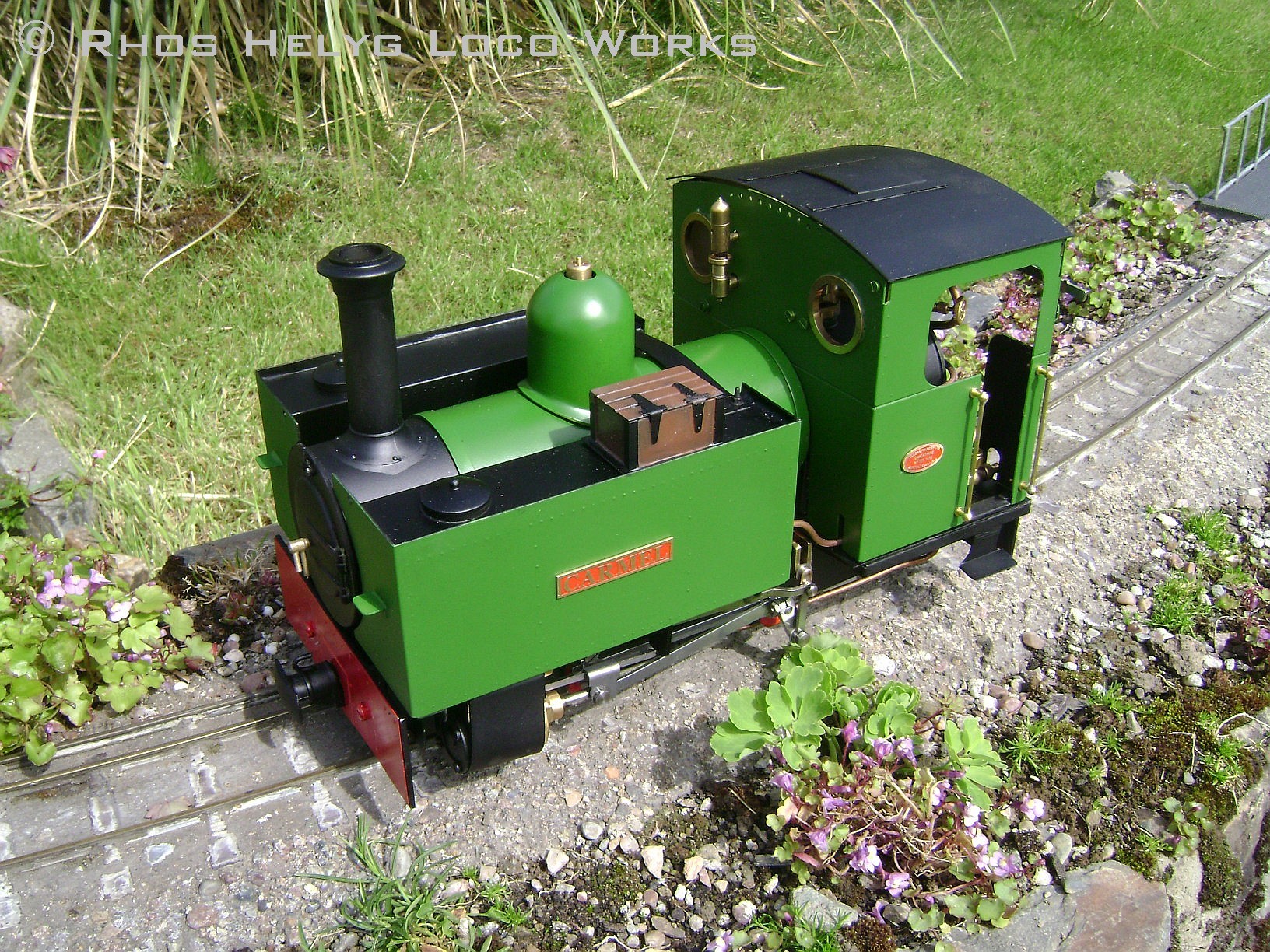
DJB Engineering Robert coal-fired 0-4-0T CARMEL
This coal-fired DJB Robert came here as a part-assembled kit, so I finished the assembly and painted it. This was followed by extensive testing and running-in before return to its owner in the USA. |
|
|
DJB Engineering Robert coal-fired 0-4-0T
An unfortunate accident befell this coal-fired DJB Robert when the front left-hand crank pin
managed to unscrew itself. The loose coupling rod then caught on the track and pole-vaulted
the loco off the raised trackbed on to the ground. The loco landed on the back right corner
of the cab, which bent the cab but the regulator also took an impact sufficient to bend the
steam turret on top of the firebox and also the regulator fitting on the turret.
|
|
|
DJB Engineering Robert gas-fired 0-4-0T
I don't know what it is about the DJB Model Engineering Ltd Robert, but they do seem to have a hard life. This is the third one that has been here for accident damage repair following an excess of gravity, or lack of support, in its immediate vicinity. This one looks to have landed upside down, with the the back of the cab taking the initial impact and ripping the cab roof off its hinges. The boiler also suffered, with the safety valve turret being pushed forward and to one side. On arrival here the loco was dismantled and the boiler went to Shawe Steam Services for straightening of the turret, testing and re-certification. With the bodywork I decided to try and keep as much of the original paint and lining as I could. The tanks and, surprisingly, the lower half of the cab had survived relatively unscathed so only the top half of the cab and the roof were actually stripped of the original paint. Much gentle heating, hammering and rolling later the cab and its roof were returned to their original shape and painted and lined to match the rest of the loco. |
|
|
DJB Engineering Robert coal-fired 0-4-0TT
The DJB Engineering Robert is a fine kit for a coal-fired model locomotive, but my customer
wanted his to be something a little different. The result is shown here.
|
|
|
DJB Engineering Robert coal-fired 0-4-0T
Another variation on how to do the tanks on a DJB Robert... This one had been built from a kit
and was acquired second-hand by the current owner. The first picture shows the loco in as
received condition, complete with spacer blocks added between the front of the cab and the
rear of the side tanks. Both the owner and I were rather taken by these but they were poorly
made and had to go. They were replaced by the dummy coal bunkers shown in the later photos,
firmly attached to the cab front and complete with matching rivet details.
|
|
|
DJB Engineering Robert coal-fired 0-4-0T
Another Robert, built here from a kit, and again featuring the the dummy coal bunker sections between the cab front and the back of the water tanks, filling the gap nicely and changing the look significantly. |
|
|
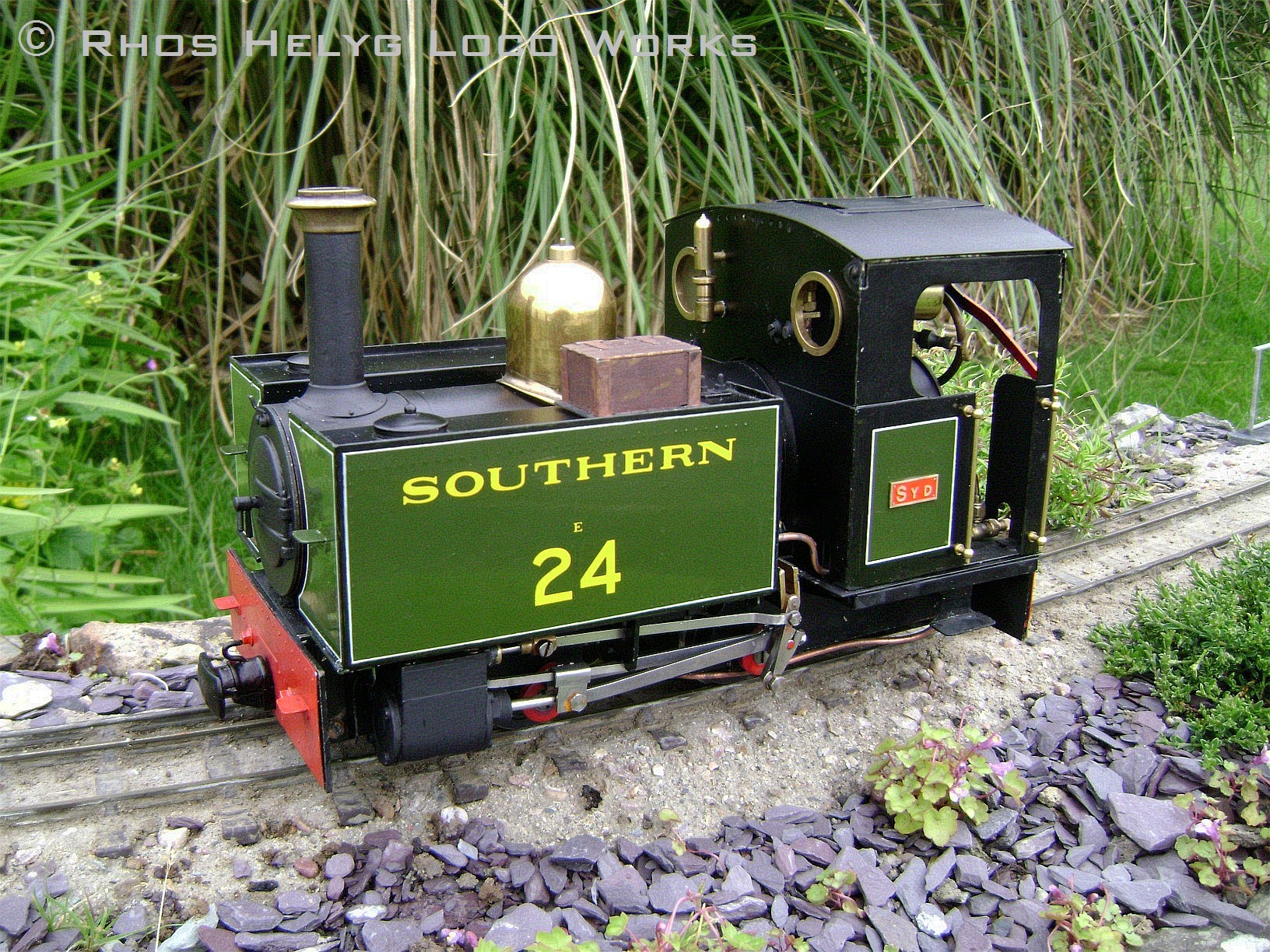
DJB Engineering Robert coal-fired 0-4-0T No. 24 SYD
This is the fourth DJB Robert that has been here for accident repairs. They are heavy locos so when they fall on to a hard surface the damage can be severe. Despite the evidence in the first photo, this coal-fired one didn't actually suffer too badly in that no boiler damage was incurred, with only a bent blower valve spindle to deal with. The rest of the impact was absorbed by the body work, and mainly the cab. The second picture shows it after bashing back in to shape and a full strip and repaint based on the livery carried by the full-size LYN. New name plates by MDC to replace the wooden originals finished the job nicely. |
|
|
Graham Duncan-Smith Cape Town Waterworks 0-4-0T
The body for this loco came to me for painting and lining. Reassembled by its builder Graham Duncan-Smith, it is a delightful model of the Cape Town Table Mountain Waterworks 0-4-0T locomotive constructed by Andrew Barclay (Photo by Graham Duncan-Smith). |
|
|
Graham Duncan-Smith Double-Fairlie 0-4-0+0-4-0 LITTLE WONDER
Some of you may have read my "getting ready to retire" article in 16mm Today (SMT) magazine
(No. 190). In it I wrote about lining locos and said "I know my skill limits and have no
hesitation in recommending others to take on the job if I consider myself unworthy. Victorian
Maroon Double-Fairlies spring to mind.".
|
|
|
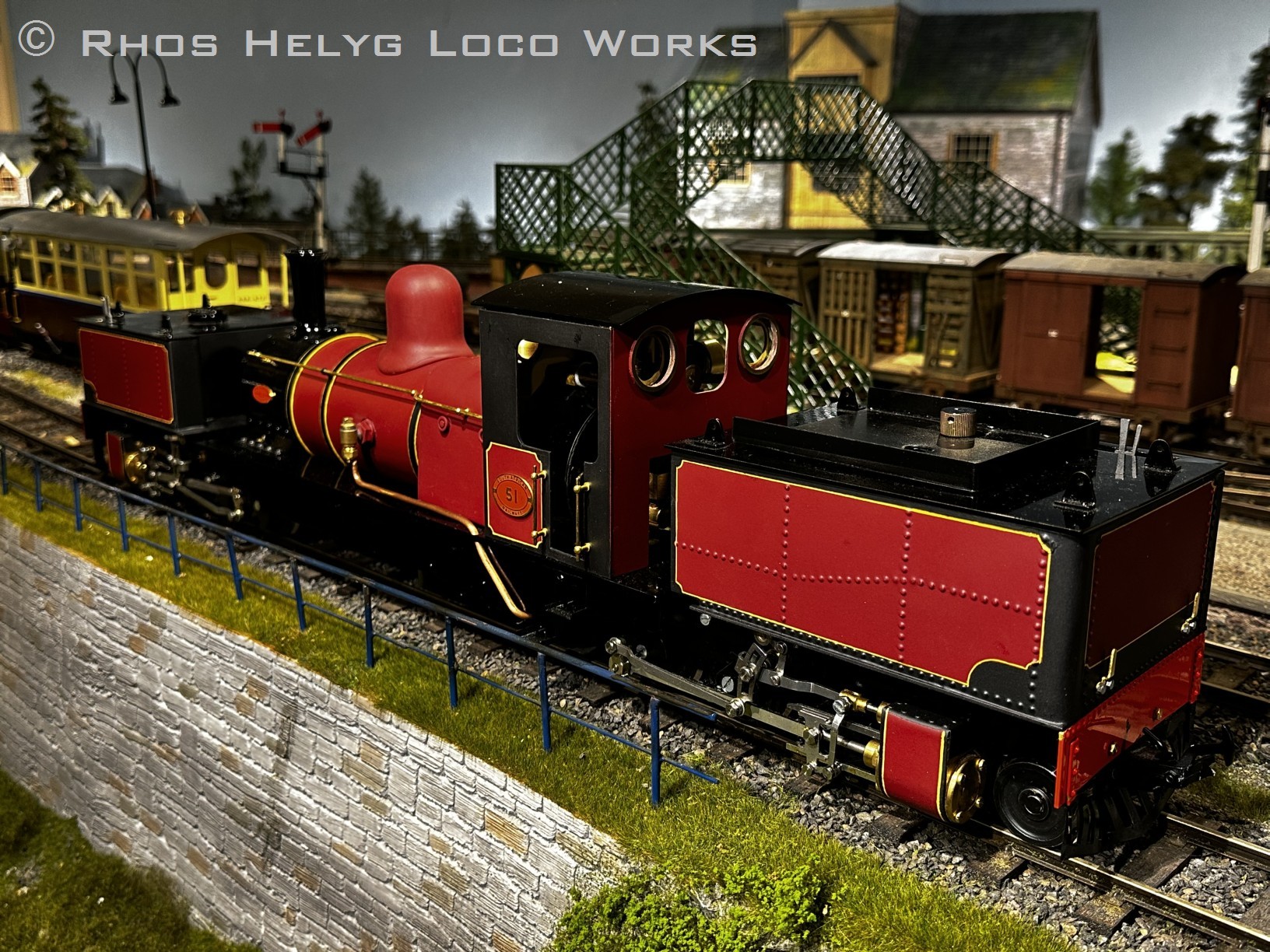
Graham Duncan-Smith NGG11 2-6-0+0-6-2 Garratt No. 51
The bodywork for this NGG11 Garratt was painted and lined in a scheme carried by the full-size loco. (Photo by Graham Duncan-Smith) |
|
|
Graham Duncan-Smith Pechot-Bourdon 0-4-0+0-4-0
This wonderful Pechot-Bourdon locomotive was built by the very talented Graham Duncan-Smith. I was very pleased to have played a small part in its construction in that I was asked to paint and line the bodywork components. It was a delight to be asked, and a delight to do the job, Looks great, doesn't it? (Photo by Graham Duncan-Smith) |
|
|
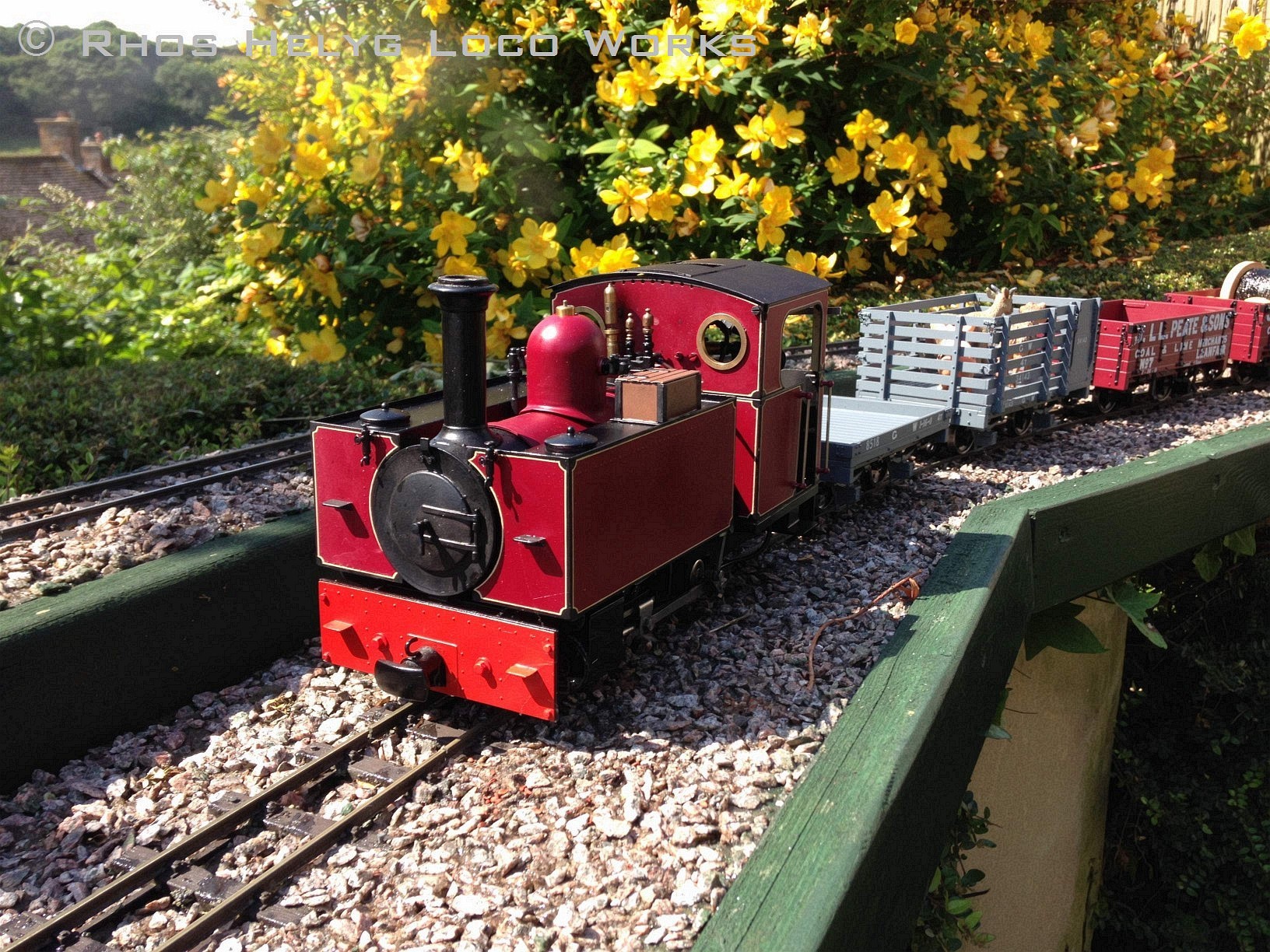
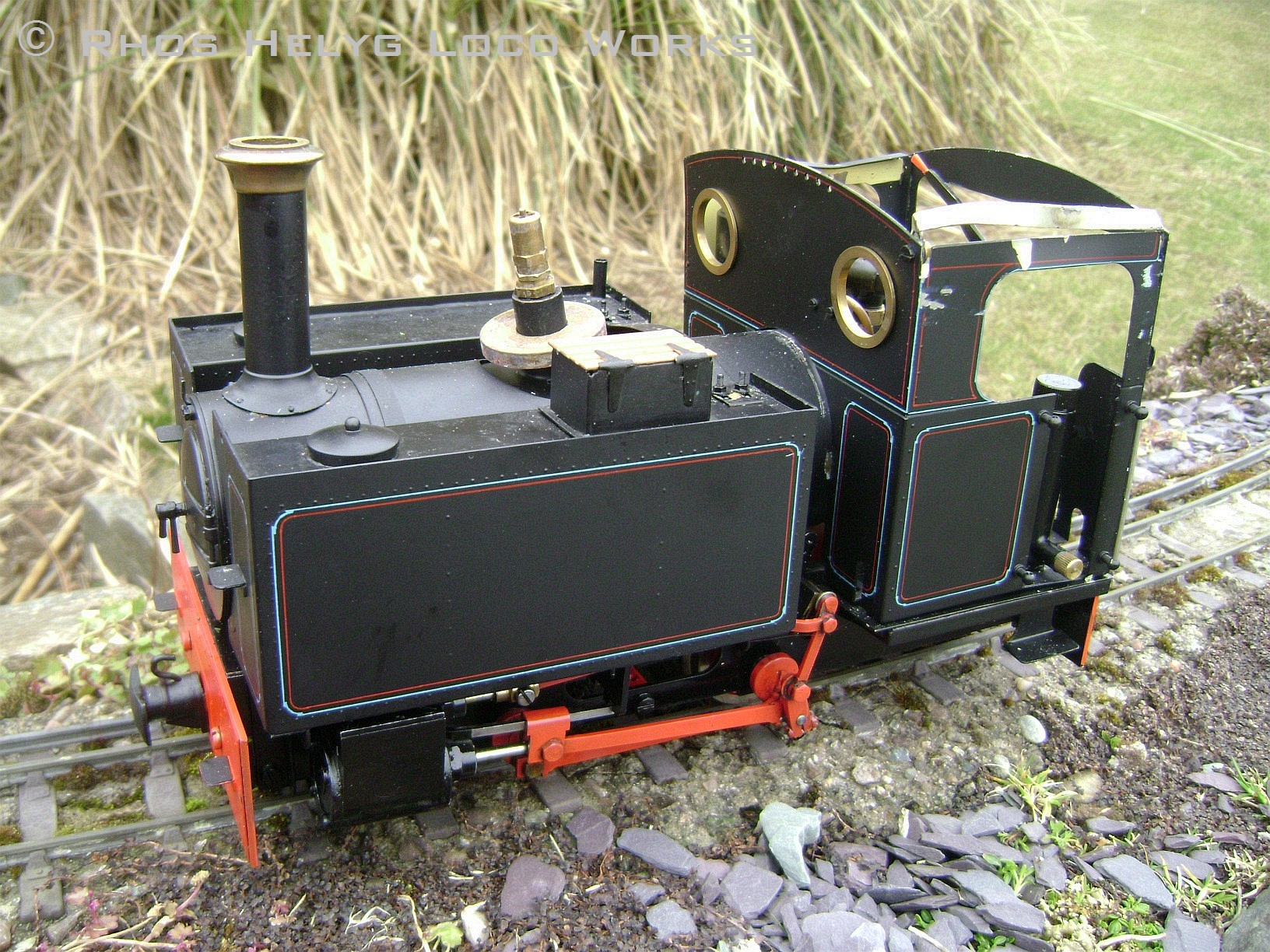
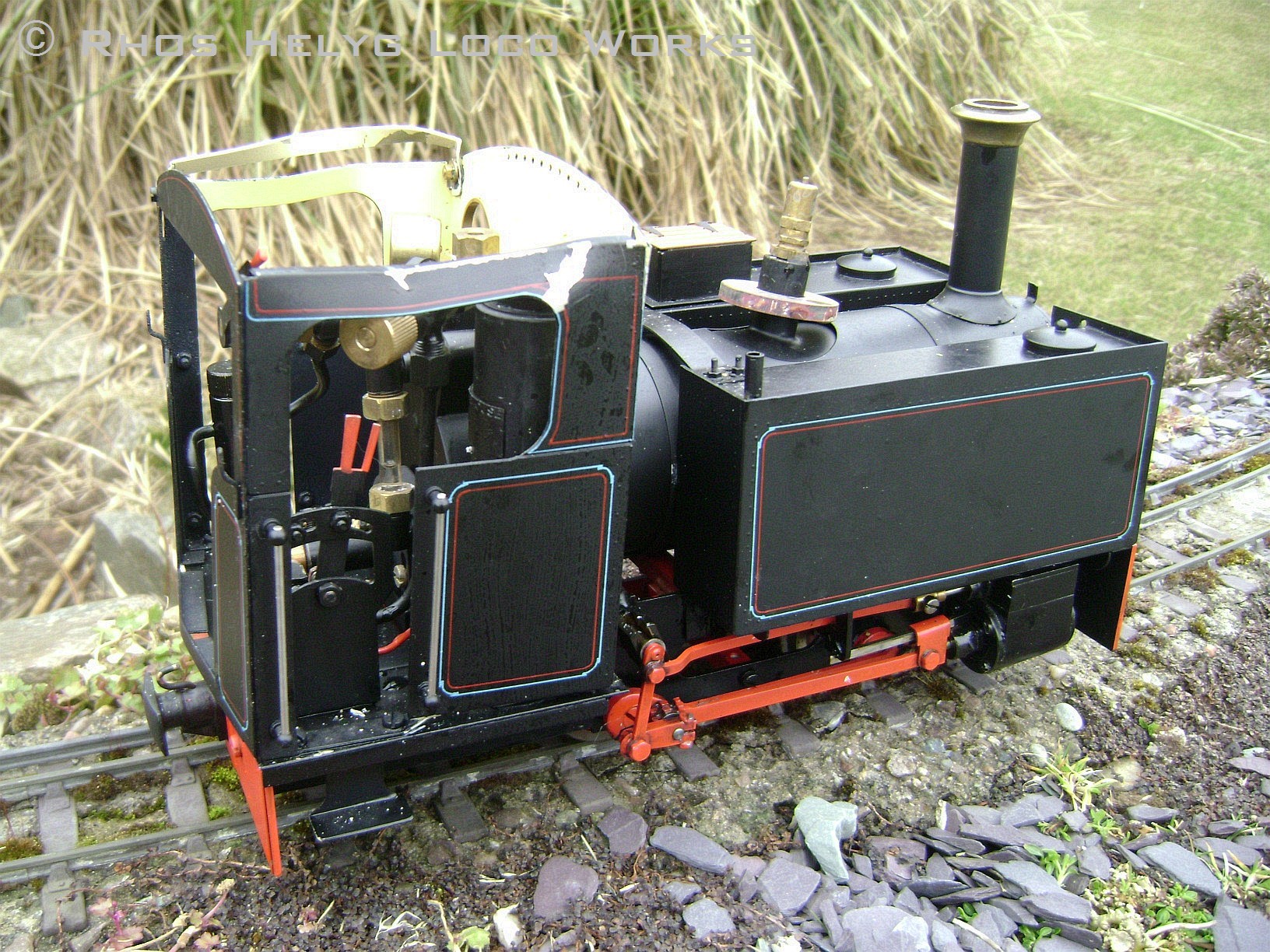
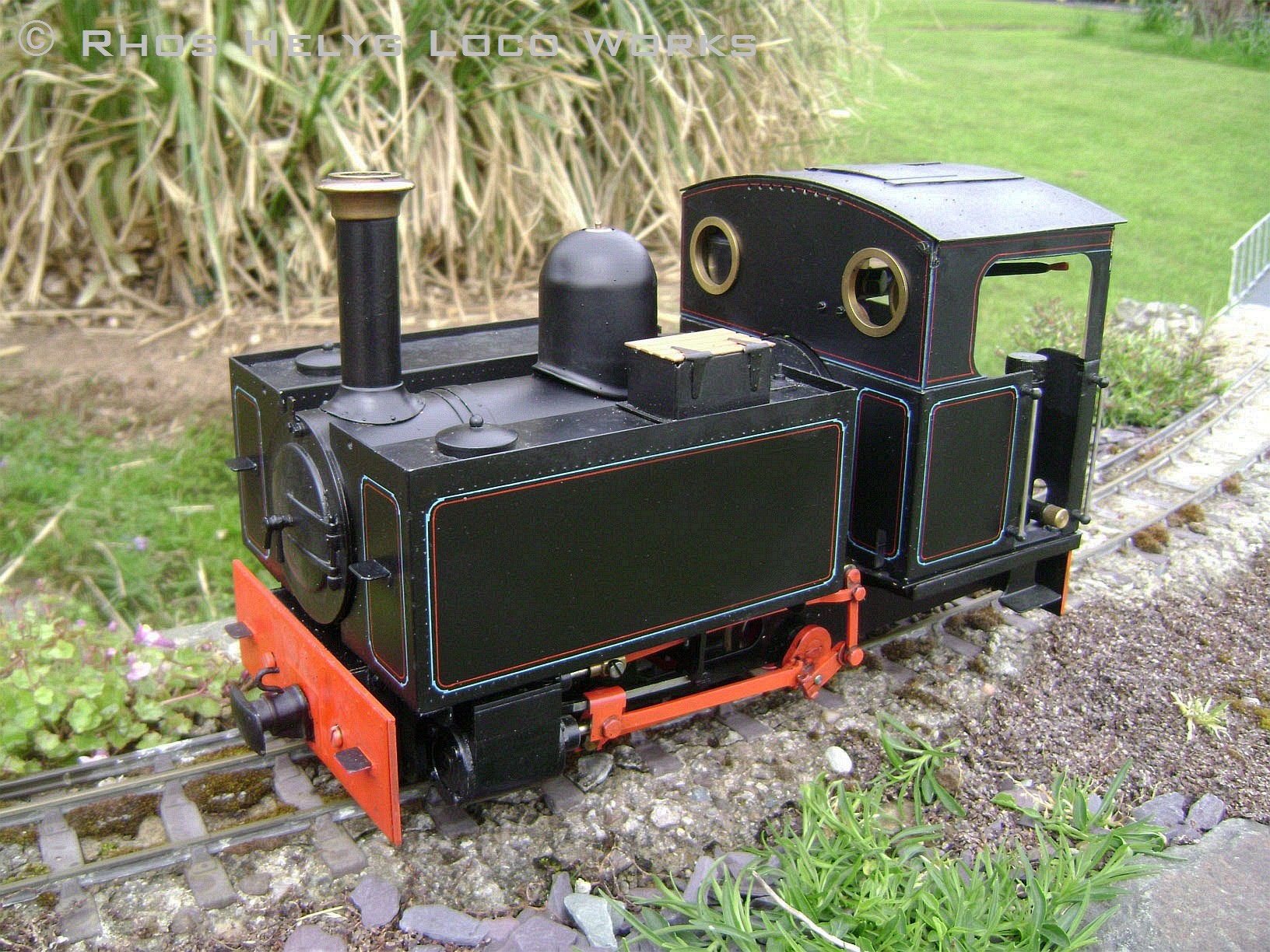
Graham Duncan-Smith Decauville Mallet 0-4-4-0T
The bodywork and boiler of this 0-4-4-0T Mallet were sent to me by builder Graham Duncan-Smith for painting and lining. The photo shows the loco after reassembly by Graham .... the first time I had seen it in one piece. There was some indecision on my part about the matt black ` smokebox, but I think I made the correct decision in the end.(Photo by Graham Duncan-Smith). |
|


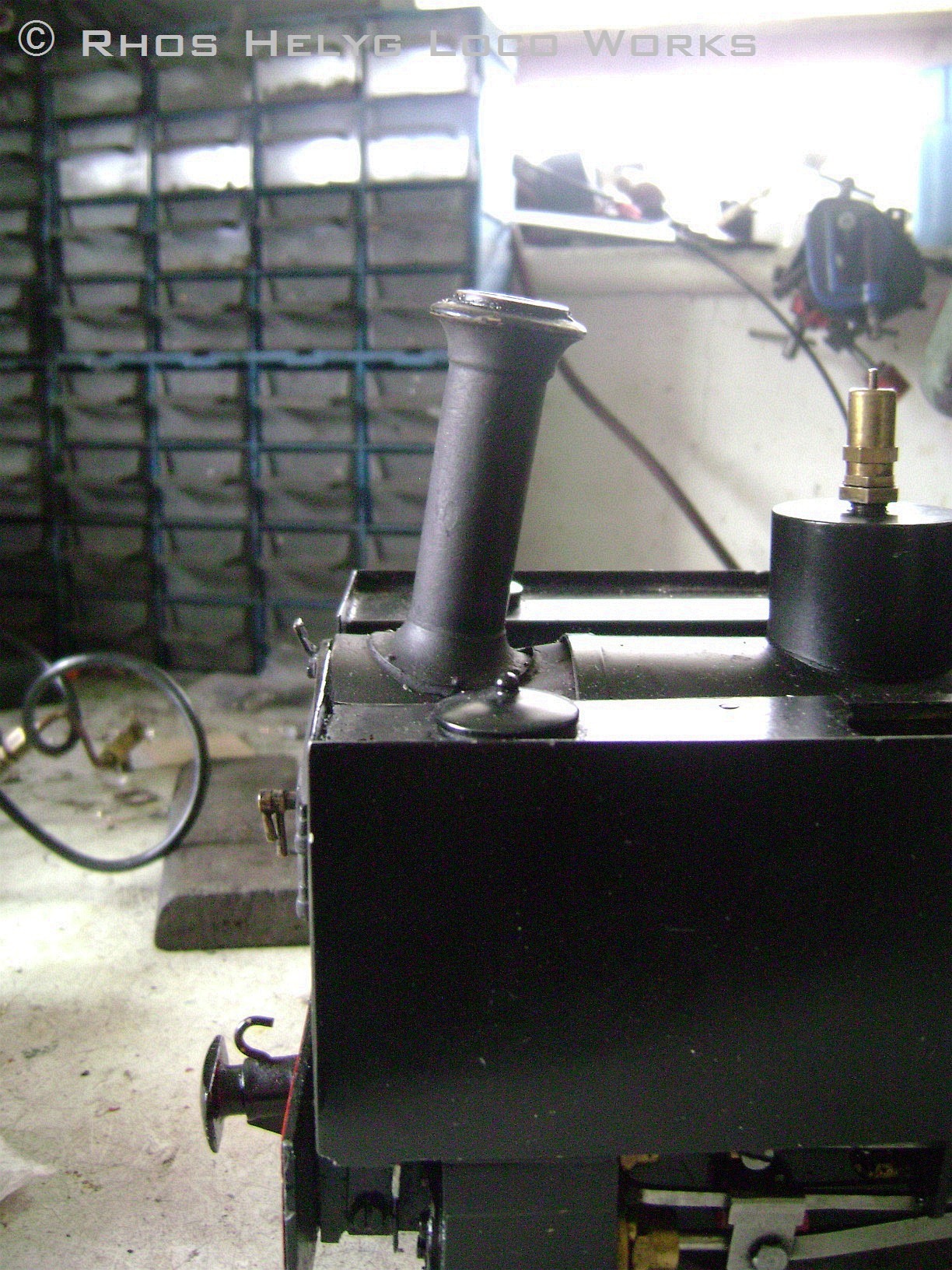
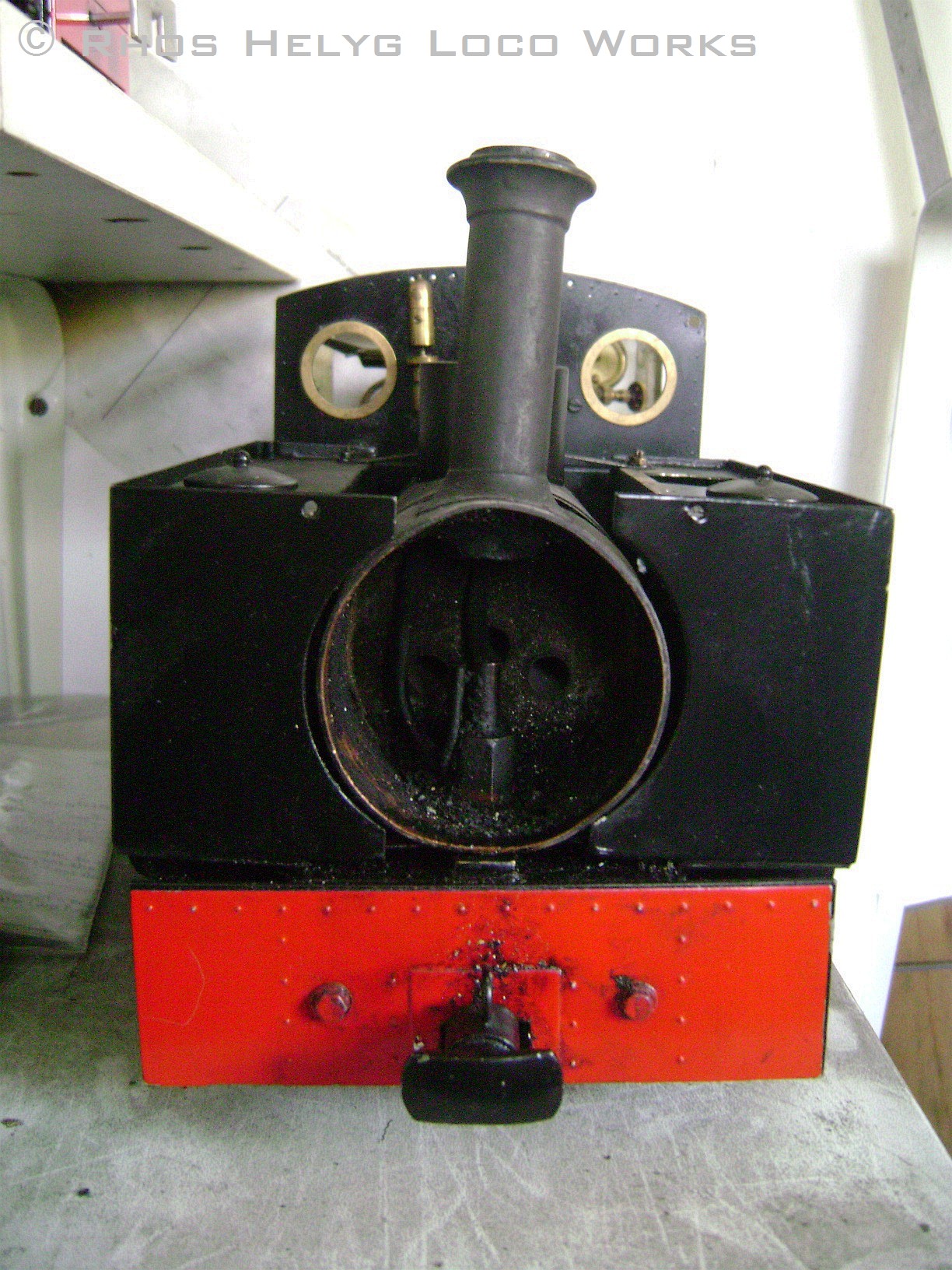

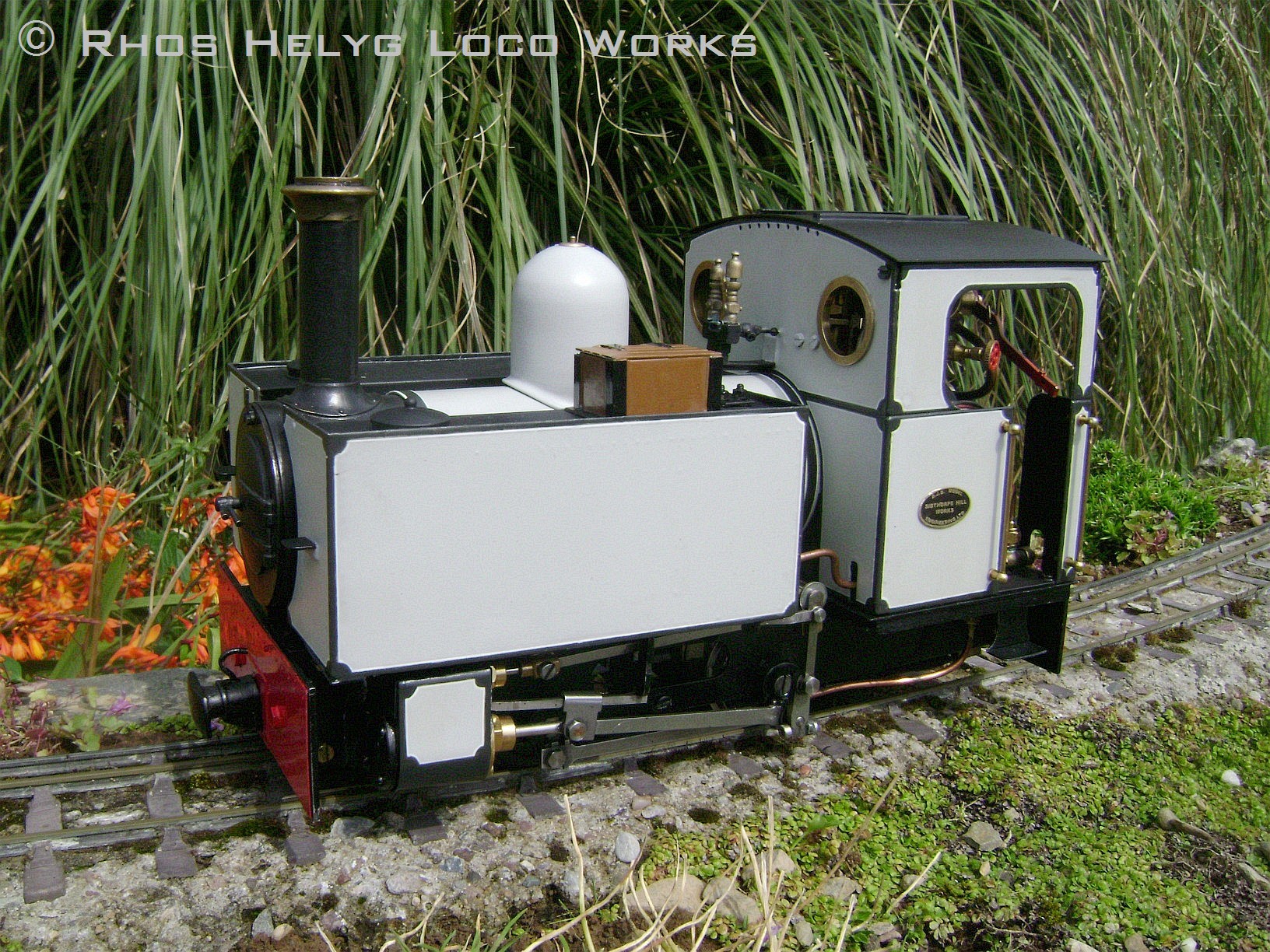
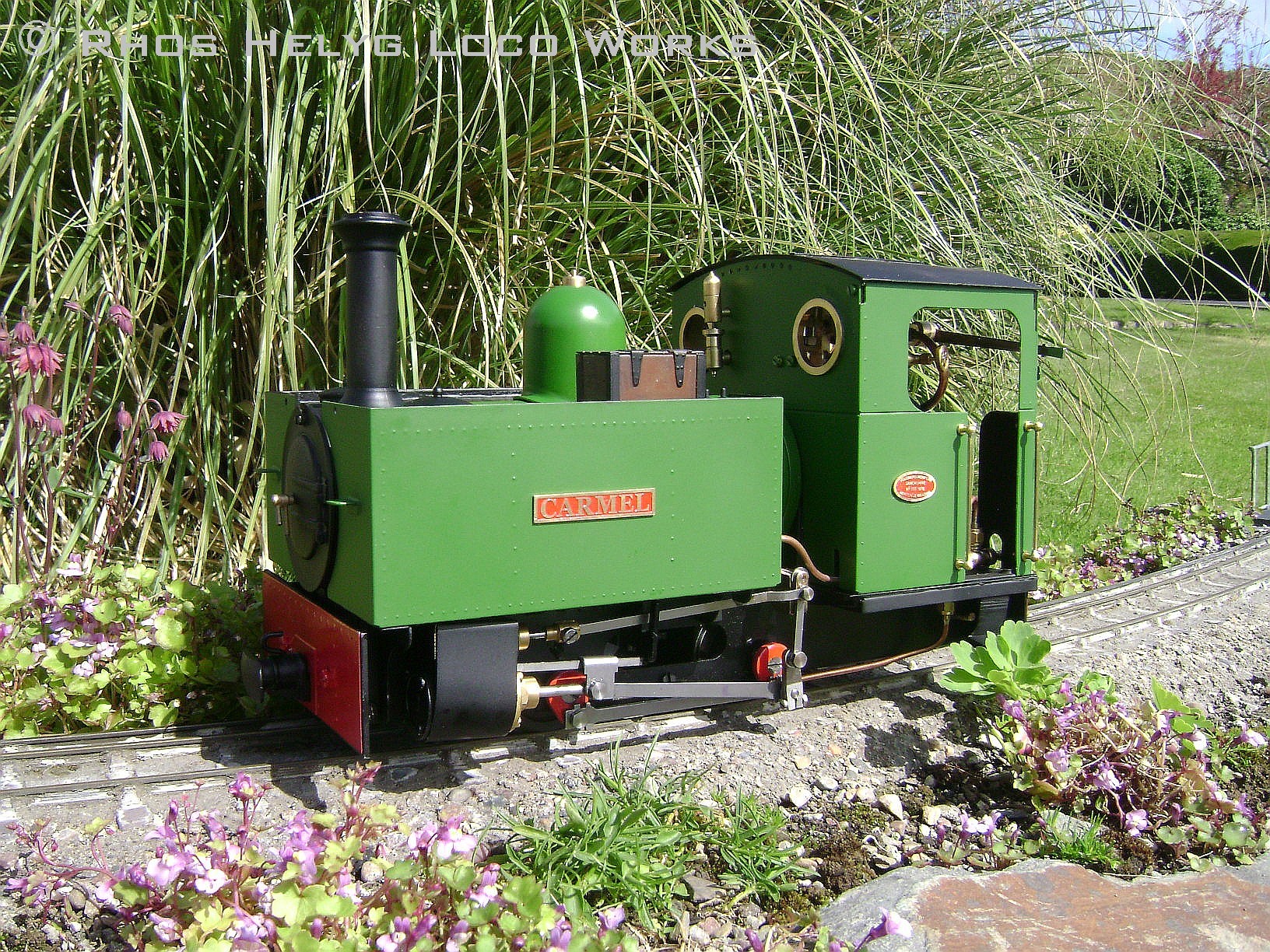

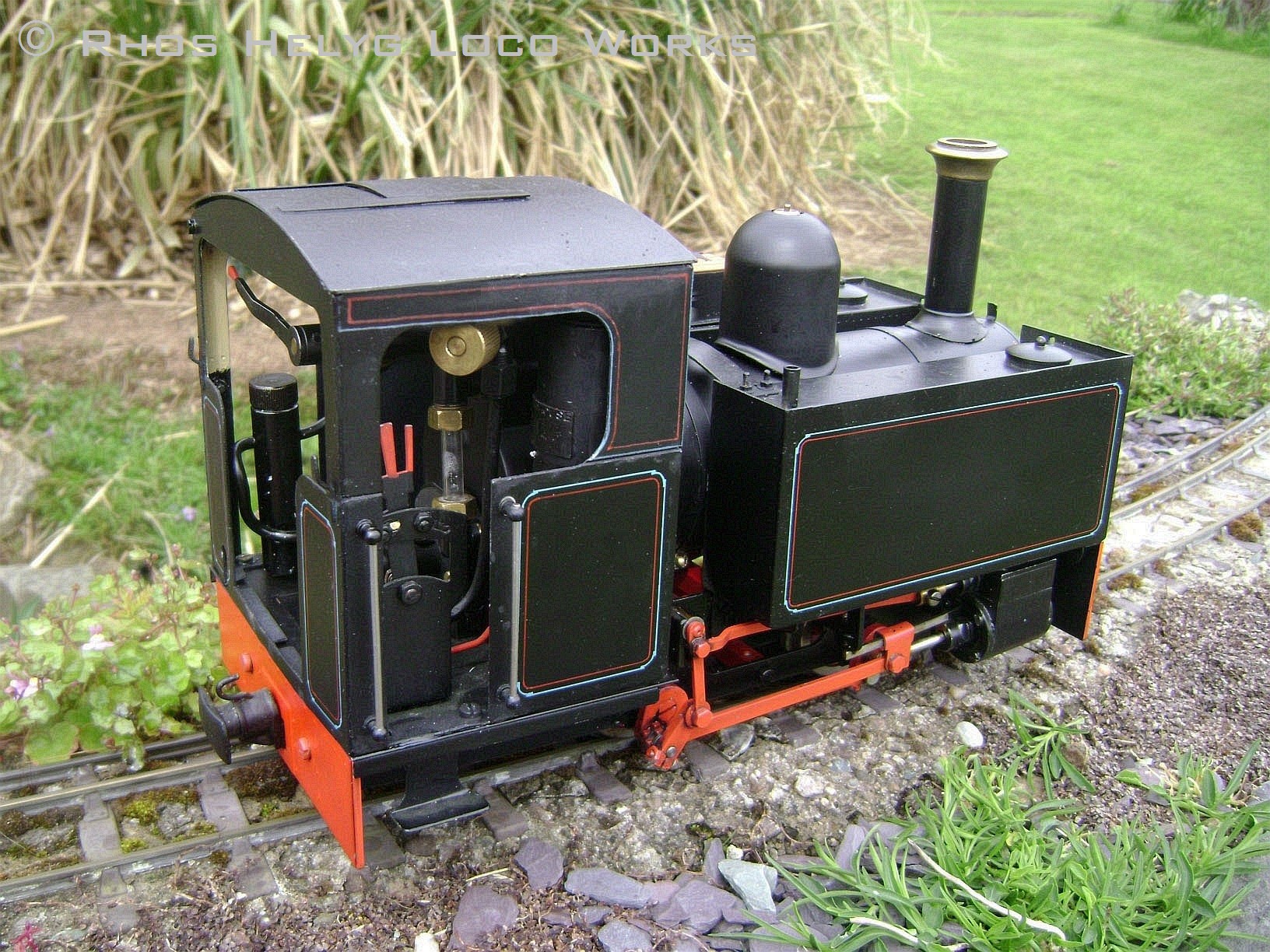
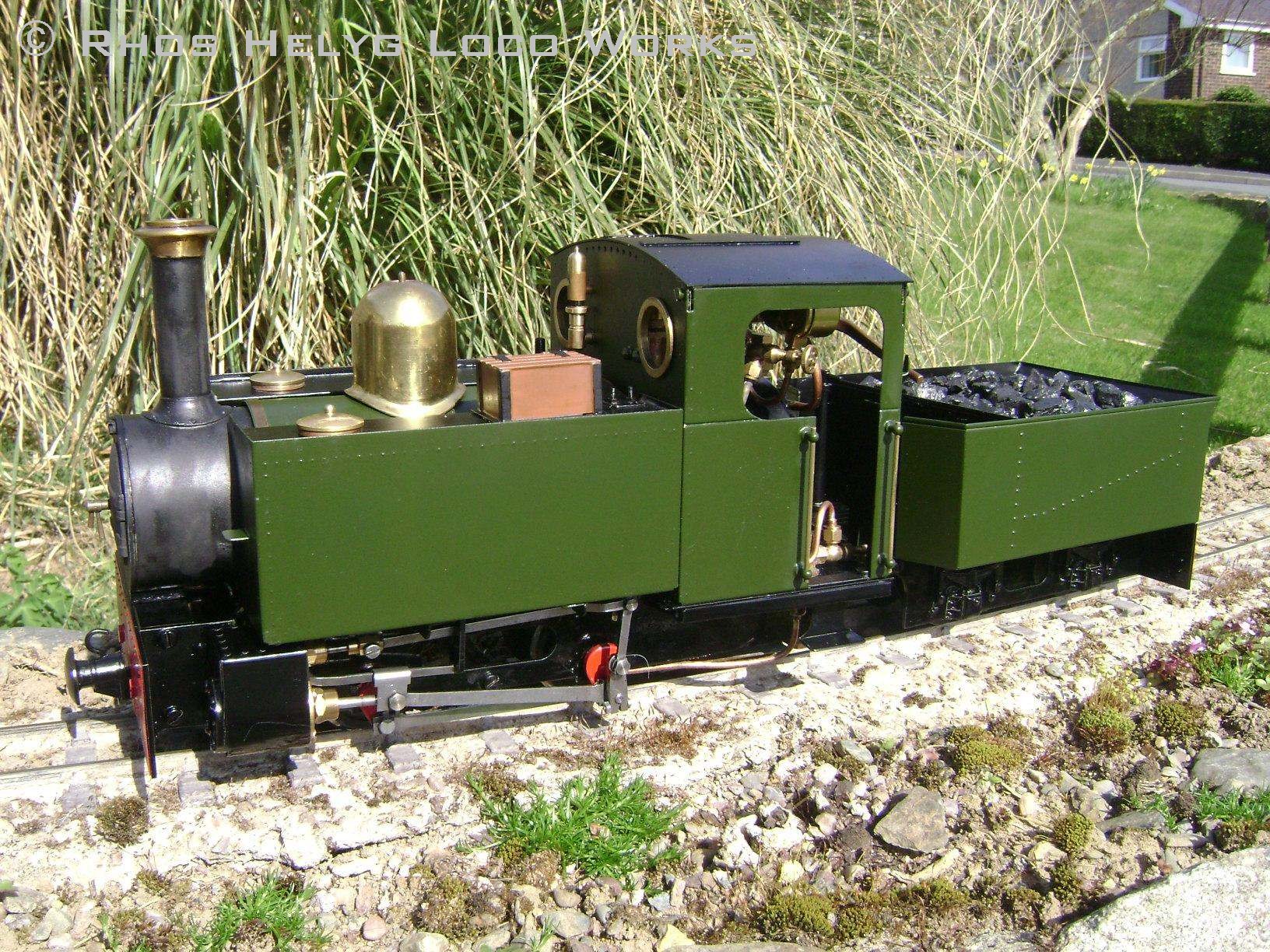
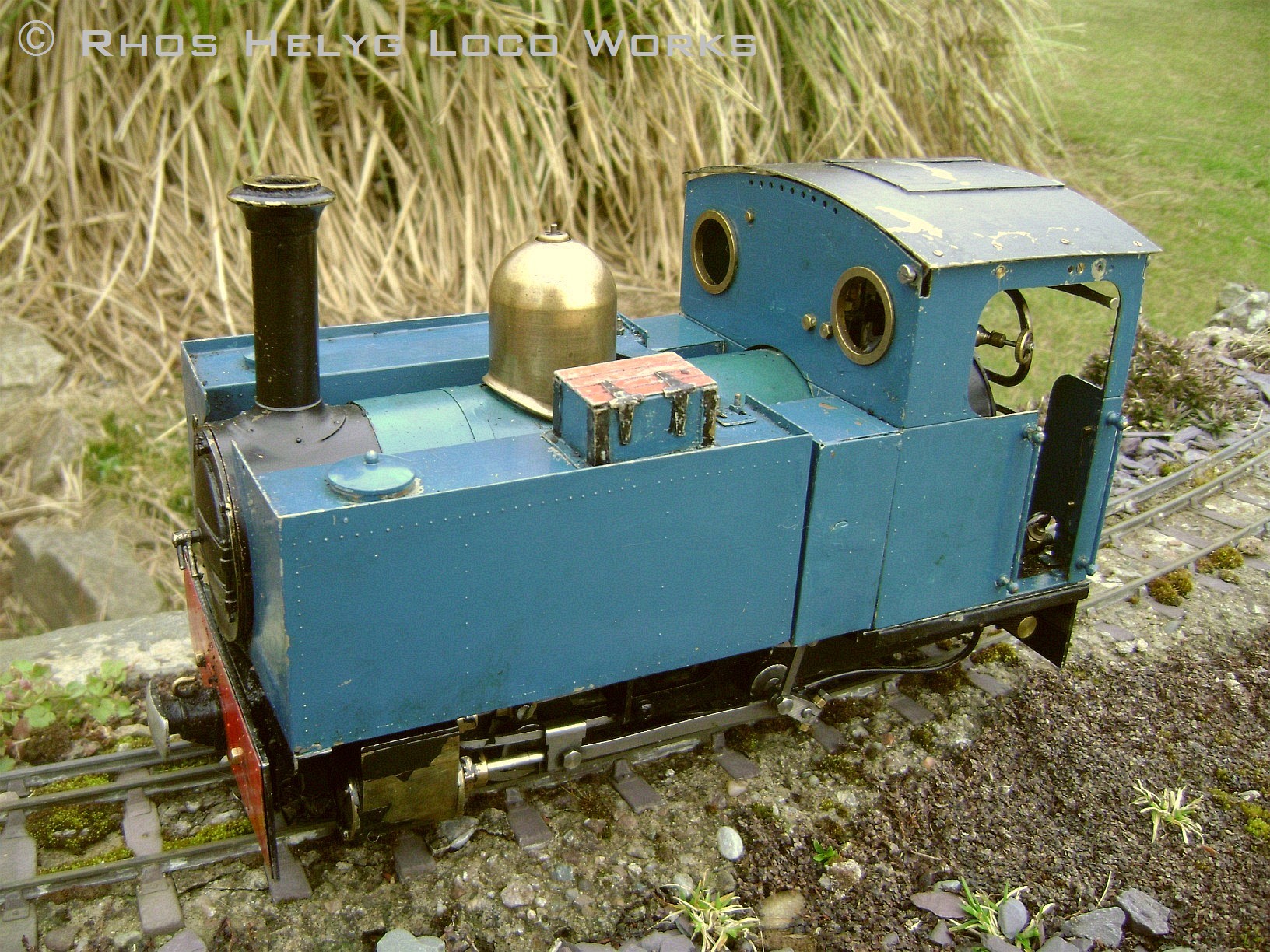
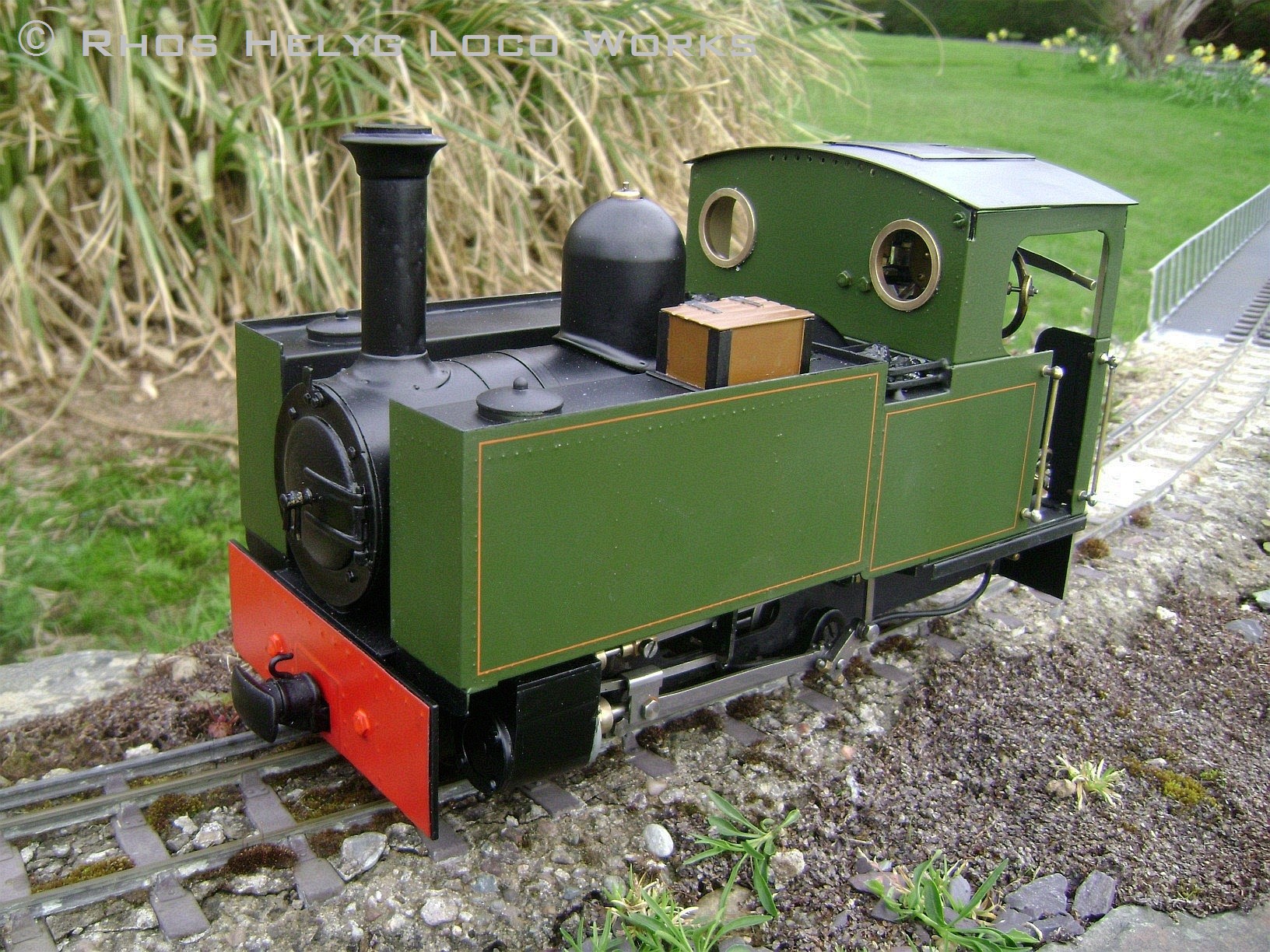
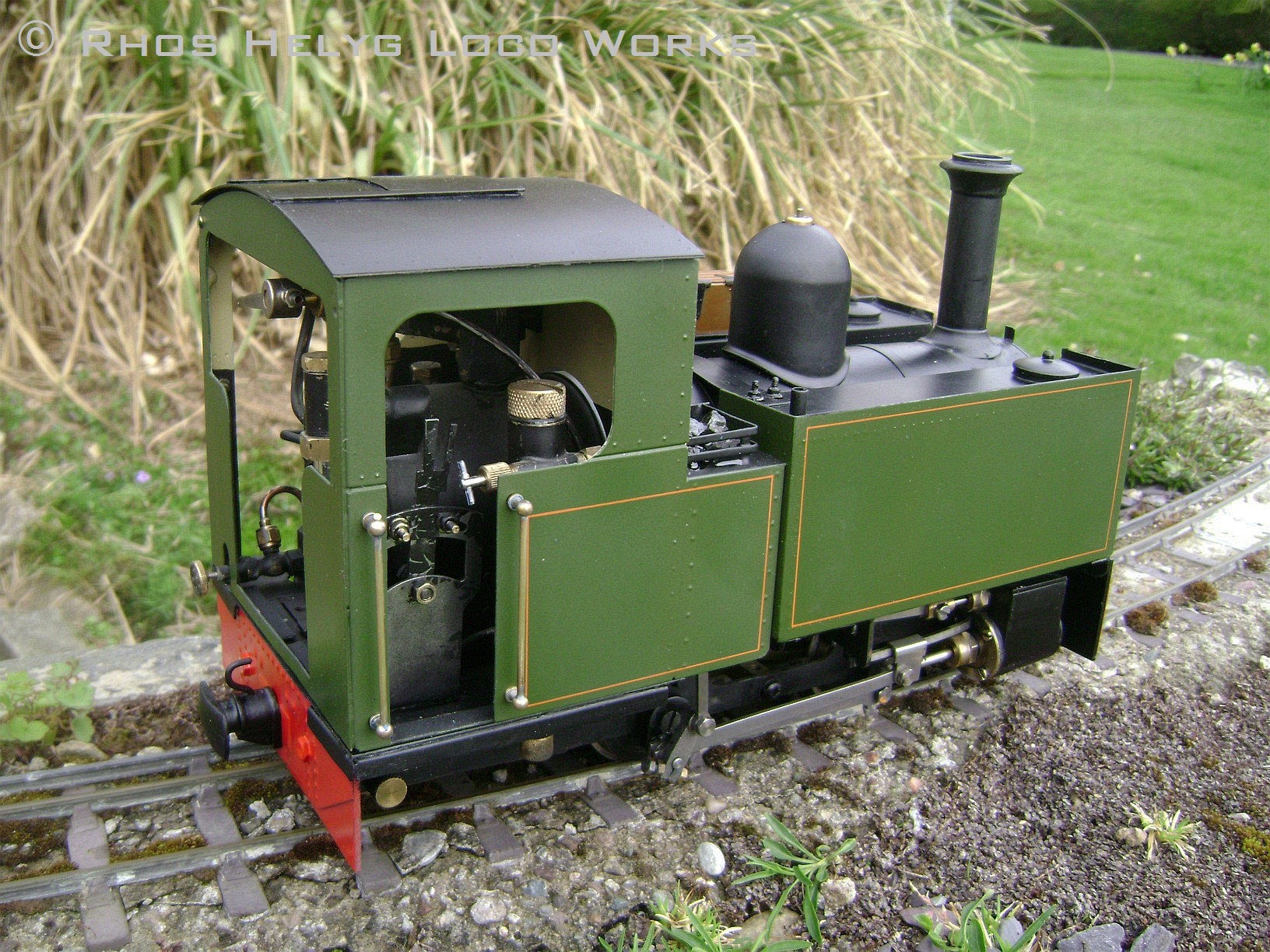
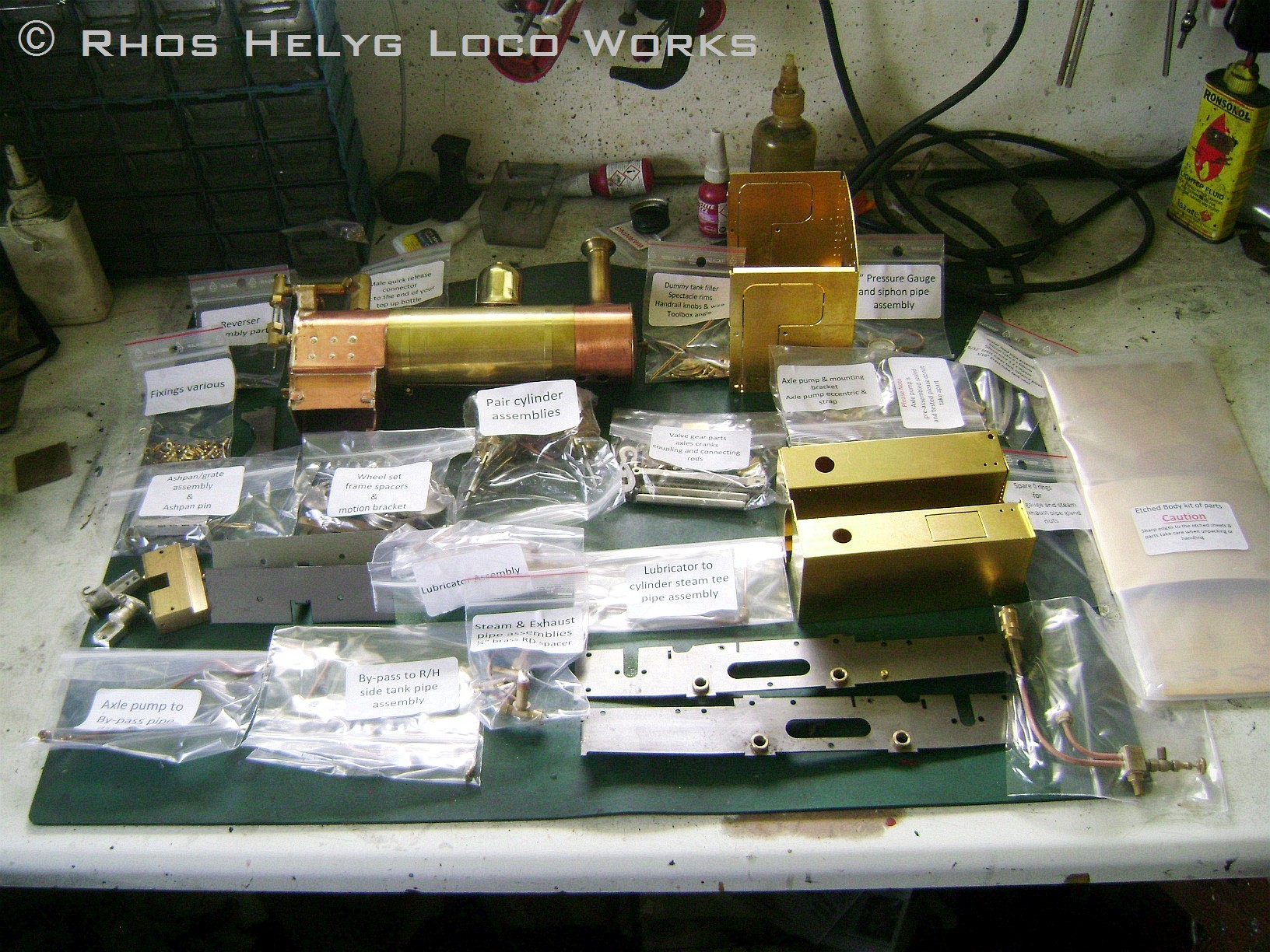
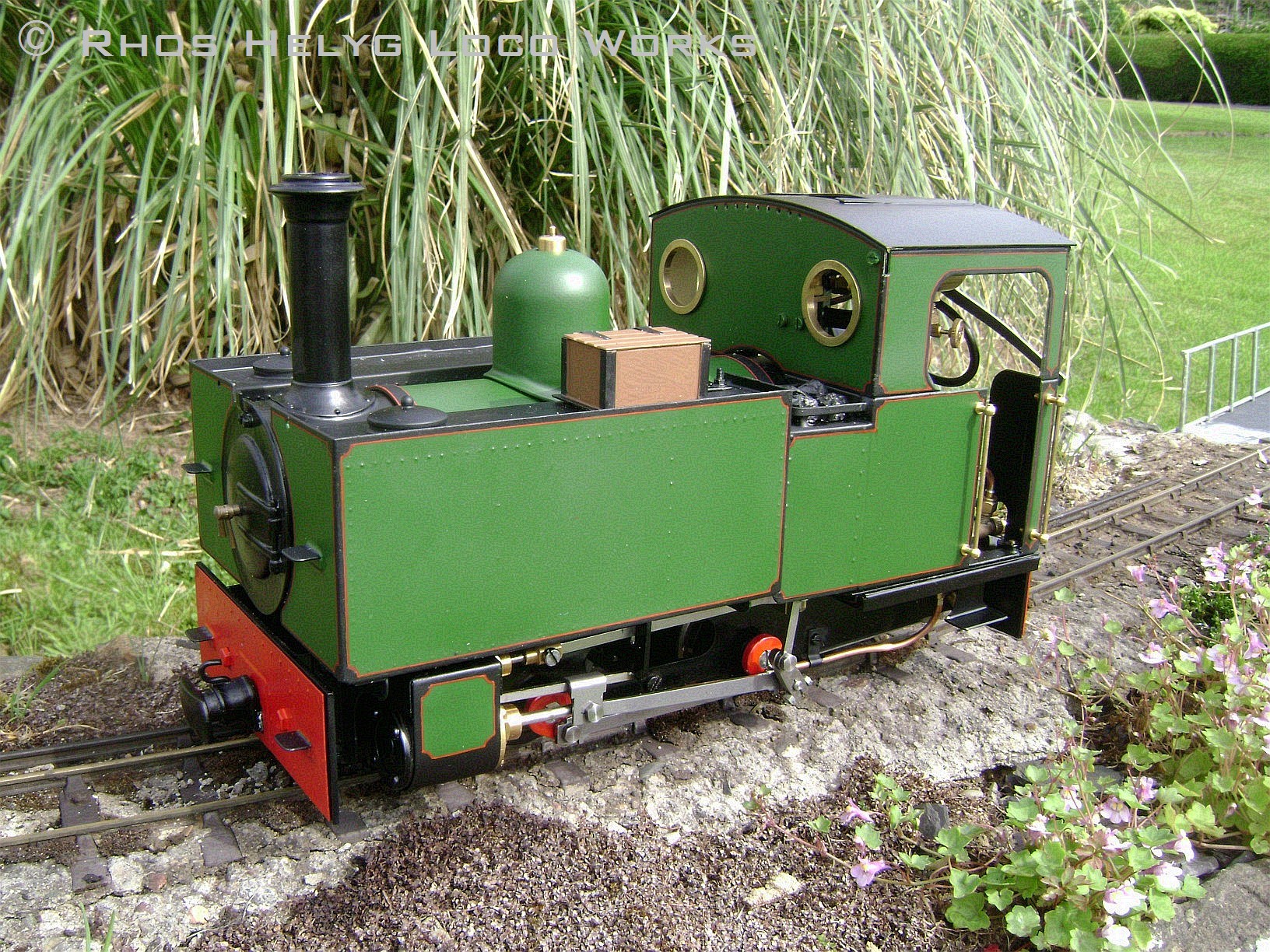
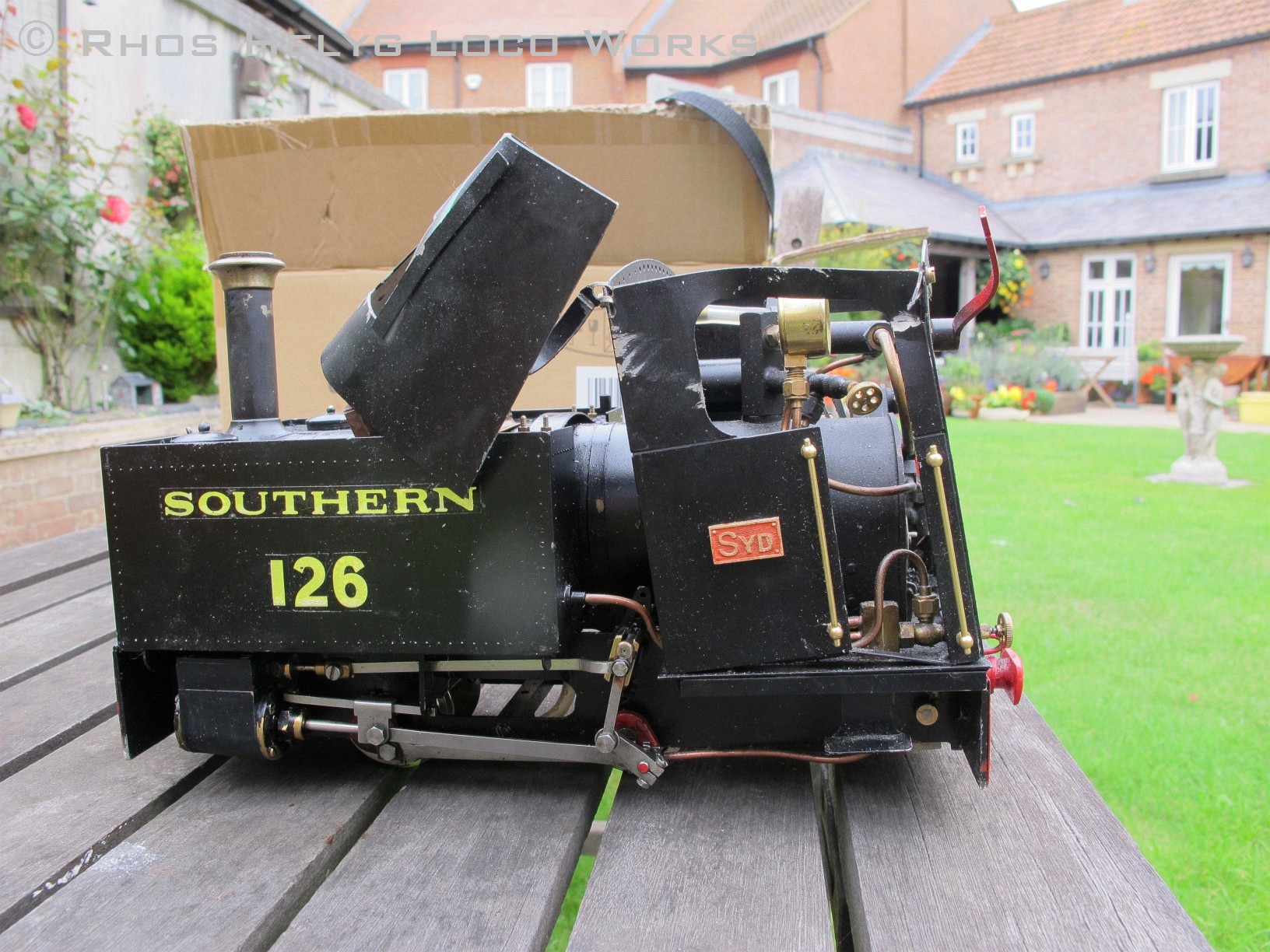
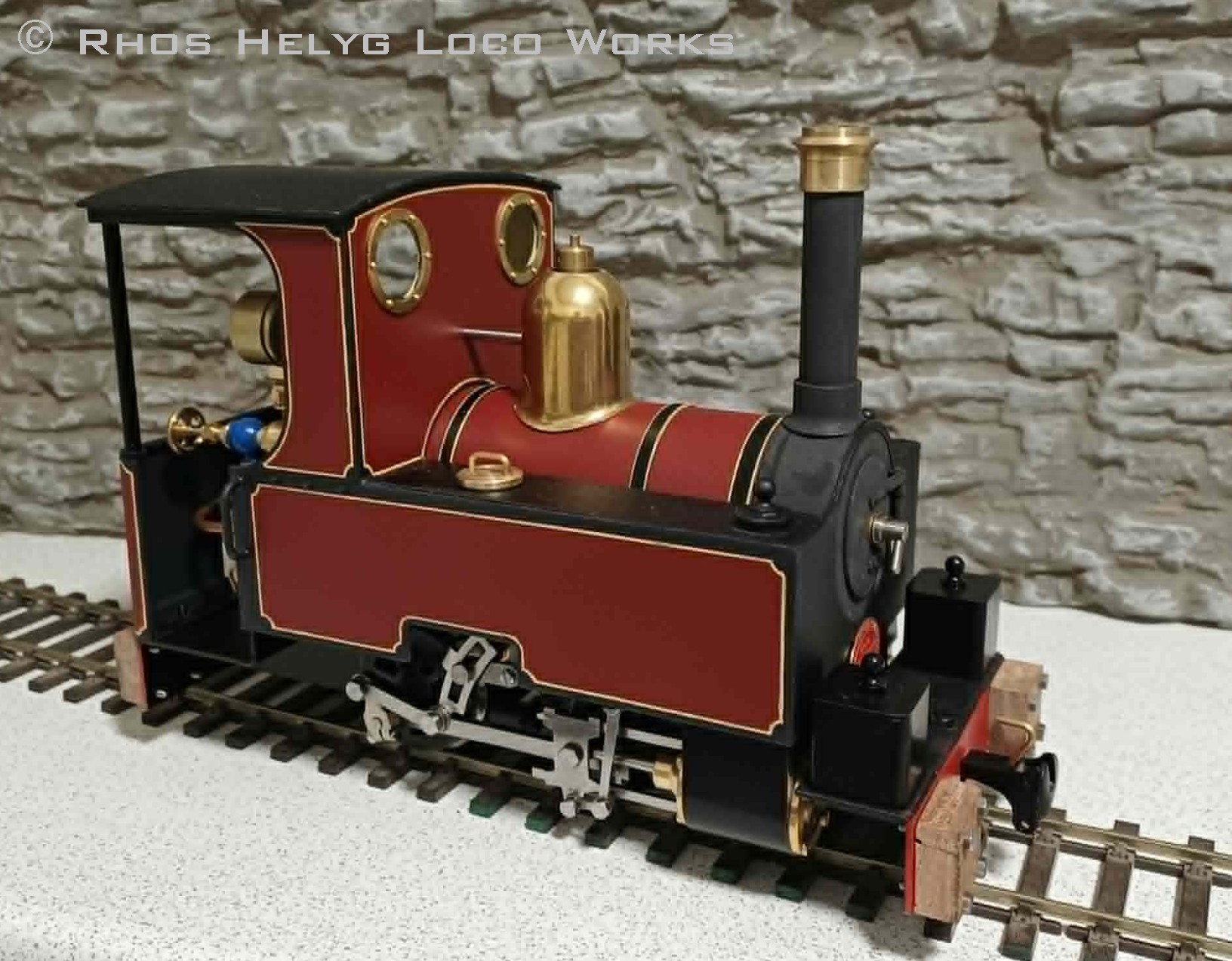

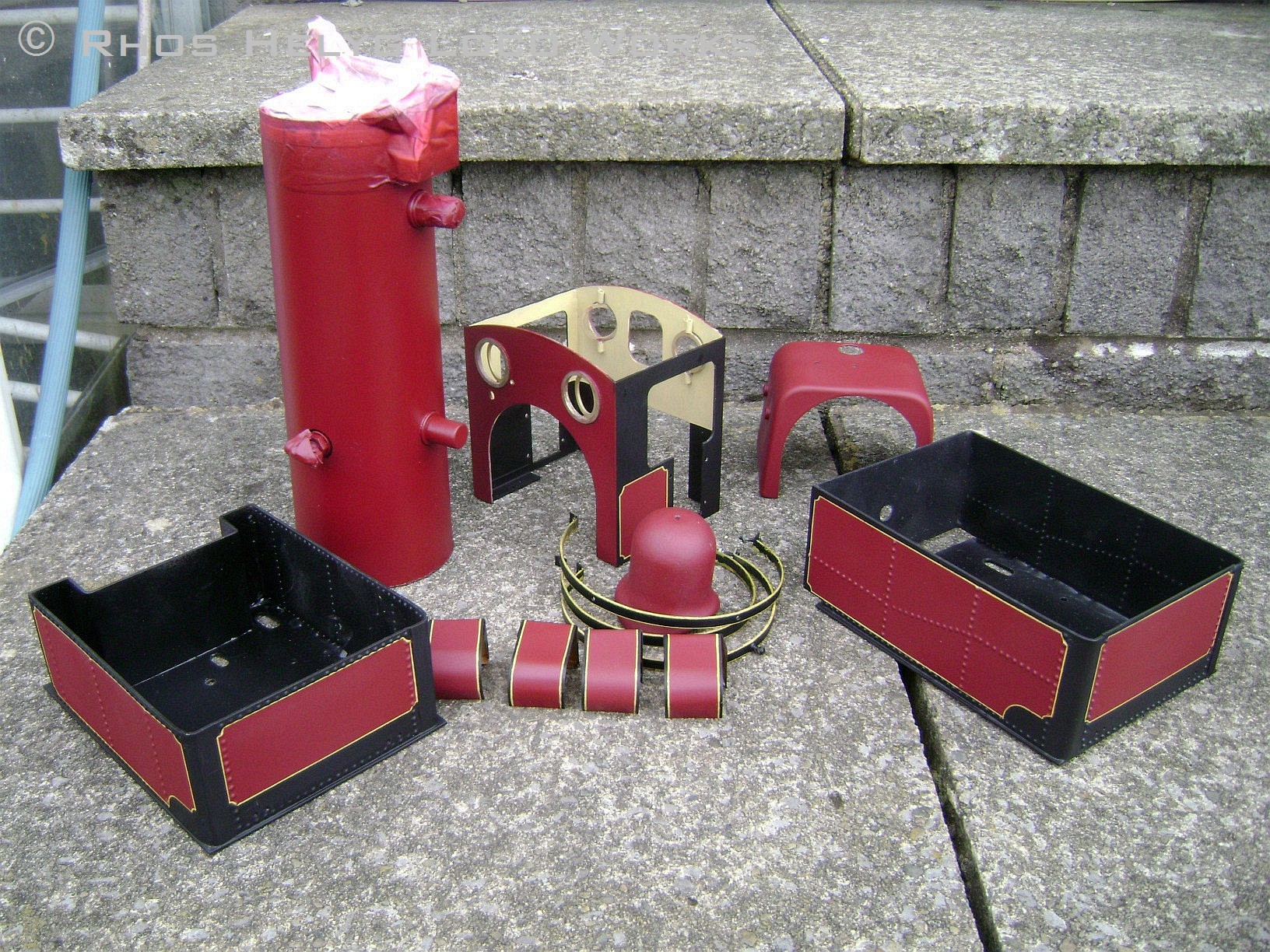


|
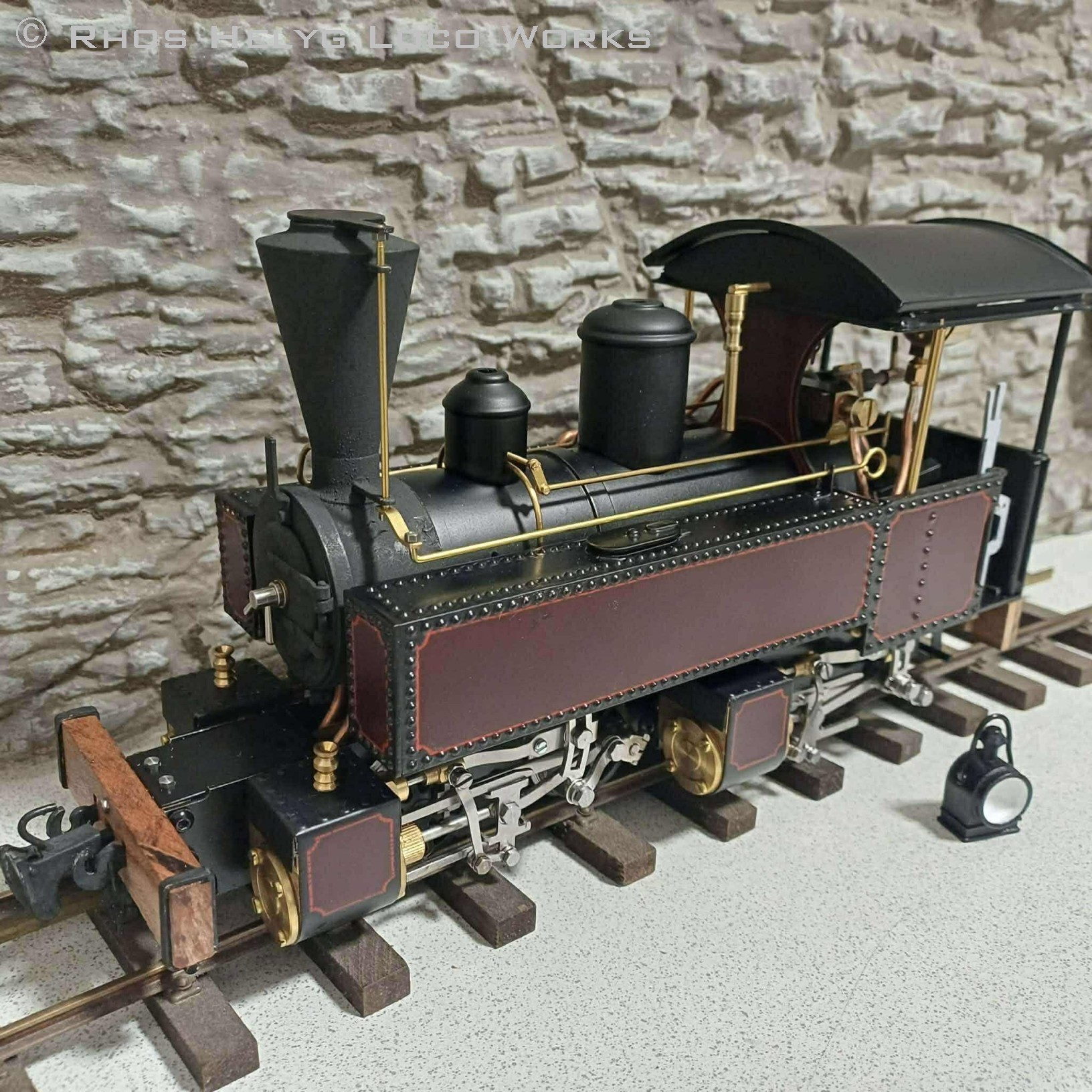
ELR Engineering Quarry Hunslet 0-4-0ST No. 12 IANTHE
The Hunslet Engine Company of Leeds is well-known for its Quarry Hunslet 0-4-0 saddle tanks.
Although they all looked very much the same, there were many different types of Quarry Hunslet
as they varied in size, power and a whole host of detail differences. Synonymous with North
Wales, large fleets of Quarry Hunslets were used in the Penrhyn slate quarries near Bethesda
and at the Dinorwic slate quarries near Llanberis, with correspondingly smaller numbers to be
found at the smaller quarries such as Pen-yr-Orsedd and Dorothea. However, Hunslet also
produced many similar but less famous locomotives for use elsewhere in the UK and abroad.
IANTHE, seen here, could be one of those.
|
|
|
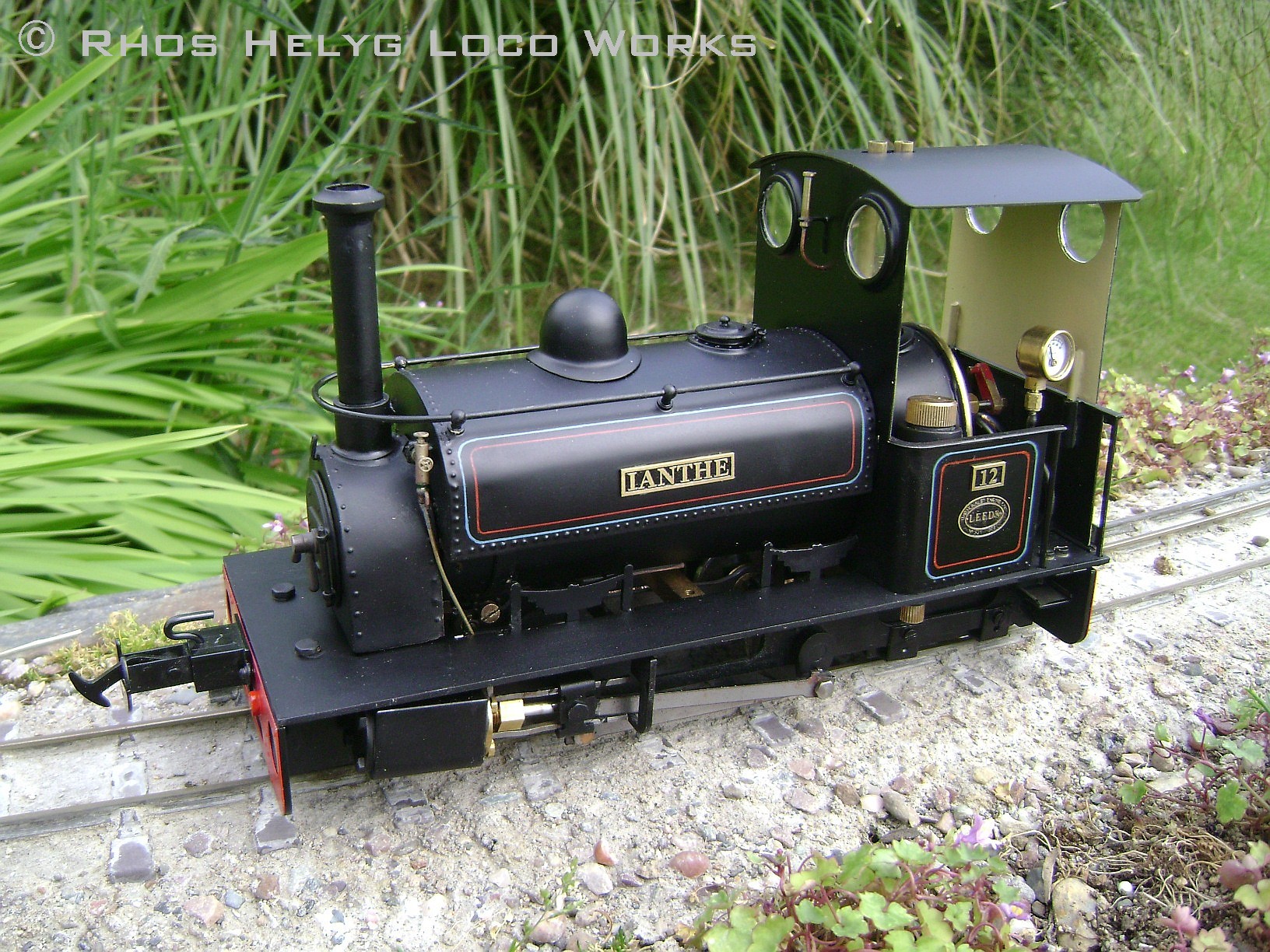
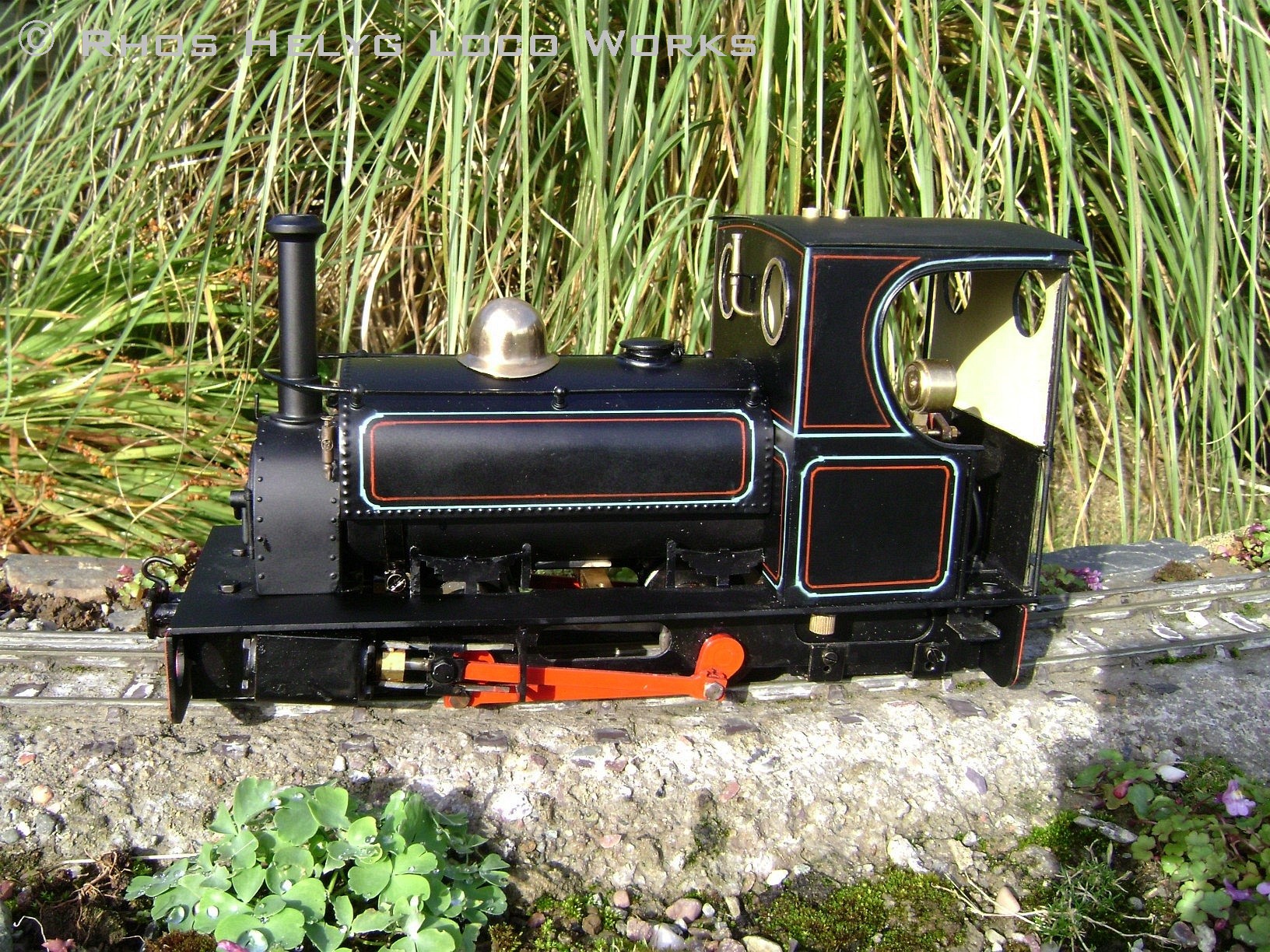
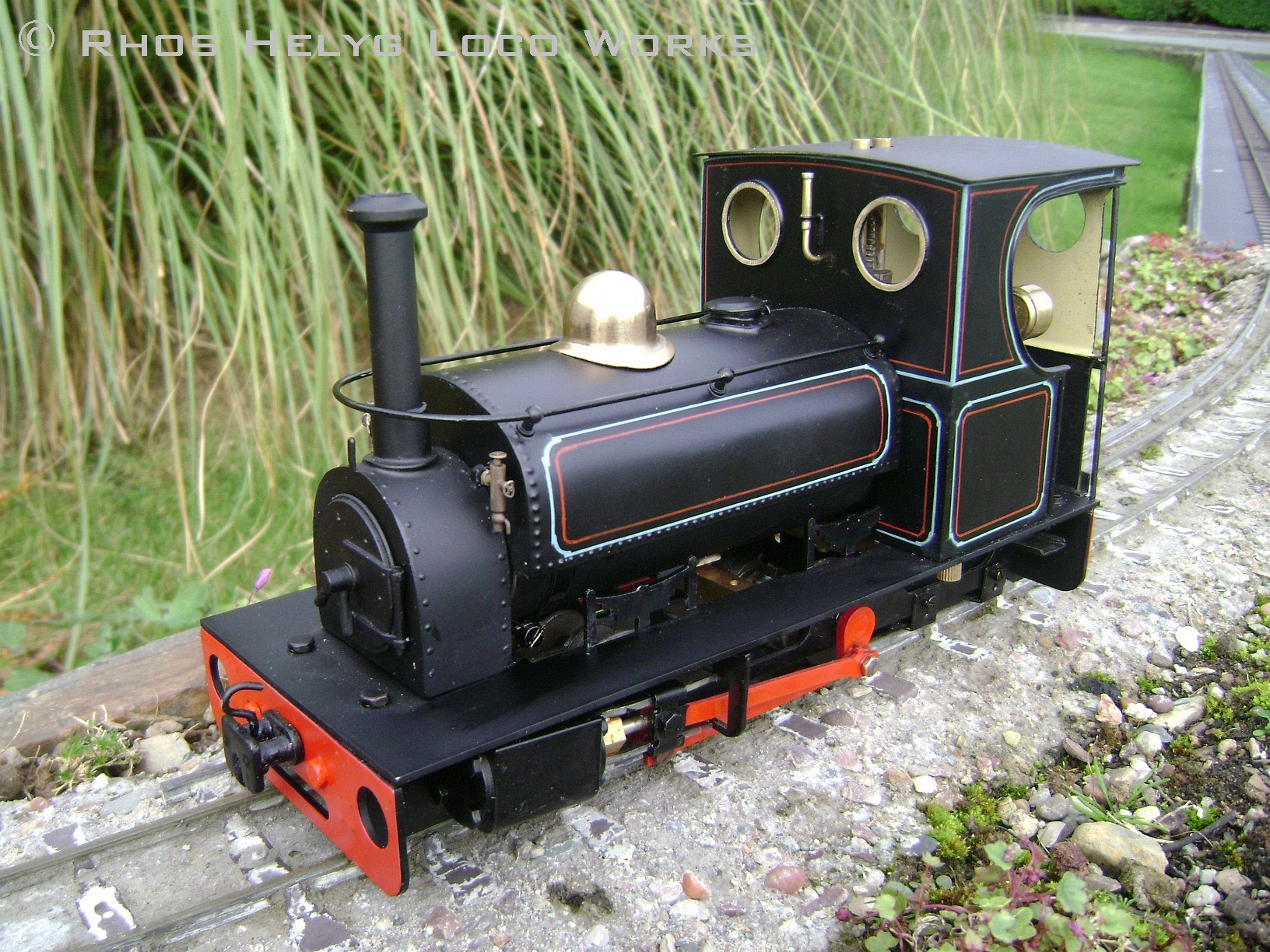
ELR Engineering Quarry Hunslet 0-4-0ST
Like IANTHE, the owner of this one also wanted a cab on his loco but in the traditional style used by Hunslet and some tourist railways. The cab is a completely new fabrication but incorporates the lower rear panel and sliding doors originally supplied with the loco. Also like IANTHE, this loco had some unfortunate construction and alignment issues concerning the chimney, boiler and saddle tank which, at the owner's request, I corrected before proceeding with the rest of the work we had planned. Again, many nuts and bolts were replaced with tapped holes or captive nuts, especially the ones that secure the saddle tank in place which, combined with the new cab and a few adjustments, give a much stronger fastening. The loco came here already painted black with Penrhyn-style lining but due to the nature and extent of the work involved it was necessary to strip the bodywork and footplating back to bare metal, repaint in satin black and apply new lining. |
|
|
ELR Engineering Quarry Hunslet 0-4-0ST
This was the third ELR Engineering Quarry Hunslet to come here for attention. Unfortunately
it needed the same rectification and modification work as the other two but a cab was not
fitted this time. Working under specific instructions from the owner, this work included:
|
|
|
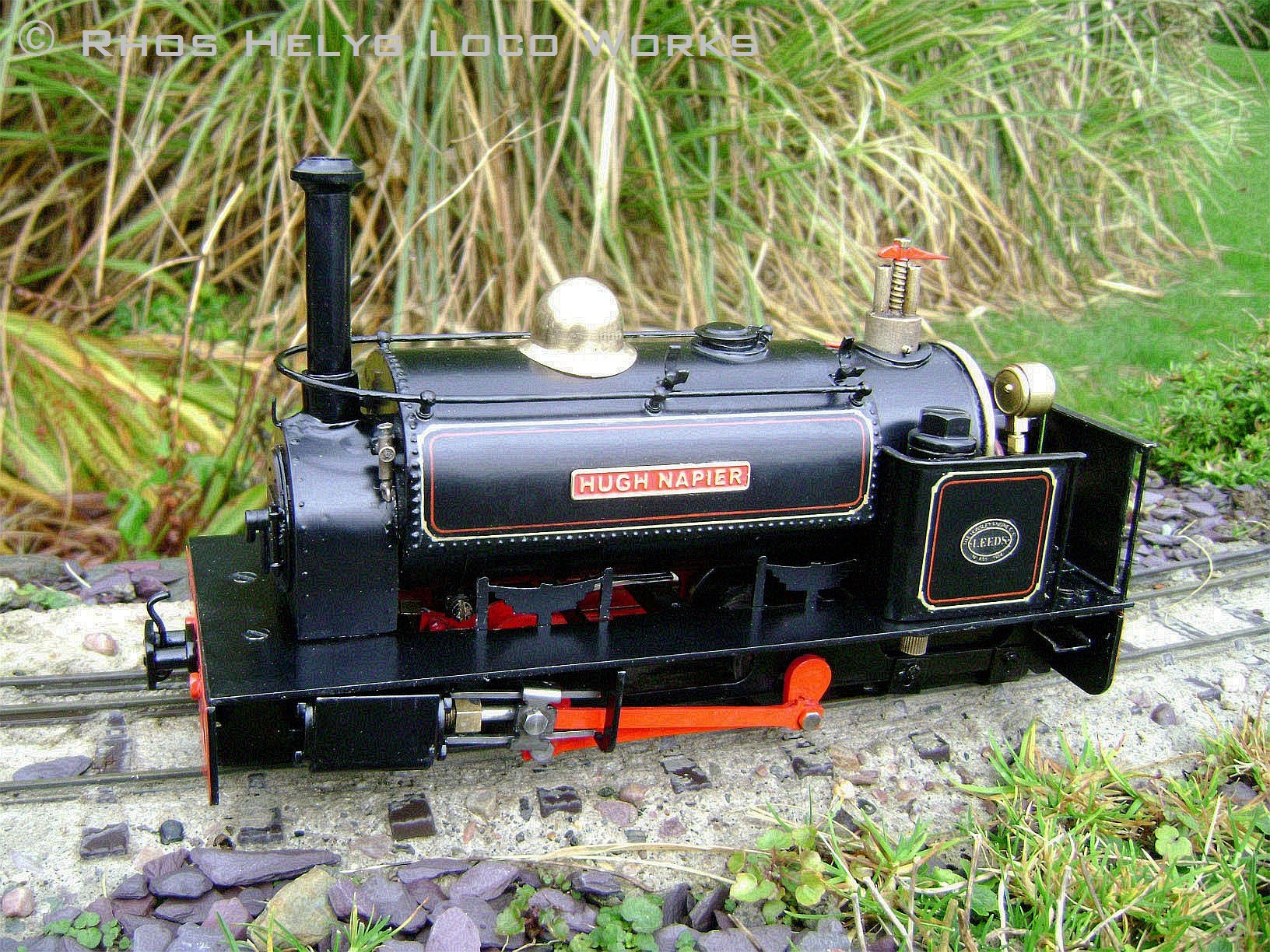
ELR Engineering Quarry Hunslet 0-4-0ST HUGH NAPIER
Another ELR Engineering Quarry Hunslet has been on my bench for attention. Others that have
been here have run very well, despite their many shortcomings in other areas, but this one was
reported by the owner to be off-beat. After checking that the slip-eccentrics were not the
cause of the problem my diagnosis was that a valve head was in need of repositioning on its
spindle. Unfortunately with these particular models there is no easy way to achieve this
without completely dismantling the locomotive. Removing the bodywork, boiler and footplating
allowed access to the valve chests and after half a turn of one valve buckle perfect running
was restored. The time then came to reassemble it...
|
|
|
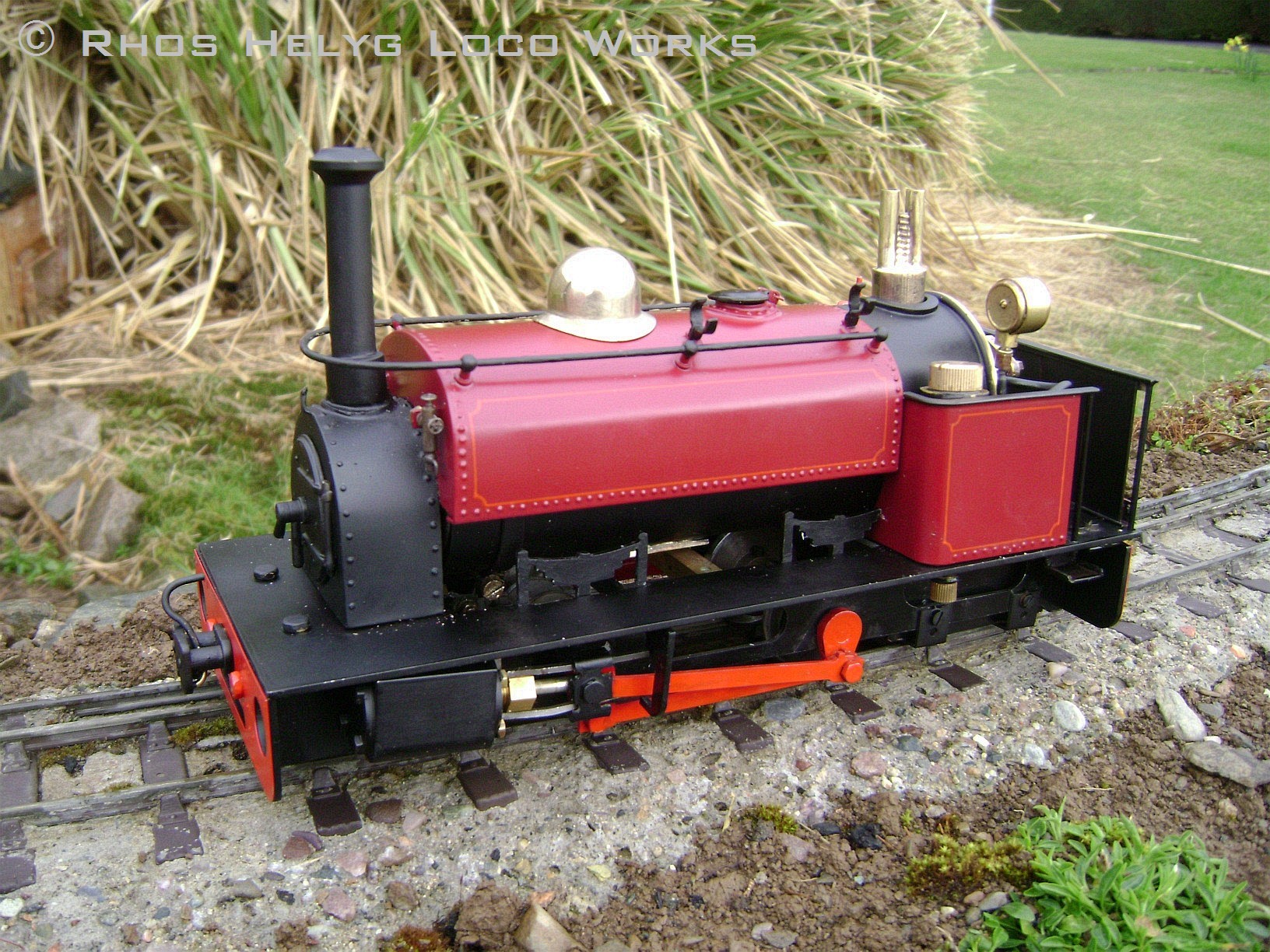
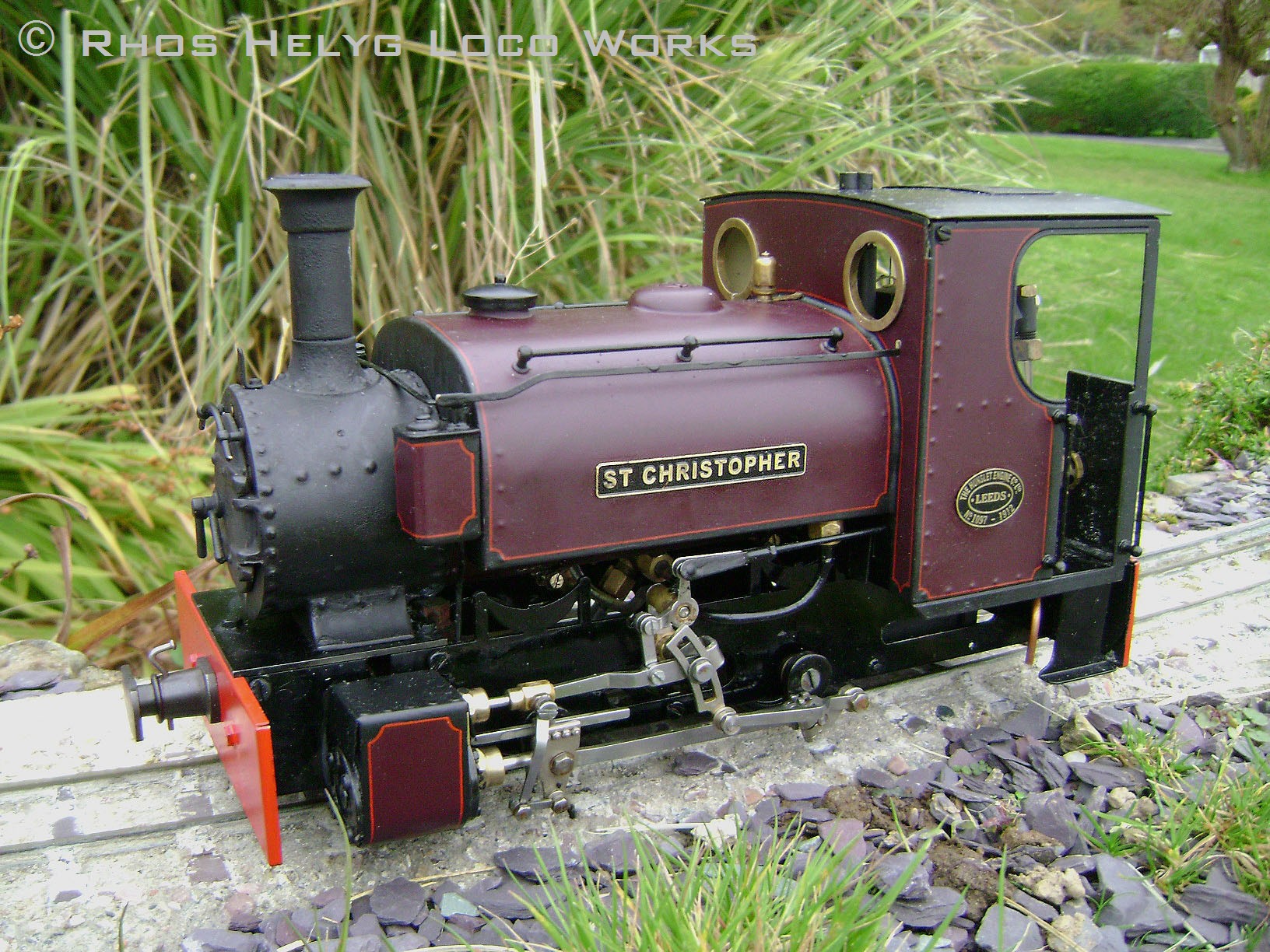
ELR Engineering/Roundhouse Engineering Jack 0-4-0ST ST CHRISTOPHER
ELR Engineering converted this standard Roundhouse "Jack" 0-4-0ST to coal-firing. It came
here for a check-over, service and repaint. As is usual with these things, the job list grew
a little and ended up looking something like this:
|
|
|
Elstow Engineering Darjeeling A-Class 0-4-0ST
A representation of a Darjeeling Himalaya Railway A-Class built by Elstow Engineering.
|
|
|
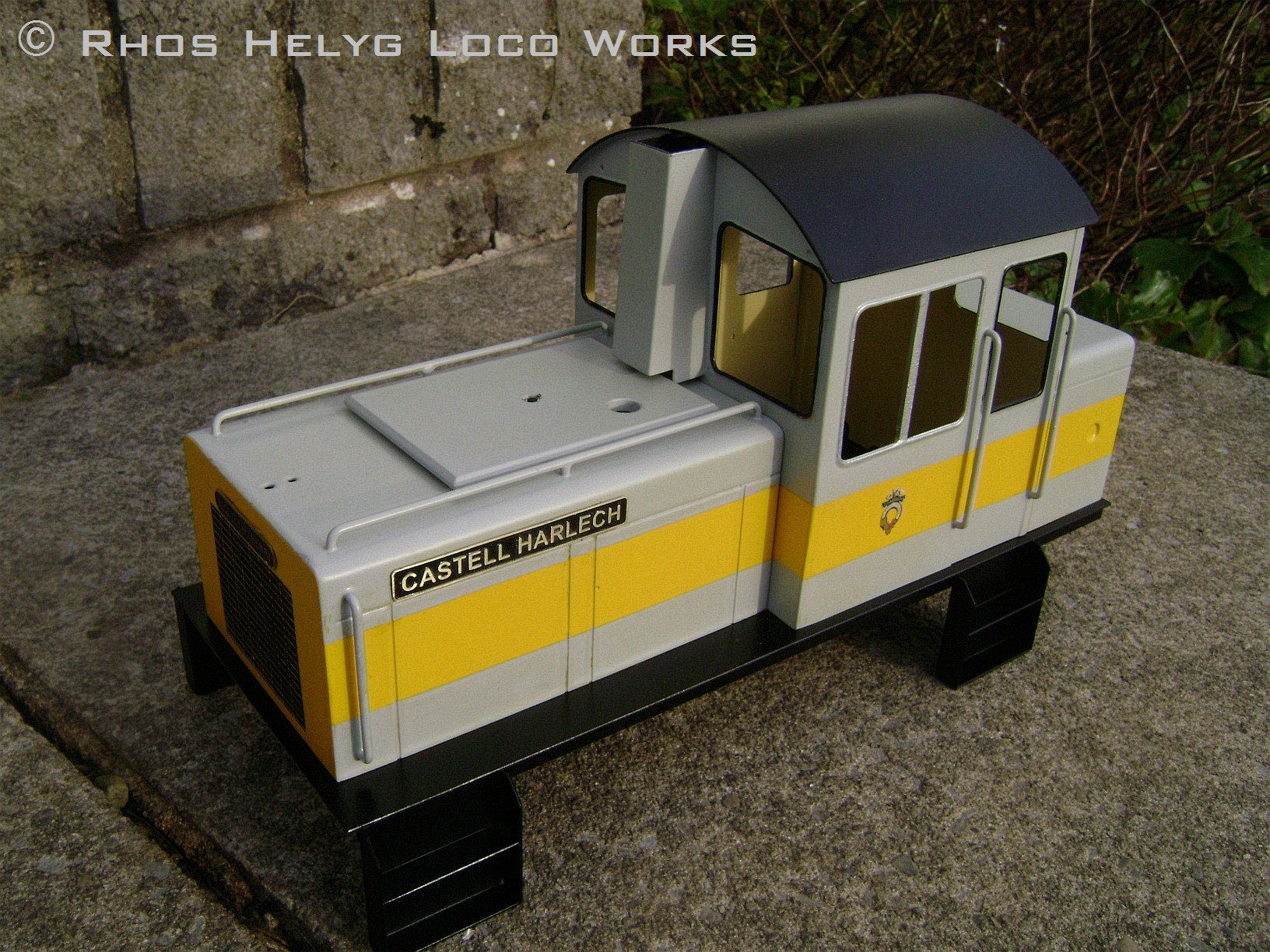
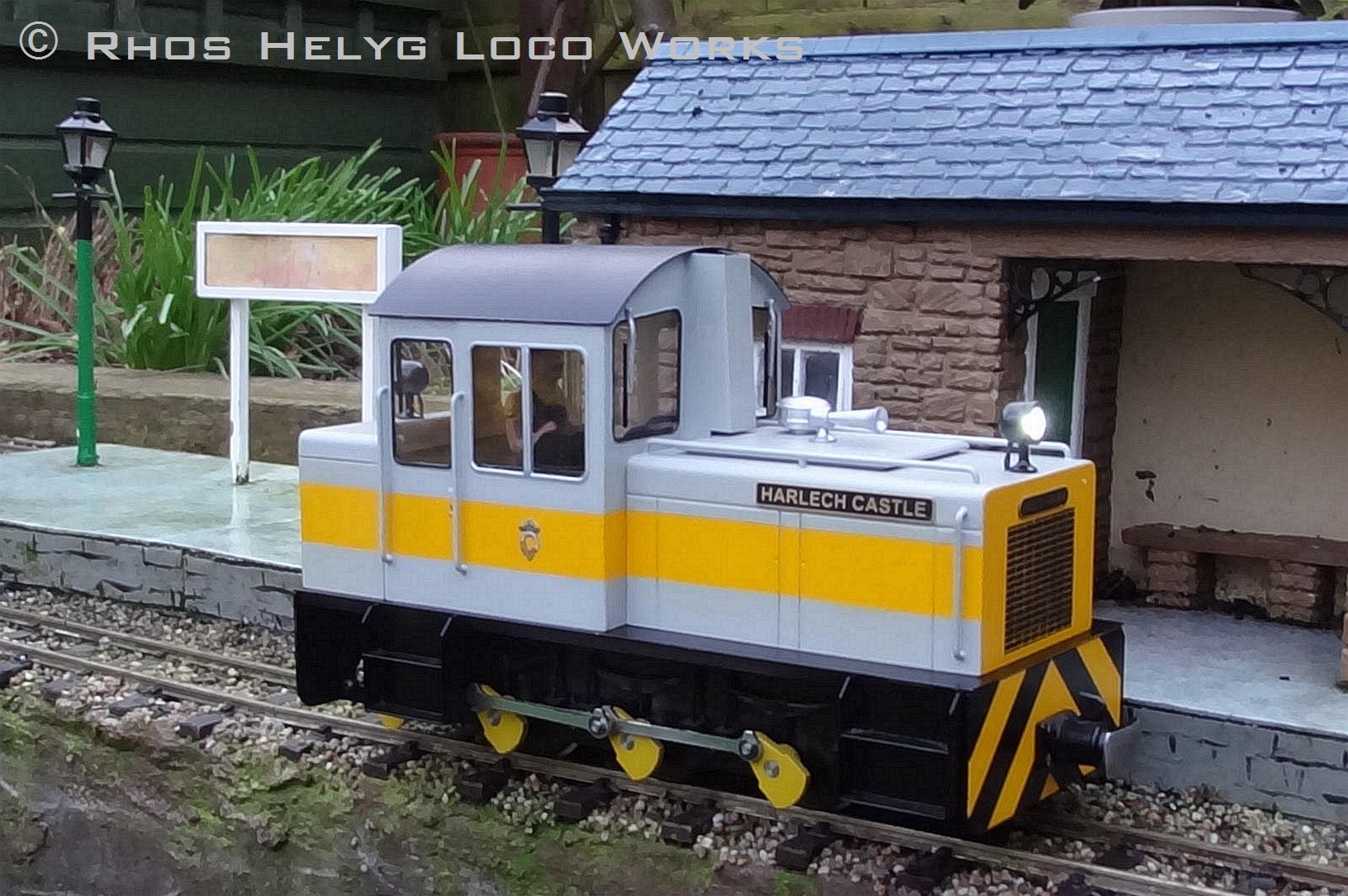
Essel Engineering HARLECH CASTLE 0-6-0 battery diesel locomotive
The bodywork from this Essel Engineering model of the Festiniog Railway's
diesel locomotive came here for repainting.
|
|
|
Evans Steam Services Frank Garratt 0-4-4-0
This brand-new Evans Steam Services "Frank" Garratt came to me for conversion from radio to manual control and then repainting in Deep Brunswick Green and lining in orange and black. While here it also received some modifications to pipework and bodywork to allow for easier and future disassembly, maintenance and reassembly. I like to think its new paint garb makes it look more "grown up" and credible than the basic green and bare brass as supplied. |
|


|
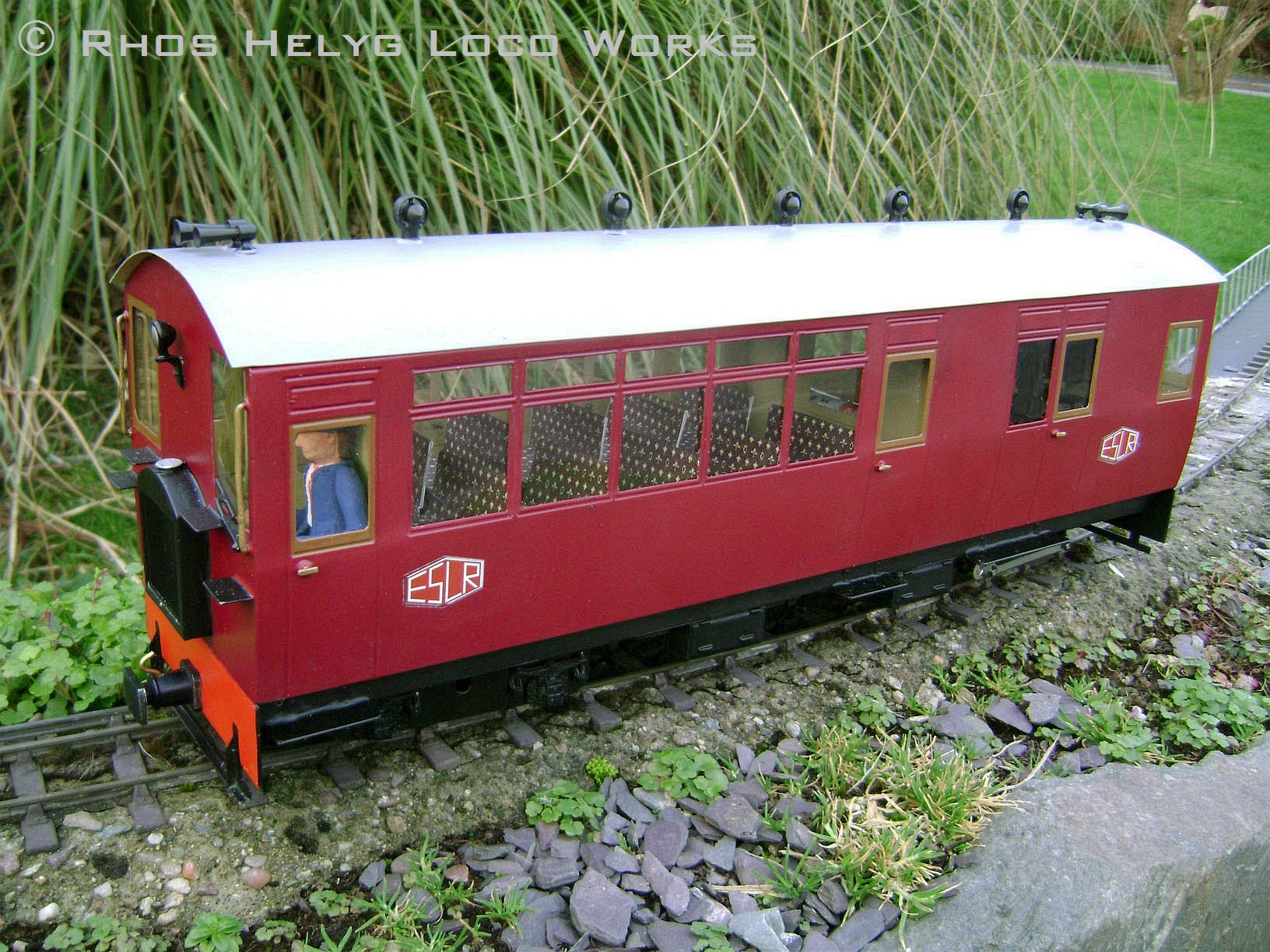
Faller railcars
For those that wish to economise on the running of their passenger services, here is a
possible alternative to steam power. This battery-powered unit is made up of three Faller
railcars mounted on Lima bogies.
|
|
|
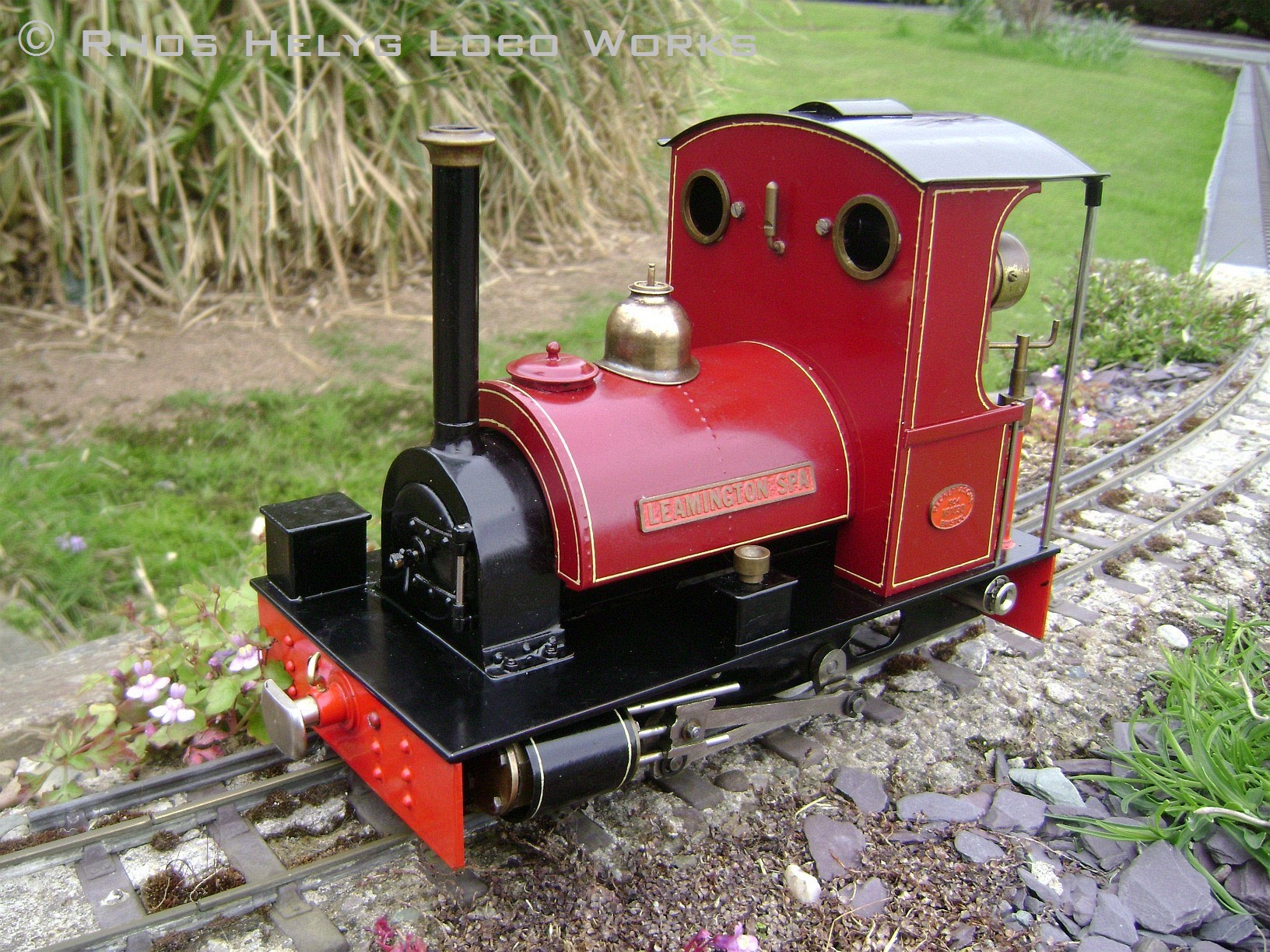
Finescale Engineering Peckett 0-4-0ST LEAMINGTON SPA
Sometimes it is an absolute pleasure to do work on a loco, and those produced by Finescale Engineering definitely fall in to that category. LEAMINGTON SPA is a Finescale Peckett 0-4-0ST and it came here for remedying of its poor performance issues. Worn piston rings, a stuck slide valve head and a faulty safety valve all contributed, and normal sewing machine-type performance was restored after correcting these issues. Just lovely... |
|
|
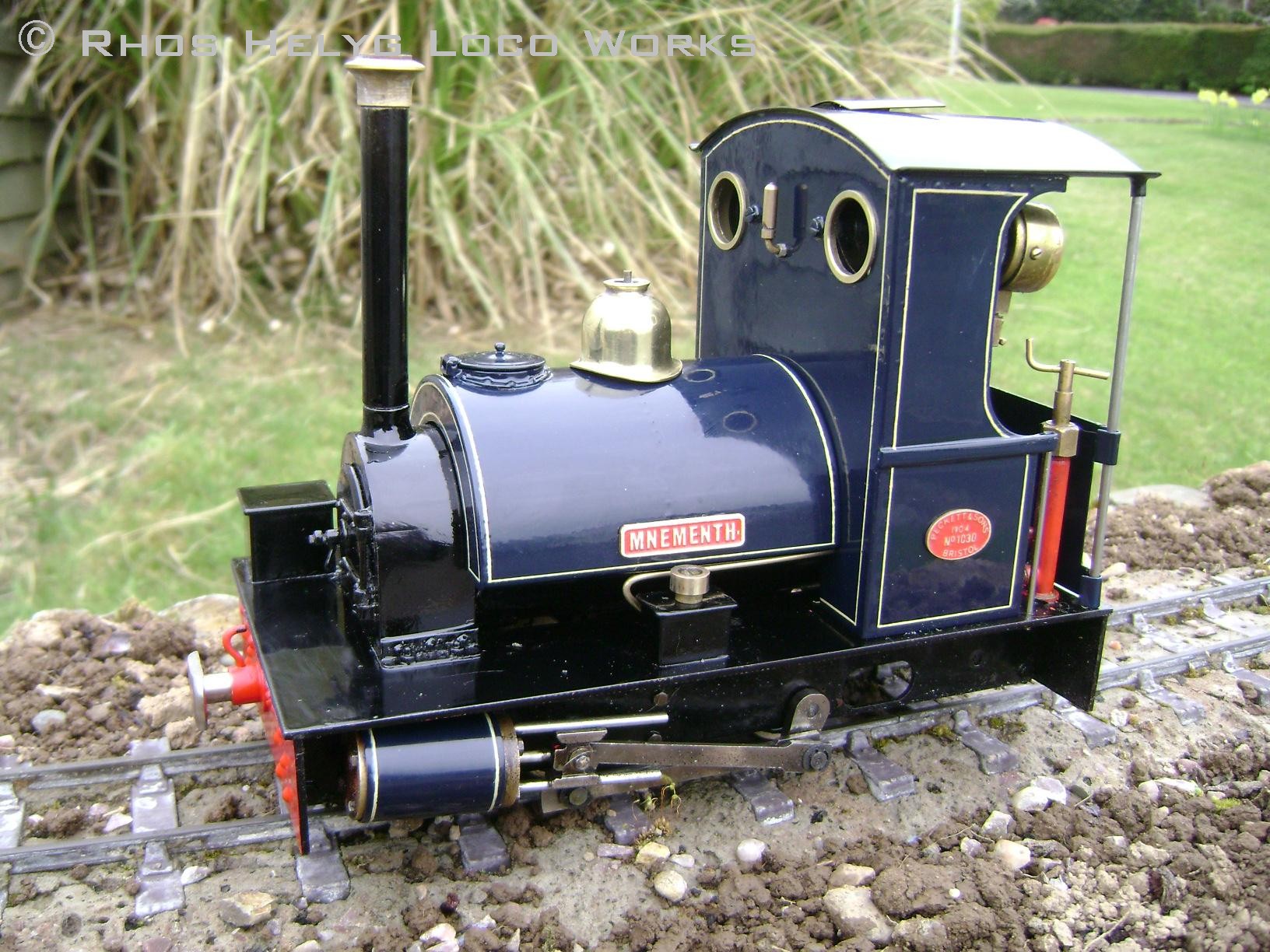
Finescale Engineering Peckett 0-4-0ST MNEMENTH
This 20-year old locomotive was showing its age and was looking a little scruffy. The owner specified that it was to be restored to its original as-new condition, so it was stripped back to bare metal and repainted in gloss blue with cream lining, but with blue cylinder covers instead of black. |
|
|
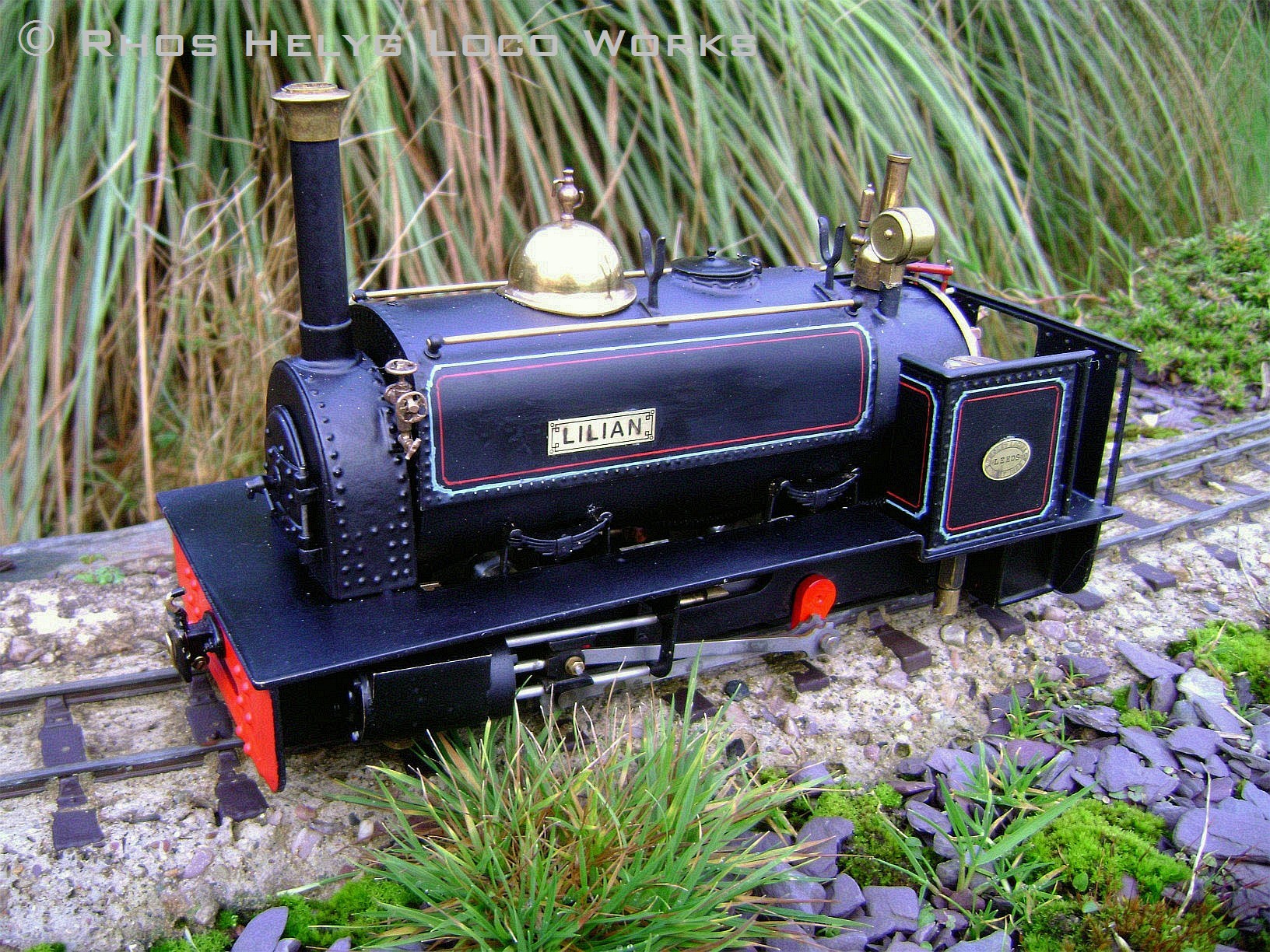
Finescale Engineering Quarry Hunslet 0-4-0ST LILIAN
This Finescale Engineering Quarry Hunslet had suffered some impact damage to its rear end, causing the cab back sheet to part company with the footplate and the paintwork to be scratched. This cab back was repaired and the cab, footplate and saddle tank were then stripped back to bare metal and repainted in satin black with Penrhyn-style lining. Doing this allowed me to make a couple of changes to the loco as supplied in that I added lining to the cab front panels and also positioned the name plates in the slightly odd positions in which they were and are carried by the full-size loco (GWYNEDD, for example, has them higher up the tank side and further towards the front). |
|
|
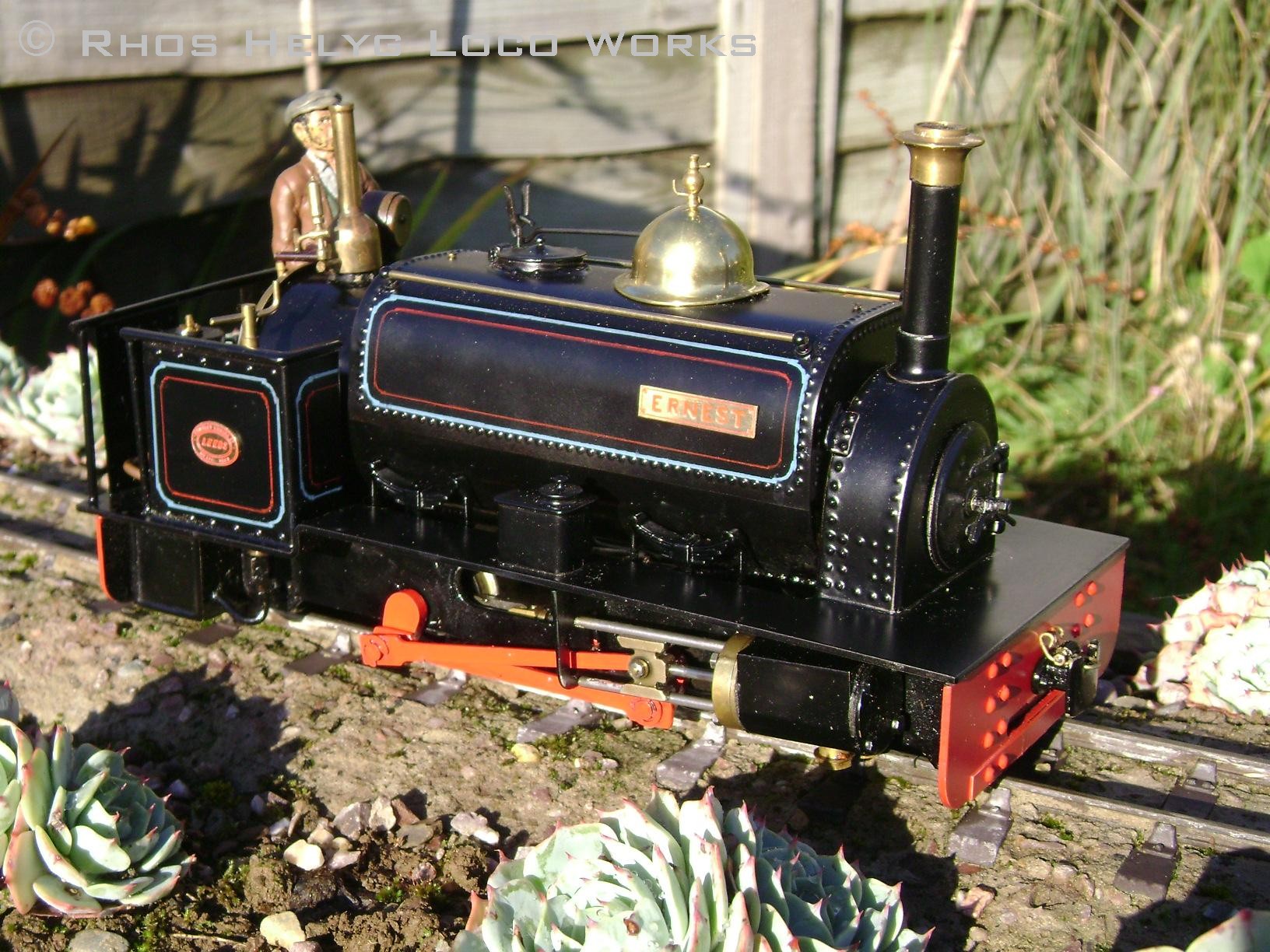
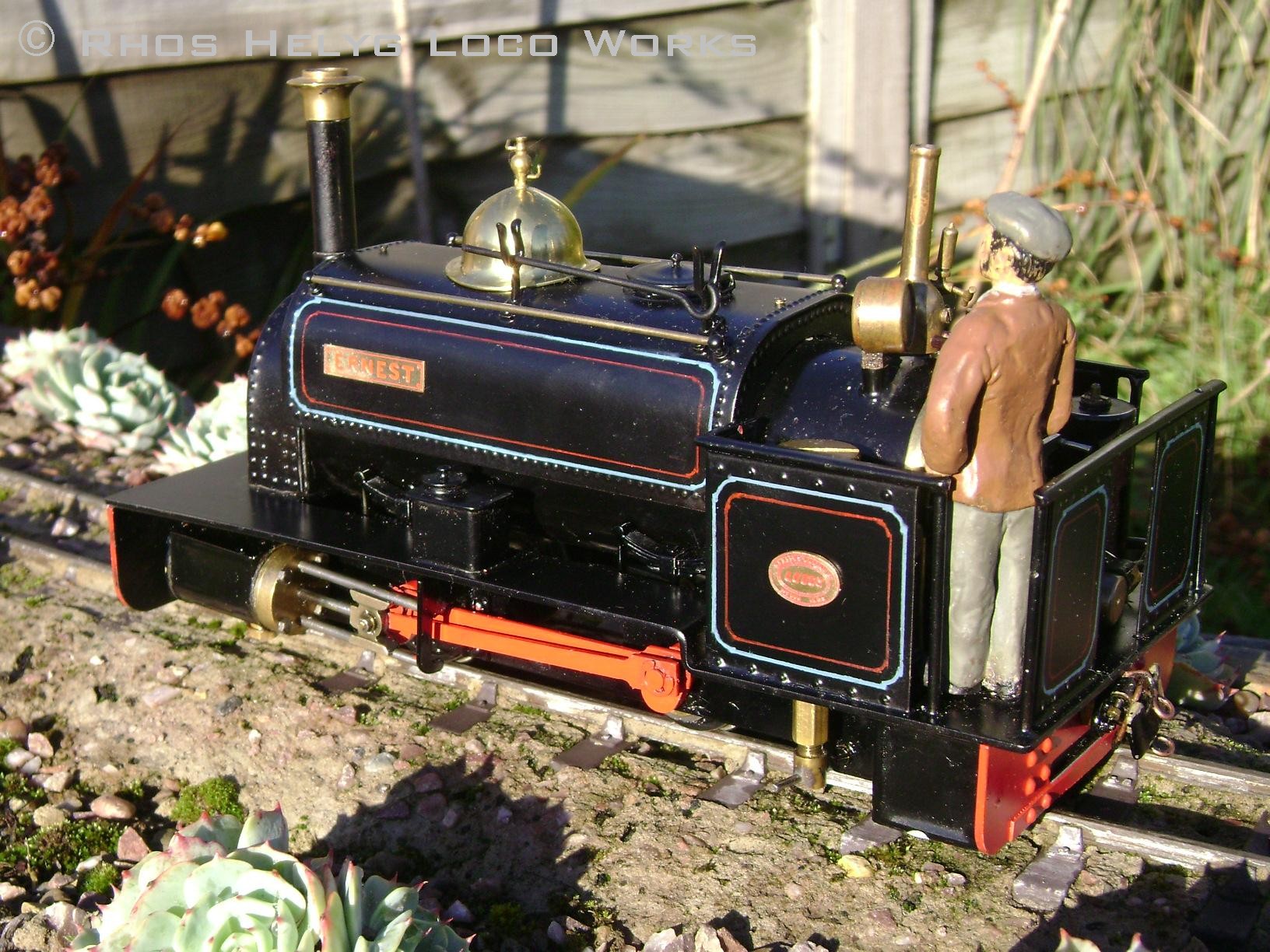
Finescale Engineering Quarry Hunslet 0-4-0ST ERNEST
This loco was completely dismantled and stripped back to bare metal. It was then resprayed with etch primer and satin black. followed by lining in the Penrhyn Quarry Railway's scheme. |
|
|
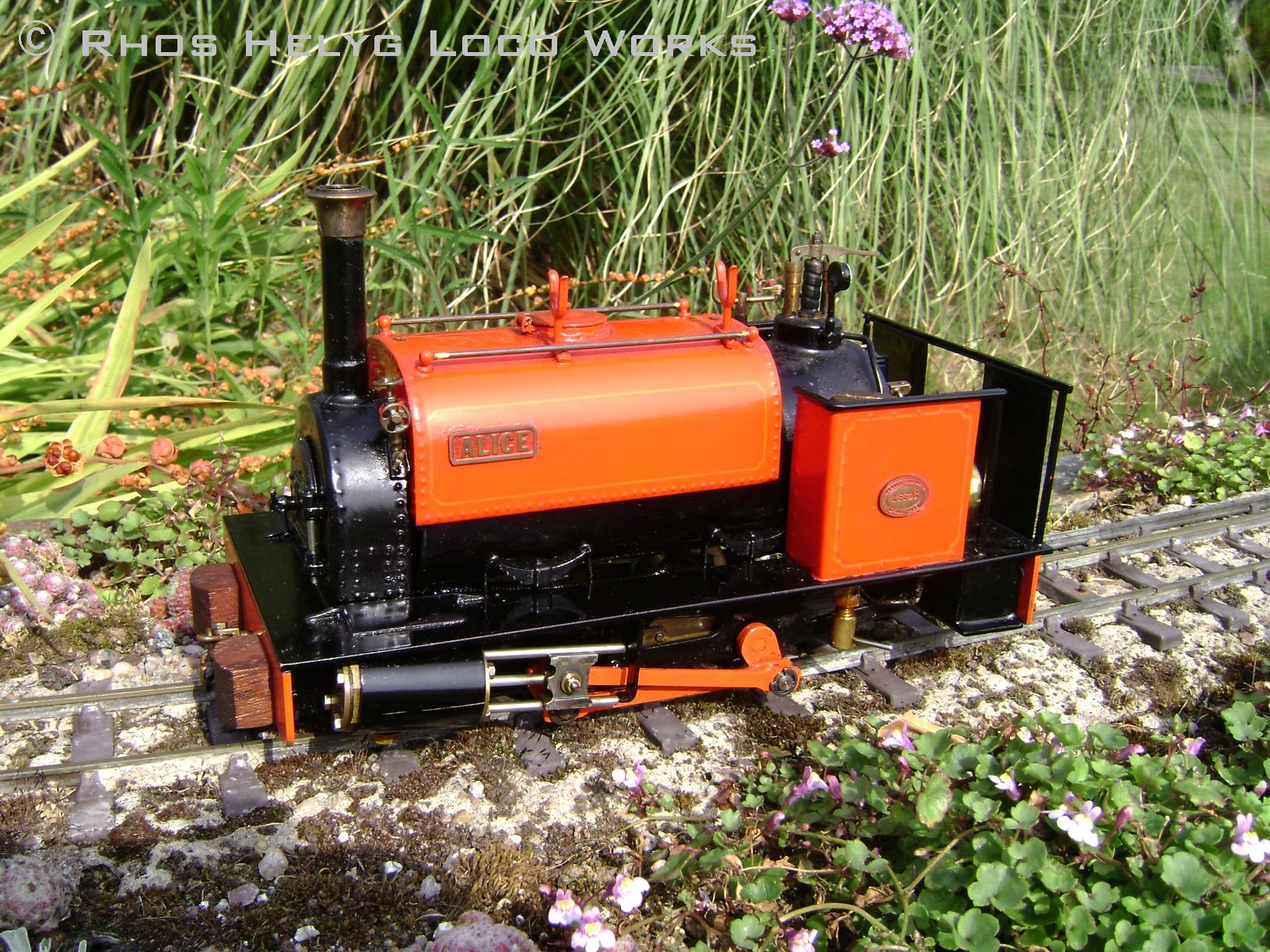
Finescale Engineering Quarry Hunslet 0-4-0ST ALICE
This delightful Finescale Engineering Quarry Hunslet had not been used for a few years so it came here for some attention. Included in this work was freeing and repair of the regulator handle which was seized solid in its housing, unblocking of the pressure gauge syphon pipe and adjustment of the valve timing to improve backwards running. The first two issues were caused by deposits from hard water, and so the boiler had a descale too. |
|
|
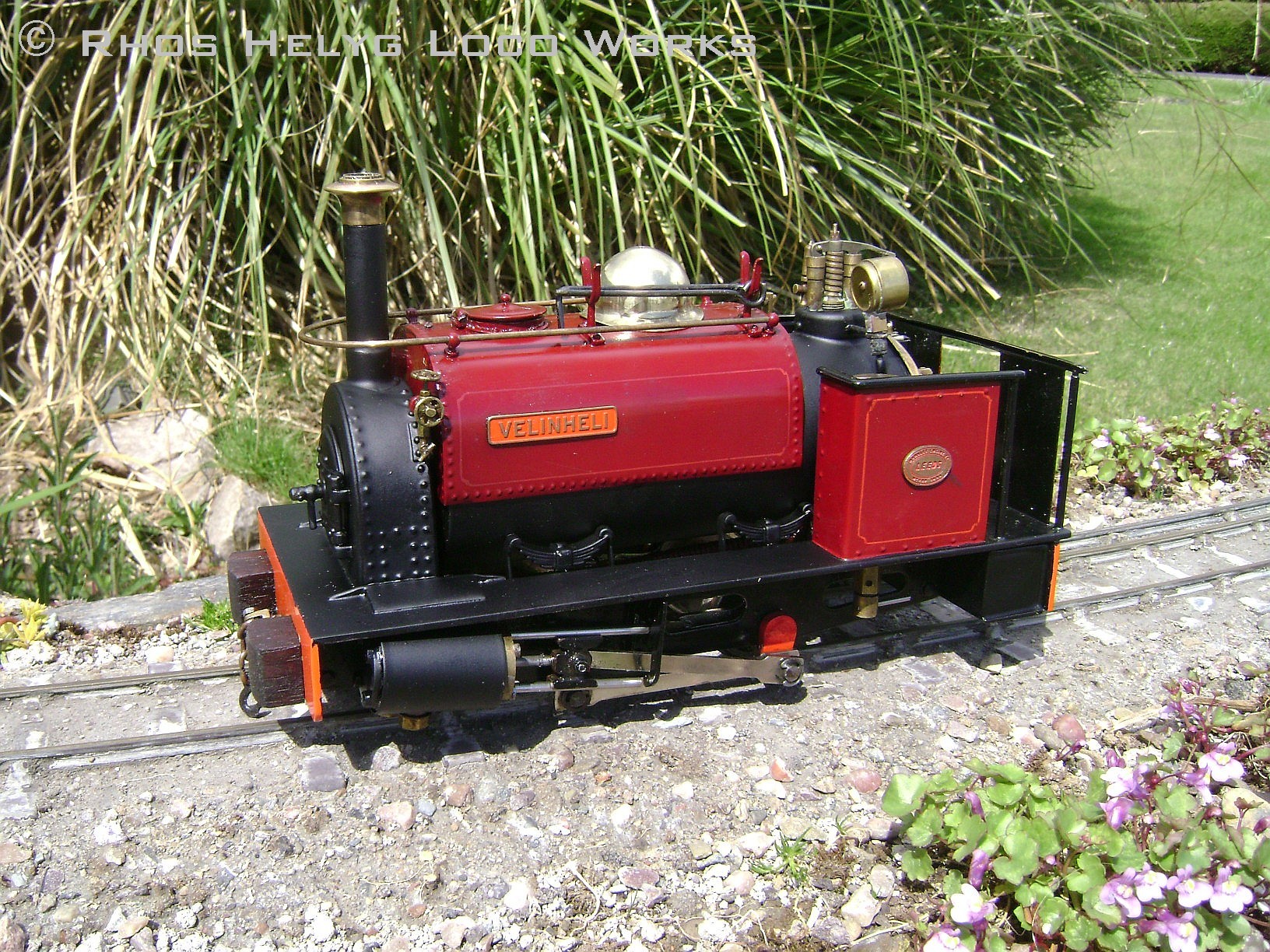
Finescale Engineering Quarry Hunslet 0-4-0ST VELINHELI
After 20-odd years of use, this Finescale Engineering Quarry Hunslet had lost its usual impeccable performance and was struggling to pull a train. Examination revealed that the slip-eccentric valve gear had worn out and was preventing the cylinder steam valves from opening fully. Repair work included fitting of new slip-eccentrics, coupling and connecting rods, axles and crank pins. It also received a respray in satin black of the smokebox, boilere, footplating and cylinder covers. Gorgeous... |
|
|
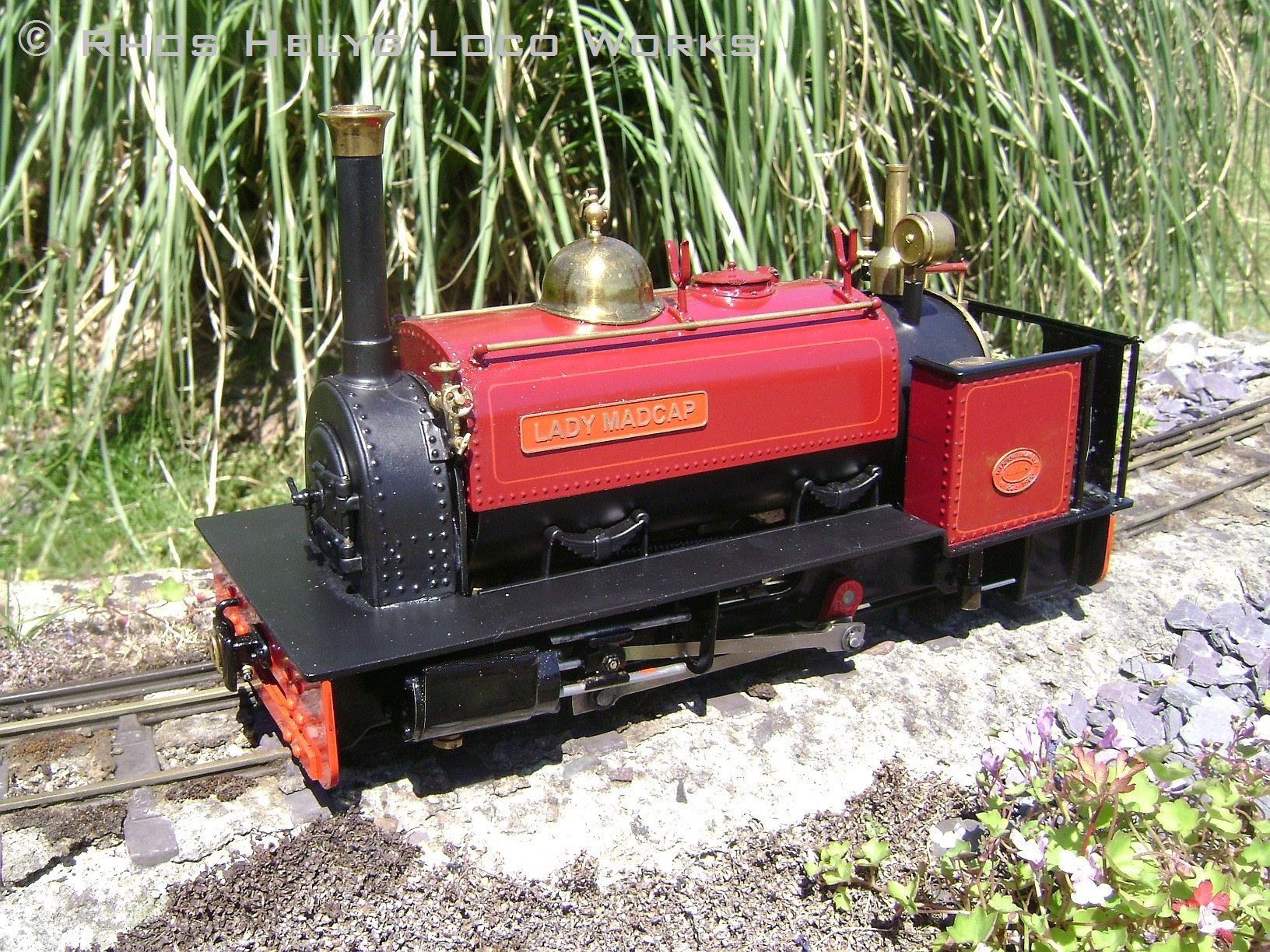
Finescale Engineering Quarry Hunslet 0-4-0ST LADY MADCAP
Lady Madcap came here for application of satin black to the smokebox, footplating, boiler and firebox, and the addition of a spacer between the rear of the smokebox and the front of the saddle tank that fills an unsightly gap. |
|
|
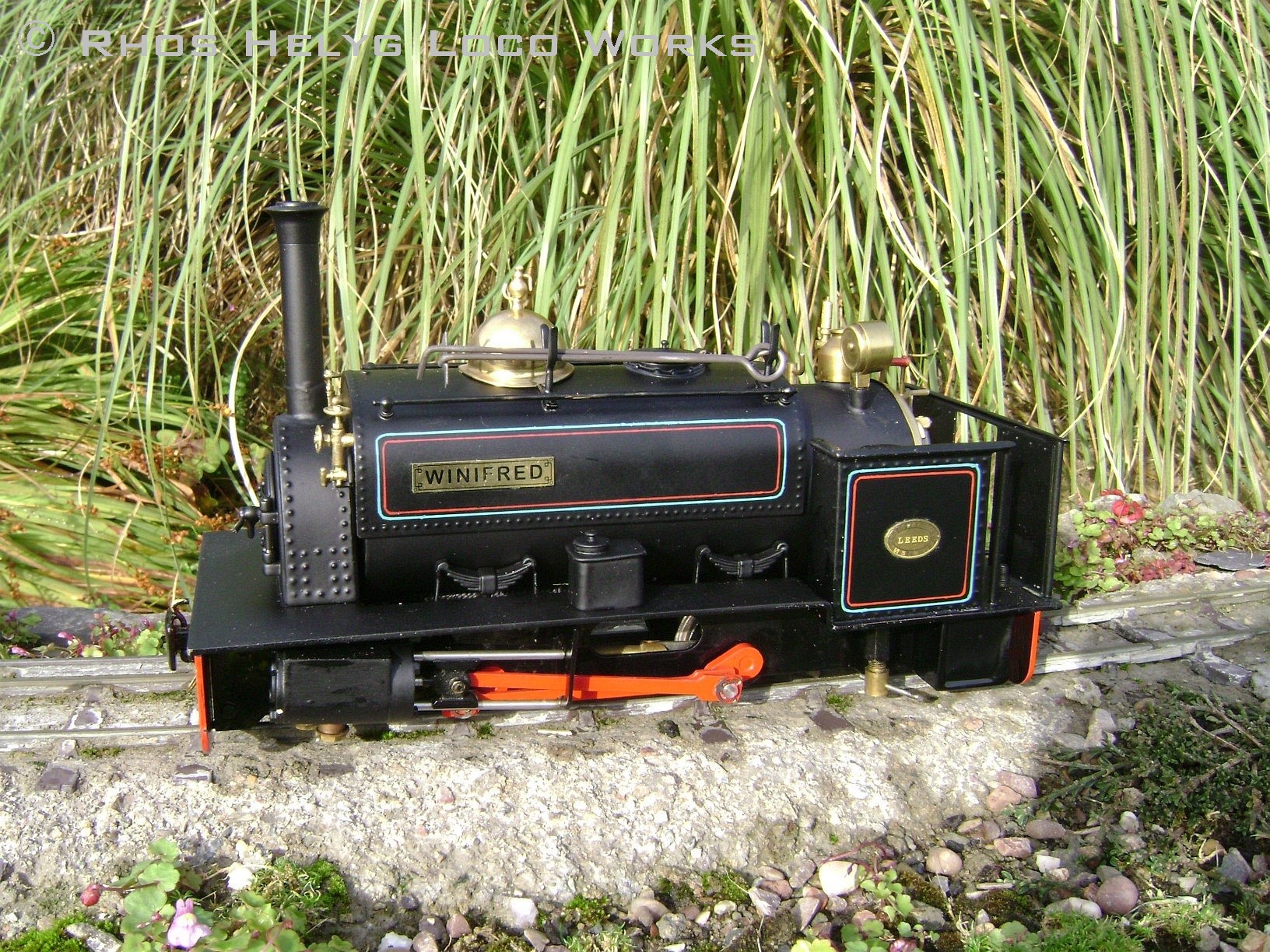
Finescale Engineering Quarry Hunslet 0-4-0ST WINIFRED
WINIFRED is a Finescale Engineering Quarry Hunslet and came here in as-new gloss black with blue and red lining. It received a coat of satin clear to the tank and cab panels, a coat of satin black to smokebox, footplating, chimney cap and handrails, and a coat of red on the cranks and rods. It looks a bit more quarry-like now... |
|
|
Finescale Engineering Quarry Hunslet 0-4-0ST
This loco came here for repainting from black in to blue with red and black lining. |
|
|
Finescale Engineering Glyn Valley Tramway loco DENNIS
This delightful model of a Glyn Valley Tramway loco was built by Finescale Engineering
in the early 1990s and came here for a number of repairs, including:
|
|
|
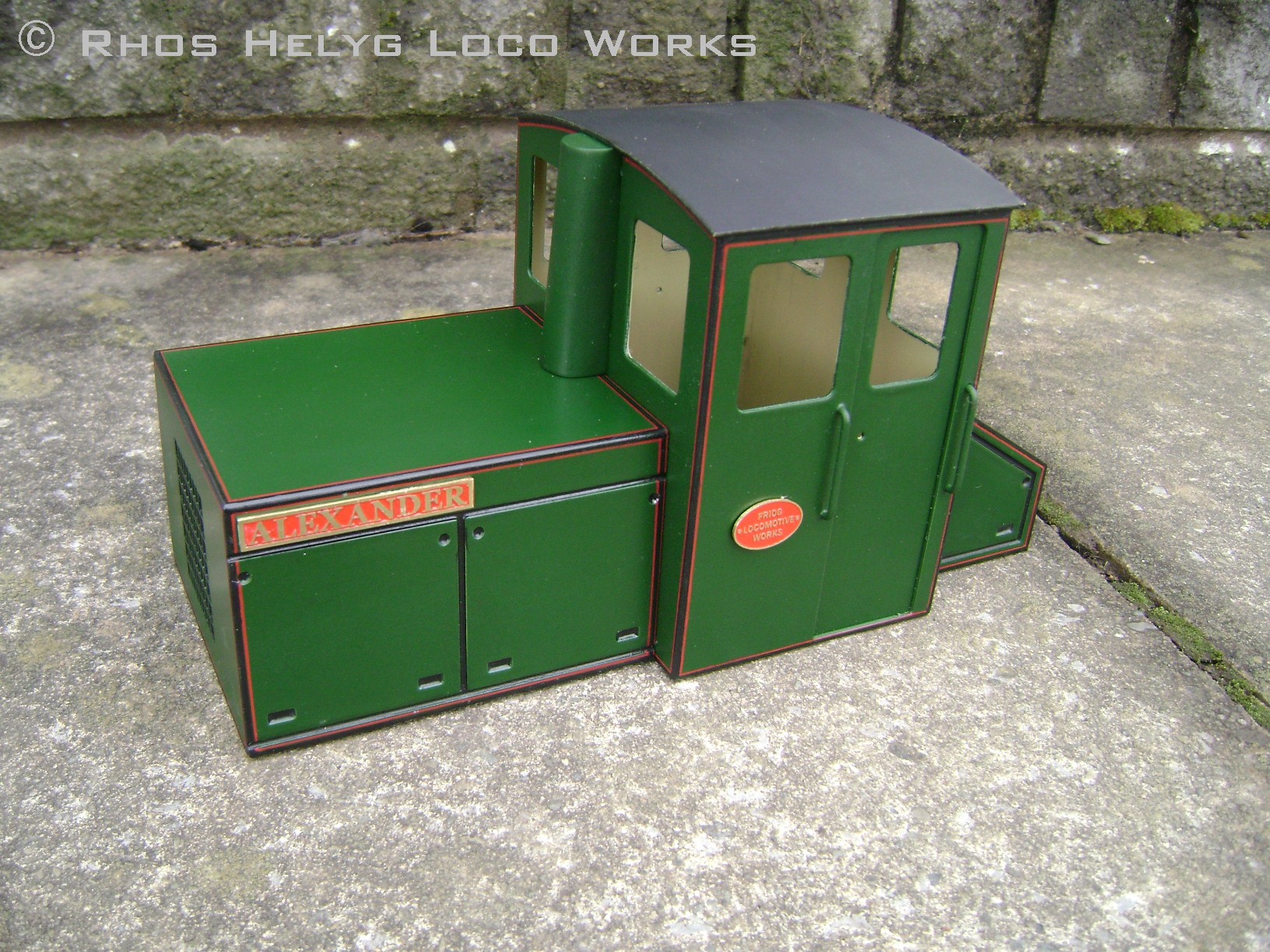
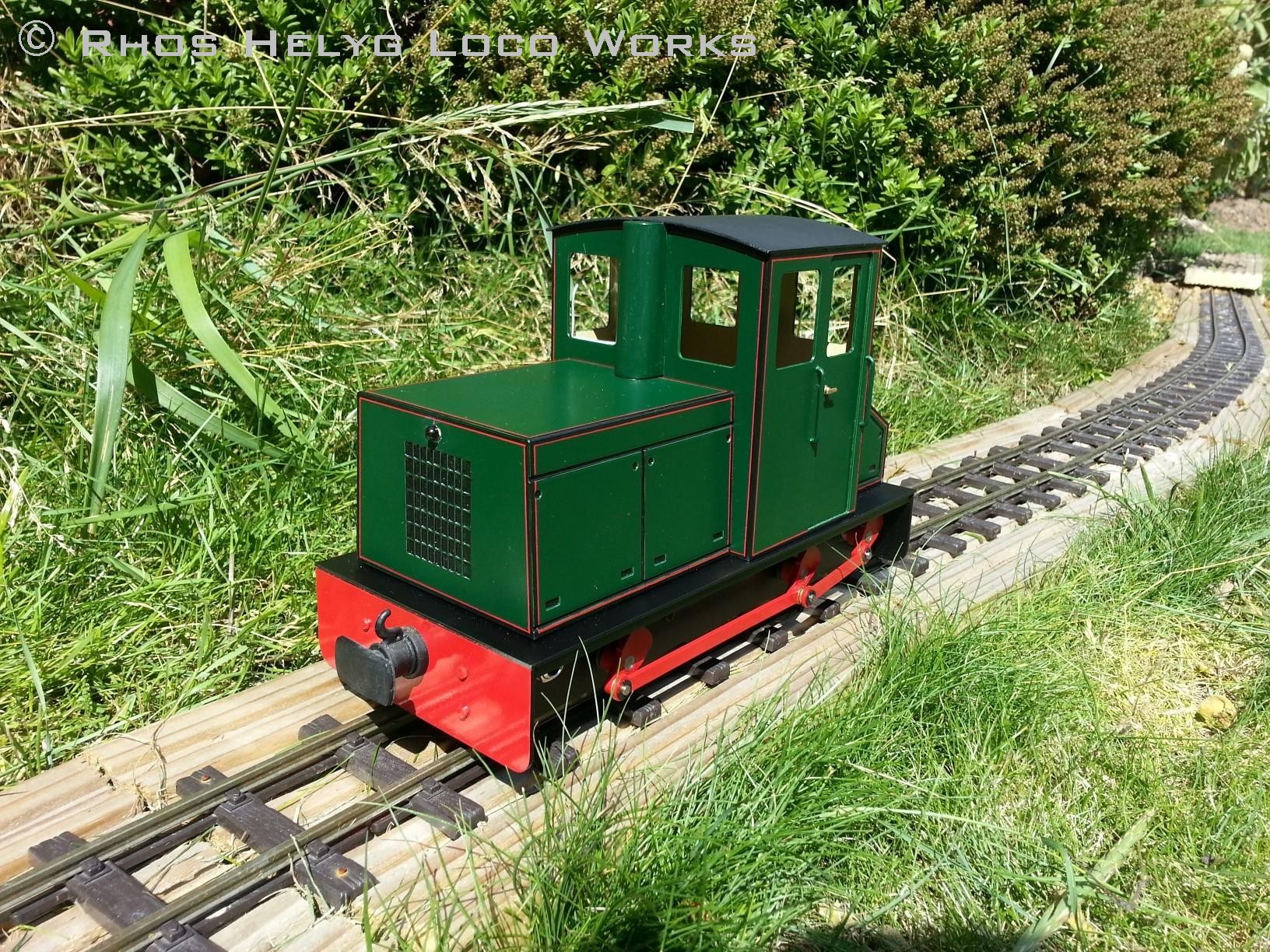
Friog Railway Services Punch 0-4-0 diesel loco ALEXANDER
The three main body parts for this diesel loco were sent here by Friog Railway Services for painting in green and lining in red with black edging. |
|
|
The second picture shows the loco after completion. (Photo by Rob Brown) |
|
|
Another Friog Punch, painted in green and lined in red with black edging. (Photo by Phil Roberts) |
|




|
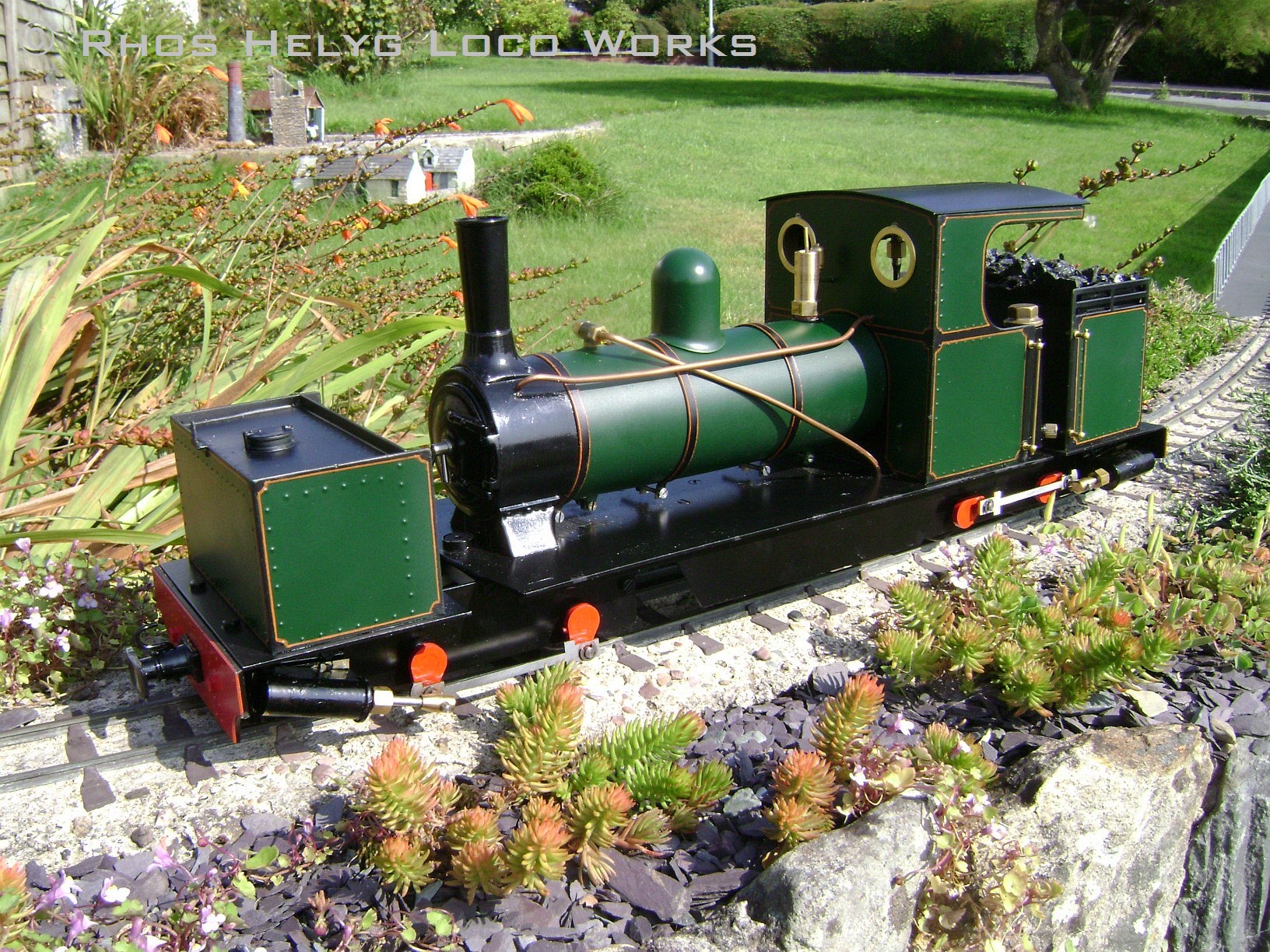
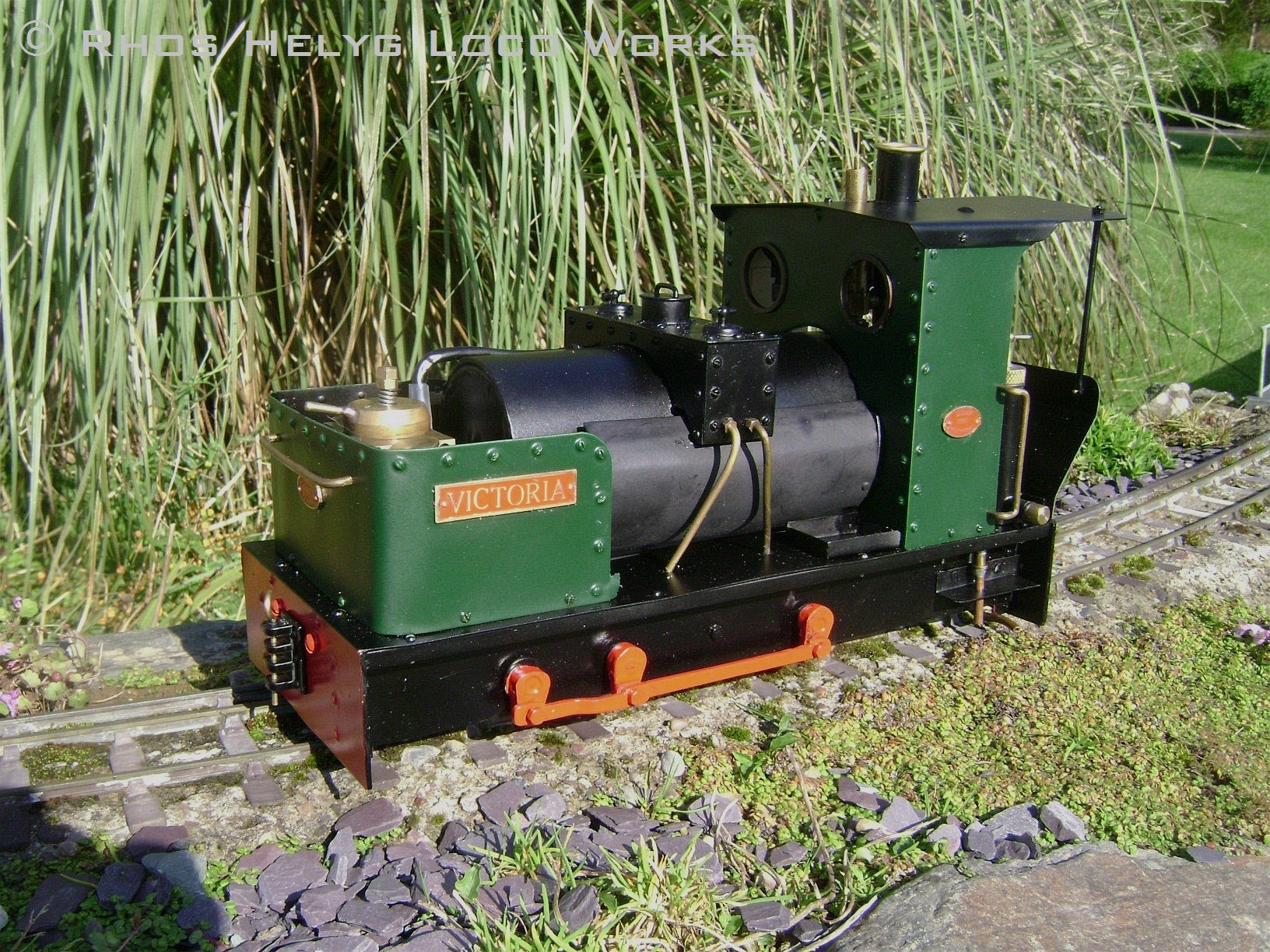
Chris Green 0-4-0 VICTORIA
An unusual machine, VICTORIA is meths-fired and is powered by a 2-cylinder oscillating engine driving a gear on the front jackshaft. It was purchased by the current owner at the 1988 16mm Association AGM. The works plates read GREEN / 1987 / ENGINEERS and the plate on the front reads NERRISGECH SLATE QUARRY, so not giving any huge clues as to who built it. However, an appeal for information on Facebook soon found the builder: Chris Green. Chris kindly wrote, "I built it in 1987. The oscillating engine was as built for me by Dave Baker, who is better known for Gauge 1 locos. It's very roughly based on a Sentinel quarry loco. I sold it to Tennents Model Shop in Halesowen, who then sold it on at the AGM. I used the funds to purchase my first lathe. As for Nerrisgech Slate quarry, you will have difficulty finding it in any books, but take a little look at the letters in my name. Glad to see it is still running after 30 years.". It came to me for a full strip and repaint, an overhaul of the steam engine to improve its running and prevent leaks, and replacement of the burner wicks. |
|
|
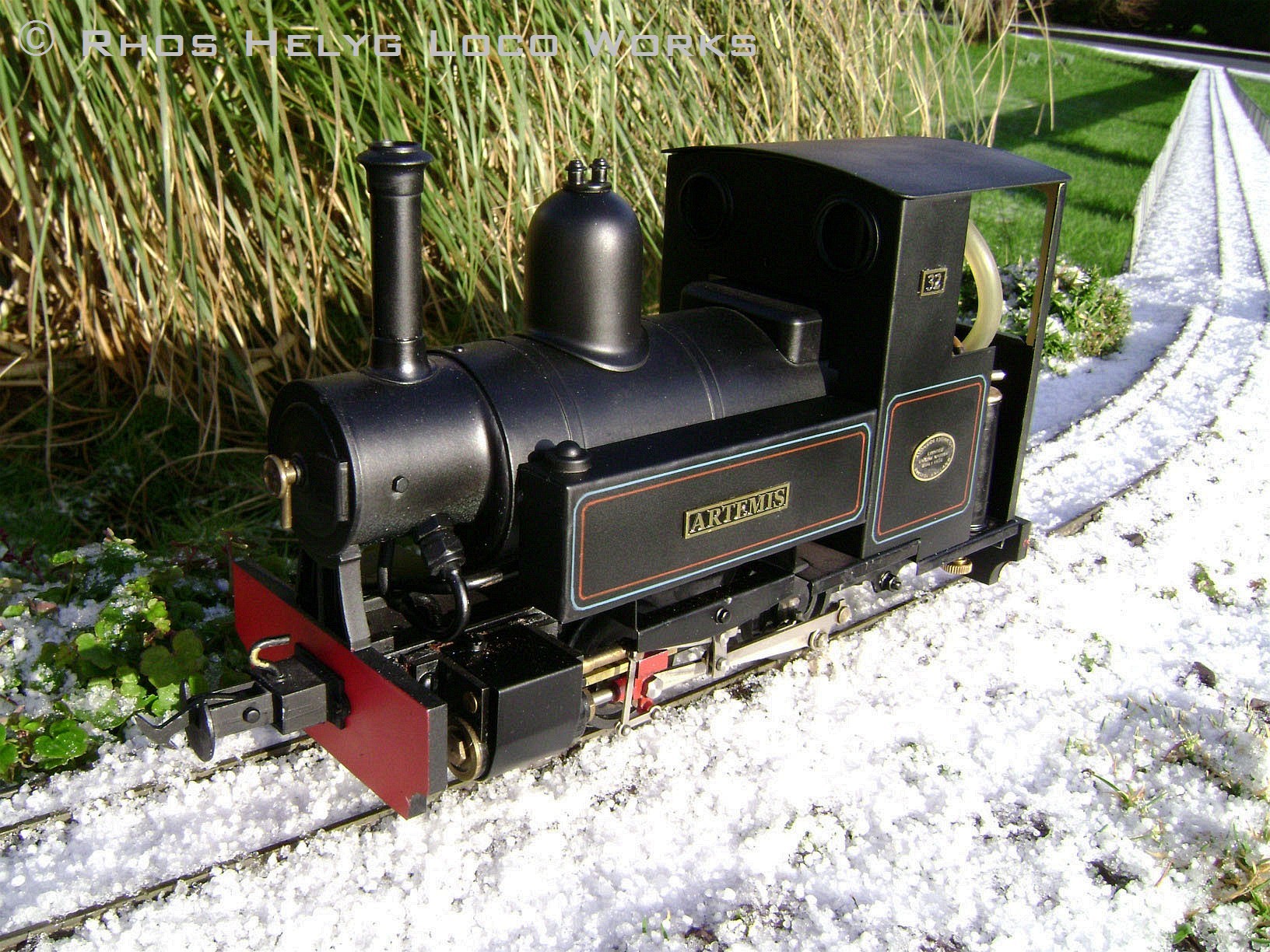
Maxwell Hemmens Ogwen 0-4-0T No. 32 ARTEMIS
Repainted, lined and fitted with Accucraft couplings... |
|
|
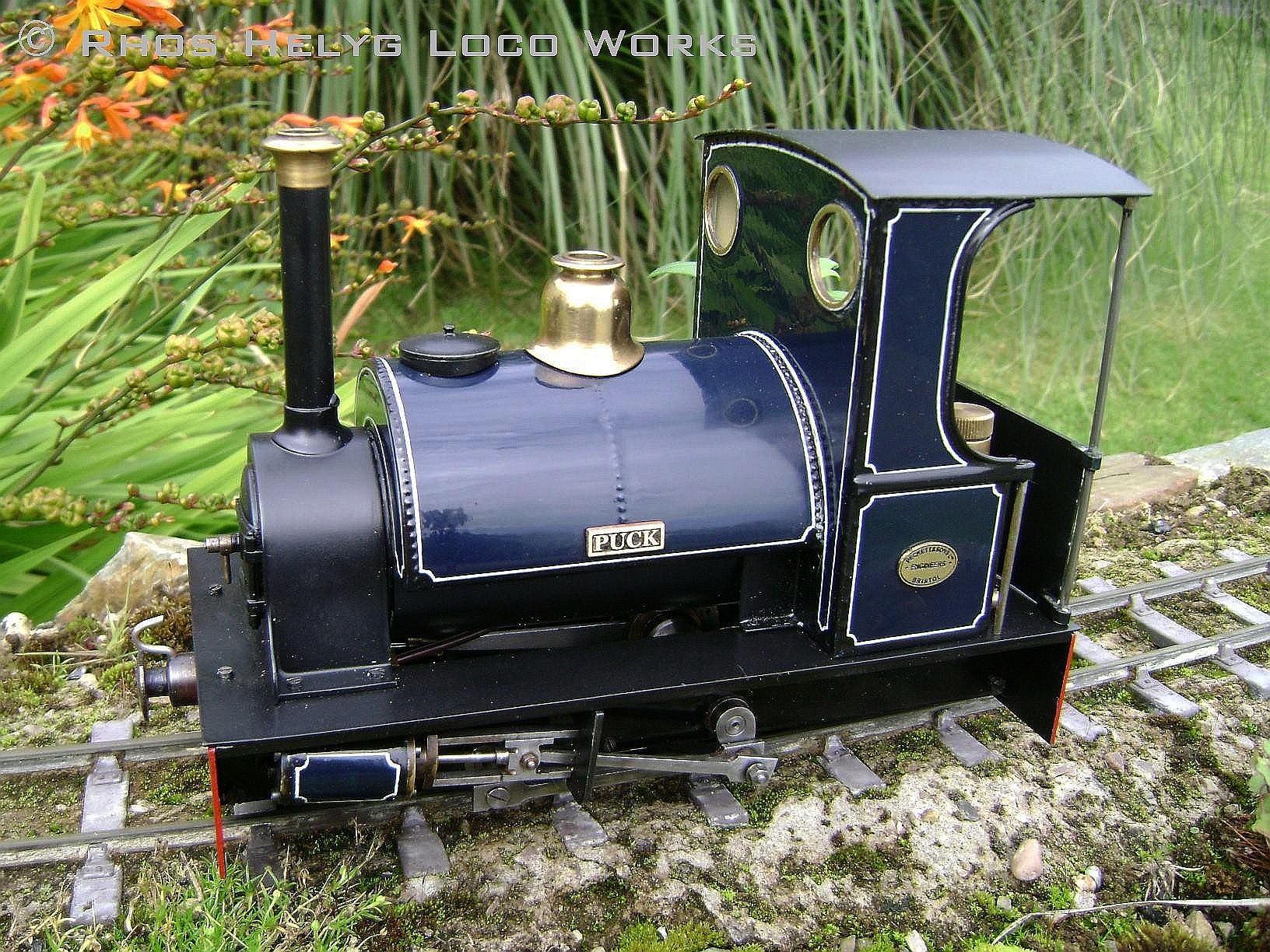
David Hick Peckett 0-4-0ST PUCK
David Hick made a number of these gas-fired Peckett 0-4-0ST locos in the 1980s and this one was bought on behalf of a model locomotive collector in the USA and shipped to him shortly afterwards. It changed ownership in 2012, but when the new owner tried to run it he found a few problems after its years of storage, and the plain pea green paintwork was looking very tired. After going through the process of registering Rhos Helyg Loco Works as an authorised temporary importer of goods for repair (and the acquisition of an EORI number from HM Revenue & Customs) the owner and I made the necessary arrangements for it to cross the Atlantic once again. I found and corrected problems with the valve timing and the safety valve, and followed this by a full repaint and lining in the scheme shown here. The job was completed with the name and works plates supplied by MDC. Gorgeous! |
|
|
Houstoun Gate Locomotive Works
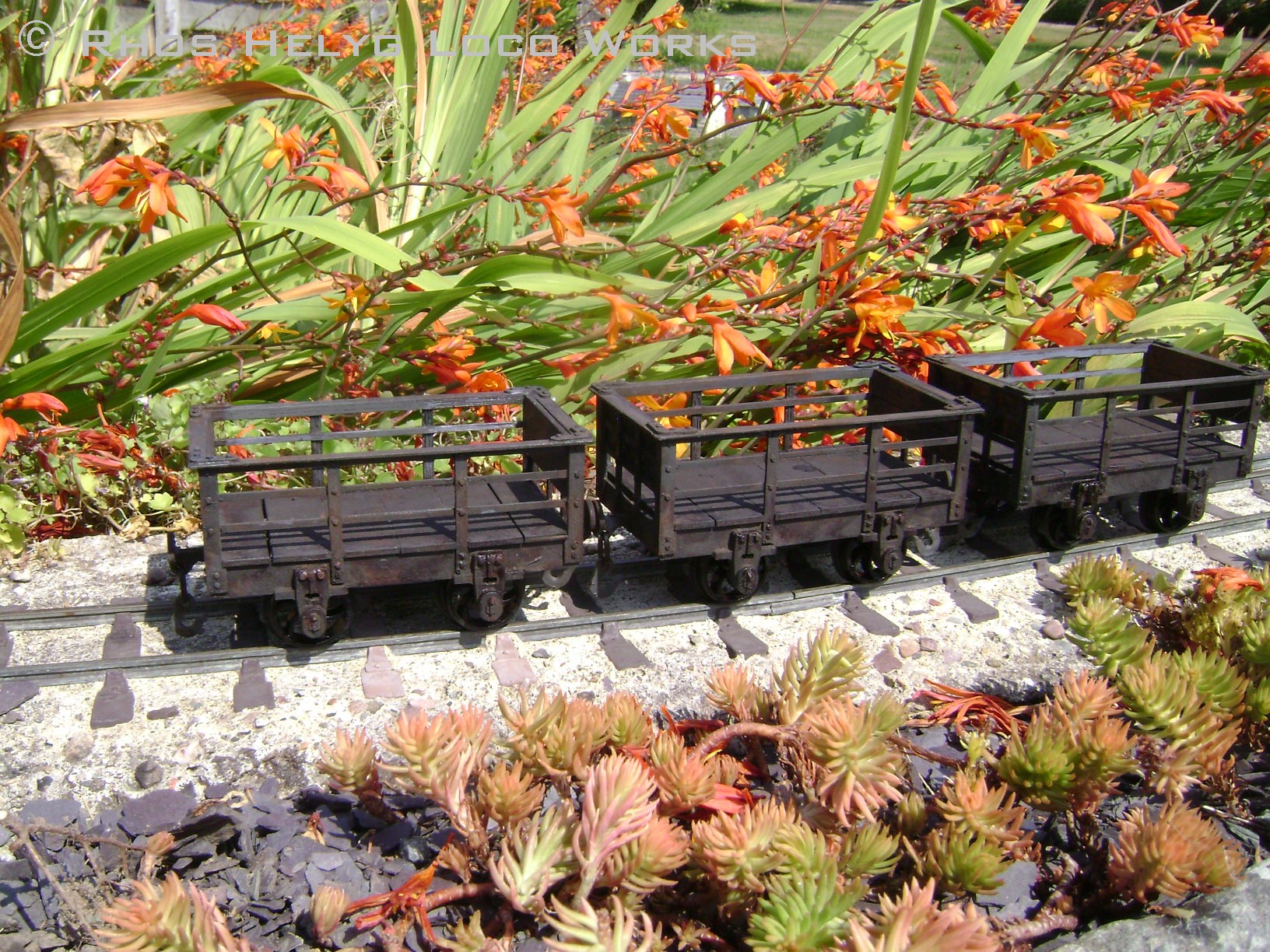
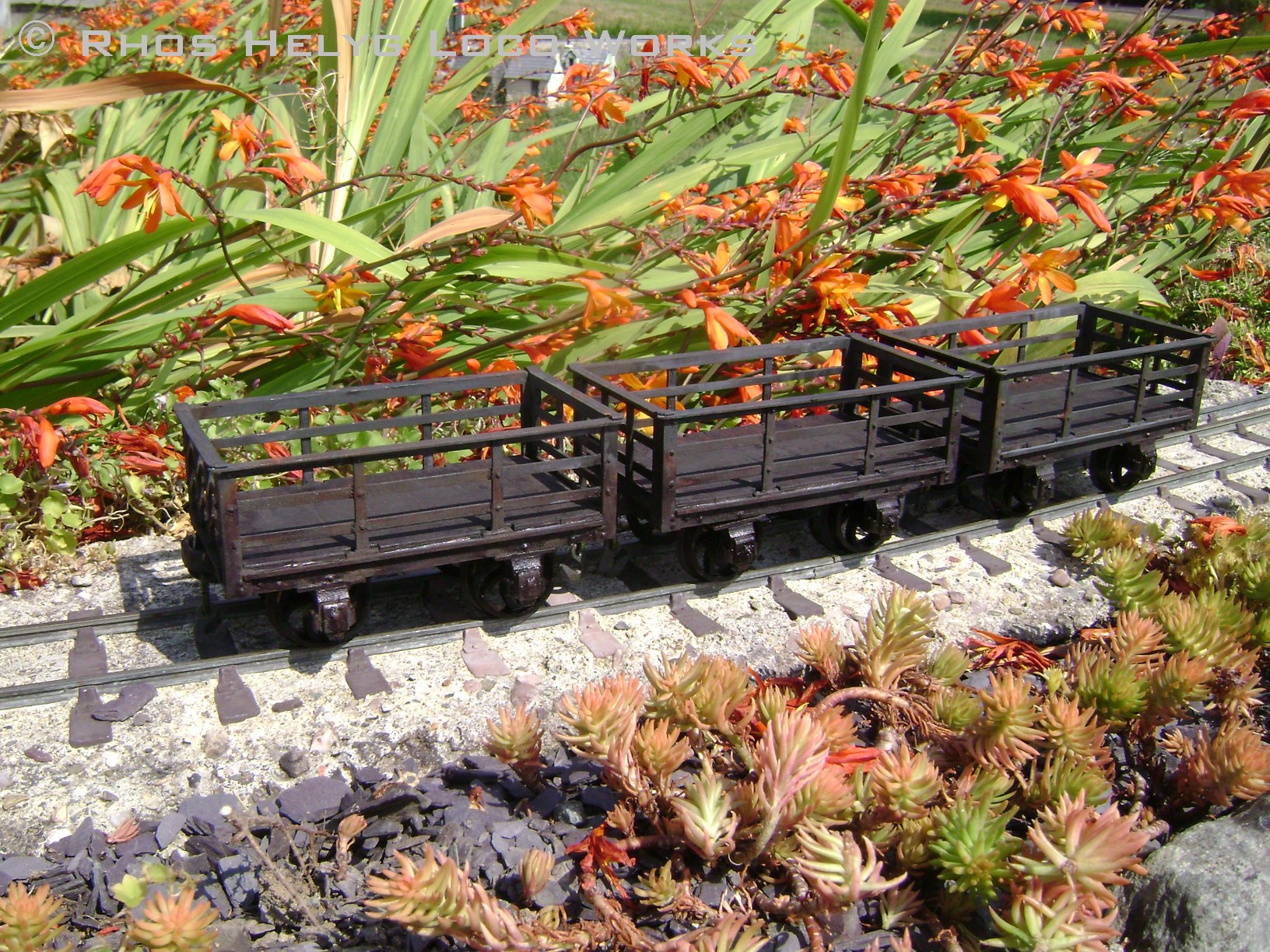
Penrhyn Midland Pattern Slate Wagon |
|
|
|
|
|
I P Engineering Jane 0-4-0T
This loco came here as the proverbial box of bits, with a request that it was assembled and tested in steam. The task included supplying the many missing components (gaskets, O-rings, screws, gauge glass) and some modifications to the cab layout to accomodate a gas fuel tank. |
|
|
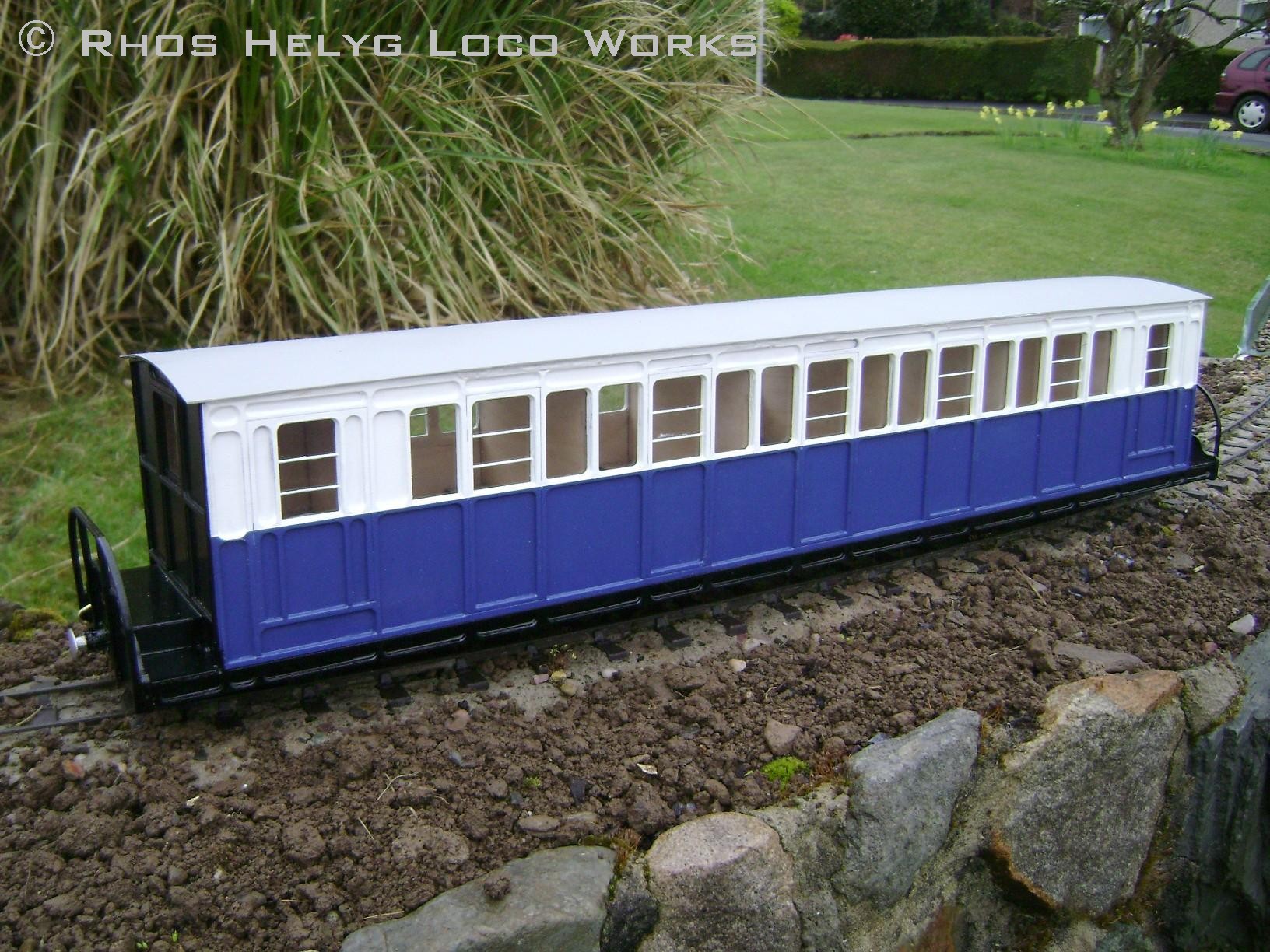
I P Engineering carriage
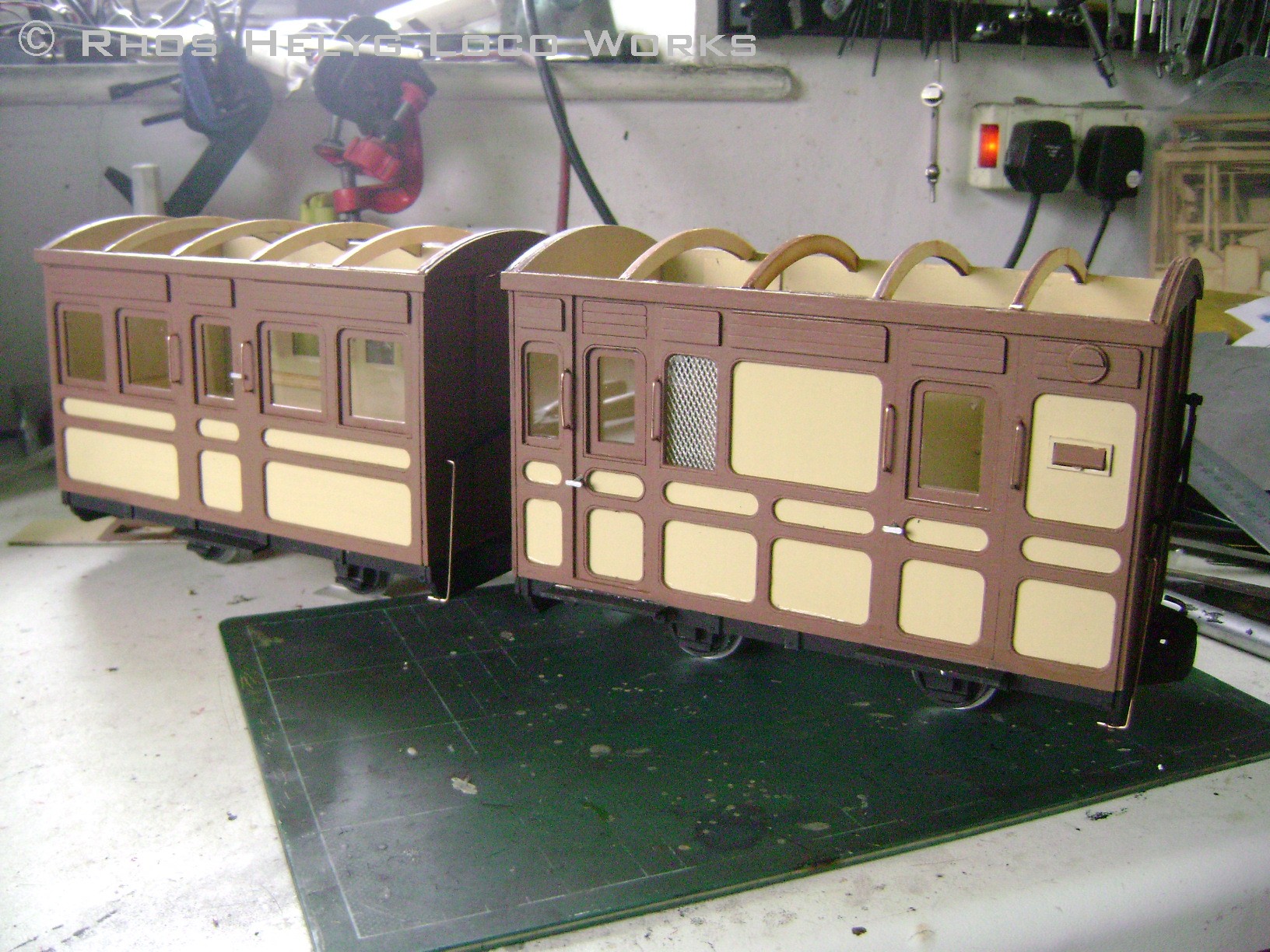
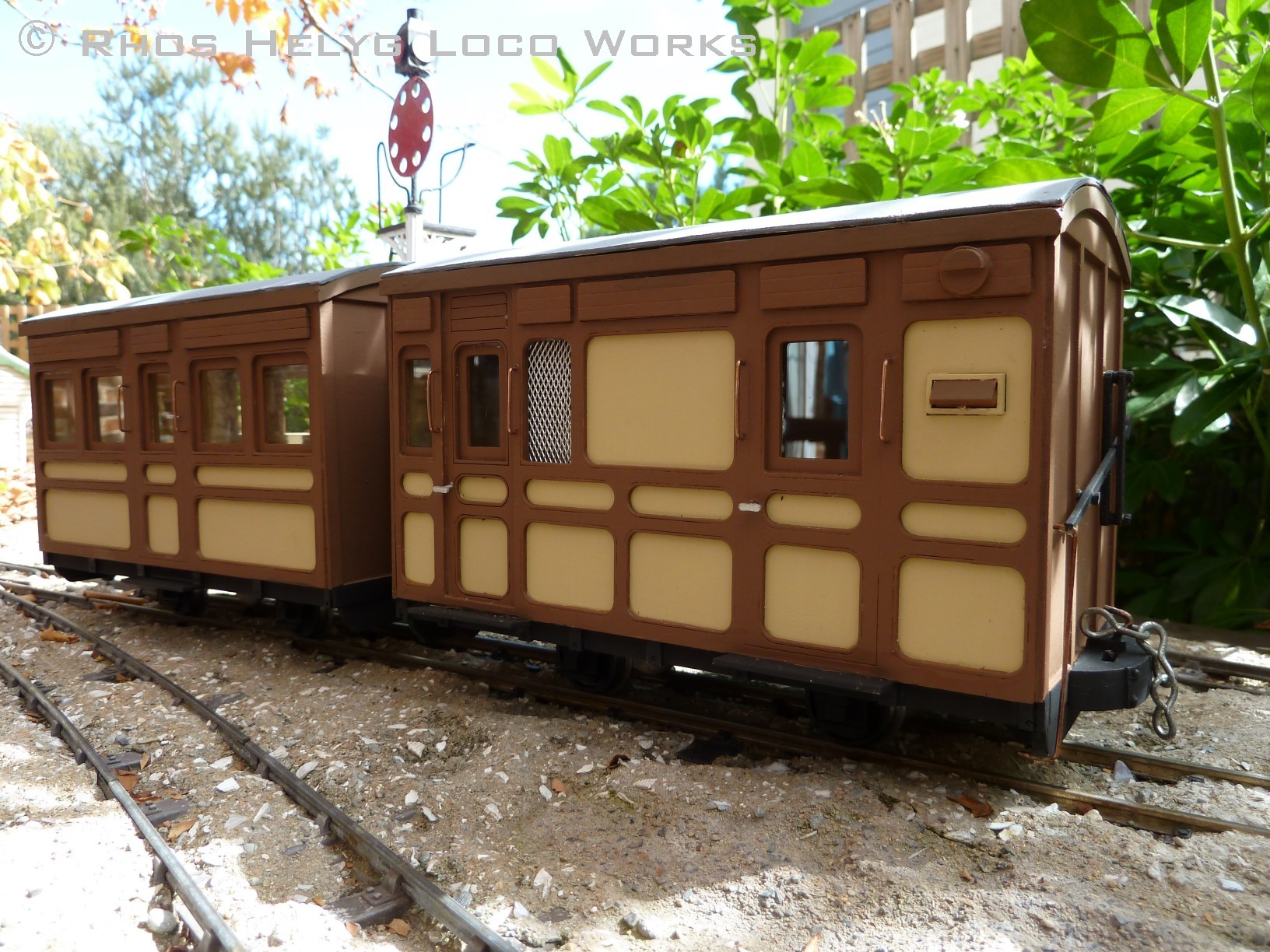
This carriage is one of three identical models built from I P Engineering's Festiniog Railway No. 15/16 kits and painted in a livery based on that used on some carriages at the Markeaton Park Light Railway in Derby. |
|
|
I P Engineering Darjeeling carriages
These two carriages were built for a customer in Australia from I P Engineering kits. The roofs were deliberately not fixed on before shipping so that the customer could add internal detailing. |
|
|
The second picture shows them after completion at their home in Australia. (Photo by Julia Bell) |
|
|
I P Engineering cattle wagons
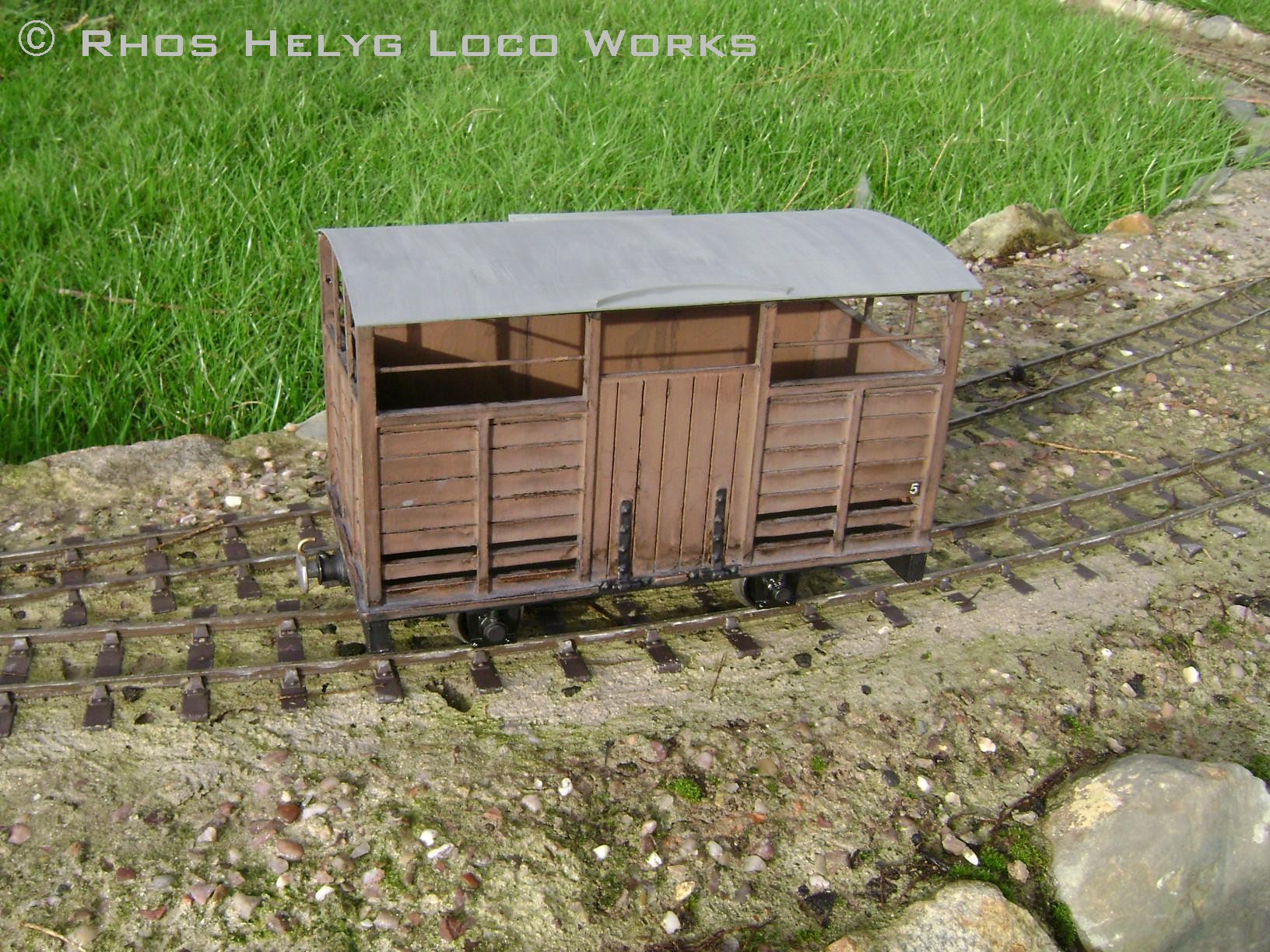
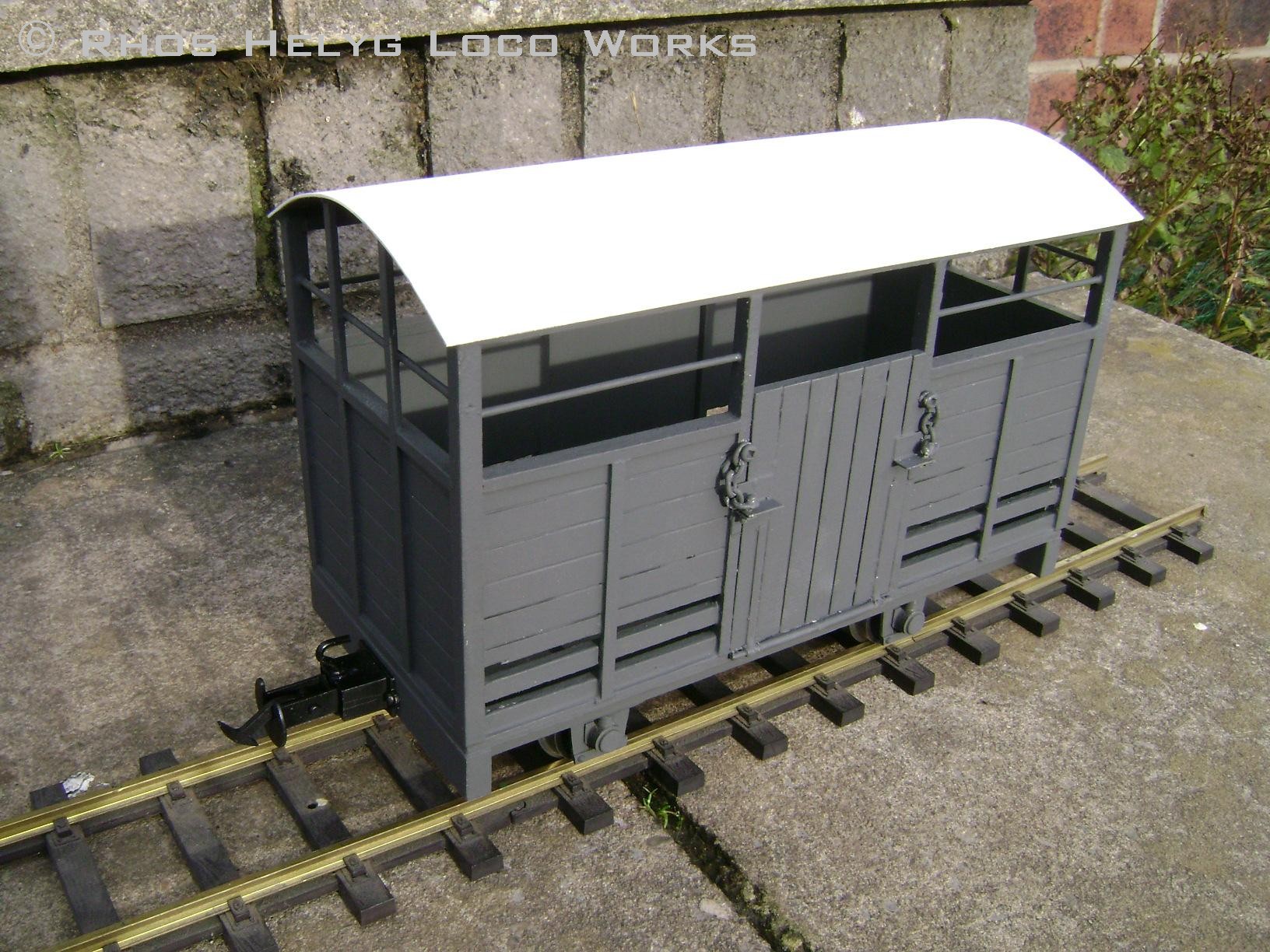
The first picture shows an I P Engineering cattle wagon which was built here and then painted and weathered. The second picture shows a cattle wagon that was built to 45mm gauge for a customer who wanted it to match his Accucraft Welshpool & Llanfair wagons in Great Western livery and so it was painted to match. It features Accucraft chopper couplings and opening side doors hinged at the bottom and held closed by chained pins. |
|
|
I P Engineering MOD Low Loader
I P Engineering MOD Low Loader constructed, painted and weathered. |
|
|
I P Engineering Simplex diesel
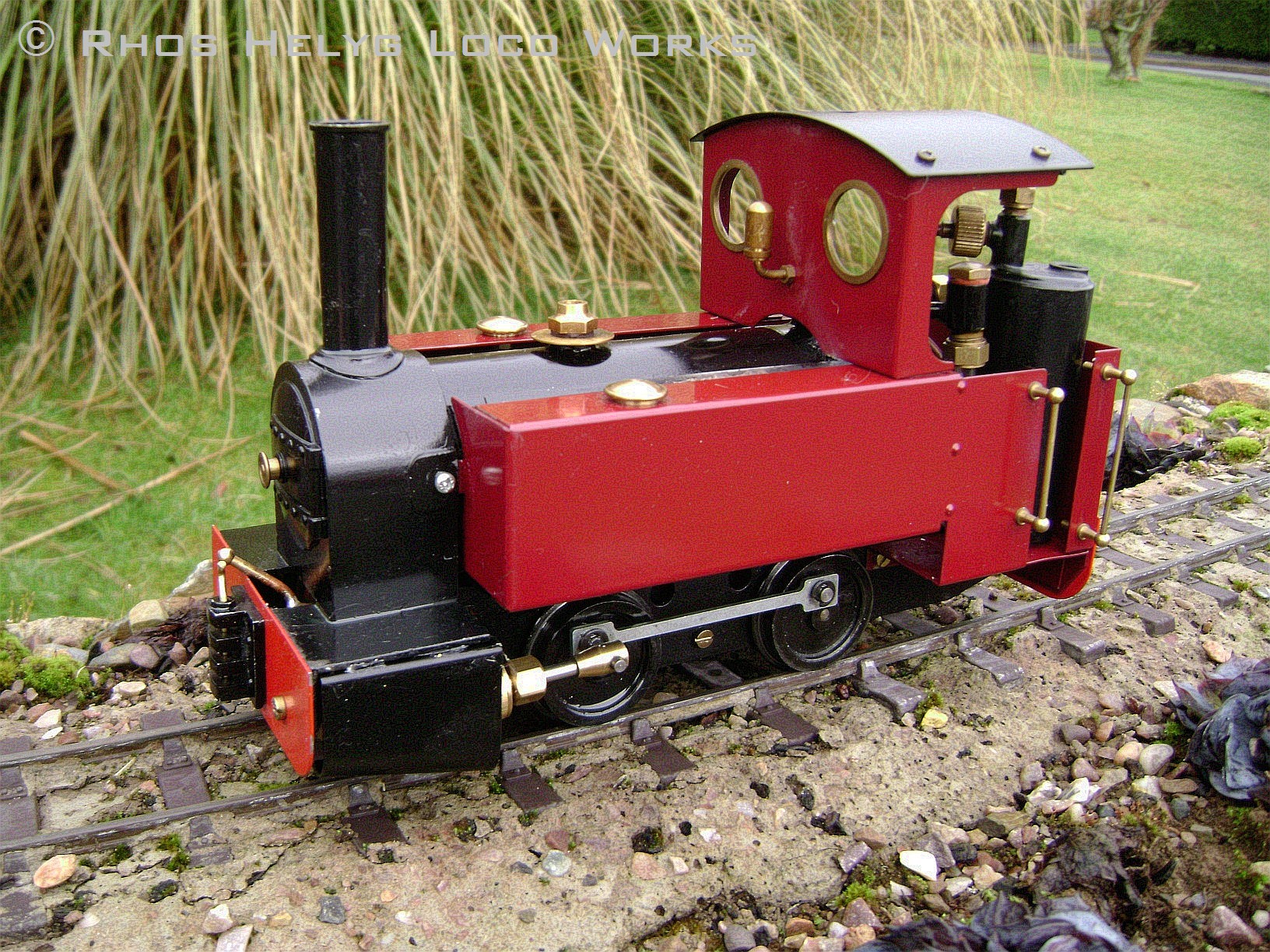
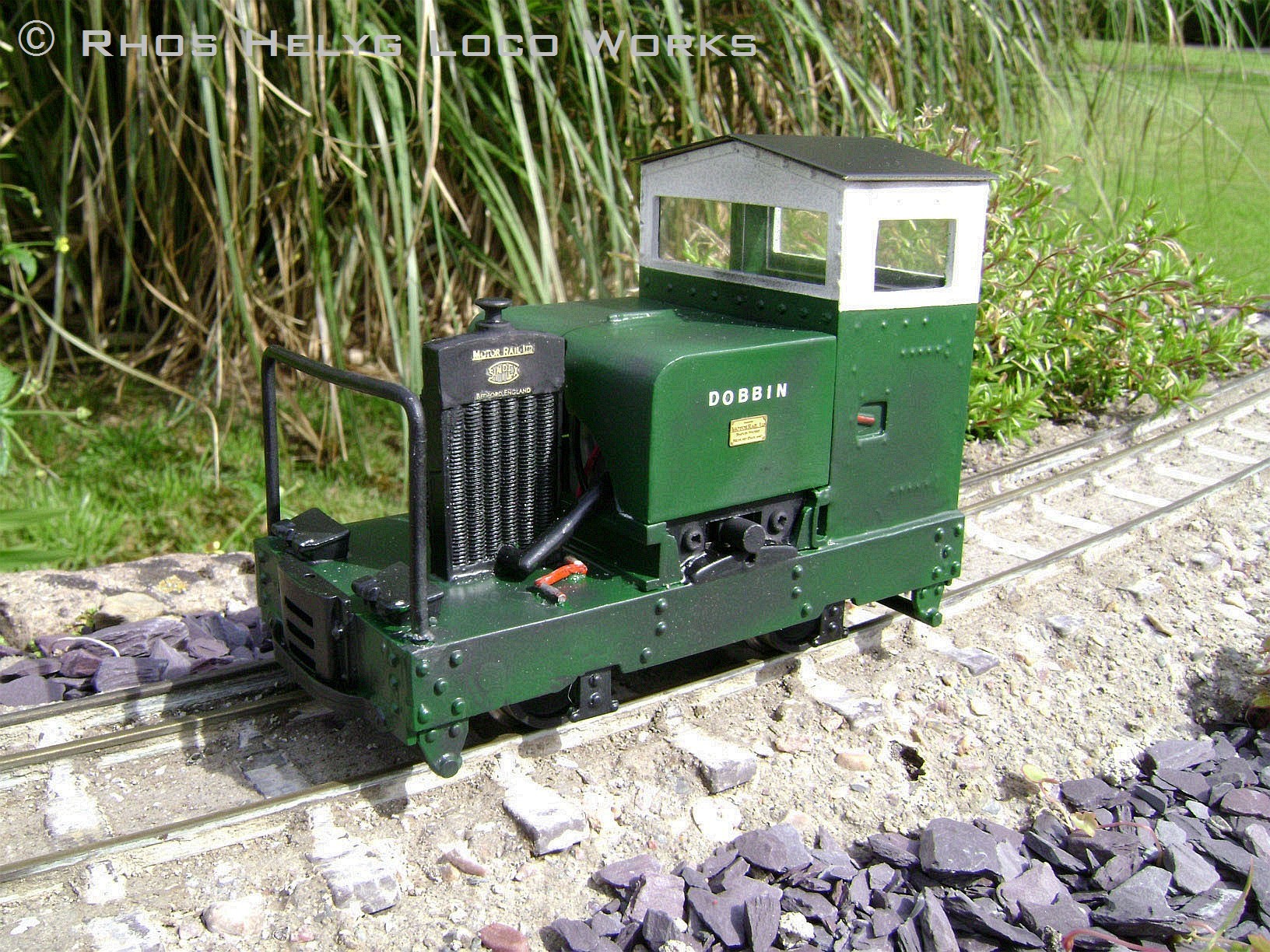
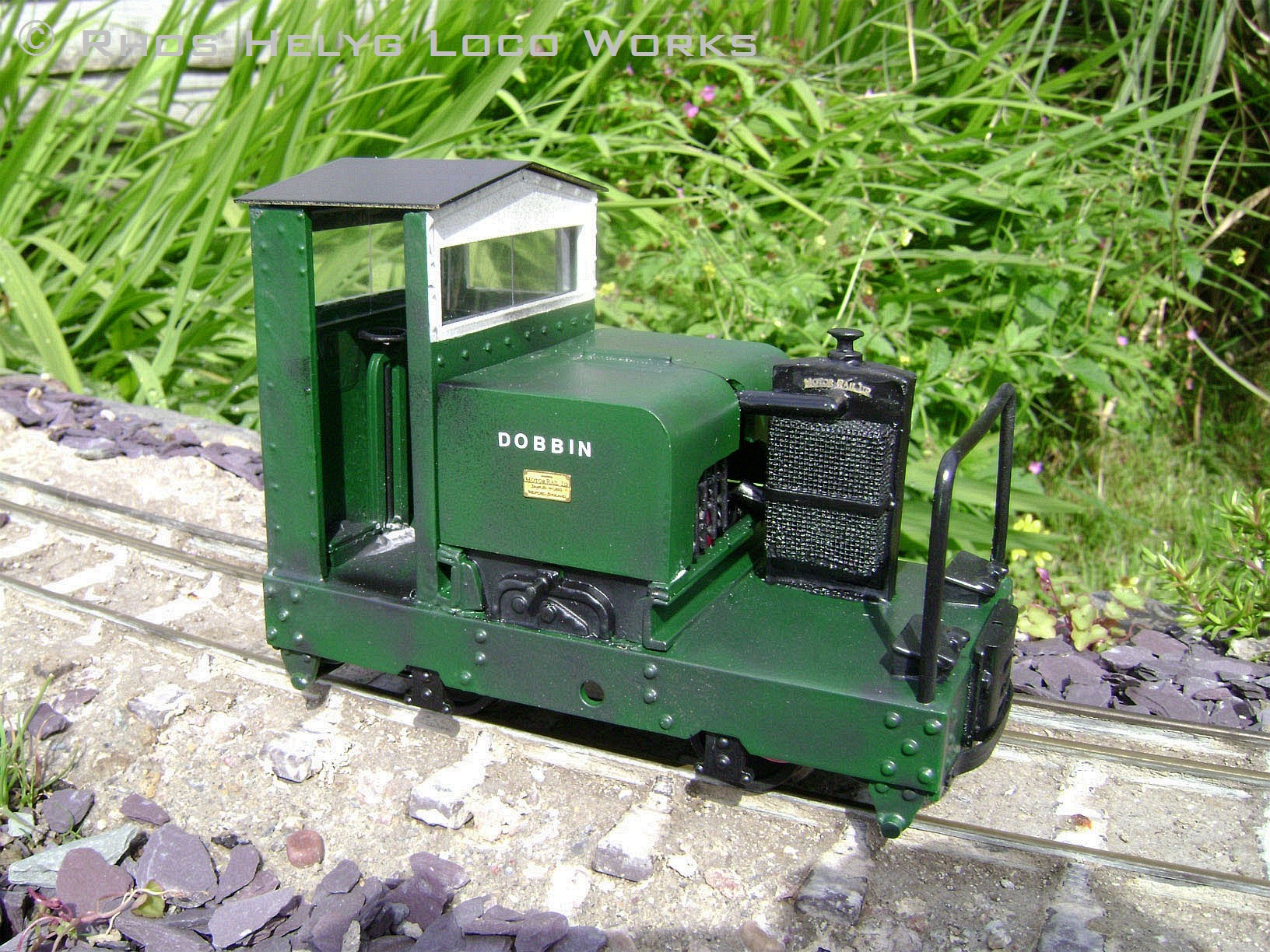
My first ever 16mm/foot scale loco was a Brian Clarke / Saltford Models Simplex battery
diesel. For the few pounds they cost Saltford sent a motor, wheels, axles, a switch, a
selection of whitemetal castings and comprehensive instructions. The bodywork was made
from styrene sheet (not provided in the kit) and it was a couple of evening's work to cut
out all the bits, glue them together and end up with a working loco. Other locos featured
in the Saltford range and I am sure I am not alone in following that introductory route to
modelling in our scale.
|
|

|
David Johnson Garratt 0-4-0+0-4-0
For those of you that receive and read the rather excellent Throwback Modeller digital magazine you may have seen on pages 51 and 52 of issue 42 an article giving a short history of this Garratt built by the late David (Dave) Johnson in Leeds, probably in 2002. The Garratt's body components came to me recently for repainting and lining. The owner chose dark blue lined in cream and edged in black. (Photo by Mike Leckenby) |
|


|
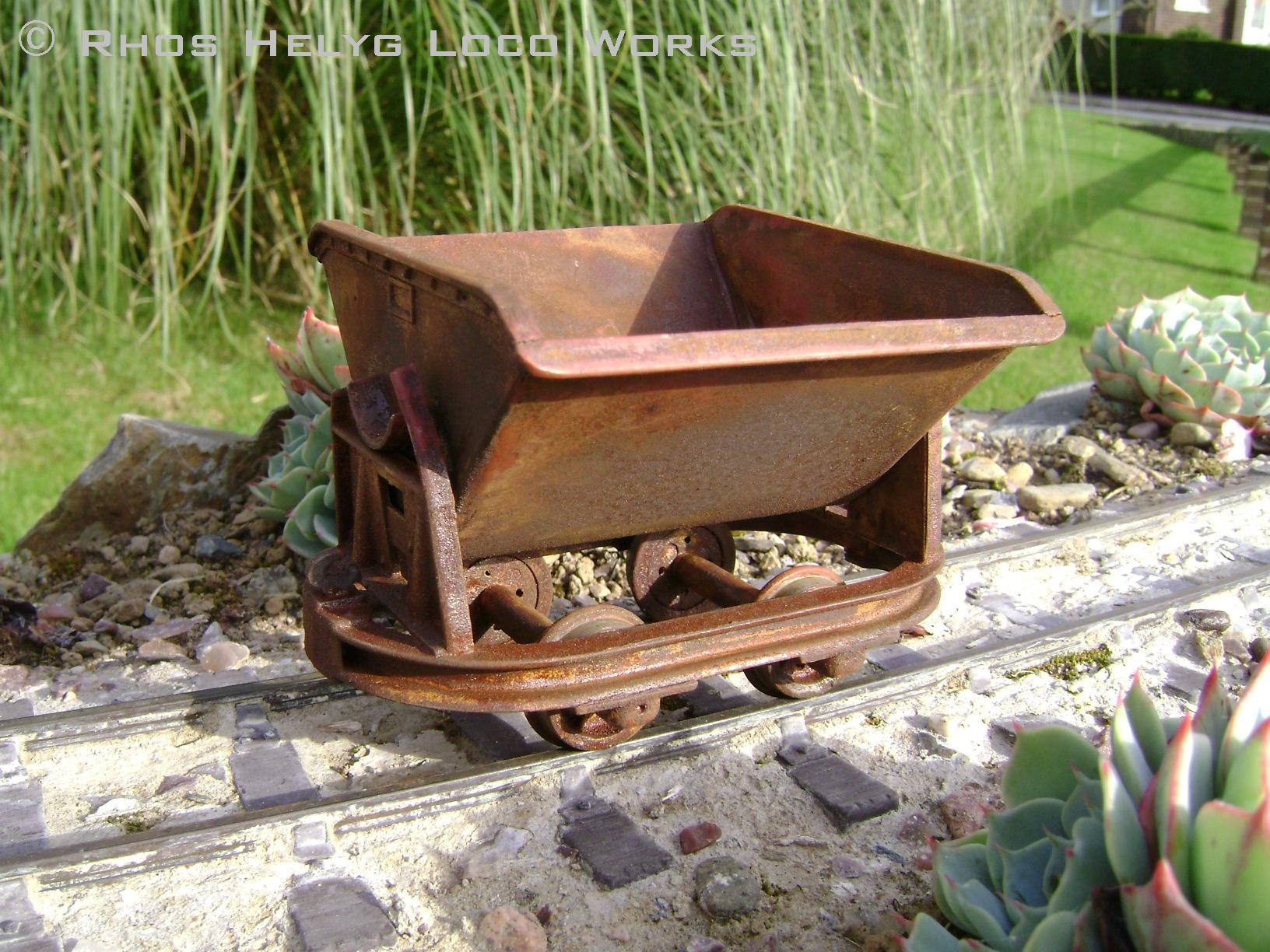
Kestrel plastic tipper wagon
Kestrel plastic tipper wagon with steel wheels and red oxide and rust paint finish. |
|
|
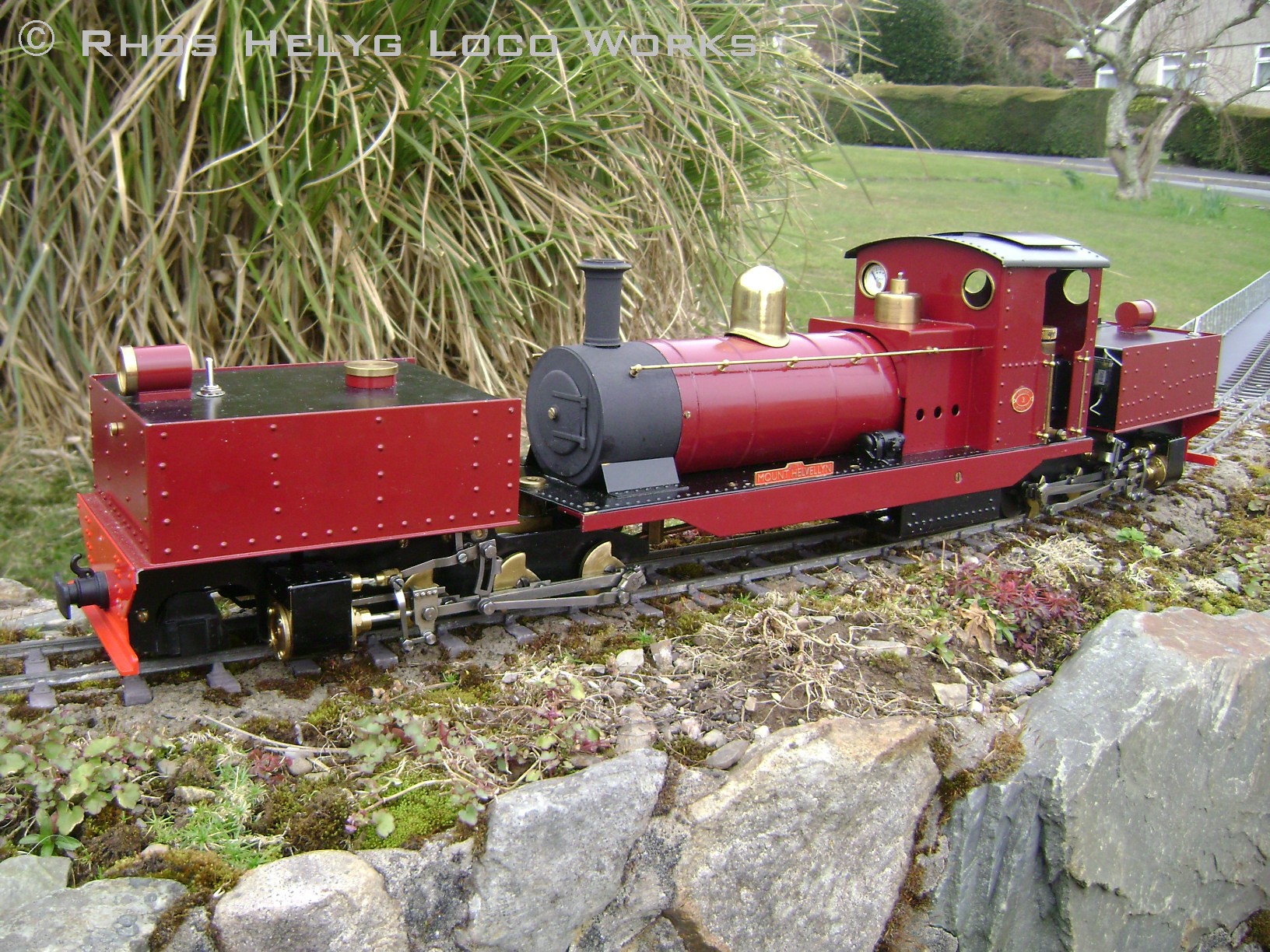
Locobox NGG11 2-6-0+0-6-2 Garratt No. 3 MOUNT HELVELLYN
A few repairs and modifications were made to this Locobox Afrikaans Garratt. The main change was to the front and rear pony trucks which now sport dummy axle box details, instead of the "naked wheel" arrangement that they used to have. The dummy axleboxes fitted to this loco are designed to cope with regauging from 32mm to 45mm, and vice versa. The repairs included remaking some of the soldered joints on the cab and tanks which had failed due to flexing of the bodywork. |
|
|
A few years later the bodywork components of this locomotive returned here for repainting in satin black. The second photo shows it after reassembly by its owner. (Photo by Richard Hay) |
|
|
Locobox Darjeeling 0-4-0+0-4-0 Garratt
Imagine if the Penrhyn slate quarries had flourished beyond everybody's wildest dreams, they might have ended up with one of these for working trains on the Main Line to Porth Penrhyn. Well, maybe. This is a Locobox Garratt that came here for conversion from radio to manual control, a few changes to its appearance including a proper smokebox door and the rear headlight moved from cab roof to the coal bunker, and a repaint in to Penrhyn livery. The repaint proved rather problematic as the original thick coat of green paint returned to a semi-liquid state when the black was first applied, and then set solid again. Needless to say, this did not give an acceptable finish and so the whole green and black sticky mess had to be completely removed - a filthy and very time-consuming job. Worth the effort though... |
|
|
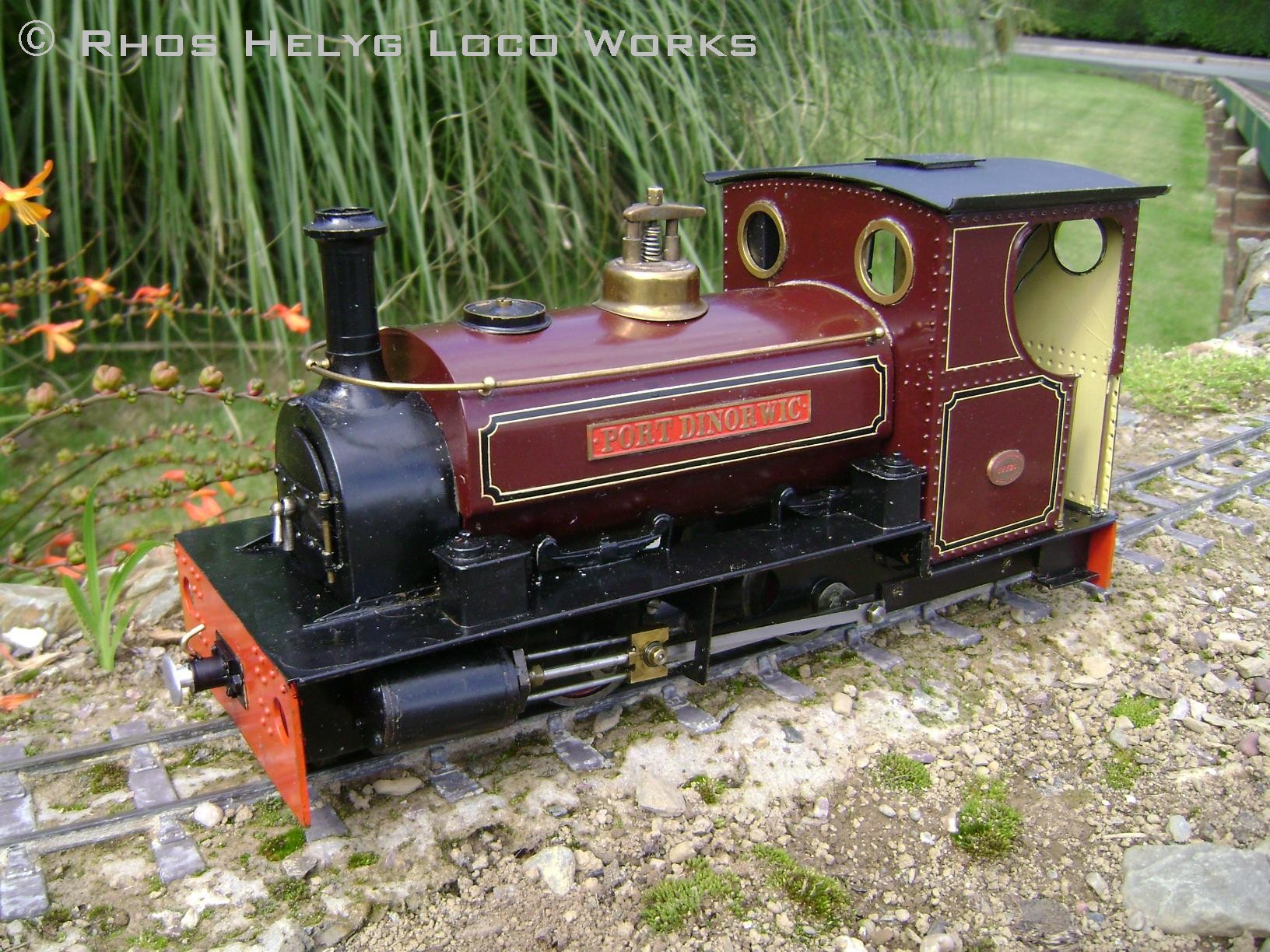
Locomotion Hunslet 0-4-0ST PORT DINORWIC
The owner of this fine machine sent it here for a service, some minor repairs and some attention to its paintwork. The original couplings were also replaced with I P Engineering centre buffer/hook type on specially-made mounting plates. |
|
|
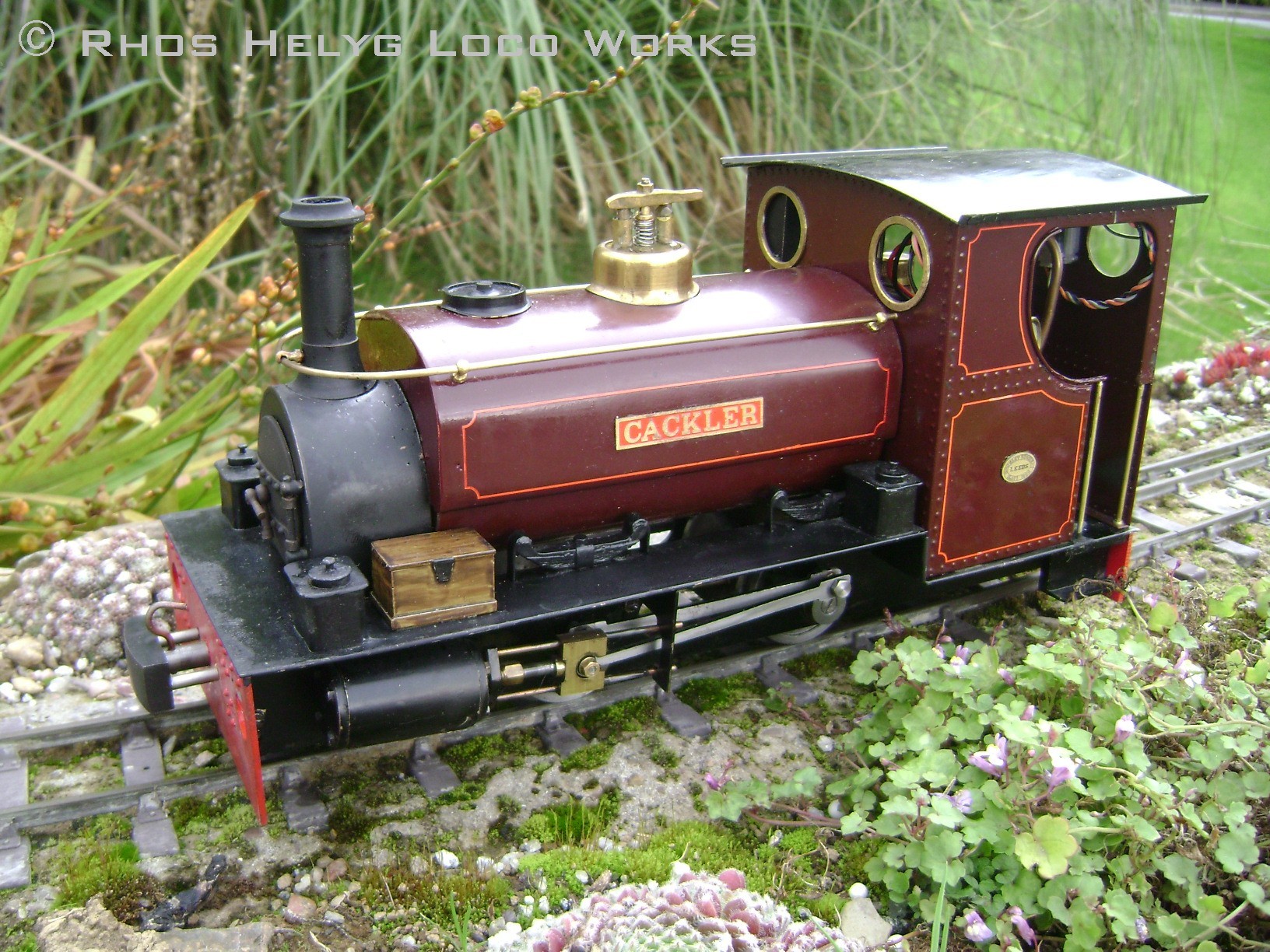
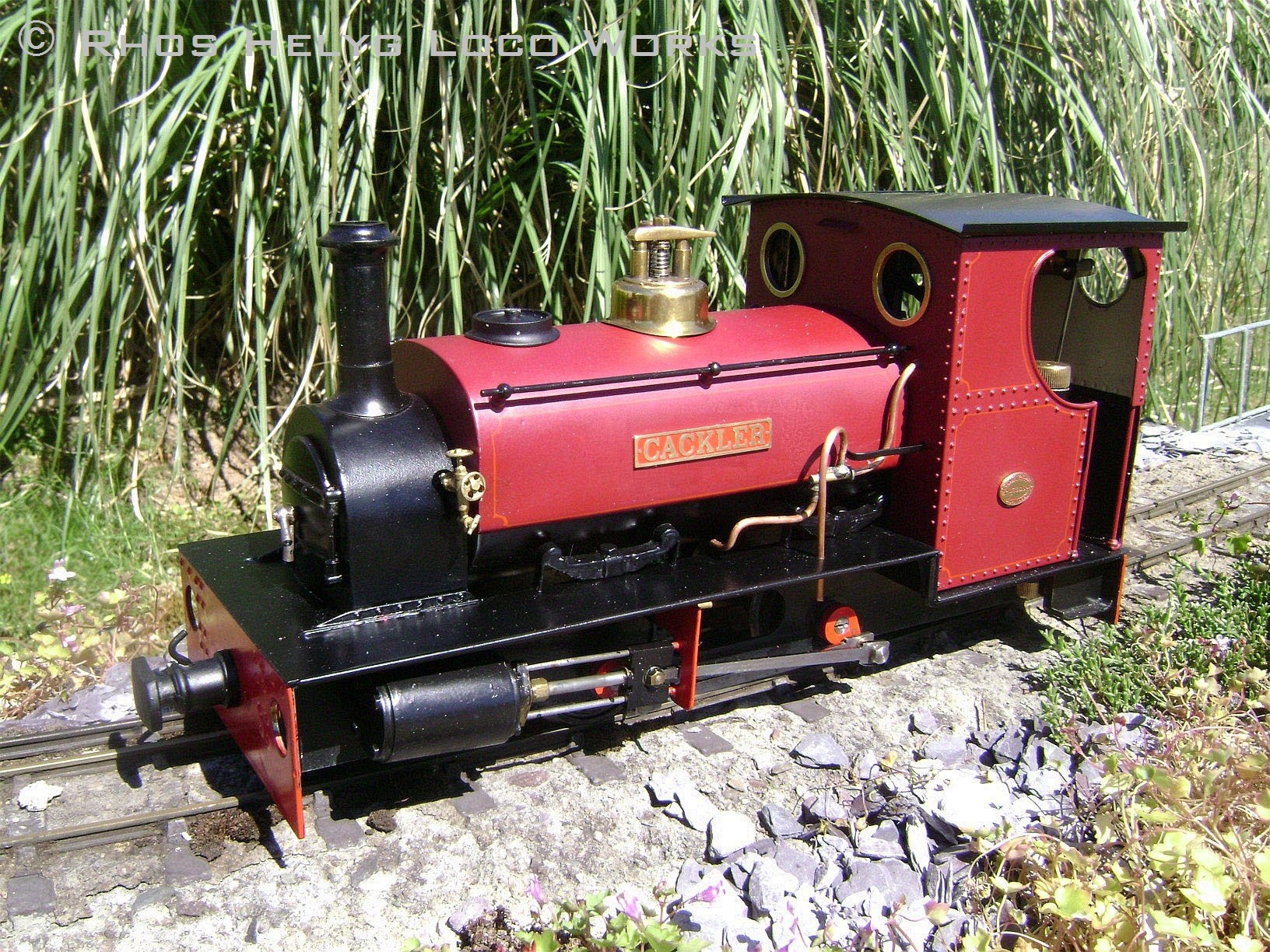
Locomotion Hunslet 0-4-0ST CACKLER
This particular model of Cackler by Locomotion was being a bit of a problem child and so it came here for some attention. The main problems concerned the pistons and valves, with the former so tight in their bores that it was almost impossible to rotate the wheels and the latter having a propensity to dismantle themselves at every opportunity. These issues were corrected, but still the problems continued with a steam leak in the smokebox, a blocked boiler water gauge, faulty gas burner and a safety valve that was anything but safe. The safety valves on these locos are unusual in that they rely on a spring under tension (rather than compression) for their operation, and the spring on this one "let go" of its top fitting in spectacular style during a bench test run. Fortunately it was working on compressed air at the time and there was no hot water or steam involved! The safety valve was successfully rebuilt and recalibrated by Shawe Steam Services. |
|
|
Locomotion Hunslet 0-4-0ST CACKLER
Two more Locomotion Cacklers came here for similar repairs. It seems that once they get to
a certain age they seem to have similar problems involving degradation of the O-rings used
on the live steam supply to the valve chests and of the piston rings. This degradation then
causes steam leaks under the smokebox and "blow by" of steam to the pistons, so causing poor
performance. They had all of these O-rings replaced with modern equivalents and the
performance returned to how it should be.
|
|
|
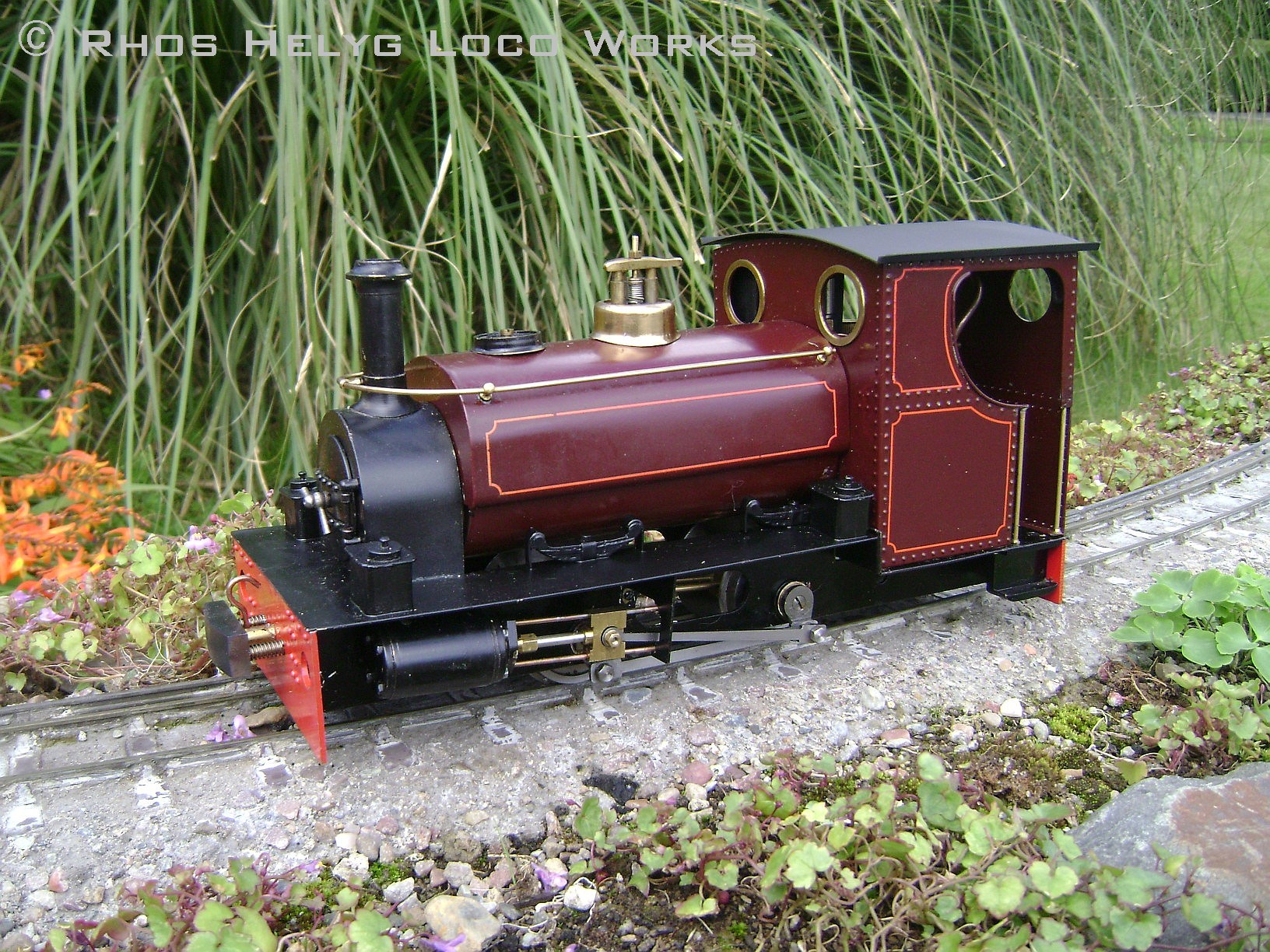
Locomotion Hunslet 0-4-0ST CACKLER
This loco first came here a few years ago for attention to the poor running characteristics unfortunately common in these locos. The usual battle with the cylinder end covers and their steel 10BA screws snapping when unscrewed followed. Fitting a new set of the correct type of piston O-rings soon had the loco running again as it should, and that was about all I did. Four years later, and the same loco was back on my bench having changed owners in the meantime. The new owner wanted it to be fitted with single-channel (regulator only) radio control, more detailing (lubricators, pipework, cab vents, etc.) and a repaint in to the maroon lined in red scheme that the full-size loco carried while at Dinorwic Quarry in North Wales. |
|
|
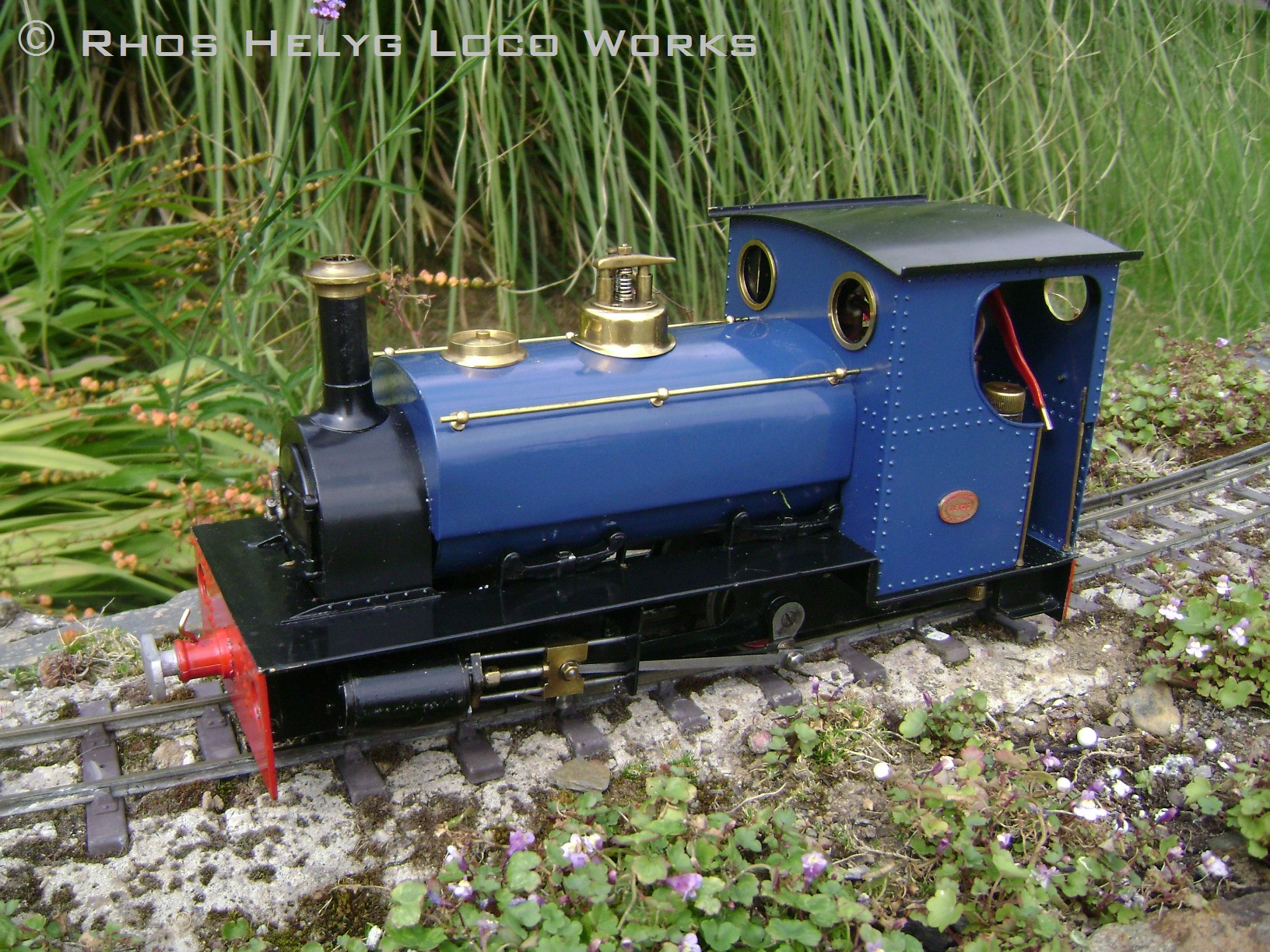
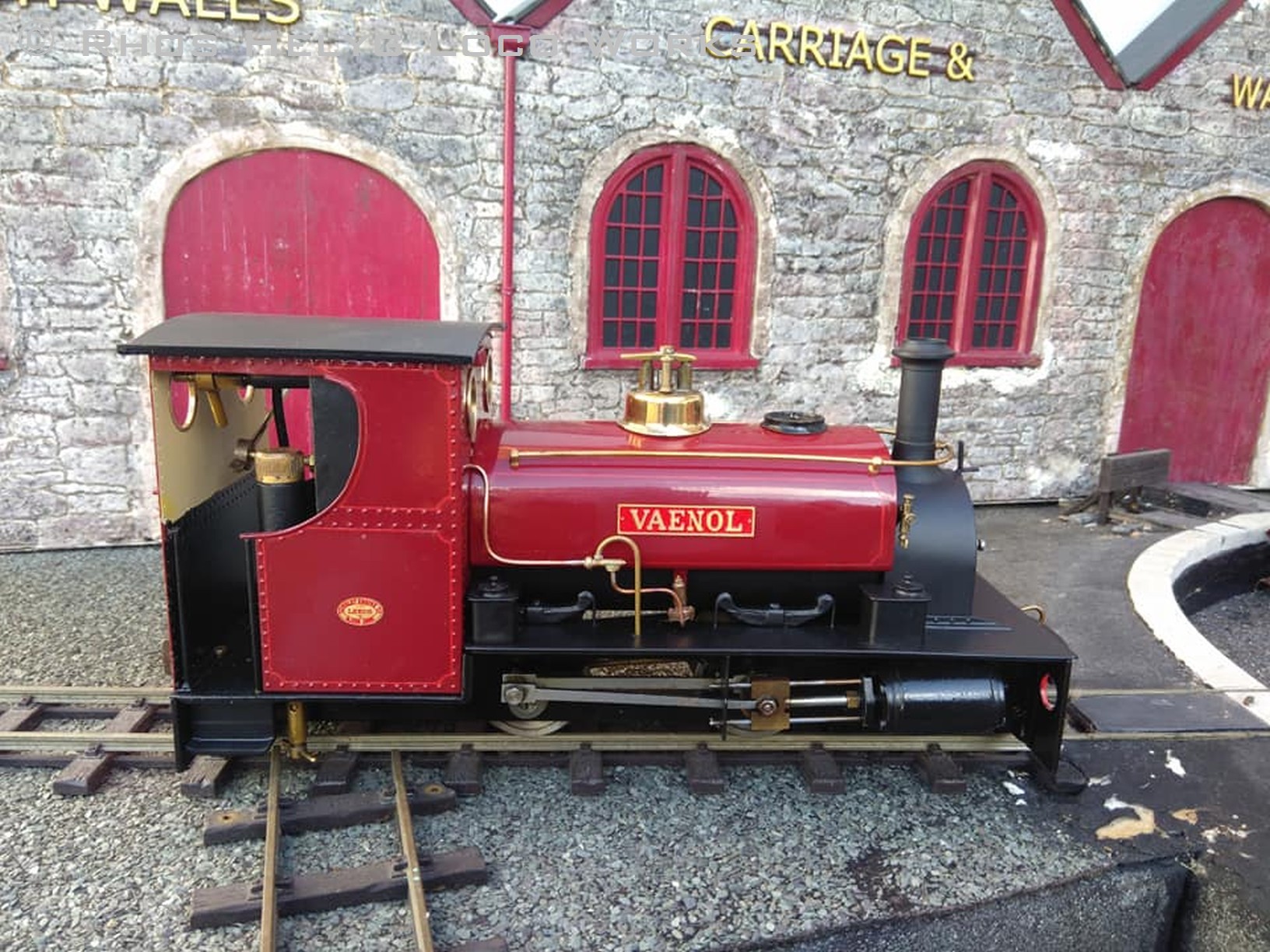
Locomotion Hunslet 0-4-0ST VAENOL
The bodywork for this loco came here for a repaint in to the maroon lined in red scheme that the full-size loco carried while at Dinorwic Quarry in North Wales. (Photo by Gareth Jones) |
|

|
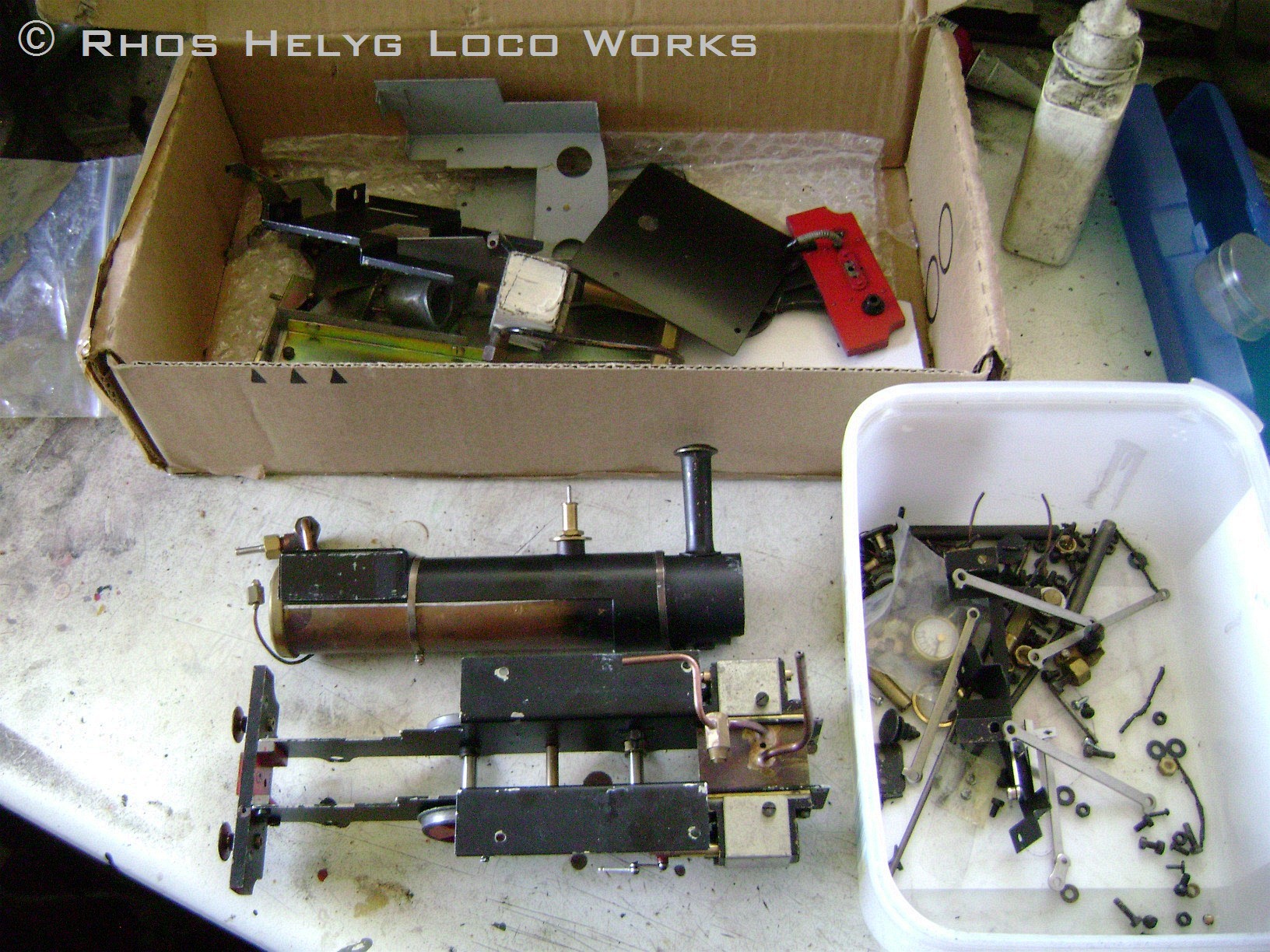
Roger Marsh Avonside 0-4-0T MARCHLYN
The proverbial Box Of Bits can always be a challenge, especially when there are no
instructions, few others around of the same type to copy and the box contains bits from
more than one kit. Such was the case with this one, which eventually turned in to a model
of Penrhyn Quarry's Avonside 0-4-0T MARCHLYN.
|
|
|
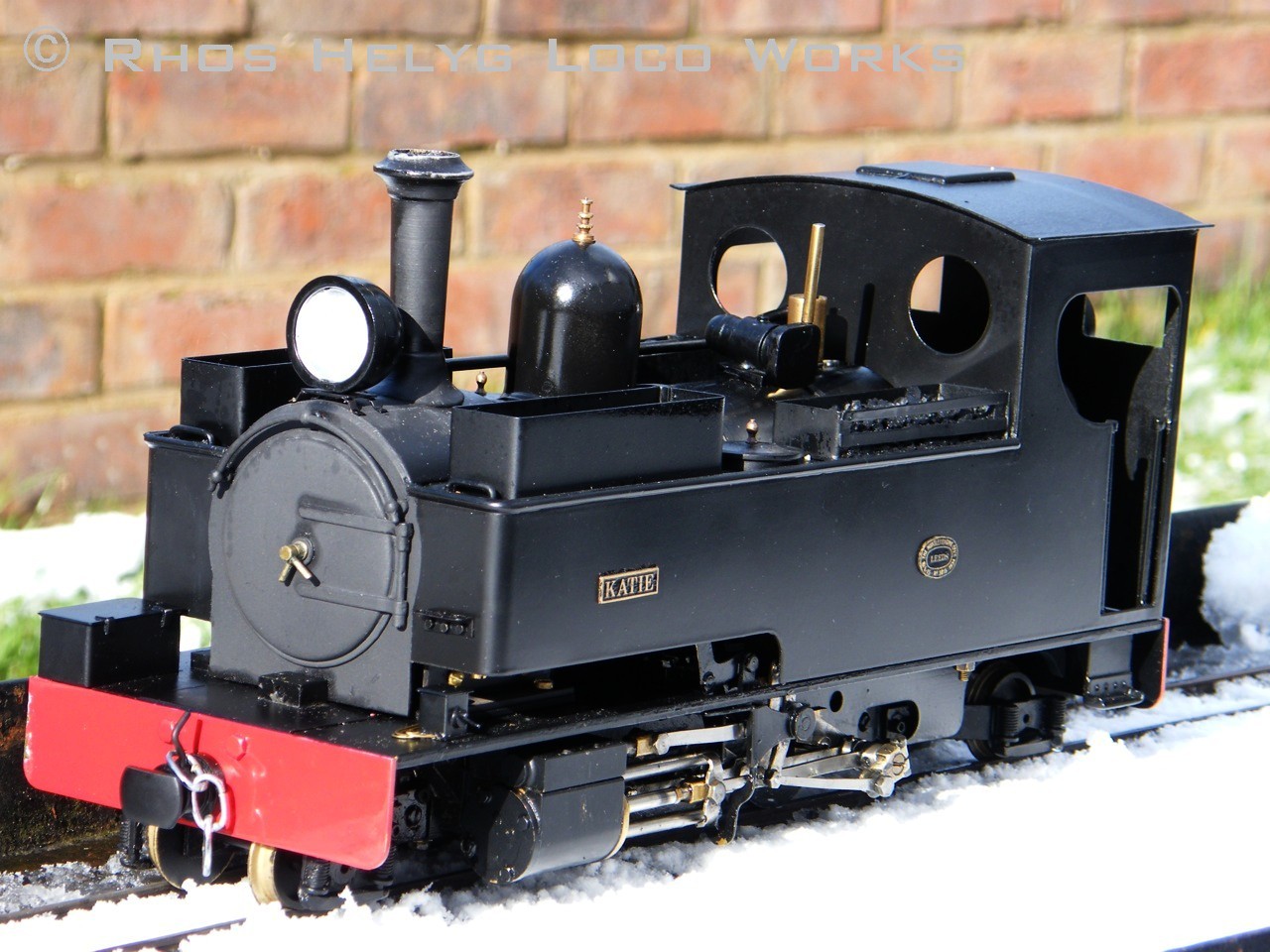
Merlin Hunslet 2-6-2T KATIE
The body (only) of this loco came here for repainting in satin black with the smokebox, cab roof and tank tops finished in matt black. (Photo by Dave Billmore) |
|
|
Merlin Major 0-6-0T KING ARTHUR
The bodywork parts for this Merlin Major were sent here for painting and lining in the colour and style carried by the Rudyard Lake Railway's locomotive KING ARTHUR. The owner then completed the assembly of his locomotive and the superb result is shown here. The lower picture shows the painted and lined parts. (Photo by Keith Greenwood) |
|
|
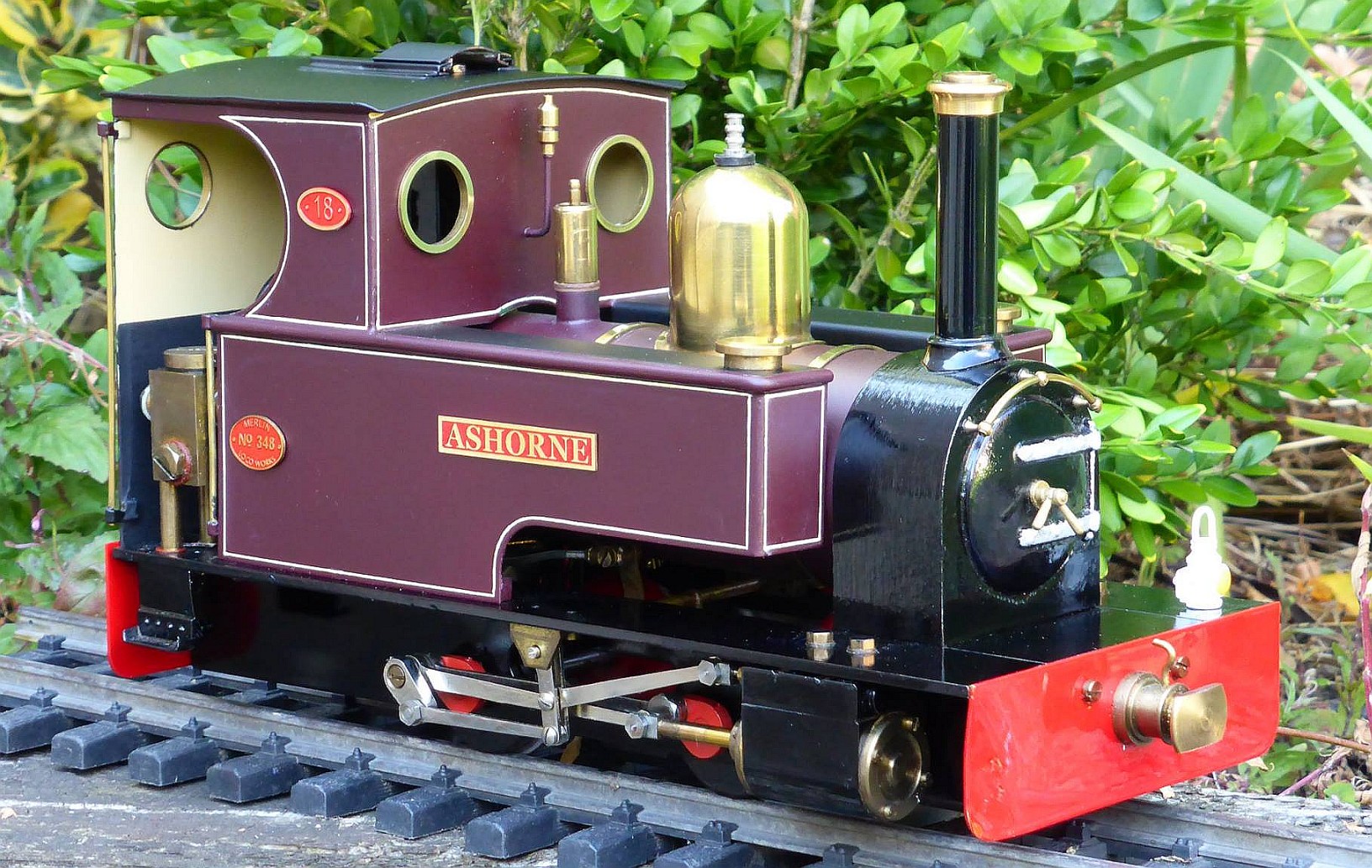
Merlin Mayflower 0-4-0T No. 18 ASHORNE
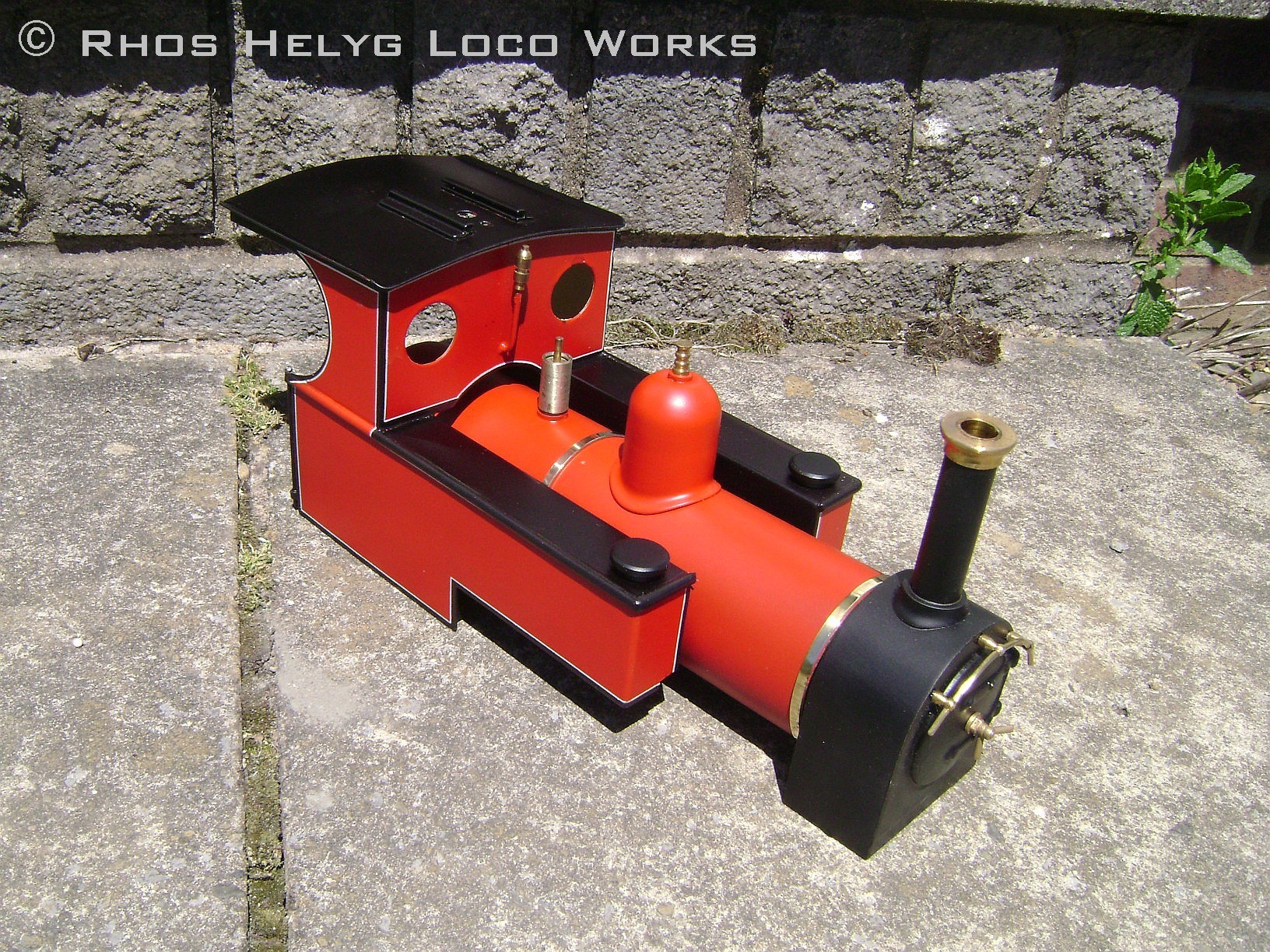
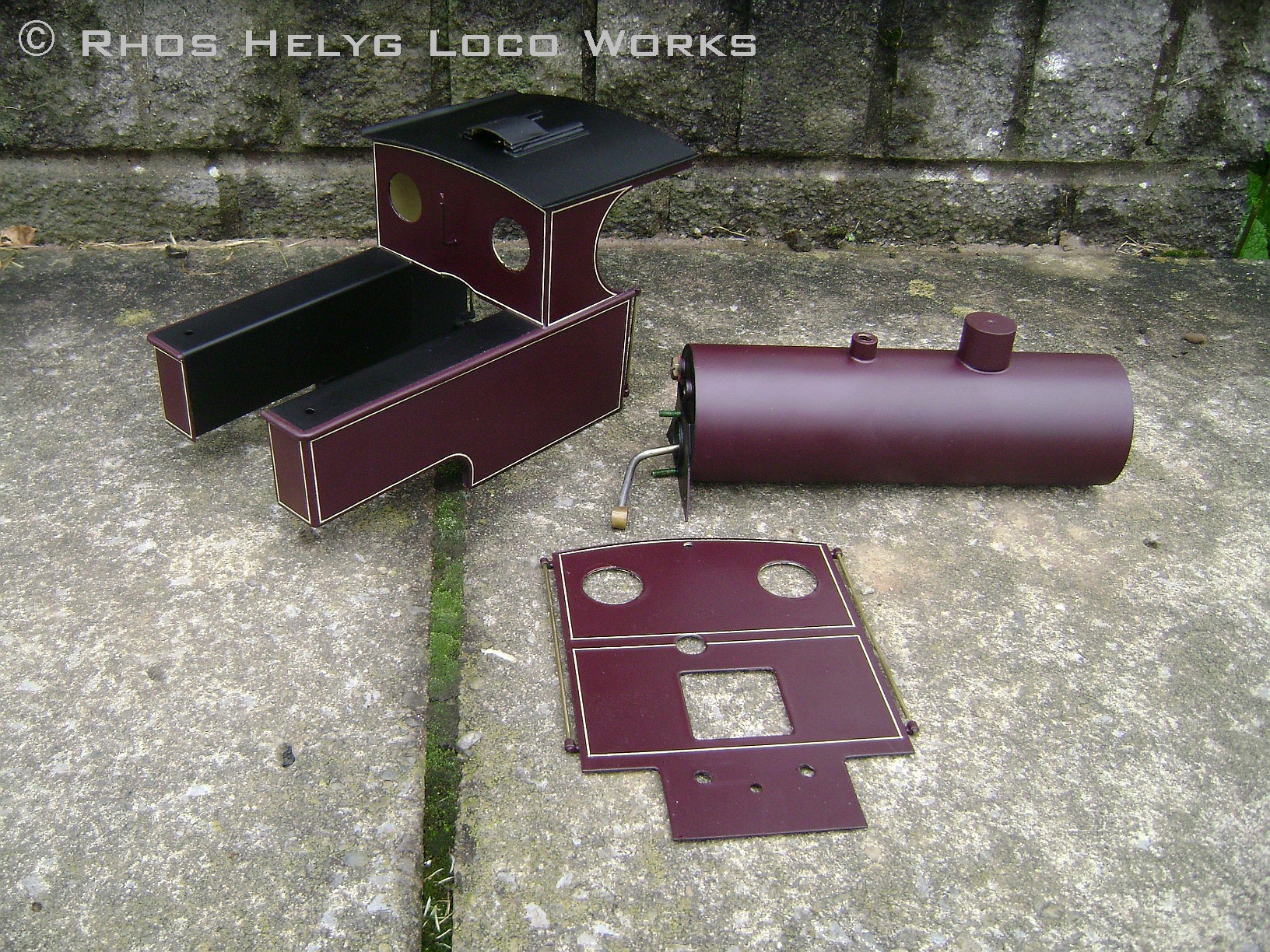
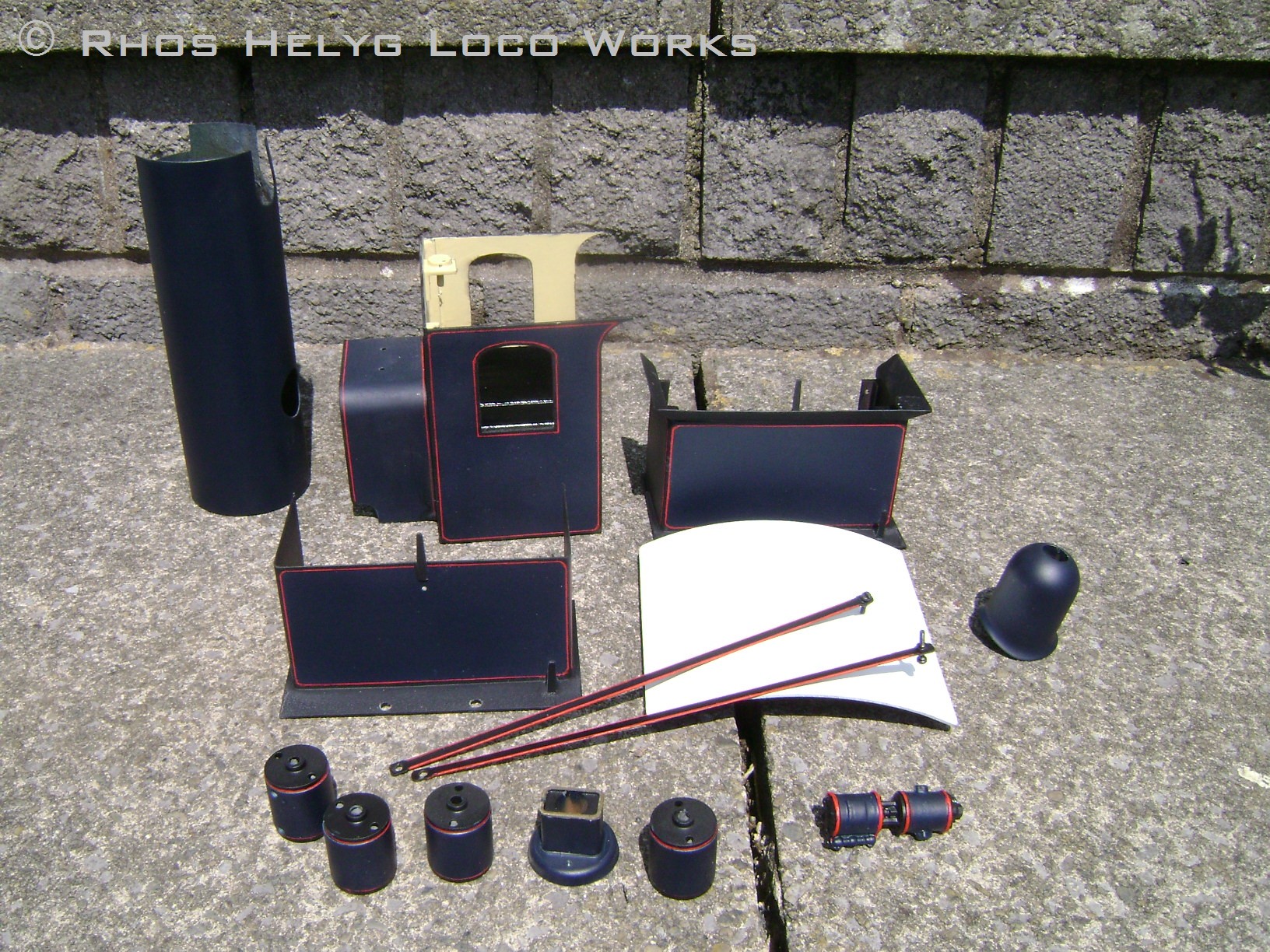
The bodywork parts for this Merlin Mayflower were sent here for painting in Victorian Maroon and lining in cream. The owner then completed the assembly of his locomotive and the superb result is shown here. The lower picture shows the painted and lined parts. (Photo by Keith Greenwood) |
|
|
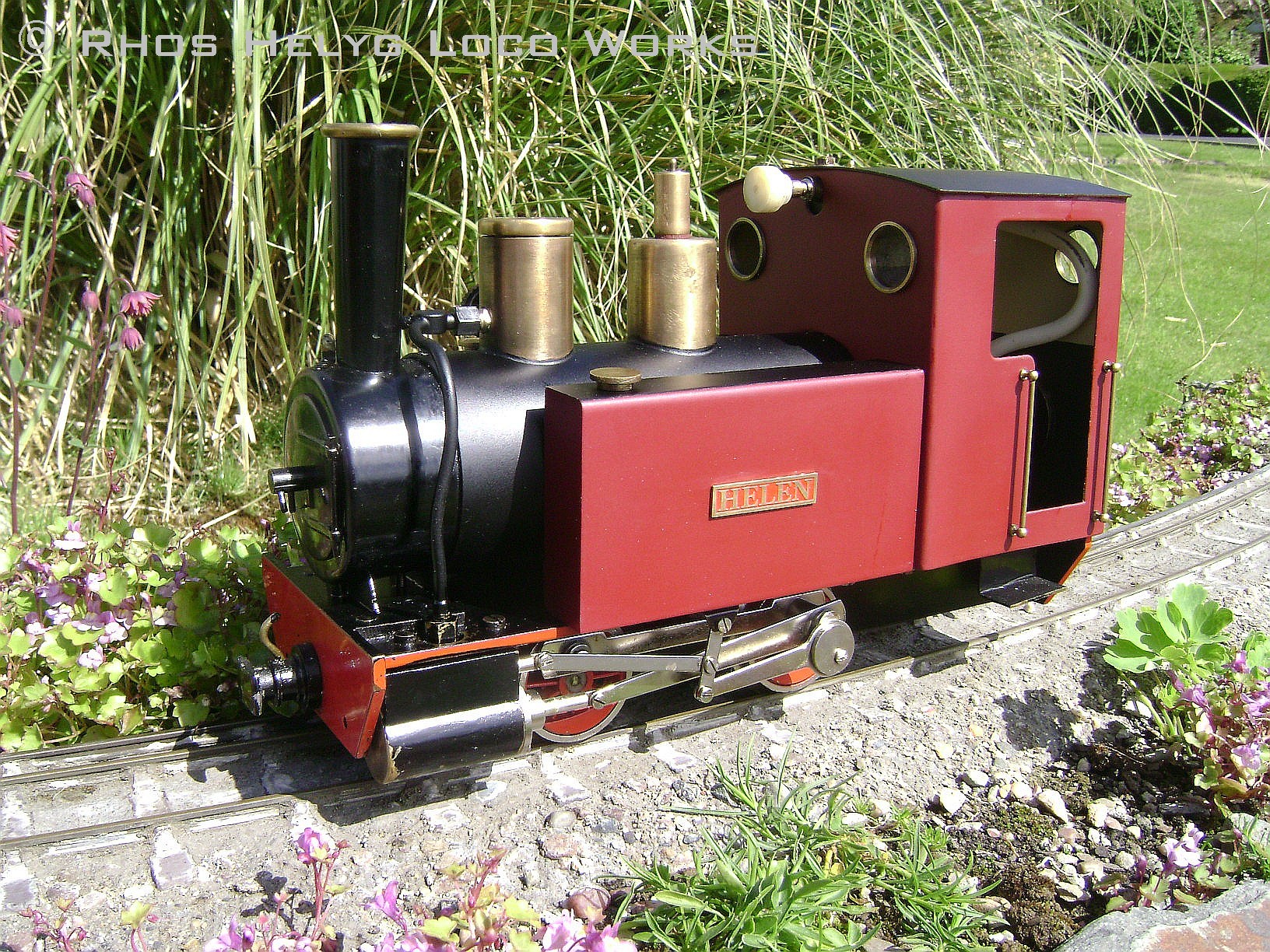
Merlin Midas 0-4-0T HELEN
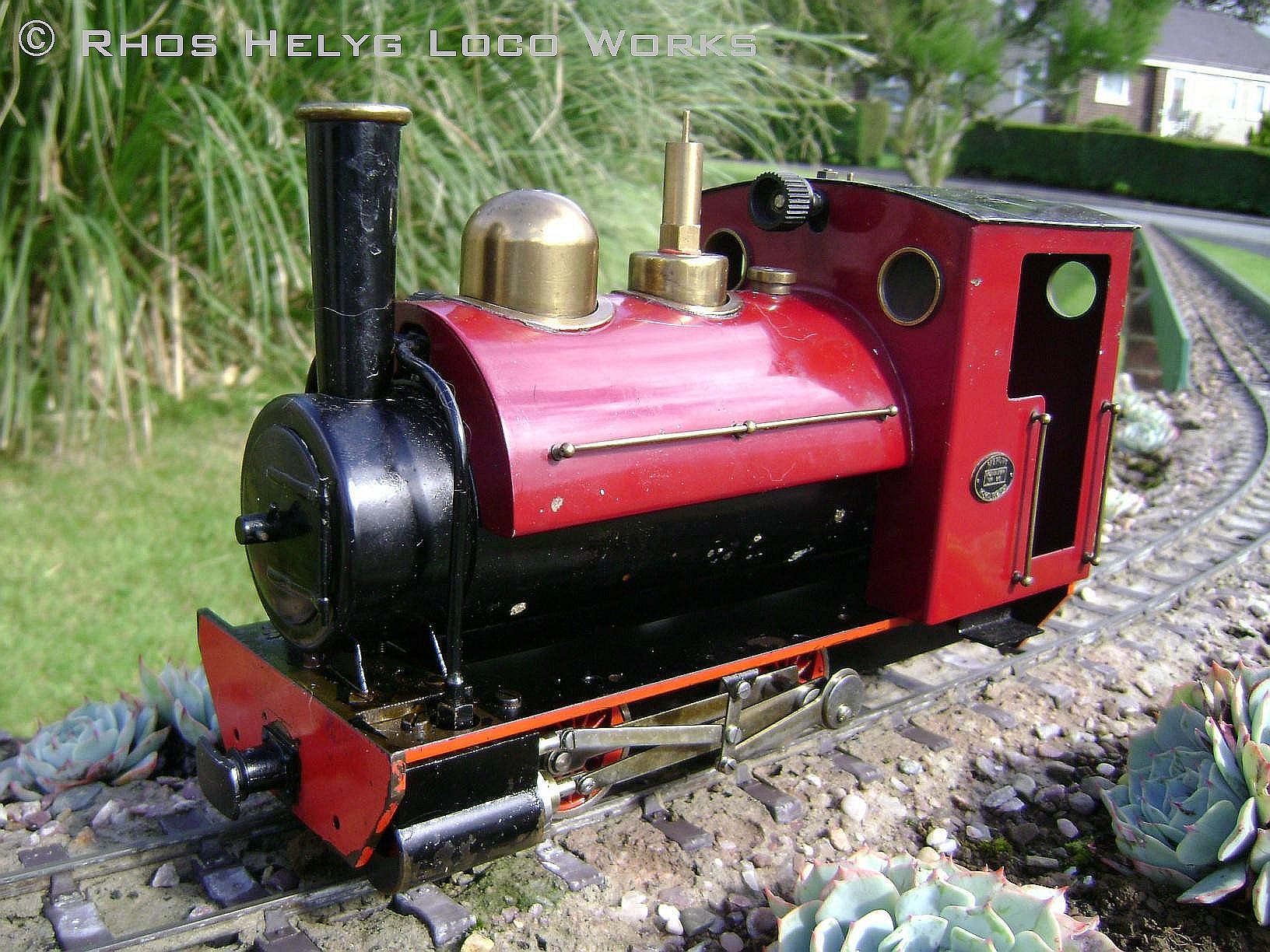
This Merlin Midas came here for a replacement pressure gauge syphon pipe and a repaint from chipped and scratched maroon into pristine maroon, complete with black tank tops. |
|
|
Merlin Minstrel 0-4-0T
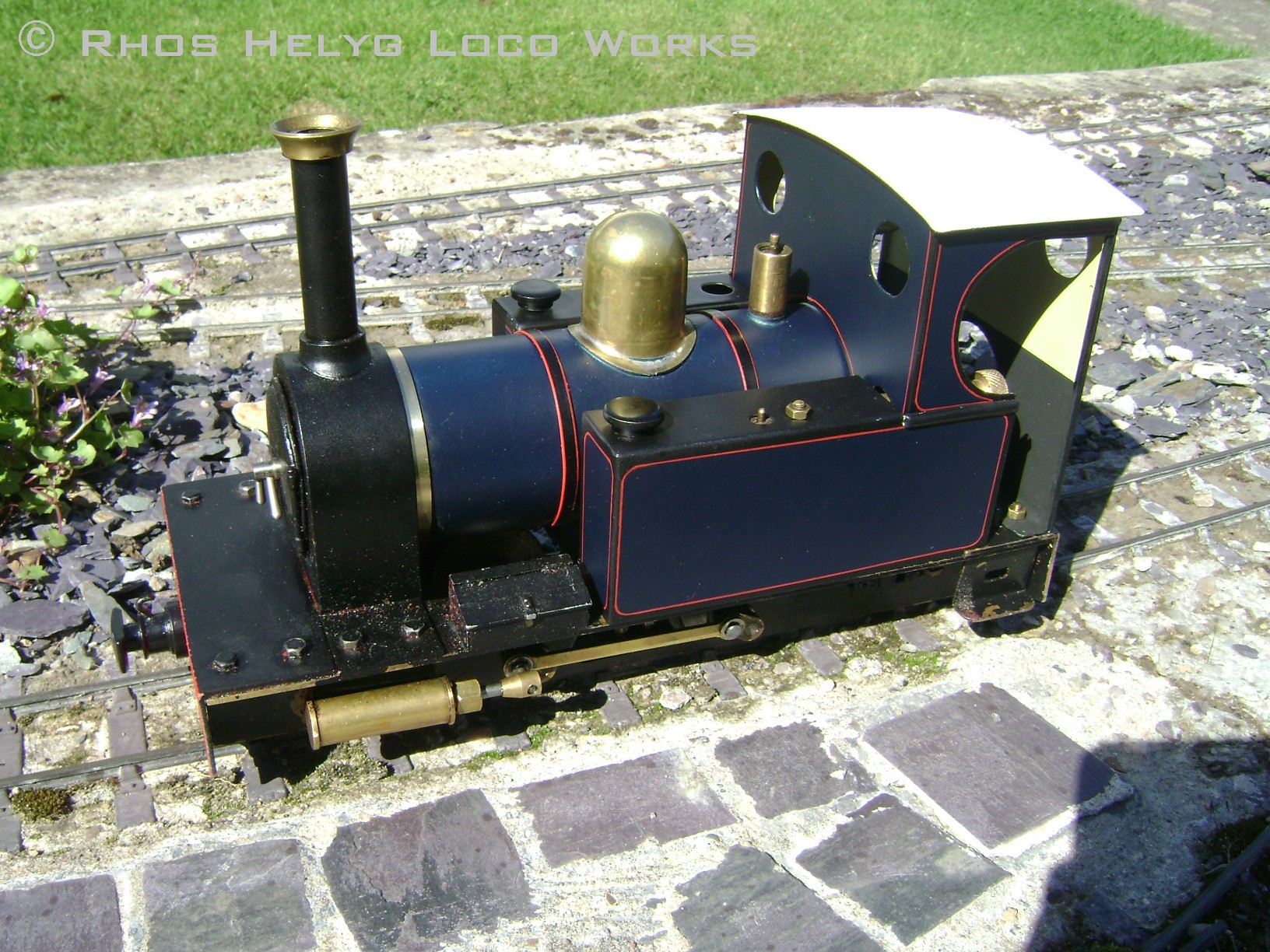
This Merlin Minstrel came here for stripping and repainting of the boiler and bodywork in to the Great Eastern Railway-inspired scheme of dark satin blue with red and black lining shown here, along with the obligatory white cab roof. The side tanks are made of tinplate and the cab from brass, and it also has a brass boiler. The paintwork on the frames was left for the owner's attention, at his request. |
|
|
Merlin Minstrel 0-4-0ST DAMSON
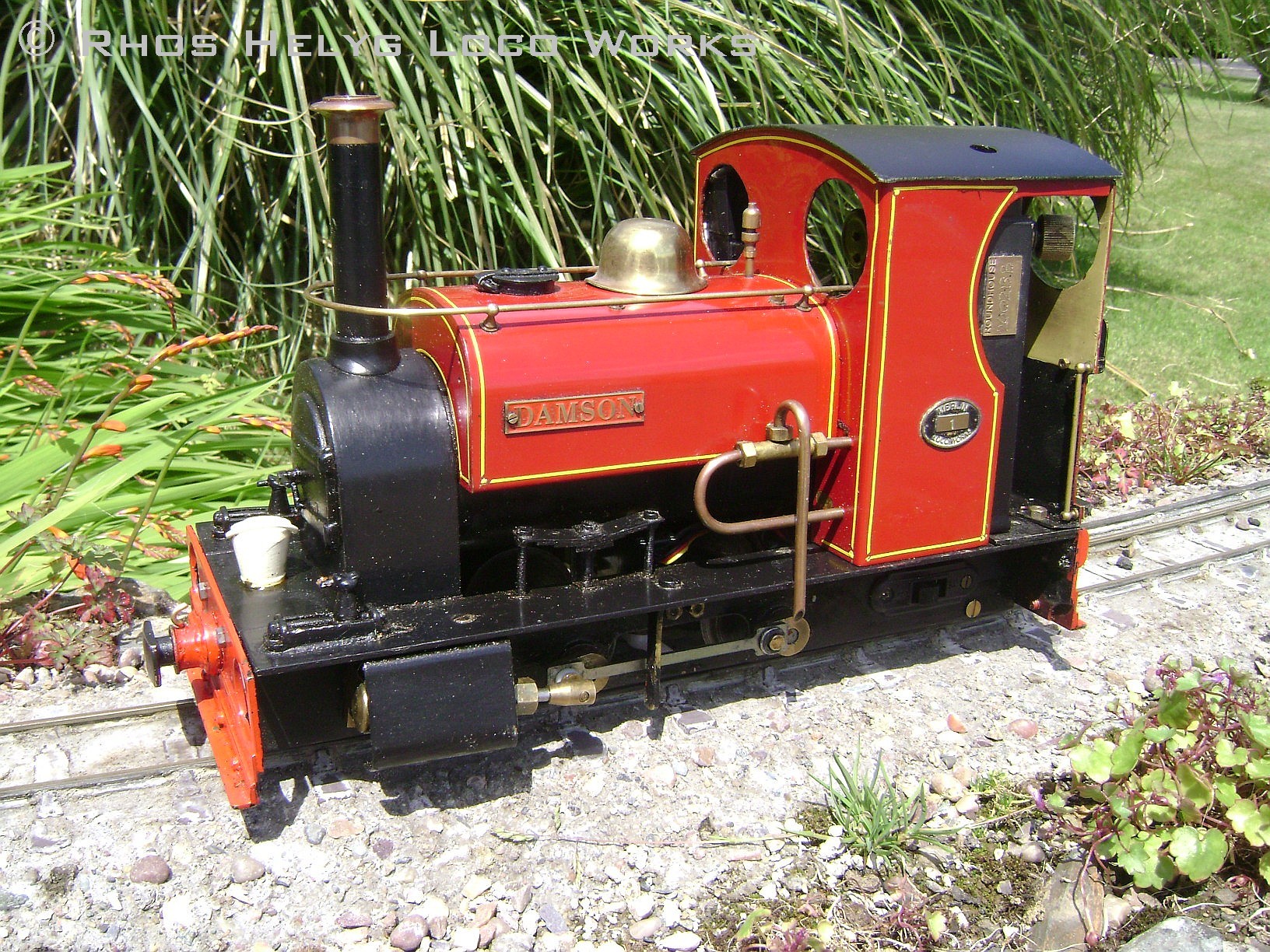
The owner of this Merlin Minstrel had decided to replace the original gas tank and burner with replacement items from Roundhouse Engineering, and to upgrade the radio control system. Unfortunately circumstances then prevented him from finishing the job, so he sent it here. Various brackets were made to fix the gas tank and the burner firmly in place, a single-channel 2.4GHz radio control system was installed, the now unused holes in the cab roof were filled and the roof was repainted. |
|
|
Merlin Monarch 0-4-0ST
The owner of this 1980s Merlin Monarch reported it to be "a bit wobbly" when running. Investigation revealed that the axles and their frame holes were badly worn so new inner axleboxes were made and fitted. It was found that the valve timing was out and this was corrected by making a replacement valve rod for one side. Brass pistons with O-ring seals replaced the original worn plastic pistons. Attention to the gas filler valve, pressure gauge and safety valve made it usable once more. |
|
|
Paul Millington Hunslet 2-6-2T RUSSELL
This delightful model of the WHR's Russell was built by Paul Millington in 1997 and came
here for a number of repairs, including:
|
|
|
Morgan Locomotive Company 0-4-0+0-4-0 Garratt No. 15
Morgan Locomotive Works Garratt No. 15 had a more substantial cab fitted before being repainted in to green with white lining and black edging. |
|
|
Morgan Locomotive Company 0-4-0+0-4-0 Garratt No. 16
Garratts have a reputation for being big and long locos, but not this one as it is barely 15 inches long. It is powered by a 2-cylinder oscillator steam motor mounted under the boiler, with power provided to each end by drive shafts and universal joints. It is beautifully made and a credit to its builder. It came here for a repaint in to green with yellow and black lining. |
|
|
Morgan Locomotive Company 0-4-0+0-4-0 Garratt DVLR No. 5
The bodywork for a Morgan Garratt painted and lined in a Great Eastern Railway scheme. |
|
|
MSS 0-4-0T VICTOR
VICTOR was repainted in "Improved Engine Green" (yellow ochre), lined in white with black edging, and finished off with a satin clear coat. |
|
|
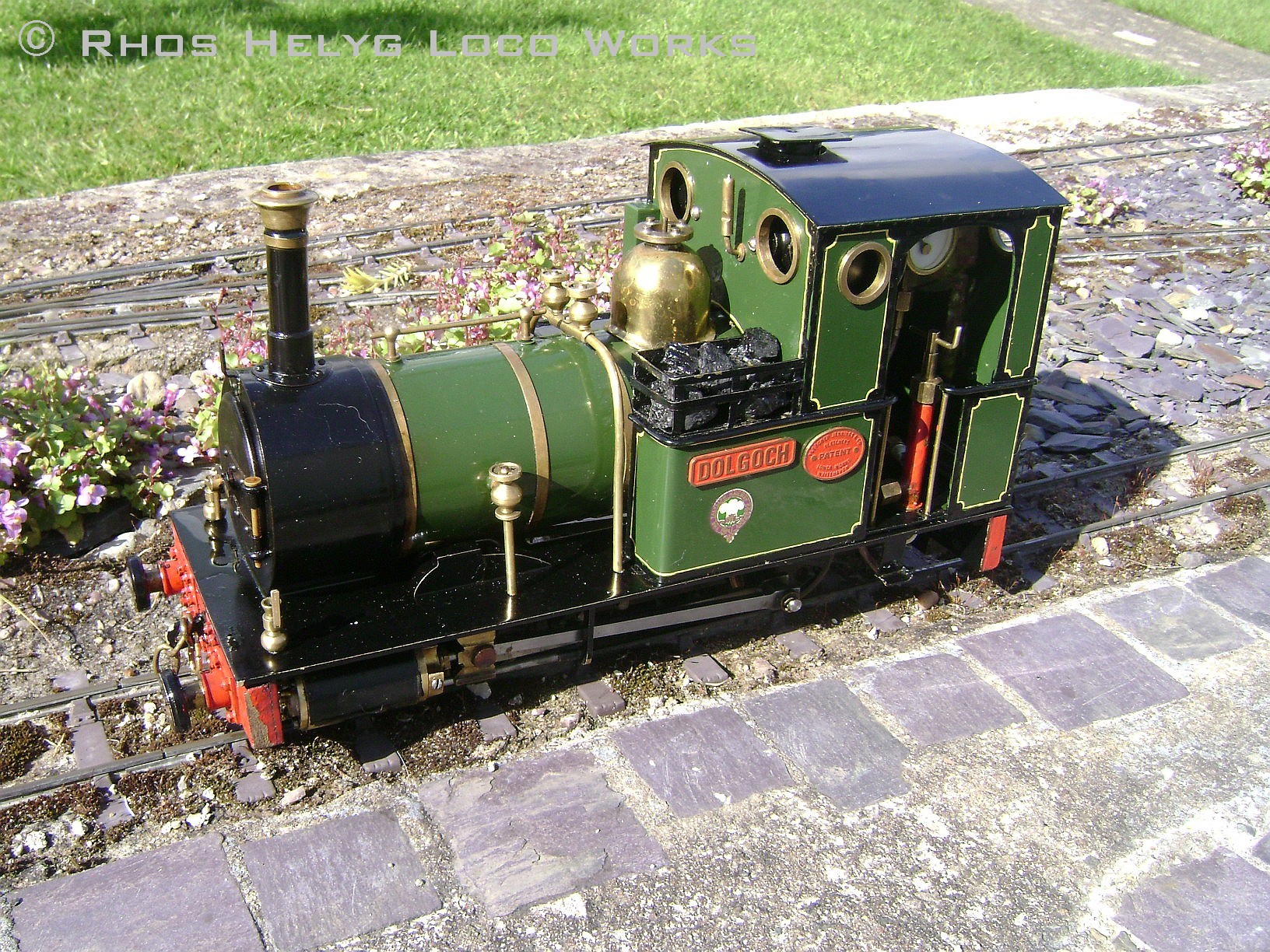
Mac Muckley Talyllyn Railway 0-4-0WT DOLGOCH
A number of repairs were performed on this exquisite machine, including:
|
|
|
|
|






This page was last updated on 8th September 2026